Paper Pulp Heat Exchanger for Pulp and Paper Mills
Pulp and paper mills face a tough thermal challenge: fibrous slurries, sticky black liquor, and abrasive fillers quickly foul and clog standard heat exchangers. This article explains how welded plate heat exchangers with wide-gap channel designs solve fouling, blockage, and erosion problems in pulp and paper production, and what to consider when selecting the right unit for your mill.
Pulp and paper production is one of the most demanding environments for heat transfer equipment. From cooking and washing to bleaching and black liquor concentration, every stage involves fluids that carry fibers, chips, chemicals, and solid particles. A standard gasketed plate heat exchanger may work for clean water circuits, but it struggles when the medium turns thick, fibrous, or abrasive. That is where a purpose-built paper pulp heat exchanger makes a real difference.
The core problem in pulp and paper mills is fouling. Fibers and suspended solids tend to accumulate in narrow channels, reducing heat transfer efficiency and driving up pressure drop. Eventually, production must stop for cleaning. Welded plate heat exchangers address this by eliminating gaskets and using laser-welded plate packs that withstand higher temperatures and pressures. More importantly, wide-gap channel designs allow fibers and particles to pass through without building up.
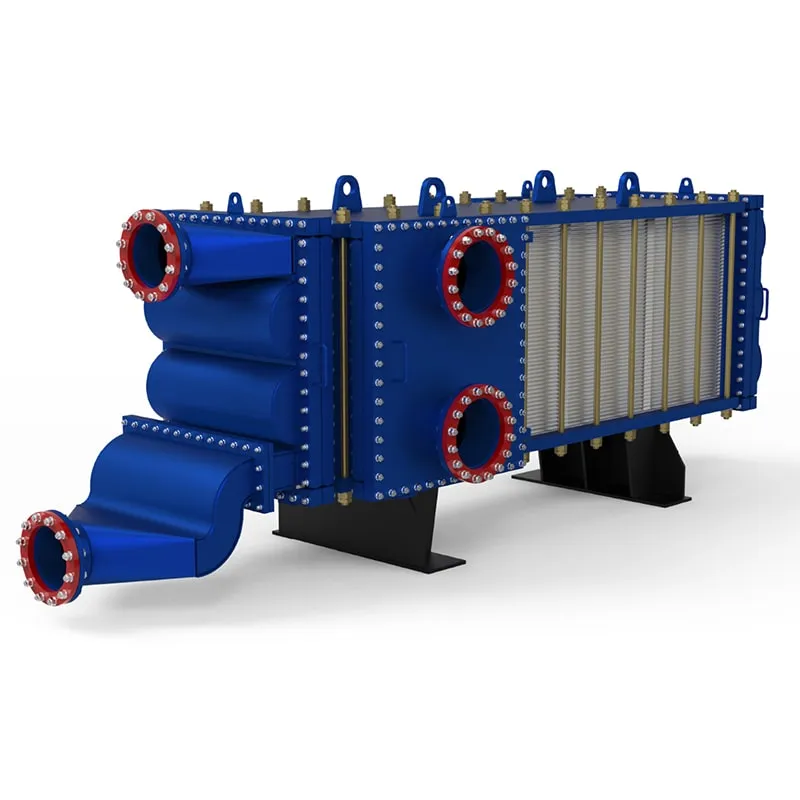
For mills handling high-consistency pulp or black liquor with high dry solids content, a wide gap welded plate heat exchanger is often the most practical choice. The open channel geometry is calculated based on the actual fiber length and particle size in your process, so there are no dead zones where stock can stagnate and block the unit. Vertical configurations also save floor space, which matters in crowded mill buildings.
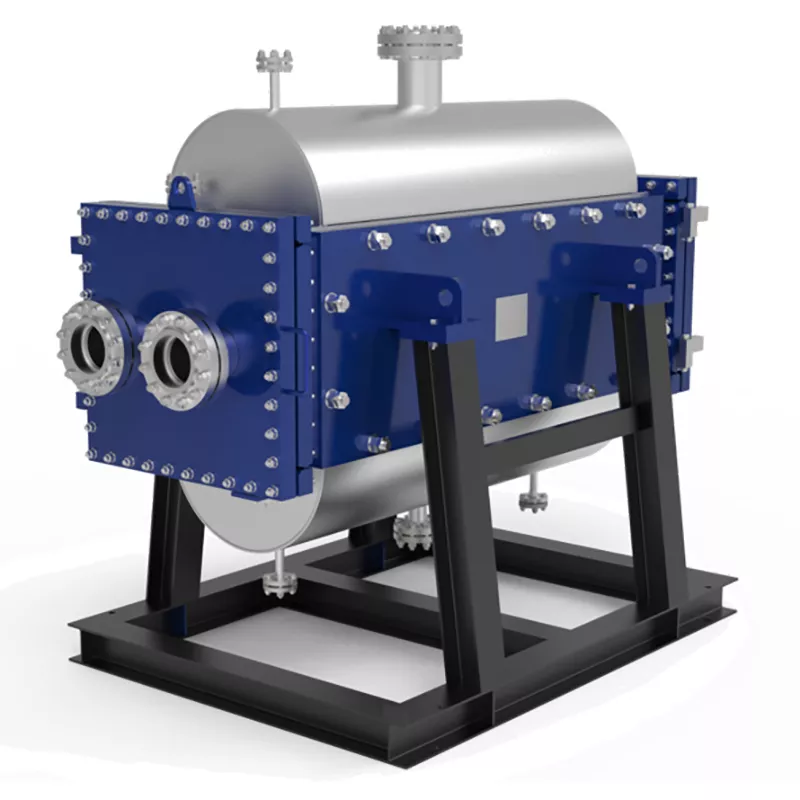
When the duty involves high viscosity media, extreme temperatures, or tight space constraints, a HT-Bloc welded plate heat exchanger offers a compact alternative. These units are custom-configured by engineers who review your fluid properties, thermal profile, and available installation space. The result is a heat exchanger that fits the process rather than forcing the process to fit the equipment.
For more severe fouling and erosion threats, the TP welded plate heat exchanger combines wear-resistant metallurgy with tailored channel geometries and integrated CIP (Cleaning-in-Place) systems. This approach keeps production running where conventional shell-and-tube or gasketed plate units fail. The welded construction removes gasket failure as a maintenance concern, which is a significant advantage when dealing with hot black liquor or chemical-laden process streams.
Material selection also matters. Depending on the chloride content and temperature of your process streams, stainless steel grades or higher-alloy materials may be required to resist corrosion. A supplier who understands pulp and paper chemistry can recommend the right metallurgy rather than defaulting to a one-size-fits-all specification.
If you are evaluating heat exchangers for a pulp or paper mill application, start by defining your fluid composition, fiber content, temperature range, and pressure requirements. Then look for a welded plate design with channel dimensions matched to your actual process medium. That is the most reliable path to continuous operation and predictable maintenance intervals.

 English EN





User Comments
Service Experience Sharing from Real Customers
Mark Stevens
Mill Operations ManagerWe swapped out our old unit for this paper pulp heat exchanger six months ago and the fouling issues that used to plague us have basically vanished. My maintenance crew isn't tearing it down every other week anymore, which frees them up for actual preventive work. Steam consumption is down about 14% too, so the bean counters are happy for once.
Priya Ramanathan
Process EngineerSolid performance on our black liquor recovery line, though it took a bit longer to dial in the flow rates than I expected. Once we got the configuration right, the heat recovery efficiency was noticeably better than the plate exchanger it replaced. Docking one star only because the installation manual could've been clearer for our specific setup.
Tommy Nguyen
Maintenance SupervisorBeen running this thing for about a year now on our pulp drying circuit. Honestly didn't expect it to hold up this well given how abrasive our process stream is. Gaskets are still in good shape, no leaks, and cleaning downtime is way less than what we dealt with before. The guys on my shift actually stopped complaining about it, and that says a lot.
Sandra Kowalski
Plant Procurement SpecialistPrice point was competitive and delivery landed ahead of schedule, which rarely happens in this industry. Our engineering team reports good heat transfer numbers after four months in service. I'd give it five stars if the vendor's after-sales support were a little more responsive when we had questions about spare parts.