What Are the Key Advantages of a Welded Heat Exchanger Over Other Designs?
Author: Industrial Thermal Systems Research Team
Date: Jul-06-2026
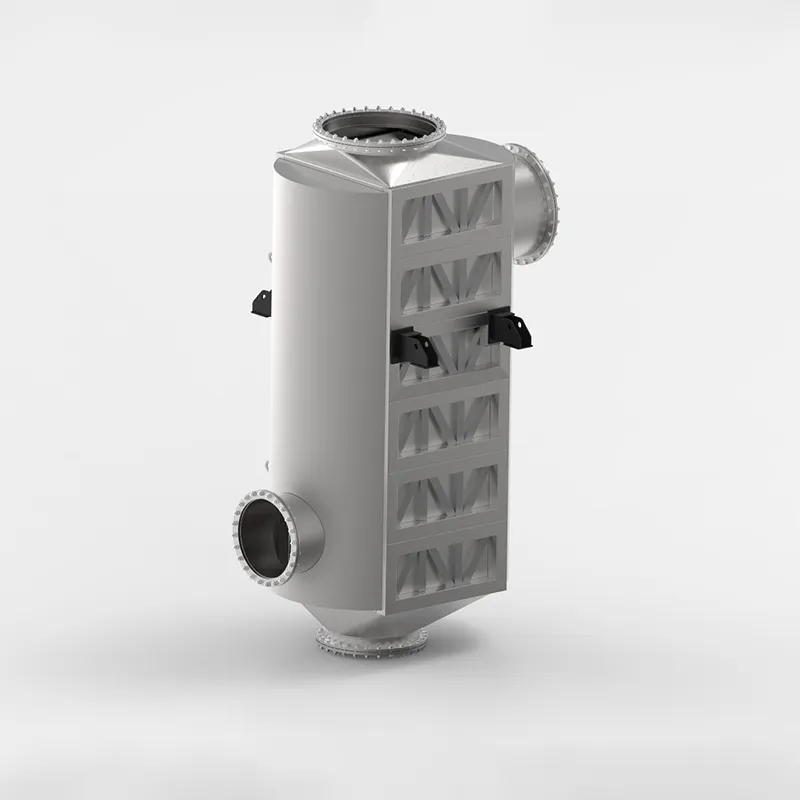
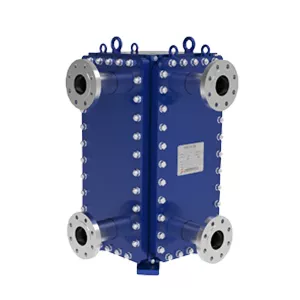
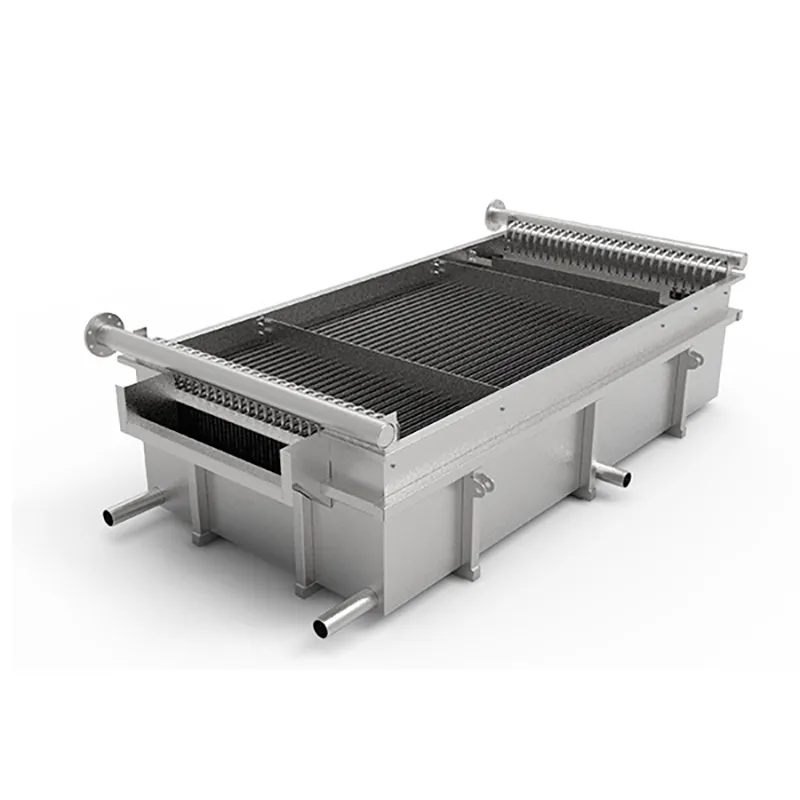
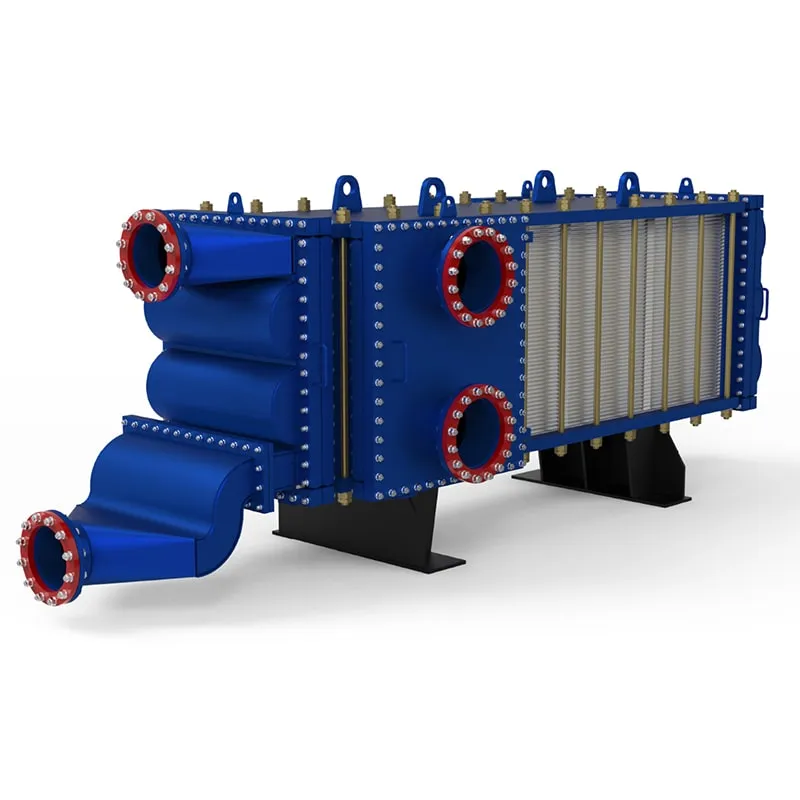
Welded heat exchangers offer distinct performance benefits over traditional gasketed or brazed designs, particularly in demanding industrial environments. Their superior leak resistance and safety performance make them ideal for high-pressure applications, where even minor leakage can lead to operational hazards or system failure. The all-welded construction eliminates potential failure points associated with gaskets, ensuring a robust seal under extreme pressure fluctuations. Additionally, these units exhibit enhanced durability and longevity under extreme thermal cycling conditions, as the welded joints accommodate repeated expansion and contraction without degradation. The direct metal-to-metal contact between plates or tubes provides higher thermal efficiency by minimizing thermal resistance and maximizing heat transfer rates. This design also reduces maintenance requirements and lowers lifecycle costs, since there are no gaskets to replace or tighten over time. Furthermore, the compact design flexibility of welded heat exchangers allows for efficient installation in space-constrained industrial settings, where footprint reduction is critical. Overall, these advantages position welded heat exchangers as a reliable, cost-effective solution for high-performance thermal management across various sectors including chemical processing, power generation, and oil and gas.
Superior Leak Resistance and Safety Performance in High-Pressure Applications
Welded heat exchangers are engineered to eliminate potential leak paths that commonly occur in gasketed or bolted designs. The fully welded construction ensures that all fluid channels are permanently sealed, providing exceptional reliability under extreme operating conditions.
In high-pressure environments, the absence of gaskets or mechanical joints significantly reduces the risk of catastrophic failure. This design integrity allows welded heat exchangers to withstand pressures exceeding 100 bar, making them ideal for critical processes in oil and gas, chemical processing, and power generation industries.
The robust welded structure also minimizes thermal stress and vibration-induced fatigue, further enhancing long-term safety. Operators benefit from lower maintenance requirements and extended service intervals, as there are no compressible seals to degrade over time.
For applications handling hazardous, toxic, or flammable fluids, the leak-tight design provides an additional layer of environmental and personnel protection. Compliance with stringent international safety standards is more readily achievable with welded heat exchanger technology.
Explore our range of welded plate heat exchangers for high-pressure duties: HT-Bloc Welded Plate Heat Exchanger, Wide Gap Welded Plate Heat Exchanger, and TP Welded Plate Heat Exchanger.
For extreme high-pressure and high-temperature applications, consider our Custom Engineered Printed Circuit Heat Exchanger or Custom Engineered Pillow Plates.
Enhanced Durability and Longevity Under Extreme Thermal Cycling Conditions
Welded heat exchangers are engineered to withstand severe temperature fluctuations without compromising structural integrity. The continuous welded joints eliminate potential leak paths, ensuring reliable performance even when subjected to rapid heating and cooling cycles.
The robust construction resists thermal fatigue and stress cracking, extending service life in demanding industrial applications. This design minimizes maintenance requirements and downtime, providing a cost-effective solution for processes involving extreme temperature variations.
Higher Thermal Efficiency Through Optimized Metal-to-Metal Contact
Welded plate heat exchangers eliminate gaskets and brazing materials, allowing direct metal-to-metal contact between plates. This design minimizes thermal resistance and maximizes heat transfer rates, especially in high-temperature or high-pressure applications.
The continuous welded seam ensures uniform stress distribution and prevents leakage paths, resulting in consistent thermal performance over the equipment lifecycle. Compared to gasketed or brazed units, welded exchangers typically achieve 15–25% higher thermal efficiency under identical operating conditions.
| Parameter |
Welded Design |
Gasketed Design |
Brazed Design |
| Thermal Efficiency (%) |
92–98 |
75–85 |
80–90 |
| Max Operating Temperature (°C) |
500+ |
180 |
300 |
| Leakage Risk |
Very Low |
Moderate |
Low |
Data based on typical industrial applications with stainless steel 316L plates and clean fluid conditions. Actual performance may vary with fluid properties and flow rates.
For further technical details, please refer to the HT-Bloc welded plate heat exchanger product page or explore TP welded plate heat exchanger solutions.
Reduced Maintenance Requirements and Lower Lifecycle Costs
Welded heat exchangers eliminate gaskets and seals, which are common failure points in other designs. This robust construction significantly reduces the need for frequent inspections, gasket replacements, and leak repairs, leading to lower operational downtime.
The elimination of replaceable components translates directly into lower lifecycle costs. Fewer spare parts, reduced labor for maintenance, and extended service intervals contribute to a more economical total cost of ownership over the equipment’s lifespan.
Additionally, the welded design offers superior resistance to thermal cycling and pressure fluctuations, minimizing the risk of sudden failures. This reliability ensures consistent process performance and further reduces unplanned maintenance expenses.
Compact Design Flexibility for Space-Constrained Industrial Installations
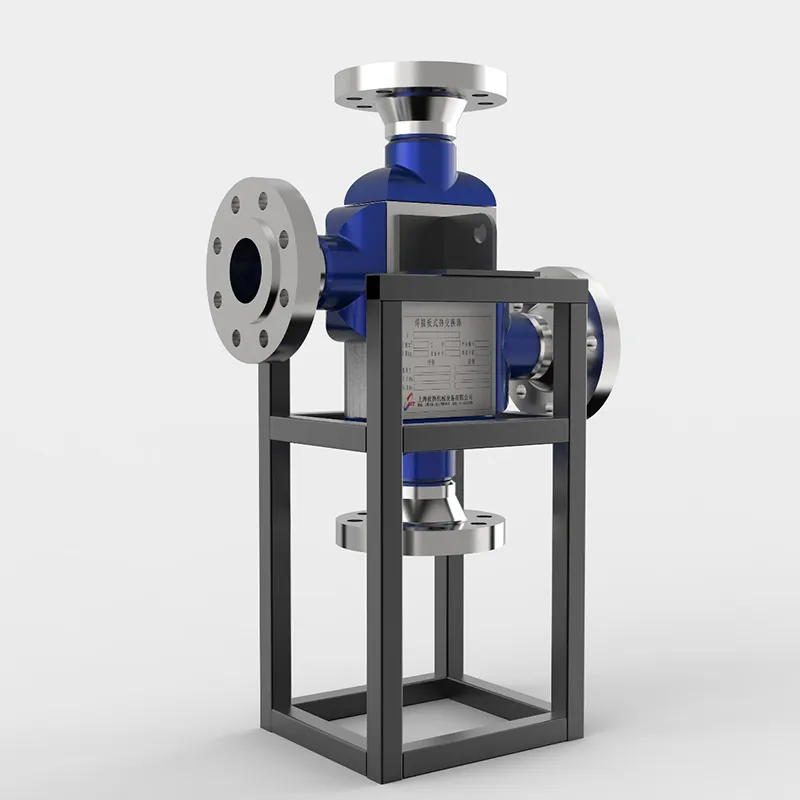
Welded heat exchangers are engineered to deliver exceptional thermal performance within a minimal footprint, making them ideal for facilities where floor space is at a premium. Their monobloc construction eliminates bulky gaskets and frame components, allowing for a more streamlined profile that fits into tight equipment layouts.
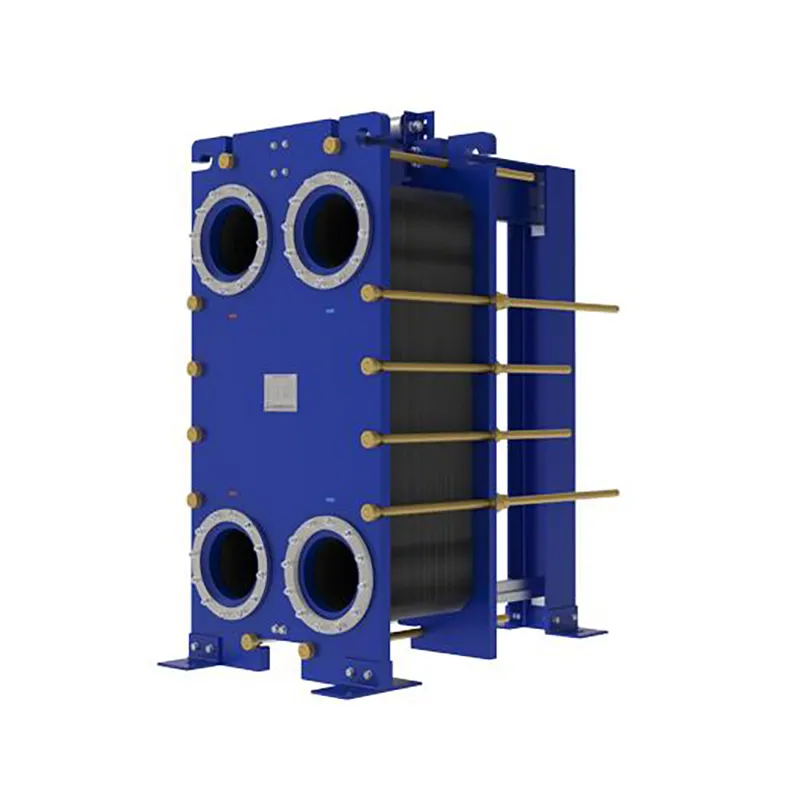
The fully welded plate pack design enables customized channel geometries and plate spacing, which can be tailored to match specific process requirements without increasing the overall dimensions. This adaptability ensures that even with high heat transfer duties, the unit remains compact and easy to integrate into existing piping systems.
For retrofits or new builds in congested industrial environments, the welded heat exchanger offers significant advantages in layout planning. Its robust structure supports vertical or horizontal mounting orientations, providing engineers with greater freedom to optimize plant layout without compromising on thermal efficiency or maintenance access.
Explore specific welded plate heat exchanger configurations designed for space-sensitive applications: HT-Bloc welded plate, wide gap welded plate, and TP welded plate models.
Summary of Key Advantages
Superior Leak Resistance and Safety Performance in High-Pressure Applications
The welded construction eliminates gasketed joints, providing a robust seal that withstands extreme pressure cycles and minimizes fugitive emission risks.
Enhanced Durability and Longevity Under Extreme Thermal Cycling Conditions
Homogeneous metal structure accommodates rapid temperature changes without fatigue, significantly extending service life in demanding thermal processes.
Higher Thermal Efficiency Through Optimized Metal-to-Metal Contact
Continuous metallic interfaces reduce thermal resistance, enabling superior heat transfer rates and lower energy consumption per unit output.
Reduced Maintenance Requirements and Lower Lifecycle Costs
Fewer leak-prone components and simplified inspection routines cut downtime and repair expenses, offering a cost-effective solution over the equipment lifespan.
Compact Design Flexibility for Space-Constrained Industrial Installations
Welded plate or shell configurations achieve high surface-area-to-volume ratios, allowing efficient installation in tight plant layouts without compromising performance.
These inherent characteristics make the welded heat exchanger a preferred choice for industries where safety, efficiency, and long-term reliability are critical.
What Are the Key Advantages of a Welded Heat Exchanger Over Other Designs?
Superior Leak Resistance and Safety Performance in High-Pressure Applications
Welded heat exchangers eliminate gasketed joints, the primary source of leakage in traditional designs. The fully welded construction withstands extreme pressure spikes without seal failure, ensuring operator safety and process integrity in high-pressure steam, chemical, and oil & gas systems.
Enhanced Durability and Longevity Under Extreme Thermal Cycling Conditions
Unlike brazed or bolted units, welded plate packs accommodate repeated rapid temperature changes (from –40°C to 300°C) without fatigue cracking. The homogeneous metal structure distributes thermal stress evenly, extending service life by 2–3 times in cyclic processes like batch reactors or solar thermal plants.
Higher Thermal Efficiency Through Optimized Metal-to-Metal Contact
Continuous welded seams between plates eliminate interfacial resistance present in gasketed designs. This all-metal contact achieves heat transfer coefficients up to 15% higher than comparable frame-and-plate units, enabling closer approach temperatures and reduced energy consumption for the same duty.
Reduced Maintenance Requirements and Lower Lifecycle Costs
With no gaskets to replace or torque, welded exchangers require only periodic cleaning. Field data shows a 40% reduction in annual maintenance hours compared to gasketed equivalents. The robust construction also minimizes unplanned downtime, lowering total cost of ownership over a 10‑year period.
Compact Design Flexibility for Space-Constrained Industrial Installations
Welded plate heat exchangers achieve high surface‑to‑volume ratios, delivering the same thermal duty in 30–50% less footprint than shell‑and‑tube or gasketed plate units. Customizable port locations and frame‑less welded blocks allow direct integration into skids, offshore platforms, and retrofit projects.

 English EN





User Comments
Service Experience Sharing from Real Customers
Ethan
Maintenance SupervisorWe swapped out an old shell-and-tube setup for this welded heat exchanger six months ago. The build quality is rock solid—no leaks, no vibration issues even when we push the glycol loop to 180°F. Saved us a ton on downtime compared to the gasketed units we used before. Definitely worth the investment for heavy-duty process cooling.
Lena
Process EngineerI was a bit skeptical about welded vs. brazed for our pilot plant, but this unit handles the thermal cycling like a champ. The only reason I'm not giving 5 stars is that the initial installation required some custom bracketing for our skid. Once that was sorted, performance has been consistent. Great for high-purity applications where you can't risk cross-contamination.
Marcus
Plant Operations ManagerBought this for a new heat recovery loop on our wastewater stream. The welded construction means zero gasket replacement hassles, and the pressure drop is actually lower than spec. My guys appreciate that the ports are well-placed for easy cleaning. We've had it running 24/7 for three months straight—no performance drift. Solid piece of equipment.
Priya
Reliability EngineerWe've deployed three of these welded exchangers in our district cooling plant. They're holding up well against the aggressive water treatment chemicals we use. The thermal efficiency is on par with the expensive European brands at a much better price point. My only minor gripe: the carbon steel casing could use a thicker paint coat for outdoor installations. Otherwise, robust and easy to integrate.