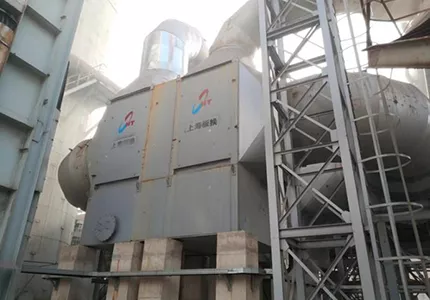
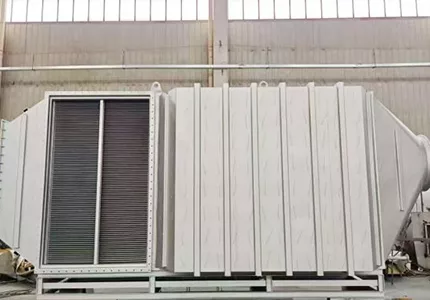
-
(1) Wastewater Treatment
Production Process: Wastewater treatment involves physical, chemical, and biological methods. Physical methods include sedimentation and filtration to remove suspended solids. Chemical methods involve neutralization, oxidation-reduction to alter pollutant properties. Biological methods use microorganisms to decompose organic matter. Advanced treatments may also include membrane processes like reverse osmosis for further purification.
Role of Plate Heat Exchanger: Heat exchangers are used to regulate wastewater temperature, ensuring it is suitable for biological treatment processes. They can also recover heat from treated water, reducing energy consumption and improving overall efficiency.
-
(2) Air Pollution Control
Production Process: Air pollution control focuses on reducing emissions through dust removal, desulfurization, and denitrification. Dust removal methods include bag filters and electrostatic precipitators. Desulfurization often uses the limestone-gypsum process, while denitrification employs selective catalytic reduction (SCR) or selective non-catalytic reduction (SNCR).
Role of Plate Heat Exchanger: Heat exchangers recover heat from high-temperature exhaust gases, lowering their temperature for safe release and reusing the heat for other processes. This reduces energy waste and lowers operational costs.
-
(3) Solid Waste Management
Production Process: Solid waste management includes landfilling, incineration, and composting. Incineration converts waste into energy through combustion, while composting processes organic waste into nutrient-rich compost. Recycling is also a key component, where materials like paper, plastic, and metals are separated and processed for reuse.
Role of Plate Heat Exchanger: In waste incineration plants, heat exchangers capture heat from the combustion process to generate steam for electricity production. This not only reduces waste volume but also recovers valuable energy, making the process more sustainable.
-
(4) Soil Pollution Remediation
Production Process: Soil pollution remediation techniques include physical methods like soil replacement, chemical methods such as soil washing, and biological methods like phytoremediation. Soil washing uses chemicals to remove contaminants, while phytoremediation employs plants to absorb pollutants.
Role of Plate Heat Exchanger: Heat exchangers can be used to control the temperature in soil washing systems, ensuring optimal conditions for chemical reactions. They also help in maintaining the temperature for biological remediation processes, enhancing the efficiency of pollutant removal.
-
(5) Biomass Fermentation
Production Process: Biomass fermentation involves converting organic materials into bio-products such as biofuels or bio-enzymes through microbial fermentation. The process requires precise control of temperature, pH, and nutrient supply to optimize microbial activity.
Role of Plate Heat Exchanger: Heat exchangers play a crucial role in maintaining the optimal temperature in fermentation tanks. They ensure consistent fermentation conditions, which are vital for high yield and quality of bio-products. They also help in cooling or heating the fermentation broth as needed.
-
(6) Desulfurization and Denitrification
Production Process: Desulfurization and denitrification are key processes in reducing sulfur dioxide (SO₂) and nitrogen oxides (NOₓ) emissions. Desulfurization commonly uses the limestone-gypsum process, where limestone reacts with SO₂ to form gypsum. Denitrification employs selective catalytic reduction (SCR) or selective non-catalytic reduction (SNCR) to convert NOₓ into nitrogen and water.
Role of Plate Heat Exchanger: Heat exchangers are used to recover heat from the flue gases before and after the desulfurization and denitrification processes. This recovered heat can be reused in other parts of the plant, improving energy efficiency and reducing the overall carbon footprint.