

The SHPHE Printed Circuit Heat Exchanger (PCHE) is an advanced diffusion bonded microchannel heat exchanger engineered for demanding high-pressure and high-temperature thermal duties. Compared with conventional shell-and-tube equipment, its chemically etched microchannel structure provides exceptionally high heat-transfer surface density within a compact core. Combined with solid-state diffusion bonding, the design delivers high thermal effectiveness, mechanical integrity, and reliable containment under extreme operating conditions.
Designed as a compact high pressure heat exchanger, the SHPHE PCHE supports critical thermal processes across LNG, natural gas processing, offshore energy systems, supercritical CO₂ power cycles, hydrocarbon processing, and high-pressure hydrogen applications. Its combination of compact size, high pressure capability, low fluid inventory, and efficient heat recovery makes PCHE technology particularly suitable for applications where equipment footprint, weight, safety, and thermal performance are equally important.
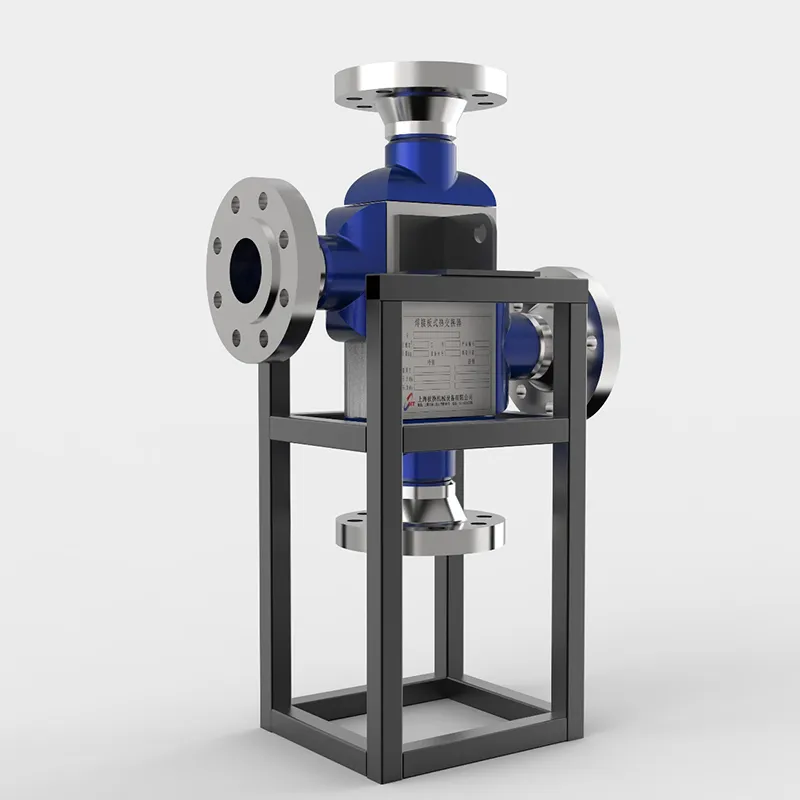
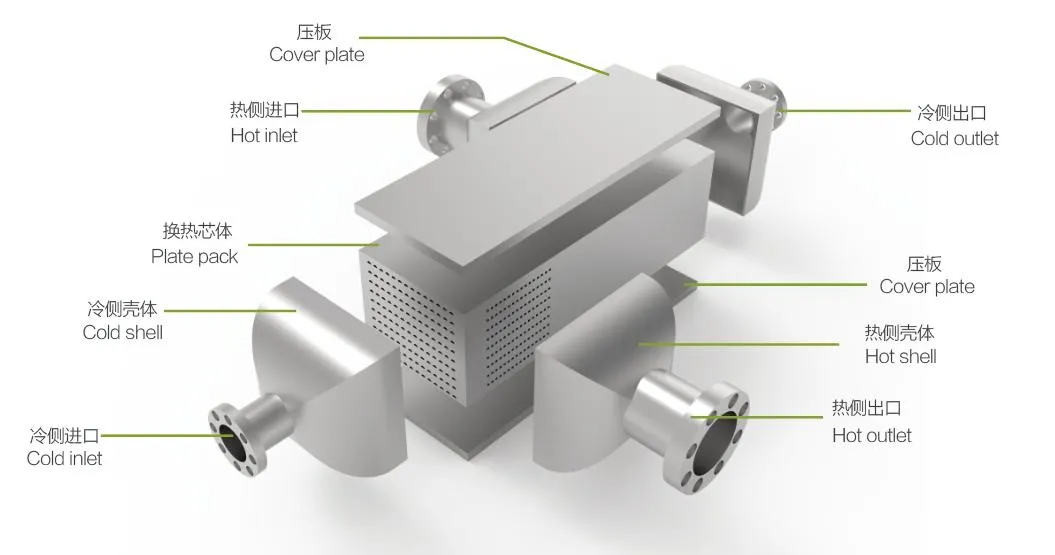
A Printed Circuit Heat Exchanger (PCHE) is a highly compact heat exchanger constructed from multiple thin metal plates containing chemically etched microchannels. These plates are stacked and diffusion bonded into a single solid-metal core, creating what is also commonly described as a diffusion bonded microchannel heat exchanger.
Unlike gasketed or brazed heat exchangers, the PCHE core contains no gaskets or brazing filler between the heat-transfer plates. The resulting monolithic structure combines the high surface-area-to-volume ratio of a microchannel heat exchanger with the mechanical strength required for extreme pressure and temperature service.
SHPHE PCHEs are engineered for pressures up to 1000 bar and design temperatures from -196°C to 850°C. By tailoring microchannel geometry, flow arrangement, plate material, and channel distribution to each thermal duty, the exchanger can provide efficient heat recovery while maintaining low equipment volume and reliable pressure containment.
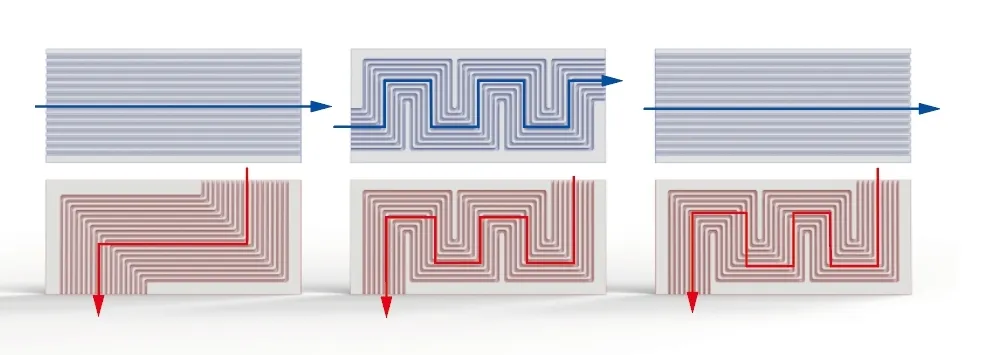
The manufacturing process begins with thin alloy plates selected according to operating temperature, pressure, fluid properties, and corrosion requirements. Available materials include Stainless Steel 316L, Duplex Steel 2205, Titanium, and Hastelloy C-276. Precision photochemical etching creates the required microchannel flow paths on the surface of each plate, allowing channel geometry, depth, and arrangement to be optimized for the required heat-transfer duty and pressure drop.
The etched plates are then accurately stacked and subjected to a controlled diffusion bonding process under high temperature, pressure, and vacuum conditions. At the bonding interfaces, atoms diffuse across adjacent plate surfaces, joining the layers without brazing filler or intermediate material. The result is a diffusion bonded heat exchanger core that behaves mechanically as an integrated solid structure.
This manufacturing approach allows SHPHE engineers to customize channel dimensions, flow configurations, thermal length, pressure drop, and multi-stream arrangements. The finished PCHE therefore combines the compactness of a microchannel architecture with the strength required for high-pressure gases, cryogenic fluids, supercritical fluids, and demanding industrial process streams.
SHPHE Printed Circuit Heat Exchangers are designed for demanding energy and process applications where conventional heat exchangers may become excessively large or face limitations in pressure, temperature, weight, or footprint. Their diffusion-bonded microchannel construction makes them especially suitable for natural gas processing, LNG systems, offshore modules, hydrocarbon processing, power generation, and high-pressure gas services.
In LNG and natural gas facilities, PCHEs can be engineered for compact gas cooling, heating, vaporization, condensation, and heat-recovery duties. For offshore and modular processing systems, their high heat-transfer-area density helps reduce equipment footprint and structural weight while maintaining the pressure capability required by demanding process conditions.
PCHE technology is also well suited to sCO₂ heat exchanger duties, including recuperation and thermal management in supercritical CO₂ power cycles. The combination of compact microchannels, close temperature approaches, and high-pressure capability enables efficient energy recovery within systems operating at elevated CO₂ pressures.
For emerging hydrogen systems, the same diffusion-bonded microchannel architecture can support high-pressure hydrogen thermal management and hydrogen pre-cooling heat exchanger duties where compactness, rapid heat transfer, pressure resistance, and leak integrity are critical design considerations.
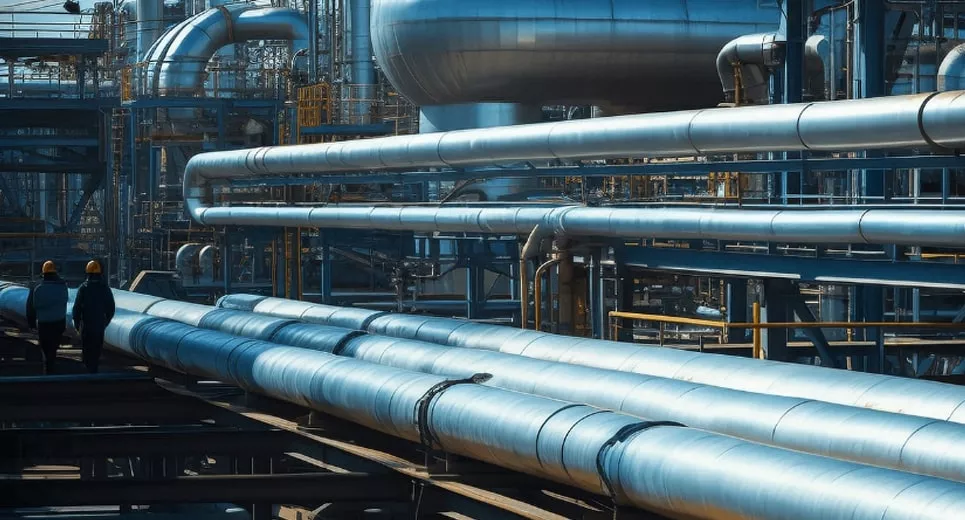
Oil and Gas industry is a cornerstone of modern industry, with a supply chain covering everything from the extraction and processing of oil and gas to the production and sale of various petrochemical products. These products are widely used in sectors such as energy, chemicals, transportation, construction, and pharmaceuticals, making the industry essential for economic development. Plate heat exchangers are widely applied in the oil and gas industry due to their high efficiency, compact size, corrosion resistance, and ease of maintenance, making them an ideal choice for this sector.

Power industry is essential for modern life, driving economic growth and sustainability through advancements in renewable energy, smart grids, and energy storage. It plays a critical role in reducing carbon emissions and ensuring reliable energy access. Plate heat exchangers are vital in this sector, enhancing energy efficiency by optimizing heat transfer in power plants. Their compact design and high efficiency reduce energy consumption and operational costs, supporting sustainable thermal management. Together, the power industry and plate heat exchangers are key to advancing global energy solutions and achieving a greener future.
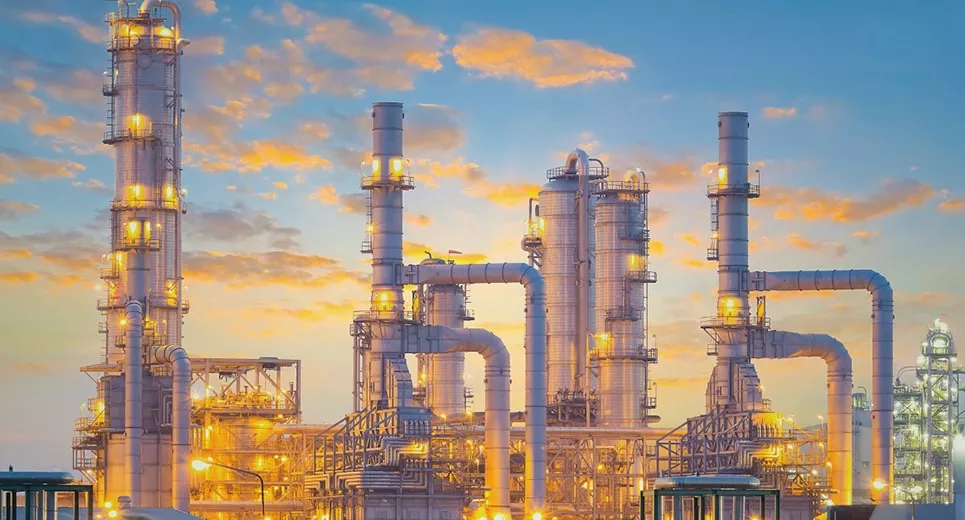
Chemical industry is a highly technical sector, combining specialized design, precision manufacturing, and stringent quality control to meet diverse process demands. Plate heat exchangers are essential in this field, providing efficient heat transfer for heating, cooling, condensation, and evaporation. Their compact design, high thermal efficiency, and adaptability to harsh conditions ensure smooth operations, reduce energy consumption, and support sustainability goals.

Offshore modular engineering is a highly technical and comprehensive project, combining specialized design, precision manufacturing, stringent quality control, and full-service after-sales support. These solutions are tailored to meet the unique demands of the marine and ship environments.

New Energy industry focuses on renewable energy sources like solar, wind, hydro, and geothermal power, aiming to reduce reliance on fossil fuels and combat climate change. Its development is driven by the urgent need to lower carbon emissions, enhance energy security, and promote sustainable economic growth. The industry is significant as it mitigates environmental degradation, creates green jobs, and fosters technological innovation. Heat exchangers are essential in this sector for optimizing energy efficiency. They transfer heat between fluids in systems like solar thermal plants, geothermal power stations, and waste heat recovery processes, ensuring maximum energy utilization and reducing operational costs.
Watch our plate heat exchanger in action and discover its high-efficiency design.
As a compact microchannel heat exchanger, the SHPHE PCHE packages a large heat-transfer area into a comparatively small volume. This can substantially reduce exchanger footprint and weight compared with conventional shell-and-tube configurations designed for similar high-pressure thermal duties, making PCHEs particularly attractive for offshore platforms, marine systems, modular skids, and space-constrained process plants.
The solid diffusion-bonded core contains no plate gaskets or brazing filler. This construction provides the mechanical integrity required for severe pressure and temperature conditions while reducing potential leakage paths within the heat-transfer core. For applications requiring both compact dimensions and extreme pressure capability, the PCHE therefore functions as an efficient high pressure heat exchanger without sacrificing thermal performance.
Chemically etched microchannels create a large heat-transfer surface area and controlled flow distribution within a compact core. By optimizing channel geometry, hydraulic diameter, flow velocity, and counter-current arrangements, SHPHE engineers can design PCHEs for high thermal effectiveness and close temperature approaches while managing allowable pressure drop.
This makes the technology particularly valuable for recuperators, process heat recovery, LNG duties, sCO₂ systems, and other applications where recovering more thermal energy directly improves overall process efficiency.
The core of the SHPHE PCHE is formed through solid-state diffusion bonding rather than conventional brazing or gasket sealing. Once bonded, the stacked plates form an integrated structure capable of resisting pressure fatigue, thermal cycling, and severe process conditions.
This combination of diffusion-bonded construction, engineered microchannels, and application-specific alloy selection allows SHPHE to design compact heat exchangers for operating pressures up to 1000 bar and temperatures from cryogenic -196°C to 850°C.
| Parameter Item | Parameter |
|---|---|
| Max. Area | 8000㎡ |
| Channel Gap | 0.4 – 4mm |
| Design Temperature | -196 ~ 850℃ |
| Max. Design Pressure | 1000 Bar |
| Plate material | 304, 316L, 2205, Titanium, C-276 |
| Plate thickness | 0.4 ~ 4 mm |



 English EN


