
Printed circuit heat exchangers are advanced devices that transfer heat efficiently using thousands of tiny channels etched into metal plates. These exchangers play a key role in industries seeking energy savings and reliable performance. SHPHE leads innovation in this field, creating solutions for sectors such as oil and gas, chemical processing, and power generation. Growth in demand comes from the push for energy-efficient technology and the expansion of modern industrial operations. For more details, readers can explore the FAQ or reach out to SHPHE’s team.
Printed circuit heat exchangers (PCHEs) are compact and efficient, using microchannels to achieve up to 98% heat transfer efficiency.
These exchangers are built to withstand extreme pressures and temperatures, making them ideal for demanding industrial applications.
Regular maintenance, including performance monitoring and cleaning, is essential to ensure the longevity and efficiency of PCHEs.
Choosing the right materials and designs tailored to specific processes enhances the reliability and performance of PCHEs.
Collaboration with manufacturers like SHPHE can optimize PCHE design and ensure it meets the unique needs of your application.
Printed circuit heat exchangers are advanced devices that use a unique structure to achieve high performance. Each printed circuit heat exchanger consists of many thin metal plates stacked together. Engineers etch thousands of tiny channels into these plates. These channels guide fluids through the exchanger, allowing for efficient heat transfer characteristics. The design creates a solid block that is both strong and compact.
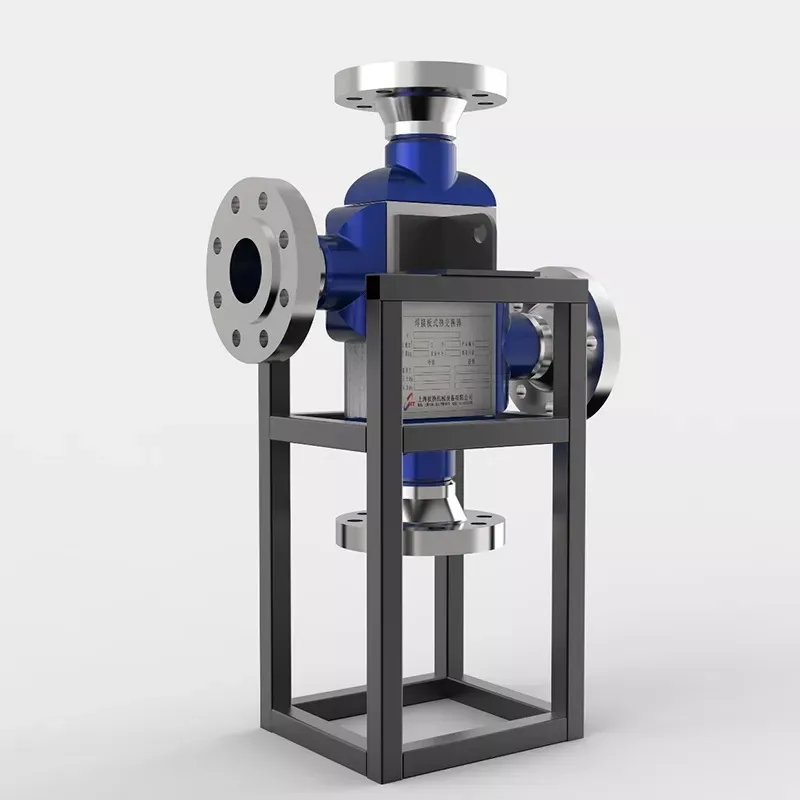
SHPHE uses advanced computational fluid dynamics modeling to design the flow paths inside each printed circuit heat exchanger. The microchannel technology ensures that fluids move smoothly and exchange heat quickly. Diffusion bonding joins the plates without gaskets or filler metals. This process creates a leak-free and durable printed circuit heat exchanger. The result is a product that can handle very high pressures and temperatures.
Printed circuit heat exchangers are much smaller and more effective than traditional shell-and-tube units. Their compact size makes them ideal for places where space is limited.
The table below highlights some of the key technological features developed by SHPHE:
Feature | Description |
|---|---|
High Pressure and Temperature Resistance | Can handle pressures up to 1000 bar and temperatures from -196°C to 850°C. |
Compact, Space-Saving Design | Up to 85% smaller in volume than traditional heat exchangers, enhancing space efficiency. |
Microchannel Efficiency | Channels between 0.4 mm and 4 mm wide optimize flow and improve heat transfer coefficient. |
All-Welded, Gasket-Free Construction | Utilizes diffusion bonding for a durable, leak-free design that requires minimal maintenance. |
Versatile Material Selection | Can be made from various materials like stainless steel and titanium for compatibility with fluids. |
Printed circuit heat exchangers belong to a group called compact heat exchangers. These exchangers are designed to save space and improve heat transfer characteristics. However, printed circuit heat exchangers stand out because of their unique structure and performance.
The table below compares the efficiency ratings of different types of compact heat exchangers:
Heat Exchanger Type | Efficiency Rating |
|---|---|
Printed Circuit Heat Exchangers (PCHEs) | 95–98% |
Shell-and-Tube Units | Lower than 95% |
Printed circuit heat exchangers achieve higher efficiency because of their microchannels and solid construction. They also offer better heat transfer characteristics compared to other compact heat exchangers. This makes them a preferred choice in industries that need reliable and efficient thermal management.
Printed circuit heat exchangers use a simple but powerful principle. Hot and cold fluids move through separate sets of tiny channels that are etched into metal plates. These plates are stacked and bonded together to form a solid block. The fluids flow on opposite sides of each plate. As the fluids pass by each other, heat moves from the hot fluid to the cold fluid through the metal wall. This process is called conduction.
Most designs use a countercurrent flow pattern. In this setup, the hot and cold fluids move in opposite directions. This arrangement helps maintain a high temperature difference along the length of the exchanger, which boosts heat transfer efficiency. The etched channels often include special shapes or patterns. These features create turbulence in the fluids, which mixes them and increases the rate of heat transfer.
Note: Countercurrent flow and turbulent mixing are key reasons why these exchangers reach such high heat transfer efficiency.
The flow paths inside printed circuit heat exchangers are carefully designed. Engineers use advanced modeling to create channels that guide the fluids smoothly and evenly. Each channel is only a few millimeters wide, but there are thousands of them in each unit. This microchannel structure allows the exchanger to be much smaller than traditional designs.
The microchannels increase the surface area for heat exchange.
They help fluids move quickly and evenly, which improves heat transfer efficiency.
The compact design means the exchanger can fit into tight spaces while still handling high pressures and temperatures.
Because of these features, printed circuit heat exchangers can achieve up to 98% heat transfer efficiency. The combination of solid construction, advanced flow paths, and microchannel technology makes them a top choice for industries that need reliable and efficient thermal management.
Printed circuit heat exchangers offer high efficiency in many industrial processes. The design uses thousands of microchannels to increase the surface area for heat transfer. This structure improves thermal–hydraulic performance and helps achieve energy savings. SHPHE’s technology allows for a compact footprint, which means the equipment takes up less space in plants or on offshore platforms.
A smaller size does not mean less power. These exchangers can handle large thermal loads while keeping pressure drop characteristics low. High efficiency means less energy is wasted, and more heat is transferred where it is needed. This leads to energy savings and lower operating costs.
Note: High efficiency and compactness are key reasons why engineers choose this technology for demanding environments.
The table below shows how these features compare to traditional designs:
Feature | PCHEs | Shell-and-Tube Units |
|---|---|---|
Up to 98% | Lower | |
Thermal–Hydraulic Performance | Excellent | Moderate |
Pressure Drop Characteristics | Optimized | Higher |
Footprint | Very Compact | Large |
SHPHE builds printed circuit heat exchangers with strong materials like stainless steel, super duplex steel, and titanium. These materials help the units resist corrosion and thermal shock. The diffusion bonding process creates a solid block with no gaskets, which improves good reliability and reduces leaks.
These exchangers can work in extreme temperatures and high pressures. Good reliability is important for safety and long service life. SHPHE’s products have certifications such as ISO9001, ISO14001, and OHSAS18001. These certifications show a commitment to quality and safety.
Good reliability also means less downtime for maintenance. The pressure drop characteristics remain stable even after years of use. High efficiency stays consistent, and thermal–hydraulic performance does not decrease over time.
Tip: For harsh environments, choose equipment with good reliability and proven pressure drop characteristics.
Floating liquefied natural gas operations rely on advanced thermal management. Printed circuit heat exchangers play a key role in these environments. Engineers select these exchangers for floating liquefied natural gas platforms because they deliver high efficiency and reliability. The compact size allows easy installation on floating liquefied natural gas vessels, where space is limited. These exchangers handle extreme conditions, including high pressures and low temperatures, which are common in floating liquefied natural gas processing.
Floating liquefied natural gas facilities often operate in harsh offshore locations. Printed circuit heat exchangers withstand aggressive fluids and resist corrosion. The all-welded design prevents leaks, making them ideal for floating liquefied natural gas storage and transfer. Custom channel patterns improve performance in floating liquefied natural gas applications. Mechanical durability ensures long service life, even with frequent thermal cycling in floating liquefied natural gas operations.
Floating liquefied natural gas projects demand equipment that can manage cryogenic fluids and supercritical flows. Printed circuit heat exchangers meet these needs with unmatched flexibility.
The table below highlights the main benefits for floating liquefied natural gas and offshore applications:
Benefit | Description |
|---|---|
Exceptional thermal efficiency | Achieves effectiveness of 95–98%, minimizing energy losses in floating liquefied natural gas systems. |
Ultra-compact size | Occupies 80–90% less space, perfect for floating liquefied natural gas vessels and platforms. |
Extreme pressure/temperature capability | Handles cryogenic fluids down to –196 °C and supercritical flows up to 850 °C, with pressures over 1,000 bar in floating liquefied natural gas operations. |
Mechanical durability | All-welded design, resistant to fatigue and corrosion, suitable for aggressive fluids in floating liquefied natural gas environments. |
Design flexibility | Custom-engineered for complex channel patterns, enhancing performance in floating liquefied natural gas processing. |
Printed circuit heat exchangers serve many industries beyond floating liquefied natural gas. They support hydrogen production, fuel cell systems, and aerospace thermal management. These exchangers provide precision temperature control and reliable operation. Engineers use them in environmental control systems and avionic cooling.
The table below shows common industries and their applications:
Industry | Application Description |
|---|---|
Hydrogen Economy | Used for precision temperature control in hydrogen production systems, hydrogenation machines, and fuel cell systems. |
Aerospace | Essential for thermal management in onboard systems, including environmental control and avionic cooling systems. |
Printed circuit heat exchangers also appear in chemical processing, power generation, and marine vessels. Their compact design and high efficiency make them a preferred choice for modern industrial operations.
Designing printed circuit heat exchangers requires careful attention to several important factors. Engineers must balance performance, durability, and flexibility to meet the needs of different industries. The table below highlights the main considerations when creating these advanced devices:
Design Consideration | Details |
|---|---|
Effectiveness of 95–98%, surpassing shell-and-tube units. | |
Size | Occupies 80–90% less space than comparable exchangers. |
Handles conditions from –196 °C to 850 °C and pressures beyond 1,000 bar. | |
Mechanical Durability | All-welded design with no leak paths, resistant to fatigue and corrosion. |
Design Flexibility | Custom-engineered with various flow patterns and tailored profiles. |
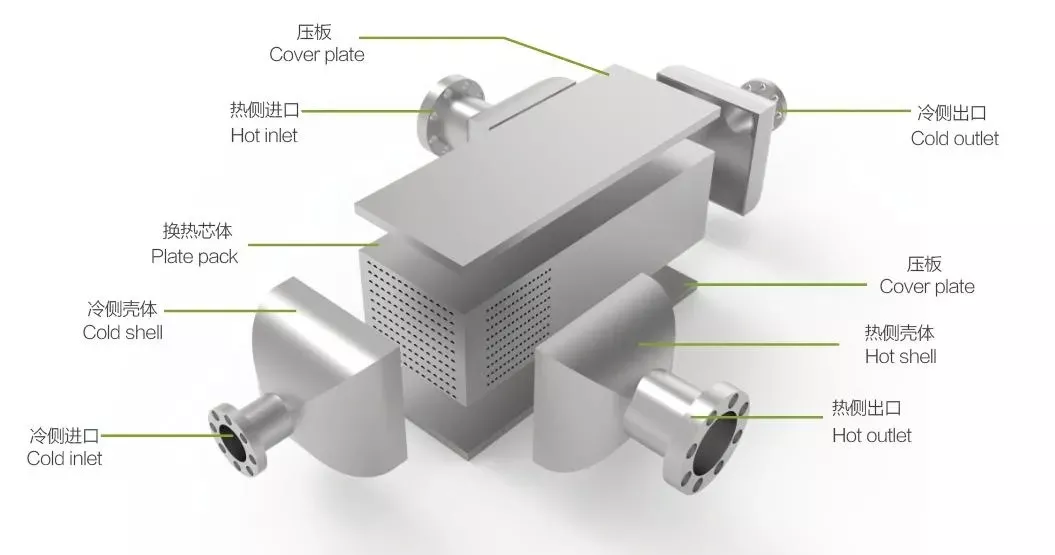
Choosing the right material is essential for safety and long service life. Engineers often select high-quality alloys such as stainless steel, super duplex steel, or titanium. These materials resist corrosion and can handle extreme temperatures and pressures. The selection depends on the fluids used and the environment where the exchanger will operate. For example, titanium works well in seawater applications because it resists saltwater corrosion. Stainless steel is a common choice for chemical processing because it offers a good balance of strength and cost.
Tip: Always match the material to the process conditions for the best performance and reliability.
The geometry of the channels inside printed circuit heat exchangers plays a major role in their efficiency. Microchannels make the units much smaller than traditional designs. These tiny passages improve flow distribution and create turbulence, which increases the rate of heat transfer. Engineers can adjust the shape and size of the channels to fit specific needs. Some designs use asymmetric channels to handle different flow rates or two-phase mixtures. This flexibility helps maximize thermal performance and ensures even the most demanding processes run smoothly.
Careful design of the etched channels allows for custom flow patterns. This means the exchanger can be tailored for unique applications, such as handling both gases and liquids or managing rapid temperature changes.
Note: Optimized channel geometry leads to better heat transfer and more efficient operation.
Printed circuit heat exchangers require regular maintenance to keep them working efficiently. Engineers use several methods to monitor and maintain these units. Performance monitoring is important. Instruments measure pressure and temperature at different points. These readings help engineers compare current performance to the original design. If the hot-side approach temperature rises by 10%, it signals a need for inspection.
Scheduled cleaning helps prevent fouling. The cleaning method depends on the type of deposit. Hot oil flushing works well for wax or heavy hydrocarbon buildup. Water-based cleaning is better for removing particles. Non-destructive testing (NDT) is also important. Ultrasonic thickness checks can find thinning in header regions, especially in hydrogen or high-pressure services. Eddy current testing can detect cracks below the surface.
The table below summarizes key maintenance practices:
Maintenance Practice | Description |
|---|---|
Performance Monitoring | Use pressure and temperature instruments. Track changes from baseline values. |
Scheduled Cleaning | Clean at set intervals. Choose hot oil or water-based methods based on fouling type. |
NDT Requirements | Use ultrasonic and eddy current testing to check for thinning or cracks. |
Repair Considerations | Involve the manufacturer for field weld repairs. Ensure support for remote or offshore repairs. |
Tip: Regular checks and cleaning help extend the life of the heat exchanger and keep performance high.
Maintenance teams sometimes face challenges with printed circuit heat exchangers. Flow-induced vibration can cause unexpected pressure drops, especially in high-velocity services. This happens when flow rates change quickly. Fouling is another issue. Small channels can become blocked by particles, leading to a loss of thermal performance. Flow stability problems may also occur. High velocity in compact channels can cause vibration or even erosion.
The table below lists common challenges, their symptoms, and root causes:
Challenge | Symptom | Root Cause |
|---|---|---|
Flow-induced vibration damage | Unexpected pressure drops | Rapid flow changes; compact channel geometry |
Fouling in closed-loop services | Loss of thermal performance; deposits | Small channels restrict quickly from particle buildup |
Flow stability issues | Vibration damage; channel erosion | High velocity amplifies flow maldistribution effects |
Note: Early detection of these issues helps prevent downtime and keeps the system running smoothly.
Printed circuit heat exchangers (PCHEs) require careful cost analysis before purchase. Many buyers focus on the initial price, but this is only one part of the total expense. The initial capital cost covers the price of the unit and installation. However, this cost usually represents just 20–30% of the total lifecycle cost. Most of the money spent over time comes from other sources.
Maintenance costs add up as the equipment ages.
Energy consumption can become a major expense, especially in large operations.
Downtime for repairs or cleaning leads to lost productivity and extra costs.
Note: Considering only the initial price can lead to underestimating the true investment needed for a PCHE. A full lifecycle approach gives a clearer picture of long-term value.
Several factors influence the price of a printed circuit heat exchanger. Each one plays a role in the final cost that buyers see.
Production costs depend on the complexity of the design and the technology used.
Material costs vary based on the type of alloy, such as stainless steel or titanium.
Market demand can push prices higher when more industries need efficient heat exchangers.
Industry growth trends, especially in oil and gas, affect both supply and demand.
The push for sustainability and energy efficiency increases demand for advanced PCHEs.
High initial costs of installation and operation reflect the advanced engineering involved.
Stringent environmental regulations may require special materials or certifications, which can add to the price.
A table below summarizes these key factors:
Factor | Impact on Price |
|---|---|
Production and Material Costs | Directly increase base price |
Market Demand | Can raise or lower prices |
Industry Trends | Influence supply and demand |
Sustainability Focus | Drives need for efficient units |
Installation/Operation Costs | Affect upfront investment |
Environmental Regulations | May require premium materials |
Tip: Buyers should consider both the initial and long-term costs, as well as the factors that drive price changes, to make the best decision for their operation.
Engineers measure the performance of printed circuit heat exchangers using several important metrics. These metrics help decide if a unit is the right choice for a specific job. The most common parameters include pressure rating, temperature approach, fouling potential, flow stability, space constraints, cycle frequency, and fluid compatibility.
The table below shows how each parameter affects the use of these heat exchangers:
Parameter | Favorable for PCHE | Avoid or Use Caution |
|---|---|---|
Pressure | >50 bar | <10 bar |
Temperature Approach | <10°C required | >30°C approach |
Fouling Potential | Clean fluids, single-phase gas | Heavy ends, lube oils, dirty fluids |
Flow Stability | Steady-state flow | Frequent cycling, recycle loops |
Space Constraints | Offshore platforms, skids | Onshore plant with ample plot area |
Cycle Frequency | Base-load, infrequent startups | Daily startups or cyclic operation |
Fluid Compatibility | H2, CO2, clean hydrocarbons | H2S >2% or strong acids without corrosion allowance |
A high pressure rating means the exchanger can handle tough jobs. A low temperature approach shows that the unit can transfer heat very efficiently. Clean fluids and steady flows help keep the exchanger working well for a long time. Compact size is a big advantage in places where space is limited, such as offshore platforms.
Tip: Matching the right parameters to the application ensures the best performance and longest service life.
Testing and validation are important steps before using a heat exchanger in the field. Engineers check each unit for leaks, pressure resistance, and thermal effectiveness. They use hydrostatic tests to make sure the exchanger can handle high pressures. Thermal performance tests measure how well the unit transfers heat between fluids.
Non-destructive testing methods, such as ultrasonic and eddy current checks, help find any hidden flaws. These tests do not damage the exchanger. Engineers also compare test results to design values to confirm that the unit meets all requirements. Only exchangers that pass every test move on to installation.
Note: Careful testing and validation help prevent problems and ensure safe, reliable operation.
Printed circuit heat exchangers are built to handle extreme conditions. SHPHE designs these units to operate safely at pressures up to 1000 bar and temperatures from -196°C to 850°C. Engineers select high-quality alloys such as Austenitic Stainless Steel, Super Duplex Steel, and Titanium. These materials resist corrosion and maintain strength even when exposed to harsh chemicals or rapid temperature changes.
Diffusion bonding is a key process in the construction. This method joins metal plates without using gaskets or filler metals. The result is a solid block that keeps its mechanical, chemical, and thermal properties. Diffusion bonding gives the exchanger high strength, allowing it to endure severe operational conditions. It is preferred over brazing, which may not provide enough strength in extreme environments.
Tip: Always check the pressure and temperature ratings before installing a heat exchanger. This ensures safe operation and prevents accidents.
The table below shows typical safety limits for SHPHE exchangers:
Safety Parameter | Typical Limit |
|---|---|
Maximum Pressure | Up to 1000 bar |
Temperature Range | -196°C to 850°C |
High (diffusion bonded) |
Safety is a top priority for SHPHE. Printed circuit heat exchangers resist common failure modes such as leaks, corrosion, and thermal shock. The all-welded, gasket-free design prevents leaks, even under intense cycling. High-quality alloys protect against corrosion from aggressive fluids.
Diffusion bonding enhances structural integrity. It keeps the exchanger strong and reliable, even when exposed to sudden temperature changes. This process also reduces the risk of cracks or weak points. Engineers monitor performance and inspect units regularly to catch early signs of wear.
Diffusion bonding retains the properties of the parent material.
High strength enables safe operation in severe conditions.
Leak-free design reduces maintenance and improves reliability.
Note: Regular inspection and proper material selection help prevent failures and extend the life of the exchanger.
Printed circuit heat exchangers offer a safe solution for demanding industrial environments. Their robust construction and advanced bonding methods ensure long-lasting performance.
Choosing the correct printed circuit heat exchanger (PCHE) starts with understanding the needs of your process. Engineers look at several key factors when sizing a PCHE. The most important criteria include flow rates, pressure, temperature range, and the type of fluids involved. Each of these factors affects the size and design of the heat exchanger.
A good starting point is to list the maximum and minimum flow rates for both hot and cold streams. Next, check the operating pressure and temperature for each stream. The type of fluid—such as gas, liquid, or a mixture—also matters. Some fluids may require special materials to prevent corrosion or fouling.
Sizing Criteria | Why It Matters |
|---|---|
Flow Rate | Determines channel size and number |
Pressure | Affects wall thickness and strength |
Temperature Range | Guides material selection |
Fluid Type | Impacts corrosion resistance needed |
Tip: Always match the PCHE’s specifications to your process conditions for safe and efficient operation.
Working closely with a manufacturer like SHPHE helps ensure the PCHE meets all requirements. Manufacturers use advanced tools, such as computational fluid dynamics (CFD), to model heat transfer and flow inside the exchanger. This modeling helps optimize the design for your specific application.
Engineers at SHPHE can recommend the best materials based on your process fluids and environment. They also help with custom channel patterns to improve performance. Good communication with the manufacturer leads to better results and fewer problems during installation.
Share detailed process data with the manufacturer.
Ask about certifications, such as ISO9001 and ISO14001.
Request support for installation and maintenance.
Note: Early collaboration with experts ensures the PCHE will perform reliably and safely in your system.
Printed circuit heat exchangers deliver high efficiency and reliability in demanding industries. SHPHE offers advanced solutions that save space and support safe operation. These exchangers work well in energy, marine, and chemical applications.
SHPHE’s team uses innovative technology and strict quality standards.
Readers can contact SHPHE for expert advice and custom designs.
For more information or questions, reach out to SHPHE or visit the FAQ section.
Printed circuit heat exchangers use thousands of tiny channels etched into metal plates. This design gives them a compact size and high efficiency. Traditional designs are larger and less effective at transferring heat.
A PCHE can last over 20 years with proper maintenance. The solid, all-welded construction resists leaks and corrosion. Regular inspections help extend its service life.
Yes. PCHEs work with gases, liquids, or a mix of both. Engineers can customize the channel patterns to match the needs of each process.
PCHEs perform well in harsh environments. They use strong alloys like stainless steel and titanium. These materials resist corrosion, high pressure, and extreme temperatures.
Check your process needs. Consider flow rates, pressure, temperature, and fluid type. Contact a manufacturer for advice. Printed circuit heat exchangers are ideal for space-saving, high-efficiency applications.



 English EN