
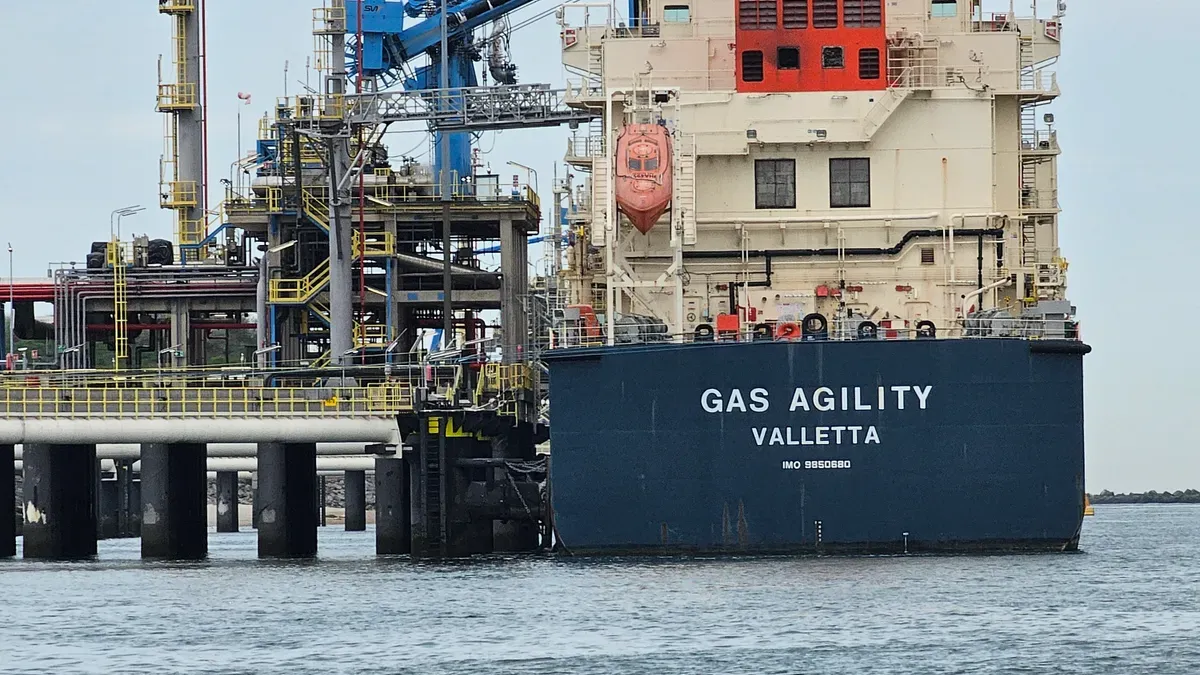
Printed Circuit Heat Exchangers are engineered to meet the demanding thermal needs of cryogenic LNG processing. Their advanced design supports efficient heat transfer under high pressure, which is vital in the fast-growing LNG sector. Offshore environments need equipment with compactness, reliability, and efficiency. SHPHE leads the industry with innovative technology that stands up to harsh marine conditions.
Requirement | Description |
|---|---|
Compactness | Essential for limited space on offshore platforms |
Reliability | Critical for harsh marine and cryogenic operations |
Efficiency | Key for energy savings and process effectiveness |
The rise of LNG infrastructure worldwide shows a strong demand for these solutions.
Printed Circuit Heat Exchangers (PCHEs) are compact and efficient, saving up to 85% in space compared to traditional exchangers.
The unique microchannel design allows PCHEs to handle extreme temperatures and pressures, making them ideal for LNG processing.
Materials like titanium and Hastelloy enhance durability and corrosion resistance, ensuring reliable performance in harsh marine environments.
PCHEs achieve thermal efficiencies of up to 98%, which helps reduce energy costs and improve overall process effectiveness.
The solid-state construction of PCHEs minimizes failure points, leading to lower maintenance needs and increased reliability in LNG applications.
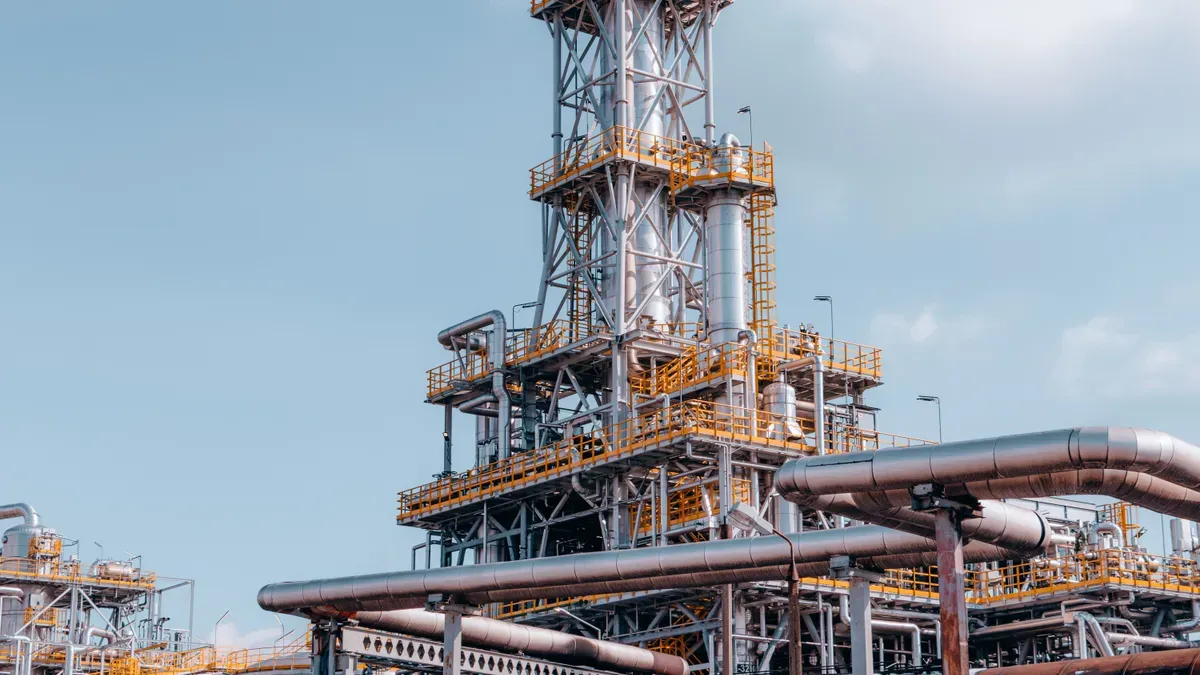
Printed Circuit Heat Exchangers use a unique construction method that sets them apart from traditional heat exchangers. SHPHE designs these exchangers as monolithic blocks, which means the entire unit forms a single, solid piece. This approach eliminates weak points found in older designs, such as gaskets and bolts. The core of each exchanger contains thousands of microchannels, which are etched into ultra-thin alloy plates. These microchannels allow fluids to flow efficiently and maximize heat transfer.
The plates are stacked and joined using diffusion bonding. This process uses high temperature and pressure to fuse the plates together, creating a solid metal core. Diffusion bonding gives the exchanger the same strength and ductility as the parent metal. It also removes common failure points, making the unit more reliable for harsh environments.
SHPHE offers a range of material options for their exchangers. The choice of material depends on the application and the demands of the environment. Here is a table showing common materials and their properties:
Material | Properties | Reason for Use |
|---|---|---|
Stainless Steel | Good corrosion resistance, strength | Commonly used for general applications |
Duplex Steels | High strength and resistance to stress | Suitable for demanding environments |
Titanium | High strength-to-weight ratio, corrosion resistance | Suitable for extreme environments and low weight |
Hastelloy | Excellent resistance to heat and corrosion | Preferred for harsh chemical processes |
Inconel | Superior corrosion resistance, thermal stability | Ideal for high-efficiency applications in cryogenics |
Nickel Alloys | High strength and corrosion resistance | Effective in cryogenic applications |
Copper Alloys | Excellent thermal conductivity | Used where heat transfer efficiency is critical |
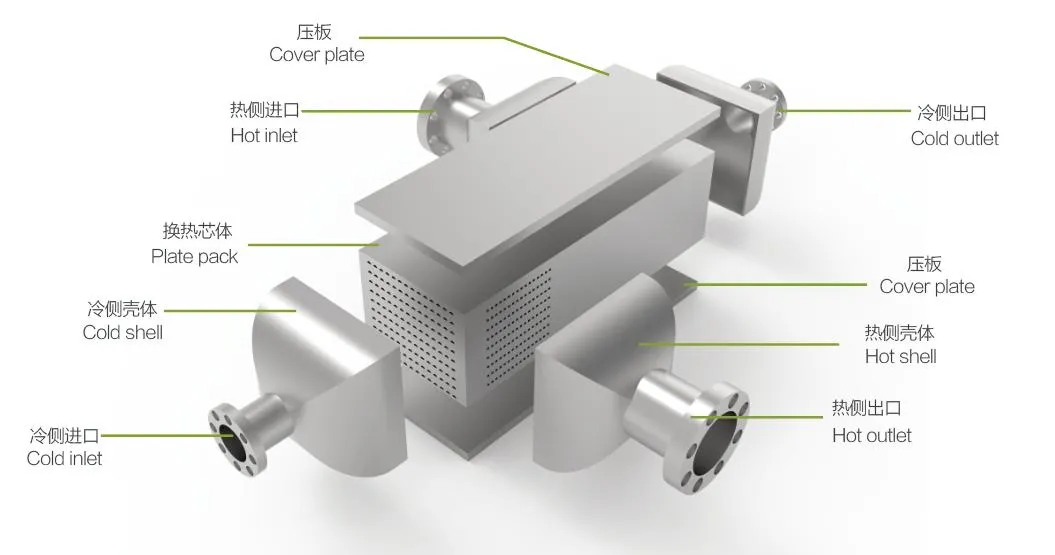
Printed Circuit Heat Exchangers have a footprint, volume, and weight that is up to 85% smaller than traditional shell-and-tube exchangers. Their high heat transfer-to-volume ratio means they save space and energy. Custom-designed flow geometries allow precise matching of heat transfer and pressure drop requirements. The hermetically sealed design minimizes leak paths, which is important for offshore and LNG applications.
Note: Diffusion bonding creates a solid-state structure that withstands extreme pressures and temperatures. This makes PCHEs ideal for demanding environments like LNG processing, where reliability is crucial.
Printed Circuit Heat Exchangers are well suited for cryogenic LNG processing because of their advanced design and material choices. The microchannel design allows flexibility in handling gas-liquid two-phase flows. These exchangers operate across a wide temperature range, from -196°C to +850°C, and can handle pressures up to 1000 bar. This capability is essential for LNG liquefaction and boil-off gas recovery.
The optimized flow channel design improves heat transfer uniformity and reduces pressure drop loss. Uniform temperature distribution and low flow resistance help maintain stable operation during cryogenic duties. The solid-state durability of PCHEs ensures they can withstand thermal shock and pressure fatigue, which are common in LNG plants.
Microchannels adapt to changing flow conditions and temperature extremes.
Diffusion bonding enhances structural strength and performance.
The compact design reduces space and weight, making installation easier on offshore platforms.
Material options like titanium and Hastelloy provide corrosion resistance for harsh marine environments.
Printed Circuit Heat Exchangers deliver reliable performance in LNG processing. Their construction and materials make them the preferred choice for operators who need efficiency, durability, and compactness.
LNG processing involves two main steps: liquefaction and regasification. Each step presents unique thermal challenges. During liquefaction, natural gas must be cooled to about -160°C. This process requires equipment that can handle extremely low temperatures and high pressures. The gas is compressed and transported under these conditions, so system integrity is vital.
LNG liquefaction requires cooling to approximately -160°C.
The process involves high pressures during compression and gas transport.
Maintaining system integrity under cryogenic conditions is essential.
Printed Circuit Heat Exchangers are designed for these demanding tasks. They can operate at pressures up to 9000 psi (620 bar) and withstand temperatures below -200°C. Their efficiency can reach up to 98%, which helps maximize energy recovery. The compact size, about 20% of traditional shell-and-tube exchangers, makes them ideal for space-limited environments like offshore platforms.
Boil-off gas forms when LNG warms up and some of it turns back into vapor. Managing this gas is another challenge in LNG operations. Heat exchangers used for boil-off gas must be made from materials that can survive cryogenic temperatures and resist corrosion. Stainless steel and titanium are common choices.
Material selection is critical for withstanding cryogenic temperatures and corrosion.
The design must optimize thermal efficiency and minimize energy losses.
Proper integration with pumps, compressors, and storage tanks ensures reliable operation.
Printed Circuit Heat Exchangers address these needs with their robust construction and advanced materials. They are used in pre-cooling, condensation, and boil-off gas heat recovery circuits. Their solid-state design helps prevent leaks and ensures safe, reliable performance even under harsh conditions.
Note: Specialized exchangers like Printed Circuit Heat Exchangers are essential for handling the extreme temperatures and pressures found in LNG processing.
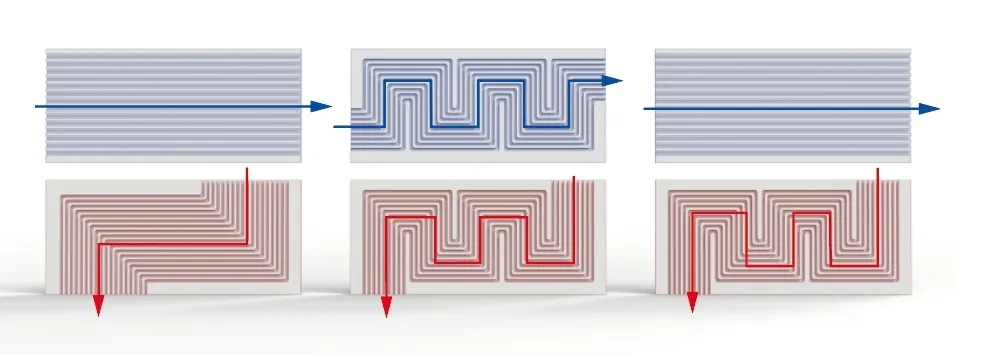
SHPHE designs Printed Circuit Heat Exchangers to maximize efficiency and minimize space requirements. These units fit easily into tight spaces on offshore platforms and LNG plants. Their compactness comes from a unique microchannel structure and monolithic block design. This approach reduces the size and weight of the exchanger compared to traditional models.
The U-value for plate-type exchangers is more than twice that of shell-and-tube exchangers, which means better heat transfer in a smaller package.
SHPHE's PCHEs are typically only 20% the size of shell-and-tube exchangers.
Their volume and weight are about one-sixth of traditional exchangers.
PCHEs handle pressures up to 9000 psi (620 bar) and achieve efficiencies up to 98%.
These features help operators save space and energy. The high thermal effectiveness ensures that LNG processes recover more energy and operate with lower costs. The modular design also allows for easy integration into existing systems.
Tip: Compact exchangers reduce structural steel requirements, making them ideal for marine vessels and modular skid packages.
Printed Circuit Heat Exchangers offer outstanding durability and reliability for cryogenic LNG duties. SHPHE uses premium materials such as 316L stainless steel and nickel-based alloys. These materials resist hydrogen embrittlement and corrosion, even in harsh environments.
The diffusion bonding process creates a solid-state structure. This method gives the exchanger exceptional fatigue resistance and allows it to withstand tens of thousands of pressure cycles. The units operate safely across extreme temperatures, from -196°C to +850°C.
Aspect | Details |
|---|---|
Material Selection | Utilizes 316L stainless steel or nickel-based alloys, which resist hydrogen embrittlement. |
Structural Fatigue Resistance | Base metal diffusion bonding provides exceptional fatigue life, enabling resistance to pressure cycles. |
Common failure modes in LNG processing include hydrate formation, corrosion, and pressure fluctuations. SHPHE's PCHEs mitigate these risks with robust materials and precise temperature control. Their compact, modular design also reduces downtime and maintenance needs.
Note: Solid-state durability ensures reliable performance under repeated thermal cycling and extreme operating conditions.
Shell-and-tube heat exchangers have served the LNG industry for decades. These units use bundles of tubes inside a large shell to transfer heat. While they are reliable, they often require a lot of space and heavy support structures. Maintenance can be challenging because of the many gaskets and welded joints. In contrast, Printed Circuit Heat Exchangers use a solid-state block with thousands of microchannels. This design allows for much higher heat transfer rates in a smaller footprint. PCHEs also handle higher pressures and wider temperature ranges, making them ideal for cryogenic LNG service.
Plate-fin exchangers are another common choice in LNG plants. They use thin plates and fins to create many small flow paths. These units are compact and efficient but can be sensitive to vibration and thermal cycling. Plate-fins often rely on brazed joints, which may weaken over time. Printed Circuit Heat Exchangers offer greater mechanical durability because of their all-welded, diffusion-bonded construction. They resist fatigue from vibration and temperature changes, ensuring long-term reliability in harsh environments.
SHPHE has installed Printed Circuit Heat Exchangers in several LNG facilities. These units have shown outstanding performance in demanding conditions. The table below highlights key benefits observed in actual operations:
Benefit | Description |
|---|---|
Thermal Efficiency | PCHEs achieve effectiveness of 95–98%, significantly surpassing traditional shell-and-tube units. |
Compact Size | They occupy 80–90% less space than comparable shell-and-tube exchangers, ideal for space-constrained applications. |
Pressure and Temperature Capabilities | PCHEs can handle cryogenic temperatures down to –196 °C and pressures beyond 1,000 bar, suitable for LNG applications. |
Mechanical Durability | The all-welded design resists fatigue from vibration and thermal cycling, ensuring reliability in harsh conditions. |
Using Printed Circuit Heat Exchangers in LNG facilities also improves energy efficiency. This leads to lower fuel use and helps reduce greenhouse gas emissions. These advantages support both operational savings and compliance with strict environmental standards.
Tip: Choosing the right heat exchanger can make LNG plants safer, more efficient, and more sustainable.
Printed Circuit Heat Exchangers offer unmatched performance for LNG cryogenic duties. The table below highlights their unique advantages:
Advantage | Description |
|---|---|
Efficiency | Achieve high heat transfer rates, optimizing energy recovery. |
Compact Design | Reduce installation space by up to 80% compared to traditional units. |
Temperature Resistance | Operate reliably from -253°C to over 1000°C, resisting thermal shock. |
Superior Effectiveness | Microchannel cores provide higher effectiveness and lower pressure drops. |
SHPHE leads innovation in this field. The adoption of PCHEs is growing, especially for floating LNG and offshore projects. Their compactness, robustness, and efficiency make them a smart choice for future LNG installations.
Printed Circuit Heat Exchangers use thousands of tiny channels etched into metal plates. This design gives them a compact size and high efficiency. SHPHE uses a solid block structure, which makes the unit strong and reliable.
Yes. PCHEs from SHPHE work from -196°C to 850°C. They stay strong and safe even in very cold or hot conditions. This wide range makes them perfect for LNG processing.
PCHEs save space and weight. Their compact design fits tight areas on ships or platforms. They also resist corrosion from seawater, which helps them last longer in marine environments.
PCHEs have high thermal effectiveness, up to 98%.
They recover more energy during heat exchange.
This reduces fuel use and lowers operating costs.
Material | Key Feature |
|---|---|
Stainless Steel | Corrosion resistance |
Titanium | Lightweight, strong |
Hastelloy | Handles harsh chemicals |
SHPHE selects materials based on the needs of each LNG project.



 English EN