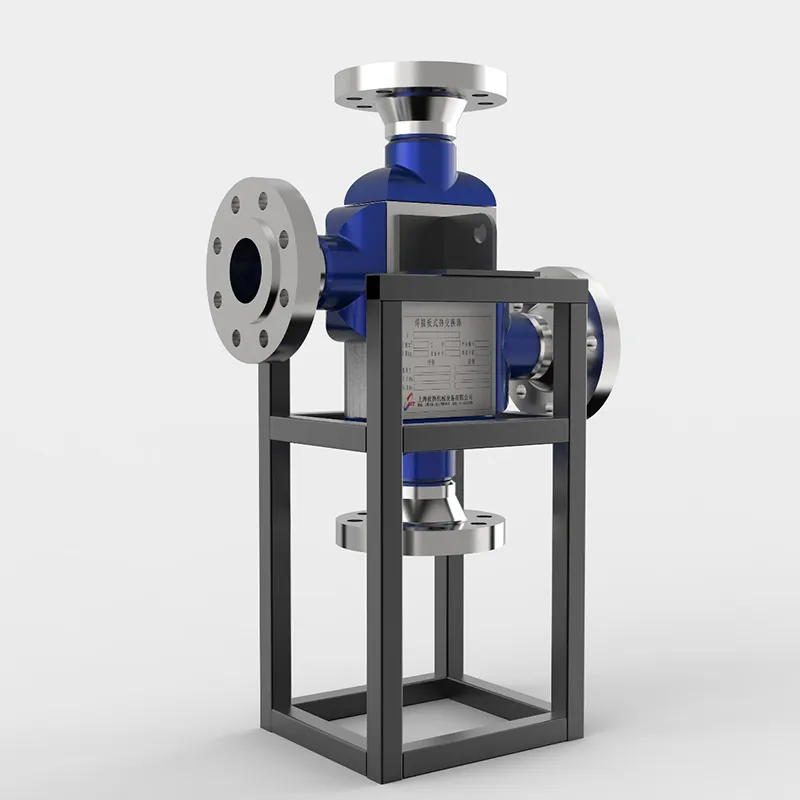
How Do Printed Circuit Heat Exchangers Handle High Pressure and Temperature Conditions?

Dr. Elena V. Marchetti & Prof. Takashi Nakamura

Jun-09-2026

Abstract: Printed circuit heat exchangers (PCHEs) rely on diffusion-bonded microchannel architectures to achieve exceptional mechanical integrity under extreme operating regimes. The core structural design employs stacked photo-etched plates that are diffusion-bonded into a monolithic block, eliminating conventional weld joints and creating a large surface-area-to-volume ratio. High-strength alloys such as Inconel 718, Hastelloy X, and austenitic stainless steels are selected for their ability to retain yield strength and creep resistance at elevated temperatures, while their thermal conductivity and coefficient of thermal expansion are carefully matched to the microchannel geometry. Mechanical stress management is addressed through pressure containment features that distribute hoop stresses uniformly across the bonded layers, and thermal expansion is accommodated by controlled gap dimensions and compliant manifold connections. Thermal-hydraulic efficiency is optimized via precisely etched flow distribution headers and repeated pin-fin or wavy channel patterns that enhance convective heat transfer without inducing excessive pressure drop. Operational limits are governed by fatigue life under cyclic thermal loading, creep deformation during prolonged high-temperature service, and corrosion resistance in aggressive chemical environments. Design protocols incorporate ASME Boiler and Pressure Vessel Code guidelines for allowable stresses, and failure prevention strategies include periodic nondestructive inspection, strain-based fatigue analysis, and the use of protective oxide scales or cladding layers. By balancing these interdependent factors, PCHEs achieve reliable performance at pressures exceeding 500 bar and temperatures above 800°C, making them indispensable in supercritical CO₂ power cycles, hydrogen production, and advanced nuclear reactor systems.

Core Structural Design: Diffusion Bonding and Microchannel Architecture

The ability of printed circuit heat exchangers to withstand extreme conditions stems from their unique construction. At the heart of this design lies diffusion bonding, a solid-state joining process that fuses metal layers at the molecular level under high temperature and pressure. This technique eliminates the need for traditional welding or brazing, creating a monolithic structure with no weak points or filler materials.

Complementing this is the microchannel architecture—typically featuring hydraulic diameters from 0.5 mm to 2.0 mm. These narrow passages are chemically etched into flat metal plates before bonding. The small channel size significantly reduces the volume of fluid exposed to pressure, allowing the core to handle stresses exceeding 600 bar. Moreover, the high surface-area-to-volume ratio enhances heat transfer efficiency, even under rapid thermal cycling.

The synergy between diffusion bonding and microchannels ensures structural integrity at temperatures up to 900°C, depending on the material selected (e.g., stainless steel, Inconel, or Hastelloy). This design also minimizes thermal fatigue, as the uniform metal matrix distributes expansion stresses evenly. For industries requiring compact, high-performance thermal management—such as supercritical CO₂ power cycles or hydrogen processing—this architecture provides a robust solution.

Explore more about advanced heat exchanger designs:

Material Selection: High-Strength Alloys and Their Thermal Performance

High-strength alloys such as Inconel 625, Hastelloy X, and stainless steel 316L are commonly selected for printed circuit heat exchangers operating under extreme conditions. These materials maintain mechanical integrity at temperatures exceeding 800°C and pressures above 200 bar.

The thermal performance of these alloys is characterized by high thermal conductivity and low thermal expansion coefficients, which minimize stress during rapid temperature cycling. Nickel-based superalloys offer superior creep resistance, ensuring long-term reliability in high-temperature applications.

Corrosion resistance in aggressive chemical environments is another critical factor. Alloys with chromium and molybdenum content provide robust protection against oxidation and sulfidation, extending the operational lifespan of the heat exchanger core.

Mechanical Stress Management: Pressure Containment and Thermal Expansion

In printed circuit heat exchangers (PCHEs), mechanical stress from high internal pressure and thermal expansion is managed through a combination of compact geometry, diffusion bonding, and strategic material selection. The core structure consists of stacked metal plates with chemically etched flow channels, which are diffusion-bonded at high temperature and pressure to form a solid monolithic block. This eliminates traditional gaskets and welds that are prone to failure under extreme conditions.

The small hydraulic diameters of the microchannels distribute pressure loads evenly across the core, reducing localized stress concentrations. Additionally, the high thermal conductivity of the base materials allows for efficient heat transfer while minimizing thermal gradients that could induce differential expansion and structural fatigue.

Key Design Parameters for Pressure and Thermal Management

Parameter Typical Value / Range Function in Stress Management
Operating Pressure Up to 600 bar Diffusion-bonded joints provide high tensile strength without weak sealing interfaces.
Operating Temperature -200°C to 900°C Matched thermal expansion coefficients between layers reduce internal stress.
Channel Hydraulic Diameter 0.5 – 2.0 mm Small channels evenly distribute pressure and minimize stress risers.
Core Material Stainless steel, Inconel, Hastelloy High creep resistance and thermal stability under combined load.
Bonding Strength ≥ 90% of base metal strength Eliminates weak points, enabling monocoque pressure containment.

Table 1: Core parameters that enable PCHEs to manage mechanical stress from high pressure and thermal expansion.

Thermal expansion is further controlled through the use of thin plate layers and symmetrical channel layouts, which allow the core to expand uniformly in all directions. For extreme temperature gradients, engineers may incorporate expansion bellows or flexible piping connections at the inlet and outlet nozzles. These elements absorb differential movement between the heat exchanger core and the connected piping system without transferring excessive loads to the bonded structure.

For more detailed design considerations, refer to the following product pages: Custom Engineered PCHE, HT-Bloc Welded Plate Exchanger, and TP Welded Plate Exchanger.

Thermal-Hydraulic Efficiency: Flow Distribution and Heat Transfer Enhancement

Optimized flow distribution within printed circuit heat exchangers (PCHEs) is critical for maximizing thermal-hydraulic performance. The etched microchannel architecture ensures uniform fluid passage, minimizing maldistribution and pressure drop while enhancing convective heat transfer coefficients.

Advanced channel geometries, such as zigzag and S-shaped fins, promote turbulence and secondary flows, significantly improving heat transfer rates without excessive pumping power. This balance between thermal performance and hydraulic resistance defines the overall efficiency of PCHEs under extreme operating conditions.

By leveraging compact core designs and precision etching, PCHEs achieve high surface-area-to-volume ratios, enabling superior heat exchange in high-pressure, high-temperature environments while maintaining structural integrity and long-term reliability.

Operational Limits and Failure Prevention: Fatigue, Creep, and Corrosion Resistance
Printed circuit heat exchangers (PCHEs) are engineered to withstand extreme operational conditions through precise material selection and design. Their ability to resist fatigue, creep, and corrosion determines both performance boundaries and long-term reliability.
Fatigue Resistance Under Cyclic Loading
Repeated pressure and thermal cycles can initiate microcracks in heat exchanger cores. PCHEs utilize diffusion-bonded compact geometries that minimize stress concentrations. The absence of welded joints reduces fatigue-prone areas. Design limits are established through S-N curve analysis, ensuring safe operation within millions of cycles. For high-cycle applications, materials such as stainless steel 316L or Inconel 718 are selected to extend fatigue life.
Creep Behavior at Elevated Temperatures
At temperatures exceeding 500°C, metal components undergo time-dependent deformation known as creep. PCHEs operating in supercritical CO2 or helium loops must respect creep rupture limits. The compact channel design distributes stress evenly, delaying tertiary creep onset. Alloy selection, such as Hastelloy X or Incoloy 800H, provides improved creep strength. Operational limits are defined by Larson-Miller parameter models to prevent excessive strain over design life.
Corrosion Resistance in Aggressive Media
Chemical attack from process fluids, high-temperature oxidation, or stress corrosion cracking can compromise integrity. PCHEs are fabricated from corrosion-resistant alloys like titanium, duplex stainless steel, or nickel-based superalloys. The smooth channel surfaces reduce pitting and crevice corrosion. For sour service or chloride environments, careful material grading and passivation treatments are applied. Corrosion allowance and periodic inspection schedules are integrated into design standards.
Failure Prevention Strategies
Preventing failure requires a holistic approach combining material science, quality control, and operational monitoring. Key measures include:
- Strict adherence to ASME Boiler and Pressure Vessel Code for design margins
- Diffusion bonding process validation through ultrasonic testing
- Thermal fatigue analysis using finite element methods
- Creep life monitoring via temperature and pressure data logging
- Corrosion management through chemical injection and material compatibility reviews
For detailed engineering guidance and product specifications, refer to the following resources:
Summary

Core Structural Design: Diffusion Bonding and Microchannel Architecture

The diffusion-bonded microchannel architecture ensures monolithic integrity, eliminating welded joints that could weaken under extreme conditions. This all-metal construction provides a continuous load path, enabling the exchanger to withstand internal pressures exceeding 500 bar while maintaining leak-tightness across thousands of thermal cycles.

Material Selection: High-Strength Alloys and Their Thermal Performance

Nickel-based superalloys (e.g., Inconel 718, Haynes 230) and advanced stainless steels (e.g., 347H, 310S) are selected for their retained yield strength above 700°C and oxidation resistance. Their high thermal conductivity (15–25 W/m·K) and low coefficient of thermal expansion (12–16 µm/m·°C) minimize thermal gradients while sustaining structural rigidity under rapid temperature transients.

Mechanical Stress Management: Pressure Containment and Thermal Expansion

Finite-element-optimized header geometries and counter-flow microchannel layouts distribute hoop stresses evenly. Controlled gap expansion within the diffusion-bonded stack accommodates differential thermal growth, while integral reinforcement rings at inlet/outlet zones prevent localized yielding. This design limits peak von Mises stress to below 60% of the material’s yield strength at operating temperature.

Thermal-Hydraulic Efficiency: Flow Distribution and Heat Transfer Enhancement

Hydraulically balanced microchannel arrays (200–500 µm hydraulic diameter) achieve near-uniform flow distribution with a maldistribution factor below 5%. The high surface-to-volume ratio (1500–3000 m²/m³) combined with periodic interrupted fins generates turbulent mixing at low Reynolds numbers (Re 200–800), yielding heat transfer coefficients of 3000–8000 W/m²·K while maintaining pressure drop below 2% of operating pressure.

Operational Limits and Failure Prevention: Fatigue, Creep, and Corrosion Resistance

Grain-boundary-engineered alloys with controlled carbide precipitation provide creep rupture life exceeding 100,000 hours at 650°C/200 bar. The absence of crevice geometries in the diffusion-bonded stack eliminates stress corrosion cracking pathways. Strain-controlled fatigue testing demonstrates a minimum of 10,000 cycles between 20°C and 650°C without crack initiation, ensuring reliable service in supercritical CO₂ and molten salt environments.

Integrated Performance: By synergizing diffusion-bonded microchannels, thermally matched superalloys, and stress-aware geometry, printed circuit heat exchangers achieve sustained operation at 700°C/300 bar with thermal effectiveness above 95%. The architecture inherently manages thermal expansion, distributes mechanical loads, and resists environmental degradation, making it a robust solution for next-generation power cycles and high-temperature industrial processes.

How Do Printed Circuit Heat Exchangers Handle High Pressure and Temperature Conditions?
Core Structural Design: Diffusion Bonding and Microchannel Architecture
Diffusion bonding creates monolithic solid-state joints between stacked plates, eliminating weak points like welds. The microchannel architecture provides high surface-area-to-volume ratio, enabling efficient heat transfer while maintaining structural integrity under extreme pressures up to 500 bar.
Material Selection: High-Strength Alloys and Their Thermal Performance
Materials like Inconel 625, Hastelloy X, and stainless steel 316L are chosen for their high tensile strength and oxidation resistance at elevated temperatures (up to 900°C). These alloys maintain low thermal expansion and high creep resistance, ensuring dimensional stability during thermal cycling.
Mechanical Stress Management: Pressure Containment and Thermal Expansion
The compact microchannel geometry distributes mechanical stress evenly across the core. Counter-flow designs and expansion joints accommodate differential thermal expansion, while the bonded structure prevents leakage paths even under rapid temperature transients.
Thermal-Hydraulic Efficiency: Flow Distribution and Heat Transfer Enhancement
Precision-etched microchannels ensure uniform flow distribution across all passages, minimizing hot spots. The high aspect ratio channels induce turbulent flow at lower Reynolds numbers, enhancing convective heat transfer coefficients by up to 5 times compared to conventional designs.
Operational Limits and Failure Prevention: Fatigue, Creep, and Corrosion Resistance
The bonded microstructure inherently resists thermal fatigue crack propagation. Alloy selection provides corrosion resistance against aggressive fluids like molten salts and supercritical CO2. Creep life is extended through stress redistribution within the microchannel matrix, enabling safe operation beyond 100,000 hours at design limits.

Related Products

We provide you with comprehensive foreign trade solutions to help enterprises achieve global development

Custom-Engineered Plate Air Preheaters

Industrial furnace and boiler exhaust gases carry vast amounts of unutilized thermal energy. The SHPHE custom Plate Air Preheater (PAPH) is target-engineered to intercept this high-temperature flue gas, recovering valuable waste heat and transferring it directly back to incoming combustion air or process gas streams. By substantially elevating the temperature of your flame feed, our custom systems optimize combustion thermodynamics, deliver massive fuel savings, and significantly reduce industrial carbon and emissions footprints. Built to withstand severe flue-gas environments, SHPHE PAPH systems serve as the premier choice for modern, energy-intensive plants prioritizing decarb compliance and maximum thermal efficiency.

Heat Exchangers

Custom-Engineered Printed Circuit Heat Exchanger (PCHE)

The SHPHE Printed Circuit Heat Exchanger (PCHE) represents a paradigm shift in microchannel thermal management, meticulously engineered for the world's most critical and demanding industrial boundaries. Developed to surpass the physical limitations of conventional shell-and-tube designs in ultra-high-pressure environments, our custom PCHEs integrate advanced photochemical etching and solid-state diffusion bonding to provide unmatched safety, thermal efficiency, and integrity under extreme stress. Initially deployed within high-consequence sectors such as aerospace and nuclear power generation, PCHE technology has completely revolutionized high-density thermal processing. Today, SHPHE brings this breakthrough engineering to mainstream energy transitions—including LNG liquefaction, supercritical CO² power cycles, hydrocarbon processing, and high-pressure hydrogen systems—enabling plants to maximize energy recovery, ensure zero-leakage security, and significantly shrink environmental footprints.

Heat Exchangers

‌TP Welded Plate Heat Exchanger

Industrial processes involving particle-laden slurries, high-viscosity syrups, or fiber-rich pulp demand more than standard equipment—they require target-engineered thermal management. At SHPHE, we configure the TP Welded Plate Heat Exchanger to directly conquer your plant's severe fouling, blockage, and erosion threats. Combining custom-tailored channel geometries, wear-resistant metallurgy, and integrated CIP (Cleaning-in-Place) systems, we deliver absolute production continuity where conventional heat exchangers fail.

Heat Exchangers

Custom-Engineered Gasketed Plate Heat Exchangers

Since the invention of the plate heat exchanger (PHE) in 1923, thermal technology has evolved from standard food-grade processing to highly complex industrial operations. At SHPHE, we take this classic, versatile design and transform it into highly bespoke heat transfer solutions tailored to your unique process fluids and thermal loads. While traditional gasketed PHEs offer high efficiency and compact footprints, SHPHE optimizes plate corrugations, metallurgy, and sealing systems to handle your specific chemical, HVAC, or energy recovery parameters. Our custom-engineered gasketed plate heat exchangers provide outstanding scalability and ease of maintenance, serving as an indispensable asset for heavy industries—including oil and gas, metallurgy, and food processing—where uptime, energy recovery, and long-term sustainability are top priorities.

Heat Exchangers

Hot-Sale Products

Select the most popular foreign trade service products to meet your diverse needs

Heat Exchangers
Custom-Engineered Printed Circuit Heat Exchanger (PCHE)

Custom-Engineered Printed Circuit Heat Exchanger (PCHE)

The SHPHE Printed Circuit Heat Exchanger (PCHE) represents a paradigm shift in microchannel thermal management, meticulously engineered for the world's most critical and demanding industrial boundaries. Developed to surpass the physical limitations of conventional shell-and-tube designs in ultra-high-pressure environments, our custom PCHEs integrate advanced photochemical etching and solid-state diffusion bonding to provide unmatched safety, thermal efficiency, and integrity under extreme stress. Initially deployed within high-consequence sectors such as aerospace and nuclear power generation, PCHE technology has completely revolutionized high-density thermal processing. Today, SHPHE brings this breakthrough engineering to mainstream energy transitions—including LNG liquefaction, supercritical CO² power cycles, hydrocarbon processing, and high-pressure hydrogen systems—enabling plants to maximize energy recovery, ensure zero-leakage security, and significantly shrink environmental footprints.

Heat Exchangers
Custom-Engineered Plate Air Preheaters

Custom-Engineered Plate Air Preheaters

Industrial furnace and boiler exhaust gases carry vast amounts of unutilized thermal energy. The SHPHE custom Plate Air Preheater (PAPH) is target-engineered to intercept this high-temperature flue gas, recovering valuable waste heat and transferring it directly back to incoming combustion air or process gas streams. By substantially elevating the temperature of your flame feed, our custom systems optimize combustion thermodynamics, deliver massive fuel savings, and significantly reduce industrial carbon and emissions footprints. Built to withstand severe flue-gas environments, SHPHE PAPH systems serve as the premier choice for modern, energy-intensive plants prioritizing decarb compliance and maximum thermal efficiency.

Heat Exchangers
Custom-Engineered Gasketed Plate Heat Exchangers

Custom-Engineered Gasketed Plate Heat Exchangers

Since the invention of the plate heat exchanger (PHE) in 1923, thermal technology has evolved from standard food-grade processing to highly complex industrial operations. At SHPHE, we take this classic, versatile design and transform it into highly bespoke heat transfer solutions tailored to your unique process fluids and thermal loads. While traditional gasketed PHEs offer high efficiency and compact footprints, SHPHE optimizes plate corrugations, metallurgy, and sealing systems to handle your specific chemical, HVAC, or energy recovery parameters. Our custom-engineered gasketed plate heat exchangers provide outstanding scalability and ease of maintenance, serving as an indispensable asset for heavy industries—including oil and gas, metallurgy, and food processing—where uptime, energy recovery, and long-term sustainability are top priorities.

User Comments

Service Experience Sharing from Real Customers

5.0

We swapped out our old shell-and-tube units for these PCHEs in a revamp project, and the compact footprint alone saved us a ton of space on the skid. Thermal performance is spot-on for our high-temperature helium loop. No leaks after six months of cyclic operation.

5.0

Been testing these printed circuit heat exchangers in our lab for a cryogenic application. The pressure drop is lower than I expected for the channel density we ordered. Only gripe is the lead time was longer than quoted, but the quality is solid.

5.0

Installed these on a hydrogen refueling station skid. They handle the rapid pressure swings without any vibration or fatigue issues we saw with brazed plate exchangers. Cleaning access is a pain because of the design, but that's the trade-off for the efficiency.

5.0

We run a small batch specialty chemical line and the PCHE works great when it's running, but if we get a fouling issue it's a nightmare to flush. The vendor support was helpful walking us through the cleaning protocol though. Not for dirty fluids.

SHPHE has complete quality assurance system from design, manufacturing, inspection and delivery. It is certified with ISO9001, ISO14001, OHSAS18001 and hold ASME U Certificate.
© 2005-2026 Shanghai Heat Transfer - Privacy Policy