Understanding the Key Types of Plate Heat Exchangers and Their Applications
Article Summary: Selecting the right plate heat exchanger (PHE) for your process can be challenging when faced with varying temperatures, pressures, and media properties. This guide breaks down the main types of plate heat exchangers — including gasketed, welded, wide gap, PCHE, plate air preheaters, and pillow plates — explaining how each works, their typical parameter ranges, and where they perform best. Whether you are a process engineer evaluating a new line or a purchasing manager comparing suppliers, this article provides the technical clarity needed to make an informed decision. We also introduce SHPHE, a Shanghai-based manufacturer with ISO9001 and ASME U certifications, offering free thermal design and selection services.
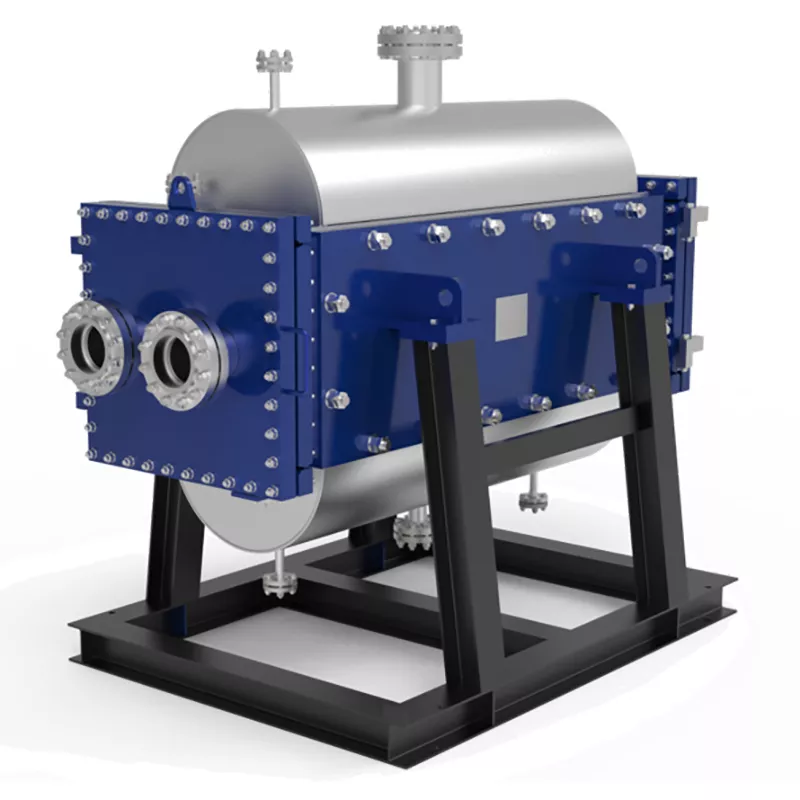
Plate heat exchangers are widely used across chemical, petrochemical, food processing, HVAC, and power generation industries because of their compact design and high thermal efficiency. However, not all plate heat exchangers are built the same. The choice between a gasketed model, a fully welded unit, or a specialized wide gap design depends on factors like operating temperature, pressure, fluid viscosity, and fouling tendency. Understanding these differences helps avoid costly downtime and ensures optimal heat transfer performance.
What Are the Main Types of Plate Heat Exchangers?
In practice, plate heat exchangers can be grouped into six major categories based on their construction and sealing method. Each type addresses specific process challenges, from high-pressure duties to handling fibrous or viscous fluids.
- Gasketed Plate Heat Exchangers (GPHE) — The most common type, using elastomeric gaskets to seal the plate pack. They are easy to clean and expand, but limited by gasket material temperature and pressure ratings.
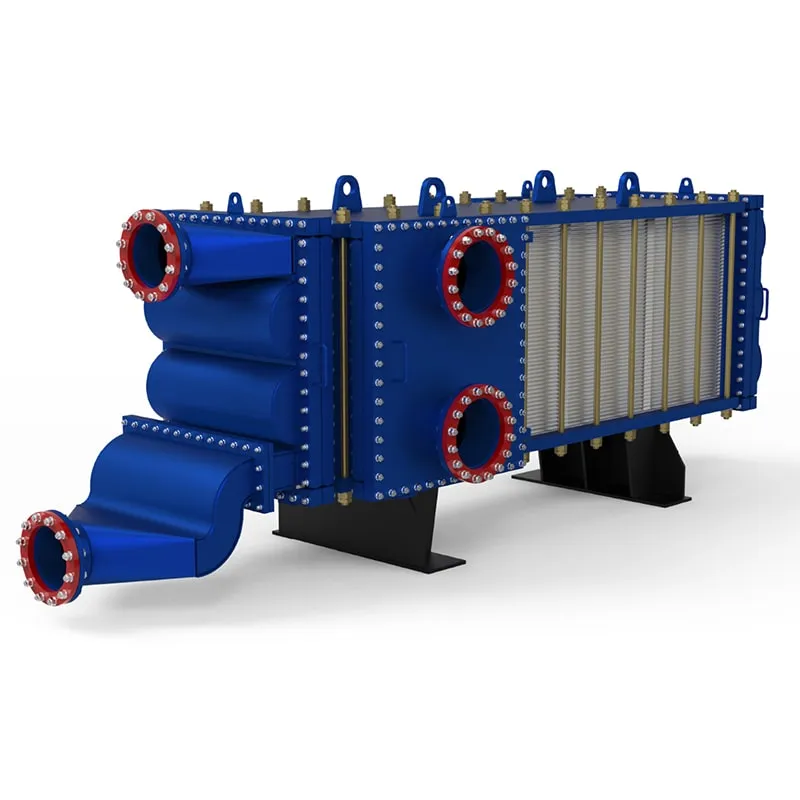
- Fully Welded Plate Heat Exchangers — Including HT-Bloc and TP welded designs, these units eliminate gaskets by laser or electron beam welding the plate pairs. They handle higher temperatures (up to 500°C) and pressures (up to 40 bar) while maintaining compactness.
- Wide Gap Welded Plate Heat Exchangers — Designed with larger plate spacing (typically 5–15 mm) to handle fluids with solids, fibers, or high viscosity without clogging.
- Printed Circuit Heat Exchangers (PCHE) — Manufactured by chemical etching flow channels into metal plates and diffusion bonding them. They are extremely compact and capable of handling ultra-high pressures (up to 600 bar) and cryogenic temperatures.
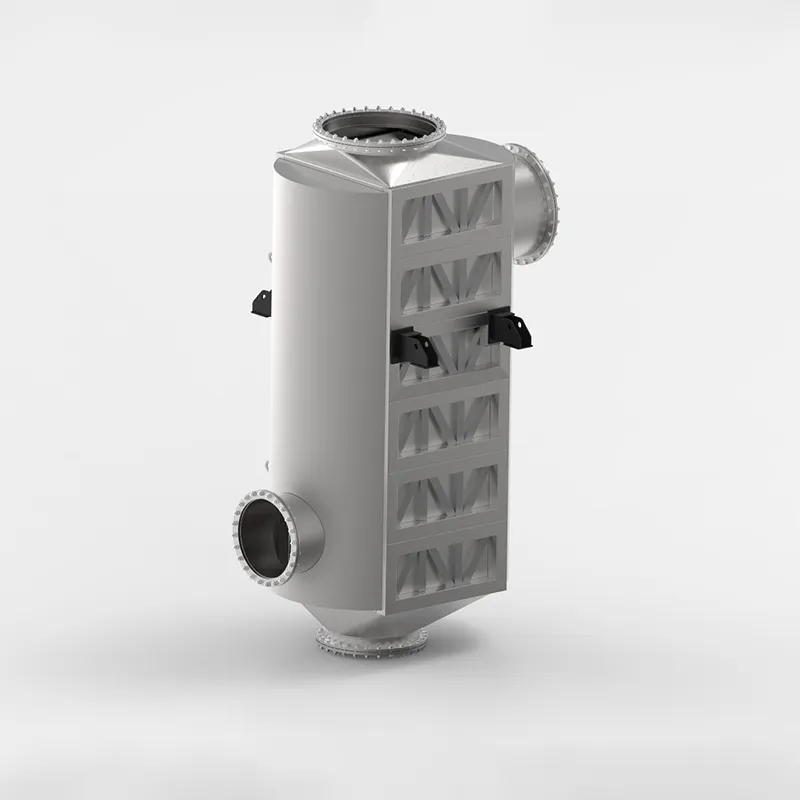
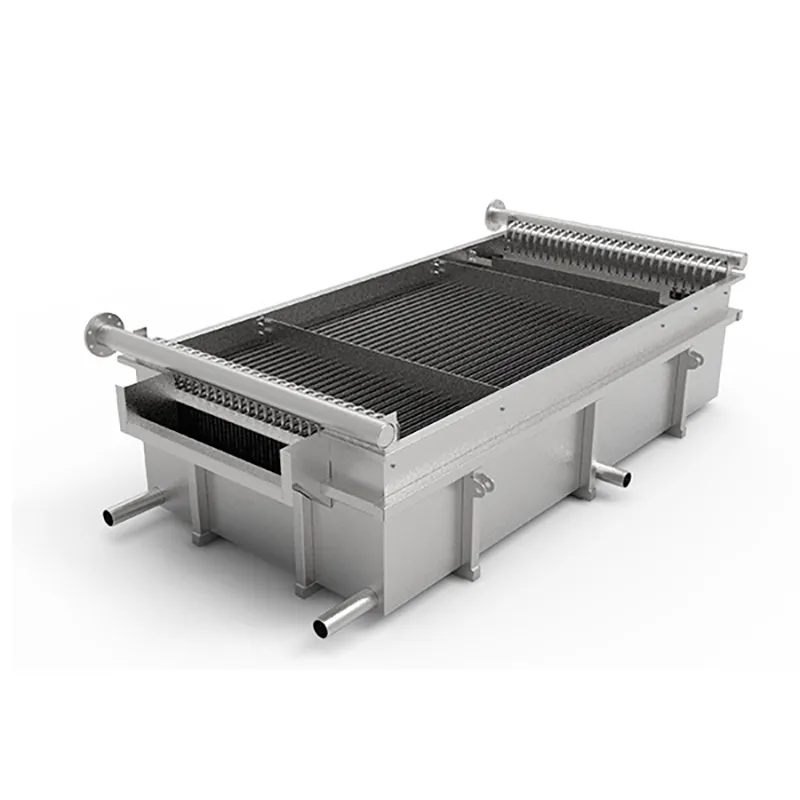
- Plate Air Preheaters — Used primarily in boiler flue gas heat recovery, these units preheat combustion air to improve overall thermal efficiency.
- Pillow Plates — Formed by spot-welding two thin metal sheets and inflating them to create a pillow-like flow path. They are often used in tank heating/cooling and immersion applications.
How Do Gasketed and Welded Plate Heat Exchangers Compare?
This is one of the most frequent questions engineers ask when specifying equipment. The core difference lies in the sealing method and the resulting operating envelope.
Gasketed plate heat exchangers rely on elastomeric gaskets (NBR, EPDM, Viton, etc.) to prevent leakage between plates. They are cost-effective, allow easy access for cleaning, and can be expanded by adding plates. However, gasket materials typically limit the operating temperature to below 180°C and pressure to around 25 bar. They are not suitable for aggressive chemicals that attack elastomers.
Welded plate heat exchangers, such as the HT-Bloc welded plate heat exchanger, eliminate gaskets by welding the plate pairs together. This allows them to operate at temperatures up to 500°C and pressures up to 40 bar, with full compatibility with aggressive media. The trade-off is that the plate pack is not separable for mechanical cleaning, so chemical cleaning (CIP) is typically used.
When Should You Choose a Wide Gap Welded Plate Heat Exchanger?
Standard plate heat exchangers have narrow gaps (typically 2–5 mm) between plates, which can become blocked when processing fluids containing particles, fibers, or high-viscosity components. Wide gap welded plate heat exchangers address this by increasing the plate spacing to 5–15 mm, creating a larger free-flow channel.
These units are ideal for applications such as:
- Pulp and paper liquors
- Food processing with suspended solids (e.g., fruit pulp, sauces)
- Wastewater and sludge heating
- Chemical slurries
The wide gap welded plate heat exchanger from SHPHE is designed with a fully welded construction, so it also handles higher temperatures and pressures than gasketed wide gap alternatives, making it a robust solution for demanding processes.
What Are the Typical Parameter Ranges for Plate Heat Exchangers?
While exact values depend on the specific model and materials of construction, the following table summarizes commonly accepted ranges for each type:
| Type |
Max Temperature (°C) |
Max Pressure (bar) |
Typical Gap (mm) |
Common Applications |
| Gasketed (GPHE) |
180 |
25 |
2–5 |
HVAC, food, general chemical |
| Welded (HT-Bloc/TP) |
500 |
40 |
2–5 |
High-temp chemical, refinery |
| Wide Gap Welded |
350 |
25 |
5–15 |
Fibrous/slurry fluids |
| PCHE |
800 |
600 |
0.5–2 |
LNG, offshore, high-pressure gas |
| Plate Air Preheater |
450 |
10 |
5–10 |
Boiler flue gas recovery |
| Pillow Plate |
300 |
16 |
Variable |
Tank heating, immersion |
How Do Plate Air Preheaters and Pillow Plates Fit In?
Two specialized types deserve attention for specific applications. Plate air preheaters are designed to recover waste heat from flue gases and transfer it to incoming combustion air. They are built with welded plate packs that resist thermal cycling and corrosion from acidic condensates. Typical temperature ranges are 150–450°C on the gas side, and they can improve boiler efficiency by 5–10%.
Pillow plates are a different concept: two thin metal sheets are spot-welded in a pattern, then inflated to create internal flow channels. They are often used as tank wall panels or immersion heaters/coolers. Their flexible shape allows them to conform to curved surfaces, and they are easy to clean. Common applications include dairy tanks, chemical reactors, and fermentation vessels.
Why Choose SHPHE as Your Plate Heat Exchanger Supplier?
SHPHE is a Shanghai-based plate heat exchanger manufacturer founded in 2005, with products exported to over 20 countries. The company holds ISO9001 and ASME U certifications, ensuring consistent quality across its product lines. Unlike many suppliers that only offer a single type, SHPHE provides a full range including HT-Bloc and TP welded plate heat exchangers, wide gap welded units, gasketed plate heat exchangers, PCHE, plate air preheaters, and pillow plates.
A key advantage is the free thermal design and selection service. SHPHE engineers analyze your process conditions — flow rate, temperature, pressure, and media properties — and recommend the most suitable type and size. This saves engineering time and reduces the risk of undersizing or oversizing. The company also offers compatibility with existing installations from brands like Alfa Laval, Compabloc, and GEA, making it a practical alternative for retrofit projects.
Frequently Asked Questions About Plate Heat Exchangers
Q1: What is the main difference between a gasketed and a welded plate heat exchanger?
A gasketed PHE uses elastomeric seals between plates, making it easy to open and clean, but limiting temperature to about 180°C and pressure to 25 bar. A welded PHE has the plate pairs welded together, eliminating gaskets, so it can handle up to 500°C and 40 bar, and is compatible with aggressive chemicals.
Q2: Can I use a plate heat exchanger for fluids with solid particles?
Standard plate heat exchangers have narrow gaps (2–5 mm) and can clog with solids. For fluids containing particles or fibers, a wide gap welded plate heat exchanger with 5–15 mm spacing is recommended. It handles slurries, pulps, and viscous media without blocking.
Q3: What is a PCHE and when is it used?
A printed circuit heat exchanger (PCHE) is made by chemically etching flow channels into metal plates and diffusion bonding them into a solid block. It is extremely compact and can handle ultra-high pressures up to 600 bar and cryogenic temperatures. It is commonly used in LNG plants, offshore platforms, and high-pressure gas processing.
Q4: How do I clean a welded plate heat exchanger?
Since the plate pack in a welded unit cannot be opened, cleaning is done via clean-in-place (CIP) methods. Circulating appropriate chemical cleaning solutions through the unit at controlled temperatures and flow rates removes fouling. SHPHE can recommend a CIP protocol based on your process fluid.
Q5: Are SHPHE plate heat exchangers compatible with Alfa Laval or GEA frames?
Yes, SHPHE offers gasketed plate heat exchangers that are compatible with frames from Alfa Laval, Compabloc, and GEA. This allows you to replace or expand existing installations without changing the frame. Always provide the original frame model and plate dimensions for accurate matching.
Q6: What information do I need to get a thermal design from SHPHE?
To receive a free thermal design and selection, you need to provide the flow rate, inlet and outlet temperatures, operating pressure, and media type (including viscosity and any solids content). SHPHE engineers will then recommend the optimal plate heat exchanger type and size for your process.
Request a Quote for Your Plate Heat Exchanger Project
Selecting the right plate heat exchanger is critical to your process efficiency and reliability. Whether you need a high-temperature welded unit, a wide gap design for dirty fluids, or a compact PCHE for high-pressure gas, SHPHE has the engineering expertise and product range to deliver.
To get started, please send your process parameters — including flow rate, temperature, pressure, and media details — to the SHPHE team. They will provide a free thermal design and a quotation tailored to your specific requirements. With ISO9001 and ASME U certifications and over 18 years of manufacturing experience, SHPHE is a reliable partner for your heat transfer needs.

 English EN





User Comments
Service Experience Sharing from Real Customers
Marcus
Maintenance SupervisorWe switched to gasketed plate heat exchangers for our dairy pasteurization line last quarter. The cleaning cycle is way faster than the old shell-and-tube units, and I’ve seen a solid drop in our energy bills. Only complaint is the gasket replacement can be fiddly, but once you get the hang of it, it’s fine. Solid upgrade for high-volume production.
Elena
Chemical Process EngineerI’ve been specifying brazed plate heat exchangers for skid-mounted cooling systems in our pilot plants. They’re compact and handle the high-pressure side well, though I wish the pressure drop data in the catalog was a bit more detailed for viscous fluids. Worked great for a solvent recovery loop we set up last month. Would recommend for tight spaces.
Liam
HVAC TechnicianInstalled a semi-welded plate heat exchanger for a district cooling project. It’s doing the job, but the installation manual was confusing about the flow direction for the ammonia side. Had to call tech support twice. Once it was up and running, performance was fine—good heat transfer, no leaks yet. Just wasn’t plug-and-play like I hoped.
Sophie
Marine Systems EngineerWe use welded plate heat exchangers on our offshore supply vessels for lube oil cooling. Saltwater environment eats everything, but these have held up for two years without a single pinhole leak. The compact footprint freed up space in the engine room too. Absolutely worth the premium price for marine duty. Crew loves how easy it is to inspect during dry dock.