Optimizing Heat Pump Performance with a Plate Heat Exchanger
For process engineers and purchasing managers overseeing heat pump systems, achieving maximum thermal efficiency and reliability is a constant challenge. A plate heat exchanger plays a critical role in optimizing heat transfer between fluids, reducing energy consumption, and extending equipment lifespan. This guide explores how integrating a high-quality plate heat exchanger can solve common pain points like fouling, pressure drops, and temperature control issues, with practical insights from SHPHE, a Shanghai-based manufacturer with over 18 years of expertise.
What Is a Plate Heat Exchanger and Why Does It Matter for Heat Pumps?
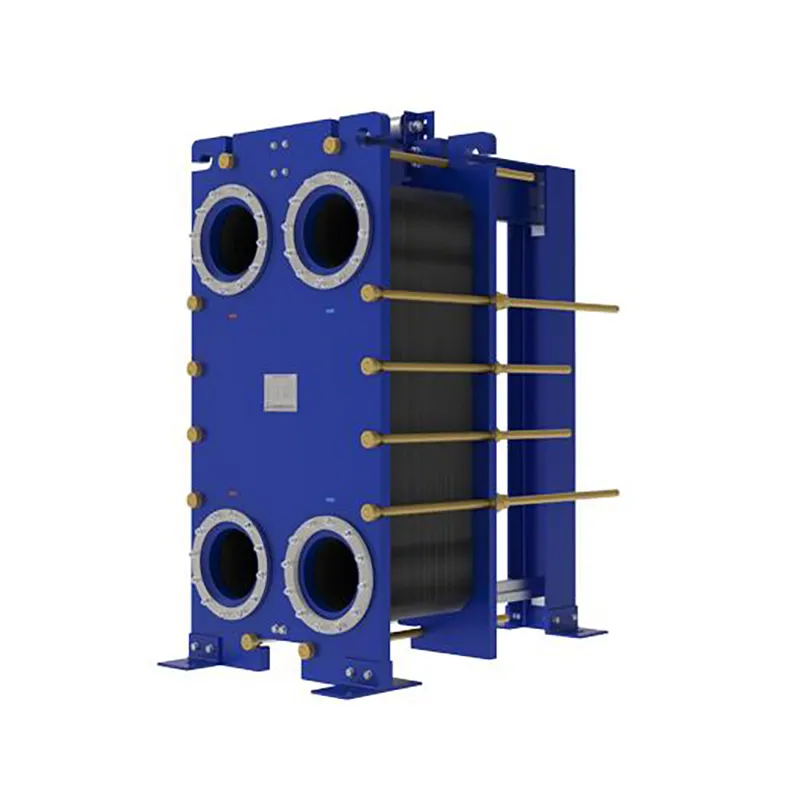
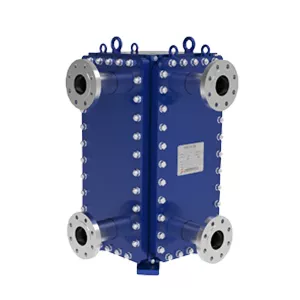
A plate heat exchanger is a compact device that transfers heat between two fluids using a series of corrugated metal plates. In heat pump applications, it serves as the evaporator or condenser, enabling efficient heat exchange between the refrigerant and secondary fluids like water or glycol. The key advantage lies in its high surface area-to-volume ratio, which allows for rapid thermal transfer with minimal temperature differences. This directly improves the coefficient of performance (COP) of your heat pump system, reducing operational costs. Without an optimized plate heat exchanger, heat pumps often suffer from poor heat transfer, leading to higher energy bills and frequent maintenance.
How Does a Plate Heat Exchanger Work in a Heat Pump Cycle?
In a typical heat pump cycle, the plate heat exchanger acts as the interface between the refrigerant loop and the external heat source or sink. During heating mode, the refrigerant evaporates in the exchanger, absorbing heat from a low-temperature source such as ground water or air. In cooling mode, the refrigerant condenses, releasing heat to a cooling tower or hydronic loop. The counter-flow design of most plate heat exchangers maximizes the temperature gradient, ensuring that even small temperature differences yield effective heat transfer. This process is critical for maintaining stable system performance across varying load conditions.
Key Features of Plate Heat Exchangers for Heat Pump Applications
When selecting a plate heat exchanger for your heat pump, focus on these essential characteristics:
- High thermal efficiency: Corrugated plate patterns create turbulent flow, enhancing heat transfer coefficients up to 5 times higher than shell-and-tube designs.
- Compact footprint: Plate heat exchangers require up to 80% less space compared to traditional heat exchangers, ideal for retrofit projects.
- Low fouling tendency: Smooth plate surfaces and high turbulence reduce scaling and fouling, extending cleaning intervals.
- Flexible material options: Plates are available in stainless steel 304, 316L, titanium, and Hastelloy to handle various refrigerants and water chemistries.
- Easy maintenance: Gasketed designs allow for simple disassembly and cleaning without specialized tools.
Typical Parameter Ranges for Heat Pump Plate Heat Exchangers
The following table outlines commonly accepted operating parameters for plate heat exchangers in heat pump systems:
| Parameter |
Typical Range |
| Operating pressure |
Up to 30 bar (435 psi) |
| Operating temperature |
-40°C to 200°C (-40°F to 392°F) |
| Flow rate |
1 to 500 m³/h (4.4 to 2,200 GPM) |
| Heat transfer area |
0.5 to 500 m² (5.4 to 5,382 ft²) |
| Plate thickness |
0.4 to 0.8 mm (0.016 to 0.031 in) |
Applications and Recommended Solutions for Heat Pump Systems
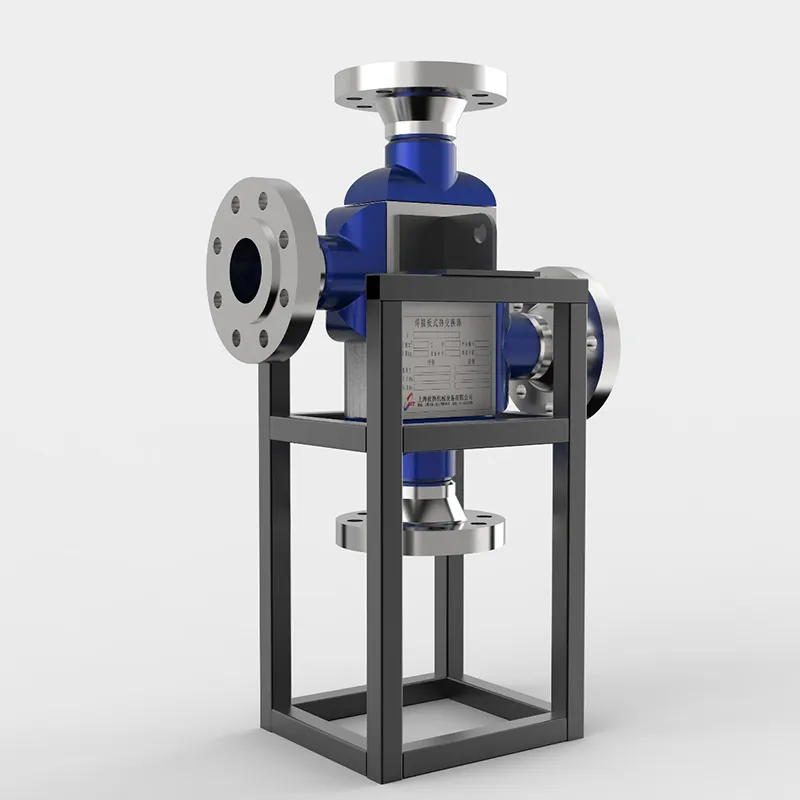
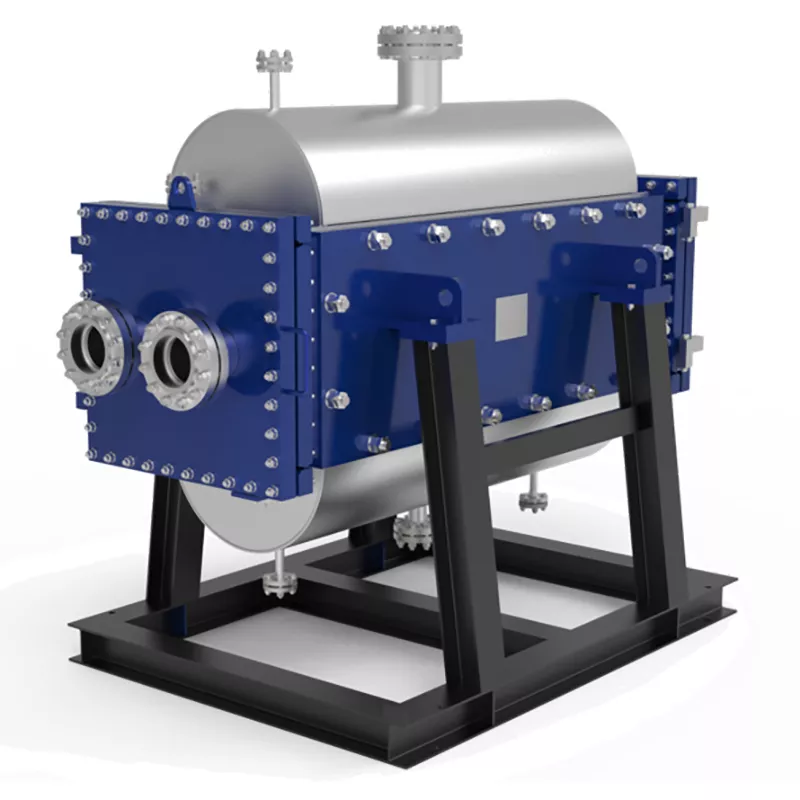
Plate heat exchangers are widely used in various heat pump configurations. For ground-source heat pumps, they handle brine-to-refrigerant heat transfer, where corrosion resistance is critical. In air-to-water heat pumps, they serve as desuperheaters or economizers. For industrial heat pumps recovering waste heat, our wide gap welded plate heat exchangers are ideal for handling fluids with suspended solids. For high-pressure applications, consider our HT-Bloc welded plate heat exchangers, which offer robust construction without gaskets. When dealing with aggressive media, our PCHE provides exceptional durability.
Why Choose SHPHE for Your Heat Pump Plate Heat Exchanger?
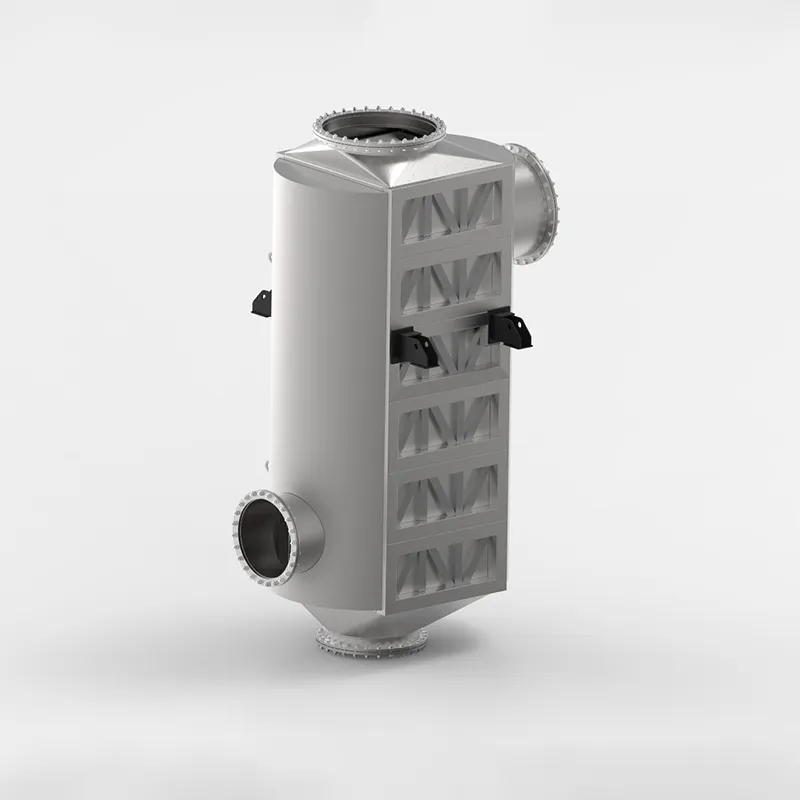
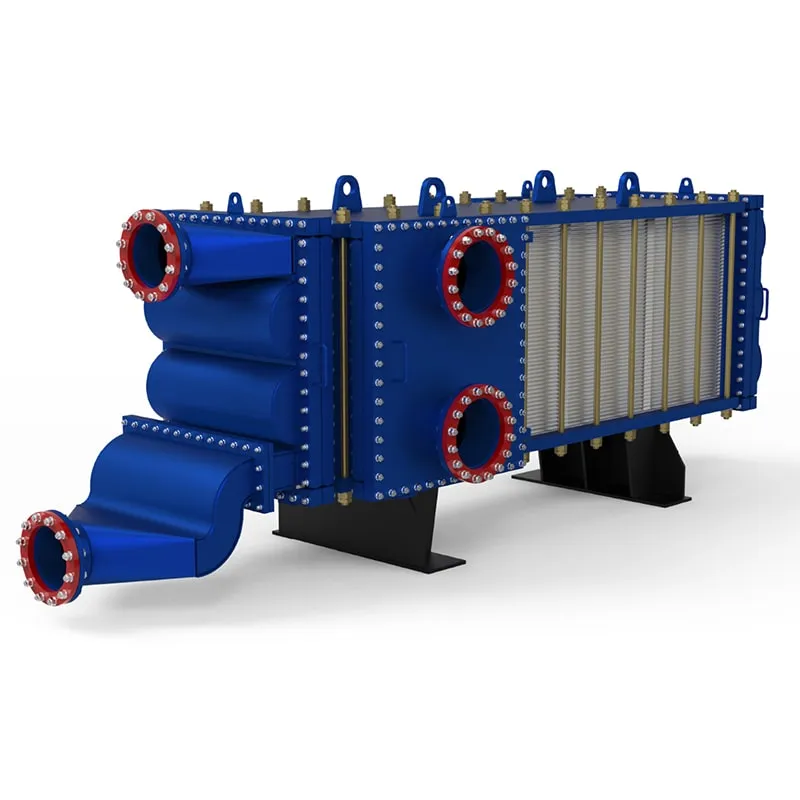
SHPHE has been a trusted plate heat exchanger manufacturer since 2005, exporting to over 20 countries with ISO9001 and ASME U certifications. Our product lines include HT-Bloc/TP welded plate heat exchangers, wide gap welded plate heat exchangers, gasketed plate heat exchangers, PCHE, plate air preheaters, and pillow plates. We offer free thermal design and selection services to ensure your heat pump system achieves optimal performance. Our engineering team works closely with you to match the right plate material, gasket type, and flow configuration to your specific operating conditions. Unlike generic solutions, SHPHE provides alternatives compatible with brands like Alfa Laval and GEA, giving you cost-effective options without compromising quality.
Frequently Asked Questions About Plate Heat Exchangers for Heat Pumps
How do I select the right plate heat exchanger size for my heat pump?
The correct size depends on your heat load, flow rates, and temperature differences. Start by calculating the required heat transfer area using the formula Q = U * A * LMTD. Provide your process parameters to SHPHE for a free thermal design that ensures optimal performance without oversizing.
Can I use a gasketed plate heat exchanger for high-temperature heat pumps?
Yes, but gasket material selection is critical. For temperatures above 150°C, consider using EPDM or Viton gaskets. For extreme conditions, our TP welded plate heat exchangers eliminate gasket issues entirely, handling temperatures up to 200°C.
What maintenance does a plate heat exchanger require in a heat pump system?
Regular cleaning every 6 to 12 months is recommended to prevent fouling. For gasketed units, inspect gaskets for wear and replace them as needed. Welded units require less maintenance but may need chemical cleaning if scaling occurs.
How does a plate heat exchanger improve heat pump efficiency?
By providing a large surface area and promoting turbulent flow, it reduces the temperature difference required for heat transfer. This lowers the compressor work, increasing the COP by 5-15% compared to less efficient designs.
Can I retrofit a plate heat exchanger into an existing heat pump system?
Absolutely. Plate heat exchangers are compact and can be easily integrated into existing piping. SHPHE offers custom flange connections and mounting brackets to simplify retrofits, minimizing downtime.
What is the typical lifespan of a plate heat exchanger in heat pump service?
With proper maintenance, a plate heat exchanger can last 15 to 20 years. Factors like water quality, operating temperature, and pressure cycles affect longevity. Using corrosion-resistant materials like titanium extends life in aggressive environments.
Request a Quote for Your Heat Pump Plate Heat Exchanger
To get a tailored solution for your heat pump system, please provide the following details: flow rate (both sides), inlet and outlet temperatures, operating pressure, and media type (refrigerant, water, glycol, etc.). SHPHE offers free thermal design and selection services to ensure your plate heat exchanger delivers maximum efficiency. Contact our engineering team today to discuss your project requirements and receive a competitive quote. Optimizing heat pump performance with a plate heat exchanger starts with the right partner—choose SHPHE for reliable, cost-effective solutions.

 English EN





User Comments
Service Experience Sharing from Real Customers
Mike R.
HVAC Service TechnicianInstalled this plate heat exchanger on a residential heat pump retrofit last week. The compact size made it a breeze to fit into a tight crawlspace, and the pressure drop was spot on according to my gauges. Customer's system is running quieter and more efficiently than the old shell-and-tube unit. Highly recommend for anyone doing modern heat pump work.
Sofia L.
Process EngineerWe swapped out a failing brazed plate exchanger on our commercial heat pump loop with this one. The thermal performance is solid—our supply water temp stabilized within an hour of startup. Only gave 4 stars because the gasket kit was a bit tricky to align on the first try, but once it seated, no leaks. Good value for the price.
Tomás G.
Renewable Energy ConsultantSpecified this unit for a ground-source heat pump project in a net-zero school. The corrosion resistance is exactly what we needed for the brine loop. Delivery was fast, and the port configuration matched our piping perfectly. My installer said it was one of the easiest heat exchangers he's ever bolted in. Will definitely use again.
Emma K.
Maintenance SupervisorWorks fine for our pool heat pump setup—keeps the water temp consistent. But I had to order additional mounting brackets separately because the ones that came with it didn't fit our frame. Not a dealbreaker, but a bit annoying when you're trying to get a job done quickly. Would be great if they included universal brackets.