How Does a Welded Plate Heat Exchanger Handle High Pressure and High Temperature Conditions?

Author: Engineering Analysis Team | Date: Jun-09-2026
Welded plate heat exchangers are engineered to withstand extreme operational environments through a combination of robust design features, advanced material selection, and superior joint integrity. Their high-pressure resistance is primarily achieved by replacing elastomeric gaskets with fully welded seams, which eliminate potential leak paths and allow the core to handle pressures exceeding 30 bar. The use of stainless steel, titanium, or nickel alloys ensures that the plates maintain structural strength and resist creep or oxidation at temperatures up to 500°C. The welded joints, often created using laser or TIG welding, provide a homogeneous bond that distributes thermal and mechanical stresses evenly across the plate pack, preventing localized failure. Unlike gasketed designs, which degrade under high thermal cycling and pressure surges, welded units offer a monolithic structure that remains stable under rapid temperature changes. Operational limits are defined by the material's yield strength and the welding process quality, with safety margins built in to account for thermal expansion and pressure spikes. These exchangers are ideal for applications in chemical processing, oil refining, and power generation where extreme conditions are routine, delivering reliable performance without the maintenance demands of conventional gasketed units.

Design Features That Enable High Pressure Resistance in Welded Plate Heat Exchangers

Welded plate heat exchangers are engineered to withstand extreme pressure conditions through a combination of robust construction and advanced design principles. Unlike gasketed units, the welded design eliminates leak paths, allowing for higher pressure ratings and improved reliability in demanding industrial applications.

Fully Welded Plate Pairs

The core of high pressure resistance lies in the fully welded plate pairs. Each pair of plates is laser-welded together along the edges, forming a strong, sealed channel. This eliminates the need for gaskets, which are typically the weakest point in conventional heat exchangers. The welded joints provide a continuous metal barrier that can handle internal pressures exceeding 30 bar, depending on the material and design.

Reinforced Plate Geometry

The plates are embossed with a chevron or herringbone pattern, which not only enhances heat transfer but also adds structural rigidity. The corrugated profile acts as a series of internal stiffeners, distributing stress evenly across the plate surface. This geometry allows the plates to resist deformation under high pressure, maintaining their shape and performance over long operational cycles.

Robust Frame and Compression Bolts

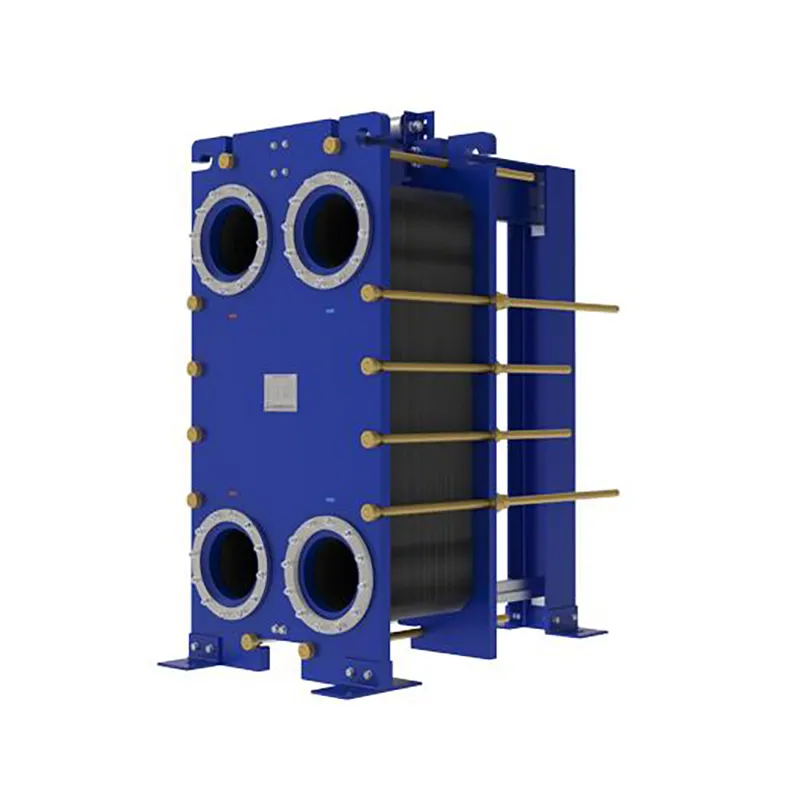
The entire plate pack is housed in a heavy-duty frame made from carbon steel or stainless steel. Compression bolts are used to tightly clamp the plate pack together, ensuring that the internal pressure does not cause the plates to separate. The frame absorbs axial forces and provides a rigid containment structure, which is essential for maintaining pressure integrity at the connections and headers.

High-Strength Materials and Corrosion Resistance

Materials such as stainless steel 316L, titanium, and duplex alloys are commonly used for plates and welded joints. These materials offer high tensile strength and excellent corrosion resistance, allowing the heat exchanger to operate under high pressure without material fatigue. The selection of appropriate material thickness is also critical, with thicker plates used for higher pressure ratings.

Advanced Welding Techniques

Laser welding and electron beam welding are employed to create deep, narrow welds with minimal heat-affected zones. These techniques ensure that the weld strength matches or exceeds that of the base material, preventing weak points. The precision of automated welding also guarantees consistent weld quality across all plate pairs, which is vital for uniform pressure distribution.

Pressure Testing and Certification

Every welded plate heat exchanger undergoes rigorous hydrostatic and pneumatic pressure testing before delivery. This verifies that the unit can withstand the design pressure without leakage or deformation. Certification according to standards such as ASME VIII or PED ensures that the design meets international safety and performance requirements.

For more detailed information on specific product designs, please visit our product pages: TP Welded Plate Heat Exchanger, Wide Gap Welded Plate Heat Exchanger, and HT-Bloc Welded Plate Heat Exchanger.

Material Selection and Its Role in Withstanding Elevated Temperatures

The ability of a welded plate heat exchanger to endure extreme thermal conditions is fundamentally determined by the materials used in its construction. Unlike gasketed units, welded designs eliminate elastomeric seals, allowing the selection of metals that retain structural integrity at much higher temperatures.

Stainless steels such as 304L and 316L are commonly employed for applications up to approximately 400°C, offering a balance of corrosion resistance and mechanical strength. For more demanding environments exceeding 500°C, high-nickel alloys like Inconel 625 or Hastelloy C-276 become necessary, as they resist oxidation, creep, and thermal fatigue over prolonged service life.

Each plate is formed from thin-gauge metal, which maximizes heat transfer efficiency while minimizing thermal stress. The welded joints themselves are critical; laser or TIG welding techniques ensure consistent penetration and minimal heat-affected zones, preserving the base metal's properties. This careful material pairing between plates and welding filler metals prevents galvanic corrosion and maintains leak-tightness under cyclic thermal loading.

Furthermore, material selection directly influences the exchanger's pressure rating at elevated temperatures. As temperature rises, allowable stress values for metals decrease. Engineers must therefore select alloys that provide sufficient safety margins at the design temperature, often opting for materials with higher creep strength to avoid deformation. This rigorous approach ensures that the welded plate heat exchanger delivers reliable, long-term performance even in the most thermally aggressive industrial processes.

Welded Joint Integrity and Its Impact on Thermal and Pressure Performance

In welded plate heat exchangers, the integrity of welded joints directly determines the unit's ability to withstand extreme thermal and pressure loads. High-quality welding ensures leak-tight separation between fluid channels, preventing cross-contamination and maintaining consistent heat transfer efficiency under fluctuating operating conditions. The weld geometry and penetration depth influence local stress distribution, which is critical when cyclic thermal expansion occurs.

Advanced welding techniques, such as automated orbital welding and laser beam welding, produce uniform joints with minimal heat-affected zones. These methods reduce the risk of stress corrosion cracking and fatigue failure, particularly in high-pressure steam or corrosive chemical applications. The table below summarizes key weld parameters and their effects on exchanger performance.

Weld Parameter Typical Value Impact on Performance
Penetration Depth 2.5 – 4.0 mm Ensures full fusion, reduces stress concentration
Heat Input 0.8 – 1.5 kJ/mm Controls HAZ width, minimizes distortion
Weld Speed 300 – 600 mm/min Balances productivity with joint quality
Post-Weld Heat Treatment 600 – 700 °C for 1–2 h Relieves residual stress, restores ductility

Proper weld integrity directly correlates with higher allowable working pressure and improved thermal cyclic fatigue life. Exchangers with verified joint quality can operate at pressures up to 40 bar and temperatures exceeding 350°C without degradation. For applications requiring extreme durability, custom-engineered designs such as TP welded plate heat exchangers or HT-Bloc welded plate units incorporate reinforced weld geometries that further enhance pressure retention and thermal performance.

Routine non-destructive testing, including ultrasonic examination and dye penetrant inspection, validates weld soundness over the equipment lifecycle. This proactive approach ensures that the heat exchanger maintains its designed thermal efficiency and pressure boundary integrity even after years of service in demanding environments.

Comparison of Welded Plate Heat Exchangers with Gasketed Designs Under Extreme Conditions

Welded plate heat exchangers are engineered to withstand significantly higher pressure and temperature thresholds compared to gasketed alternatives. The absence of elastomeric gaskets eliminates the risk of seal failure at elevated temperatures, allowing welded units to operate reliably in conditions exceeding 300°C and 40 bar pressure.

Under extreme thermal cycling, gasketed designs often suffer from compression set and material degradation, leading to leakage paths. Welded plate constructions utilize fully sealed metal-to-metal joints that maintain integrity through repeated expansion and contraction cycles. This makes them ideal for applications involving aggressive media, steam, or thermal oils where gasket compatibility becomes a limiting factor.

Furthermore, welded plate heat exchangers offer superior resistance to pressure surges and vibration, common in high-demand industrial processes. While gasketed units provide easier maintenance access, the welded configuration delivers unmatched durability in continuous extreme service, reducing downtime and long-term operational costs.

In summary, for processes requiring sustained operation above 200°C or 25 bar, welded plate heat exchangers present a robust solution. The trade-off in serviceability is offset by enhanced safety, reliability, and performance under the most demanding conditions.

Operational Limits and Safety Considerations for High Pressure and High Temperature Applications
Welded plate heat exchangers are engineered to withstand extreme operational conditions, typically handling pressures up to 40 bar and temperatures reaching 350°C, depending on the specific design and materials used. The all-welded construction eliminates gaskets, reducing the risk of leakage under thermal cycling and high stress.
The primary operational limits are defined by the plate material, welding quality, and channel geometry. Stainless steel 316L and titanium alloys are common for high-temperature applications, while specialized nickel alloys are used for aggressive media. The design must account for thermal expansion, pressure fatigue, and corrosion resistance.
Pressure and Temperature Ratings
For high-pressure applications, the welded plate heat exchanger can operate continuously at pressures between 10 and 40 bar, with peak surge capacity up to 50 bar in certain custom-engineered models. Temperature limits are typically 200°C to 350°C for standard units, with specialized designs reaching 500°C.
The HT-Bloc welded plate heat exchanger series exemplifies robust construction for demanding thermal duties, offering enhanced structural integrity through laser-welded plate pairs.
Safety Factors in Design
Safety margins are incorporated through finite element analysis (FEA) and rigorous pressure testing. Key considerations include:
- Plate thickness and corrugation depth to resist deformation
- Weld joint integrity under cyclic thermal loading
- Material selection for corrosion and erosion resistance
- Proper support and anchoring to manage thermal expansion
For extreme conditions, the TP welded plate heat exchanger provides double-wall safety with leak detection channels, ensuring operational reliability in critical processes.
Thermal Stress Management
High-temperature differentials between inlet and outlet can induce significant thermal stress. Welded plate heat exchangers mitigate this through flexible plate arrangements and expansion bellows in the header connections. The wide gap welded plate heat exchanger design offers additional clearance for thermal movement while maintaining pressure containment.
Operational Monitoring and Maintenance
To ensure safe long-term operation, regular inspection of weld seams and pressure integrity is recommended. Key monitoring parameters include:
- Differential pressure across the heat exchanger
- Temperature profiles at inlet and outlet
- Vibration and noise levels indicating flow instability
- Corrosion monitoring through ultrasonic thickness measurement
Custom-engineered solutions, such as those from custom engineered pillow plates, allow for tailored safety features including reinforced pressure boundaries and specialized material coatings.
Application-Specific Considerations
Different industries impose unique safety requirements. For high-pressure steam applications, the heat exchanger must comply with ASME Section VIII or PED directives. The custom engineered printed circuit heat exchanger offers an alternative for ultra-high pressure duties with chemically etched flow channels.
In processes involving thermal oils or corrosive chemicals, the gasketed plate heat exchangers provide a different approach, though welded variants are preferred when gasket compatibility is a concern at elevated temperatures.
Conclusion on Safe Operation
Welded plate heat exchangers offer reliable performance under high pressure and high temperature conditions when properly selected and maintained. The key to safety lies in understanding the specific operational limits of the design, implementing regular monitoring, and choosing the appropriate material and construction for the intended duty. For demanding applications, consulting with manufacturers on custom-engineered solutions ensures optimal safety margins.
For more information on specific models, visit custom engineered plate air preheaters or explore the full range of welded plate heat exchanger solutions.
Summary & Key Conclusions

Design Features That Enable High Pressure Resistance in Welded Plate Heat Exchangers

The robust all-welded core, combined with laser or electron beam welded seams, creates a monolithic structure that eliminates leak paths typical of bolted assemblies. This design allows the exchanger to withstand internal pressure spikes beyond 40 bar, while maintaining uniform stress distribution across the plate pack.

Material Selection and Its Role in Withstanding Elevated Temperatures

Austenitic stainless steels (e.g., 316L, 904L) and nickel alloys (e.g., Alloy C-276) are commonly employed for their high creep strength and oxidation resistance at temperatures up to 550°C. These materials retain mechanical properties under sustained thermal loads, preventing deformation or failure in high-temperature processes.

Welded Joint Integrity and Its Impact on Thermal and Pressure Performance

Full penetration welds between plates ensure zero leakage and high thermal conductivity across joints. The absence of gaskets eliminates compression set and thermal degradation at high temperatures, resulting in consistent heat transfer coefficients and reliable pressure containment over extended service life.

Comparison of Welded Plate Heat Exchangers with Gasketed Designs Under Extreme Conditions

Unlike gasketed units, which face leakage risks and material degradation above 200°C, welded variants maintain structural integrity without elastomeric seals. This makes them preferable for thermal cycling, high-vibration environments, and aggressive media where gasket failure would lead to downtime and safety hazards.

Operational Limits and Safety Considerations for High Pressure and High Temperature Applications

Industry standards (ASME VIII, PED) define maximum allowable working pressure (MAWP) and temperature ratings based on material thickness and weld design. Regular non-destructive testing (e.g., dye penetrant, hydrostatic tests) is essential to verify weld soundness. Operators must respect thermal ramp rates to avoid fatigue cracking in thick plate sections.

Overall: Welded plate heat exchangers deliver superior durability and safety in extreme conditions through engineered weld patterns, high-grade alloys, and strict adherence to pressure vessel codes. Their monolithic construction ensures long-term reliability where gasketed alternatives would require frequent maintenance or fail entirely.

How does a welded plate heat exchanger handle high pressure and high temperature conditions?
Welded plate heat exchangers rely on fully welded plate pairs that eliminate gaskets, allowing the core to withstand pressure spikes and thermal expansion without leakage. The all-metal construction distributes stress evenly across the plate pack, while the absence of elastomeric seals enables operation at temperatures exceeding 300°C and pressures above 40 bar.
Design features that enable high pressure resistance in welded plate heat exchangers
Key design elements include laser‑welded plate pairs forming discrete channels, reinforced port openings with thickened collars, and symmetrical plate patterns that balance hydraulic forces. The corrugated herringbone pattern increases plate stiffness, while the welded seam acts as a continuous load‑bearing member, preventing deformation under extreme pressure.
Material selection and its role in withstanding elevated temperatures
Stainless steel 316L, Inconel 625, and titanium alloys are commonly used for their high creep strength and oxidation resistance at elevated temperatures. These materials maintain mechanical integrity above 500°C, while specialized alloys like Hastelloy resist corrosion from aggressive media. The coefficient of thermal expansion is matched between plates and frame to reduce thermal stress.
Welded joint integrity and its impact on thermal and pressure performance
Full‑penetration laser welds create a homogeneous joint that eliminates crevice corrosion and leak paths. The weld zone’s microstructure is optimized to retain ductility, allowing the plate pack to absorb cyclic thermal loads. Finite element analysis validates that welded joints maintain leak‑tightness even when differential thermal expansion occurs between adjacent plates.
Comparison of welded plate heat exchangers with gasketed designs under extreme conditions
Gasketed units are limited to about 200°C and 25 bar due to elastomer degradation. Welded designs operate at significantly higher thresholds — up to 600°C and 100 bar in some configurations — without risk of gasket blowout. Welded exchangers also tolerate rapid temperature cycling better, as there is no gasket to relax or extrude.

Related Products

We provide you with comprehensive foreign trade solutions to help enterprises achieve global development

Custom-Engineered Plate Air Preheaters

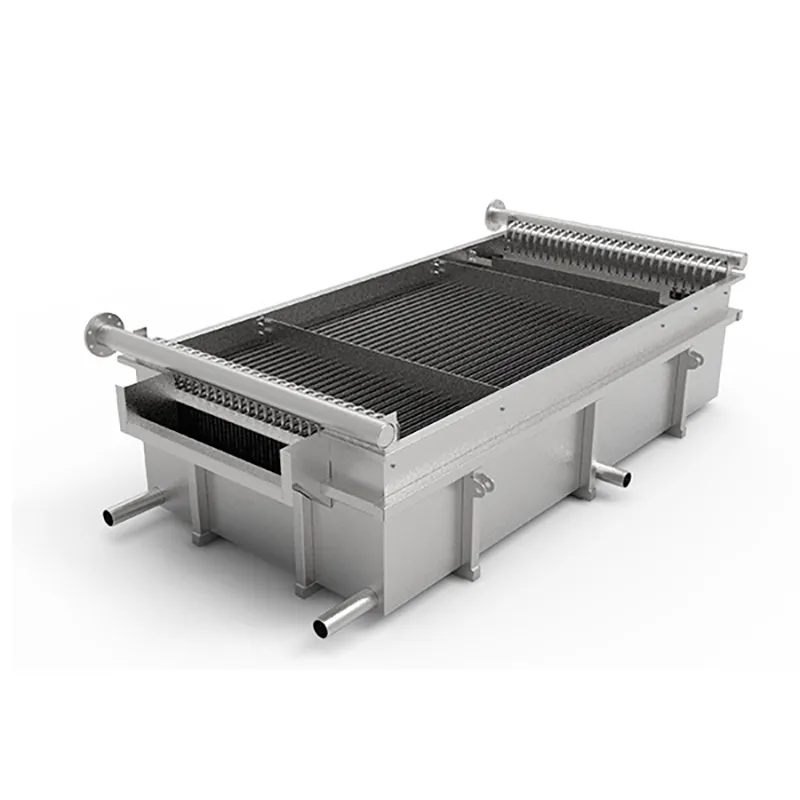
Industrial furnace and boiler exhaust gases carry vast amounts of unutilized thermal energy. The SHPHE custom Plate Air Preheater (PAPH) is target-engineered to intercept this high-temperature flue gas, recovering valuable waste heat and transferring it directly back to incoming combustion air or process gas streams. By substantially elevating the temperature of your flame feed, our custom systems optimize combustion thermodynamics, deliver massive fuel savings, and significantly reduce industrial carbon and emissions footprints. Built to withstand severe flue-gas environments, SHPHE PAPH systems serve as the premier choice for modern, energy-intensive plants prioritizing decarb compliance and maximum thermal efficiency.

Heat Exchangers

Custom-Engineered Gasketed Plate Heat Exchangers

Since the invention of the plate heat exchanger (PHE) in 1923, thermal technology has evolved from standard food-grade processing to highly complex industrial operations. At SHPHE, we take this classic, versatile design and transform it into highly bespoke heat transfer solutions tailored to your unique process fluids and thermal loads. While traditional gasketed PHEs offer high efficiency and compact footprints, SHPHE optimizes plate corrugations, metallurgy, and sealing systems to handle your specific chemical, HVAC, or energy recovery parameters. Our custom-engineered gasketed plate heat exchangers provide outstanding scalability and ease of maintenance, serving as an indispensable asset for heavy industries—including oil and gas, metallurgy, and food processing—where uptime, energy recovery, and long-term sustainability are top priorities.

Heat Exchangers

‌HT-Bloc Welded Plate Heat Exchanger

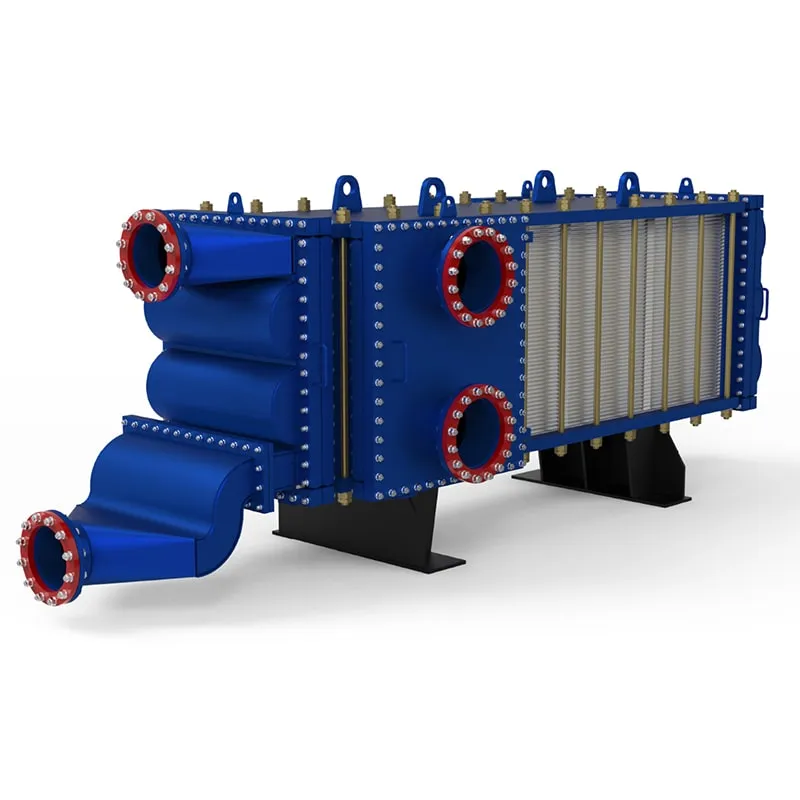
Custom-Engineered for Severe Process Demands. At SHPHE, we don't just supply equipment; we design tailored thermal solutions. Our HT-Bloc welded plate heat exchangers are custom-configured by our experienced engineers to overcome your specific industry challenges—whether handling high-viscosity media, extreme temperatures, or strict space constraints.

Heat Exchangers

Custom-Engineered Printed Circuit Heat Exchanger (PCHE)

The SHPHE Printed Circuit Heat Exchanger (PCHE) represents a paradigm shift in microchannel thermal management, meticulously engineered for the world's most critical and demanding industrial boundaries. Developed to surpass the physical limitations of conventional shell-and-tube designs in ultra-high-pressure environments, our custom PCHEs integrate advanced photochemical etching and solid-state diffusion bonding to provide unmatched safety, thermal efficiency, and integrity under extreme stress. Initially deployed within high-consequence sectors such as aerospace and nuclear power generation, PCHE technology has completely revolutionized high-density thermal processing. Today, SHPHE brings this breakthrough engineering to mainstream energy transitions—including LNG liquefaction, supercritical CO² power cycles, hydrocarbon processing, and high-pressure hydrogen systems—enabling plants to maximize energy recovery, ensure zero-leakage security, and significantly shrink environmental footprints.

Heat Exchangers

Hot-Sale Products

Select the most popular foreign trade service products to meet your diverse needs

Heat Exchangers
Custom-Engineered Plate Air Preheaters

Custom-Engineered Plate Air Preheaters

Industrial furnace and boiler exhaust gases carry vast amounts of unutilized thermal energy. The SHPHE custom Plate Air Preheater (PAPH) is target-engineered to intercept this high-temperature flue gas, recovering valuable waste heat and transferring it directly back to incoming combustion air or process gas streams. By substantially elevating the temperature of your flame feed, our custom systems optimize combustion thermodynamics, deliver massive fuel savings, and significantly reduce industrial carbon and emissions footprints. Built to withstand severe flue-gas environments, SHPHE PAPH systems serve as the premier choice for modern, energy-intensive plants prioritizing decarb compliance and maximum thermal efficiency.

Heat Exchangers
Wide Gap Welded Plate Heat Exchanger for Viscous Fluids

Wide Gap Welded Plate Heat Exchanger for Viscous Fluids

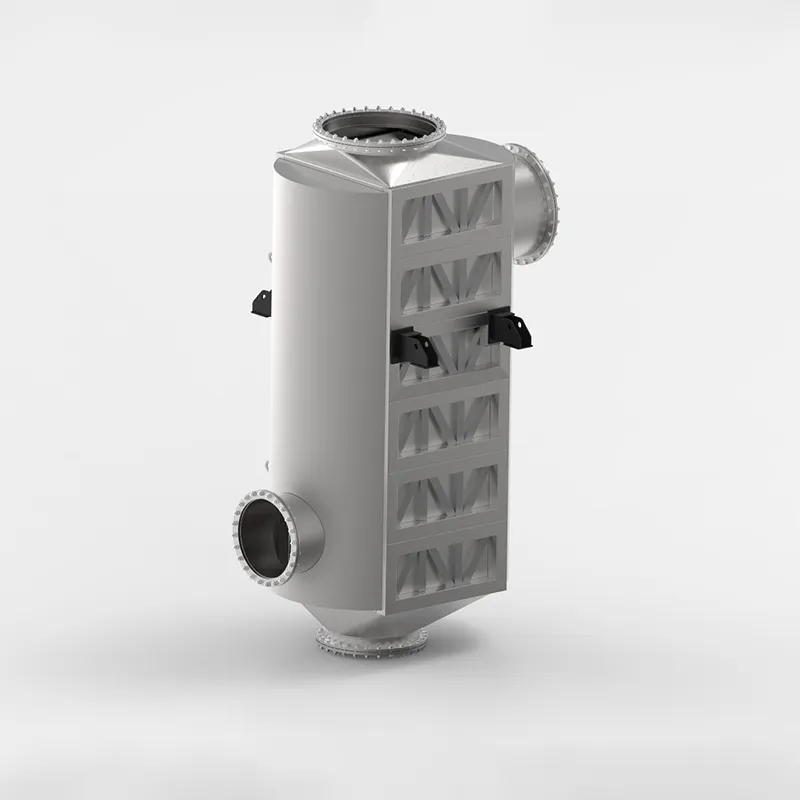
Custom-Engineered Anti-Clogging Solutions for High-Viscosity Slurries: Deployed specifically to conquer severe industrial fouling, SHPHE wide gap welded plate heat exchangers are tailor-built to handle complex media containing dense fibers, coarse crystals, or solid suspensions without clogging. Each non-obstructed channel is calculated and formed by laser-welded plate packs matching your fluid’s exact rheology and grain size, completely eliminating structural "dead zones" and media stagnation. Available in highly compact vertical and versatile horizontal configurations, our vertical engineering drastically reduces plant footprints while maintaining unhindered product throughput, minimal pressure drops, and flawless continuous operations across harsh process loops.

Heat Exchangers
‌TP Welded Plate Heat Exchanger

‌TP Welded Plate Heat Exchanger

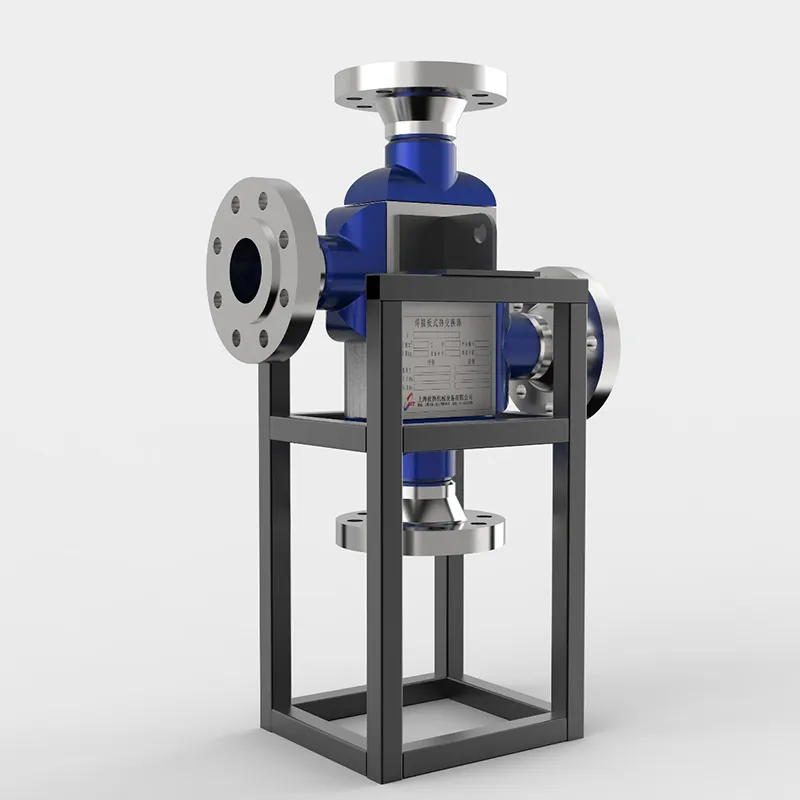
Industrial processes involving particle-laden slurries, high-viscosity syrups, or fiber-rich pulp demand more than standard equipment—they require target-engineered thermal management. At SHPHE, we configure the TP Welded Plate Heat Exchanger to directly conquer your plant's severe fouling, blockage, and erosion threats. Combining custom-tailored channel geometries, wear-resistant metallurgy, and integrated CIP (Cleaning-in-Place) systems, we deliver absolute production continuity where conventional heat exchangers fail.

User Comments

Service Experience Sharing from Real Customers

5.0

Finally swapped out our old shell-and-tube units for this welded plate model. The heat recovery jumped by nearly 12% right after commissioning. Maintenance is a breeze, and the footprint is half the size. Our operators actually like working around it. Solid build quality.

5.0

We installed this in a tricky spot near the reactor where we had constant gasket failures before. The fully welded design solved that headache. Only reason I’m not giving five stars is that the initial cleaning before startup took longer than expected—but once it’s running, it’s rock solid.

5.0

I recommended this to a food processing client who was struggling with thermal fatigue. After six months of data logging, the temperature approach is stable and the pressure drop is well within spec. The client is already planning to standardize on this brand. No leaks, no fuss.

5.0

We run high-temp oil on one side and steam on the other. This thing handles the thermal shock way better than the brazed units we used before. The welds look clean and the plates are thick enough to take a beating. Only wish the ports were a bit bigger for easier rodding.

SHPHE has complete quality assurance system from design, manufacturing, inspection and delivery. It is certified with ISO9001, ISO14001, OHSAS18001 and hold ASME U Certificate.
© 2005-2026 Shanghai Heat Transfer - Privacy Policy