
 English EN


TL;DR — The quick answer
-
What it is: a gas-to-gas plate exchanger that recovers heat from hot flue gas and returns it to combustion air.
-
Why it's used: preheating combustion air raises flame temperature, cuts fuel use and lowers emissions.
-
How it works: a fully welded matrix of corrugated plates in countercurrent or crossflow, keeping the streams separate.
-
Benefits: major fuel savings, better combustion, and a smaller carbon and emissions footprint.
-
Best for: boilers, furnaces and any energy-intensive plant chasing efficiency and decarbonisation.
Industrial furnaces and boilers send vast amounts of unused heat up the stack in their exhaust gases. A plate air preheater (PAPH) captures that heat and puts it back to work — recovering energy from the flue gas and transferring it to the incoming combustion air. The result is a hotter, more complete flame, lower fuel consumption and reduced emissions. This guide explains how the plate air preheater works, where it fits, and why it is central to modern decarbonisation.
As energy prices rise and carbon compliance tightens, waste-heat recovery has moved from a nice-to-have to a core efficiency measure. The plate air preheater is one of the most effective ways to reclaim exhaust heat, and SHPHE custom-engineers PAPH systems to intercept high-temperature flue gas and return its energy to the process — delivering measurable fuel savings while cutting the plant's carbon footprint.
What is a plate air preheater?
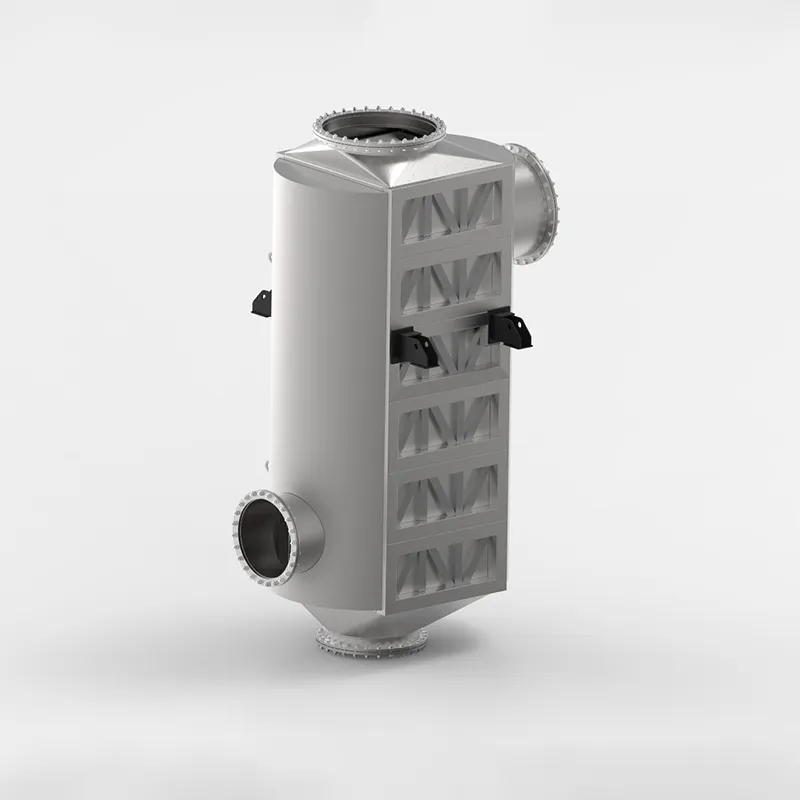
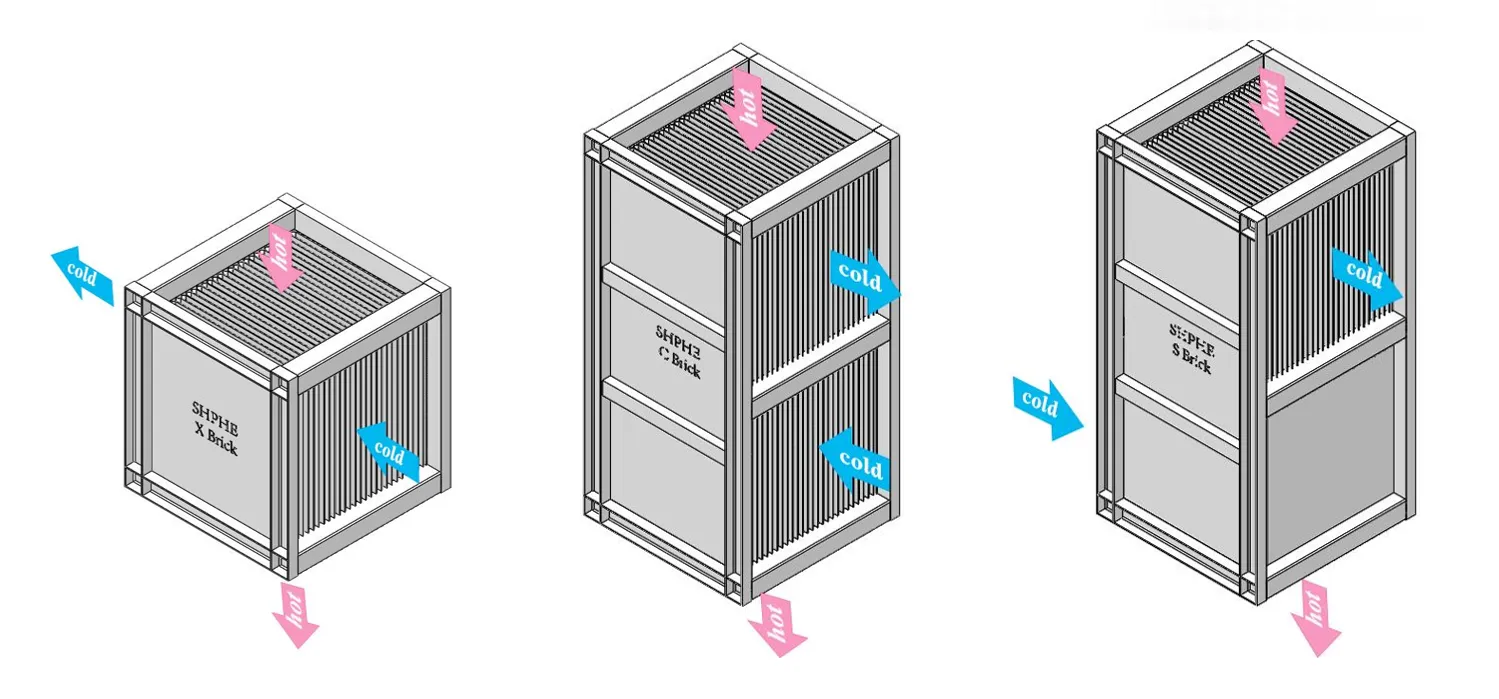
The SHPHE plate air preheater operates on gas-to-gas heat transfer. It is built around a fully welded matrix of corrugated metal plates that form discrete, alternating channels — one set for the hot flue gas, the other for the cold combustion air. As the streams pass through in a countercurrent or crossflow arrangement, heat conducts through the plate walls from the hot gas to the cold air without the two ever mixing. The corrugated plates create turbulence that maximises heat transfer, so a compact unit can recover a large amount of energy. Because the plate matrix is welded rather than gasketed, it withstands the severe, corrosive flue-gas environment and operates reliably over long campaigns.
How does preheating combustion air save fuel?
The logic is direct and powerful. When combustion air enters a burner cold, a large share of the fuel's energy is spent simply heating that air up to flame temperature. By preheating the air with recovered flue-gas heat, the burner starts from a much higher baseline, so less fuel is needed to reach the required flame temperature. Every degree the air is preheated cuts the fuel the burner must consume. In energy-intensive furnaces and boilers, this translates into substantial, continuous fuel savings — often the single largest efficiency gain available on a combustion system. Because the saving happens on every hour of operation, the payback on a well-designed preheater is typically rapid.
How does it improve combustion and cut emissions?
Preheated air does more than save fuel — it improves the combustion itself. A hotter, more energetic flame burns the fuel more completely, raising combustion efficiency and reducing unburned losses. Burning less fuel for the same output directly reduces CO2 emissions, and better combustion can lower other pollutants. For plants facing decarbonisation targets and emissions limits, this dual benefit — less fuel and cleaner combustion — makes the plate air preheater a key compliance and sustainability tool, not just an efficiency upgrade. It is one of the most cost-effective ways to reduce a combustion plant's carbon footprint without changing the process itself.
Where are plate air preheaters used?
| Sector | Duty |
|---|---|
| Power & boilers | Boiler combustion-air preheating, stack heat recovery |
| Metallurgy | Furnace air preheating, reheating furnaces |
| Chemical & process | Process gas preheating, waste-heat recovery |
| Environmental | Flue-gas heat recovery for decarbonisation |
Why a plate design over a tubular preheater?
Traditional air preheaters are often tubular or regenerative (rotary) types, but the plate design offers real advantages. Its corrugated plates give higher heat transfer in a more compact unit, recovering more energy from a smaller footprint. The fully welded plate matrix has no moving parts (unlike a rotary preheater) and no leakage between streams, so the recovered heat is not diluted by air-to-gas leakage — a common efficiency loss in rotary units. And the plate construction can be engineered with corrosion-resistant materials to handle acidic, low-temperature flue gas near the dew point. For a modern plant prioritising efficiency and reliability, the plate air preheater is frequently the better technical choice.
How is a plate air preheater designed for flue gas?
Flue gas is a demanding fluid — hot, often dusty, and potentially corrosive as it cools toward its acid dew point. SHPHE engineers each PAPH to these conditions: selecting corrosion-resistant plate materials for the cold end where condensation can occur, arranging the flow (countercurrent or crossflow) to maximise recovery, and sizing the plate matrix to the gas volumes and the target air preheat temperature within the allowable pressure drop on both sides. The result is a unit tailored to the specific stack, fuel and duty, rather than a generic box — which is what delivers the maximum reliable heat recovery over years of severe flue-gas service.
How does it fit into an existing plant?
One of the attractions of a plate air preheater is that it can usually be added to an existing combustion system without disrupting the core process. It sits in the flue-gas path between the boiler or furnace exit and the stack, and in the combustion-air path between the fan and the burner, capturing heat from one and delivering it to the other. Its compact plate construction means it can often be fitted where a bulky tubular or rotary preheater would not, which is a real advantage in space-constrained plants and retrofits. The main engineering considerations are accommodating the added pressure drop (which may need fan capacity to be checked), routing the ducts, and handling the cooled, potentially corrosive gas at the cold end. A specialist assesses these as part of the design so the retrofit is straightforward and the recovery is reliable from day one.
Air preheater vs economiser: which recovers stack heat?
Two devices commonly recover boiler stack heat, and they are complementary rather than competing. An economiser recovers flue-gas heat into the boiler feedwater, raising its temperature before it enters the boiler; an air preheater recovers it into the combustion air. Which to use — or whether to use both in series — depends on the plant. Where there is feedwater to heat, an economiser is efficient; where the biggest gain is a hotter flame (as in many furnaces), the air preheater wins. Often the two are combined, with the economiser taking the higher-temperature heat and the air preheater the lower-grade heat down toward the dew point. SHPHE can advise which arrangement extracts the most value from a given stack, and engineer the plate units accordingly.
Target-engineered waste-heat recovery
SHPHE's custom plate air preheater is target-engineered to intercept high-temperature flue gas, recover its waste heat, and transfer it directly back to incoming combustion air or process-gas streams. By substantially elevating the temperature of the flame feed, these systems optimise combustion thermodynamics, deliver massive fuel savings, and significantly reduce industrial carbon and emissions footprints. Built to withstand severe flue-gas environments with corrosion-appropriate metallurgy and a fully welded plate matrix, SHPHE PAPH systems are the premier choice for energy-intensive plants prioritising decarbonisation compliance and maximum thermal efficiency. Certified to ASME, NB, CE, BV and SGS with 30+ patents since 2005, each system is designed to the plant's specific stack, fuel and duty.
Source: SHPHE product information. See the plate air preheater page.
What is the payback on a plate air preheater?
Because the fuel saving occurs on every hour of operation, the economics are usually compelling. The capital cost of the preheater is offset by the continuous reduction in fuel consumption, and on an energy-intensive combustion plant the payback period is often short — measured in a small number of years or less, depending on fuel price, operating hours and the temperature of the recovered heat. On top of the direct fuel saving sits the value of emissions reduction, which is increasingly monetised through carbon pricing and compliance requirements. When both are counted, a plate air preheater is one of the highest-return efficiency investments a combustion plant can make — which is why waste-heat recovery is central to industrial decarbonisation strategies.
As a specialist plate-heat-exchanger manufacturer, SHPHE (Shanghai Heat Transfer Equipment Co., Ltd.) custom-engineers plate air preheaters and waste-heat-recovery systems, backed by ASME/NB/CE/BV/SGS certification and 30+ patents.
For any energy-intensive combustion plant, the question is rarely whether to recover stack heat but how much and how safely. A well-engineered plate air preheater answers both, capturing the maximum practical energy within the corrosion limits of the specific fuel and returning it as continuous fuel savings and lower emissions for the life of the plant.
Send SHPHE your flue-gas conditions for a custom plate air preheater and fuel-saving estimate.
Consult our engineers →| Factor | Why it matters | Approach |
|---|---|---|
| Acid dew point | Cooling too far condenses acid | Corrosion-resistant cold end |
| Flue-gas cleanliness | Ash/soot foul surfaces | Cleanable geometry |
| Pressure drop | Fan energy penalty | Sized to allowable ΔP |
| Recovery target | Sets fuel saving | Maximise within dew point |
Frequently asked questions
What is a plate air preheater?
A gas-to-gas plate heat exchanger that recovers heat from hot flue gas and transfers it to incoming combustion air, using a fully welded matrix of corrugated plates in countercurrent or crossflow.
How does an air preheater save fuel?
By preheating the combustion air with recovered flue-gas heat, the burner needs less fuel to reach flame temperature — a continuous saving on every hour of operation.
Does a plate air preheater reduce emissions?
Yes — burning less fuel cuts CO2 directly, and the hotter, more complete combustion improves efficiency, lowering the plant's carbon and emissions footprint.
Why choose a plate air preheater over a tubular or rotary one?
The plate design gives higher heat transfer in a compact, leak-free unit with no moving parts, avoiding the air-to-gas leakage that reduces rotary preheater efficiency.
What is the payback on an air preheater?
Often short — the continuous fuel saving offsets the capital cost within a few years or less, and emissions reduction adds further value under carbon pricing.
Sources & further reading: SHPHE product information; general waste-heat-recovery practice. Savings and payback depend on fuel, operating hours and flue-gas temperature — confirm with a thermal design.