
 English EN


TL;DR — The quick answer
CIP circulates a cleaning solution through the exchanger to remove fouling — no opening, no dismantling.
Essential for welded units, which cannot be opened plate-by-plate like a gasketed one.
A cycle typically runs rinse → alkaline wash → acid wash → rinse, tuned to the fouling type.
Benefits: restored heat transfer, lower pressure drop, longer runs, and continuous production.
Plan it with data: monitor pressure drop and performance so CIP is scheduled, not reactive.
A fully welded plate heat exchanger cannot be opened and cleaned plate-by-plate like a gasketed one — so keeping it efficient depends on cleaning-in-place (CIP). Done well, CIP restores heat transfer and prevents the blockage and performance loss that fouling causes, all without dismantling the unit. This guide explains how CIP works, how to design a cycle, and how it keeps welded and specialty exchangers running continuously.
CIP is not an afterthought for welded plate technology — it is the core of its maintenance strategy. Because SHPHE's HT-Bloc, TP welded and wide-gap platforms are designed to run on demanding fluids, they are engineered from the outset to be cleaned in place, and understanding CIP is the key to getting long, uninterrupted service from them.
What is cleaning-in-place (CIP)?
Cleaning-in-place is the practice of cleaning a heat exchanger — or a whole process circuit — by circulating a cleaning solution through it rather than taking it apart. A CIP skid pumps water and chemical cleaners through the exchanger at controlled temperature and flow, dissolving and flushing away the scale, biofilm or deposits that build up on the heat-transfer surfaces. Because nothing is opened or removed, the exchanger stays in situ and can often be cleaned during a short planned stop rather than a lengthy shutdown. For welded exchangers, whose packs are sealed, CIP is the primary — and usually the only practical — cleaning method.
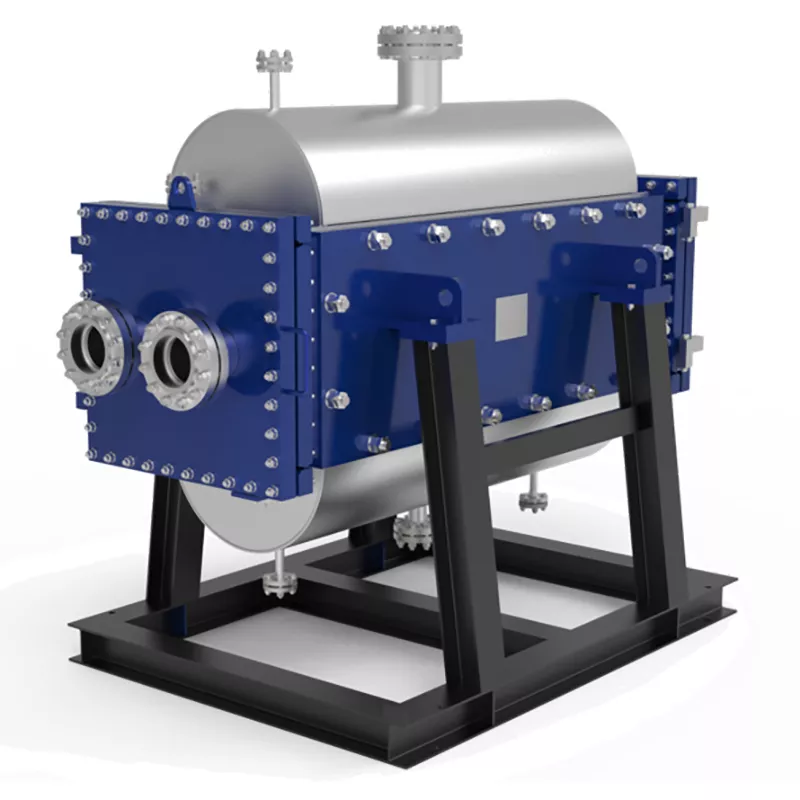
Why do welded exchangers need CIP?
A gasketed plate exchanger can be opened, its plates lifted out and scrubbed by hand — a big advantage for heavily fouling duties. A welded unit trades that access for a higher pressure and temperature envelope and the removal of gaskets as a failure point. The consequence is that mechanical cleaning is not an option, so fouling must be managed chemically. This is a deliberate trade-off: welded units are chosen for duties where the higher envelope or gasket-free reliability matters more than open-frame access, and where fouling is low-to-moderate and responds well to CIP. Matching the exchanger type to the cleaning method the fluid needs is a core selection decision.
What does a CIP cycle look like?
A typical CIP cycle runs in stages, each targeting a different deposit:
| Stage | Purpose |
|---|---|
| Pre-rinse (water) | Flush loose debris and product residue |
| Alkaline wash | Dissolve organic fouling, oils, biofilm |
| Intermediate rinse | Remove alkaline solution |
| Acid wash | Dissolve mineral scale (carbonates, etc.) |
| Final rinse | Return the unit to clean service |
The exact chemicals, temperature, concentration, flow rate and duration are tuned to the fouling type — organic deposits need alkaline cleaners, mineral scale needs acid, and abrasive or biological fouling needs its own regime. Getting these parameters right is what makes a CIP effective and safe for the metallurgy, which is why a supplier's guidance on the cleaning protocol is valuable.
How does CIP prevent blockage and erosion?
Fouling does more than cut heat transfer — as deposits build, they narrow the flow channels, raising pressure drop and eventually risking blockage, and hardened deposits can be dislodged as abrasive fragments that erode surfaces. Regular CIP intervenes before deposits reach that stage, keeping channels open and surfaces clean so the unit maintains its designed pressure drop and heat transfer. On difficult fluids, SHPHE integrates CIP into the TP welded design so the cleaning solution reaches every part of the flow path — turning a fluid that would otherwise clog the unit into one that runs continuously between planned cleans.
How often should you run CIP?
Frequency depends entirely on the fluid and its fouling rate — some clean duties need CIP rarely, others need it on a regular short cycle. The right way to set the interval is by data, not the calendar: as fouling builds, the pressure drop rises and the thermal performance falls, and these are the signals that a clean is due. Monitoring them lets you clean at the optimal point — not so early that you waste chemicals and downtime, nor so late that performance and throughput suffer. SHPHE's Smart Eye AI system tracks these parameters in real time and predicts the CIP window in advance, turning cleaning into a planned, efficient event.
How does CIP compare with mechanical cleaning?
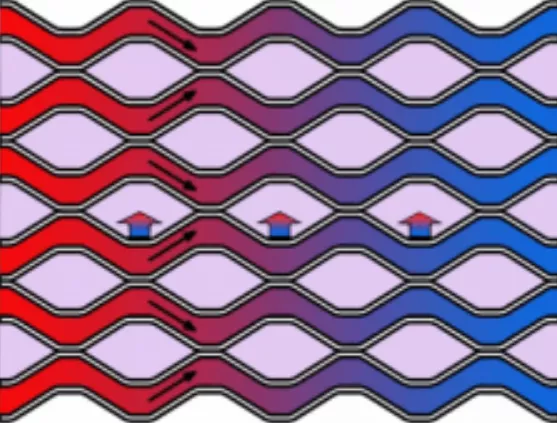
It is worth being clear about the trade-off between the two cleaning philosophies. Mechanical cleaning — opening a gasketed frame and scrubbing plates, or rodding shell-and-tube tubes — physically removes even the hardest, most stubborn deposits and lets an operator inspect every surface, which is unbeatable for heavily fouling or scaling duties. Its cost is downtime, labour and, for gasketed units, gasket replacement each time. CIP, by contrast, cleans chemically without opening the unit, so it is far faster and less disruptive, but it depends on the fouling being soluble in the cleaning chemistry and is less effective on very hard, baked-on or abrasive deposits. The two are not rivals so much as tools for different duties: welded exchangers are deliberately applied where fouling is manageable by CIP, while heavily fouling services are directed to gasketed or wide-gap platforms that can be opened or run fully unobstructed. Matching the cleaning method to the fluid at the selection stage is what avoids a maintenance headache later.
Can CIP be automated?
Yes, and automation is increasingly the norm on continuous plants. An automated CIP skid sequences the rinse, alkaline and acid stages, controls temperature, flow and dosing, and logs each cycle — removing the variability of manual cleaning and ensuring every clean is done to the validated protocol. This matters for regulated industries like food and pharmaceutical, where cleaning must be documented and repeatable. Combined with condition monitoring that triggers the CIP at the optimal fouling point, automation turns cleaning into a hands-off, data-driven routine that maximises uptime while guaranteeing the exchanger is properly cleaned every time. For plants running SHPHE welded exchangers on demanding fluids, this pairing of integrated CIP hardware, a matched chemical protocol and Smart Eye monitoring is what delivers the long, reliable production campaigns the technology is built for.
CIP designed into the exchanger
SHPHE builds CIP capability into its welded platforms rather than bolting it on. On the TP welded shell-and-plate unit, integrated CIP works with self-scouring channel geometry and wear-resistant metallurgy to conquer fouling, blockage and erosion on slurries, syrups and pulp — delivering absolute production continuity where conventional exchangers fail. On HT-Bloc and wide-gap units, CIP restores performance without opening the sealed pack. Paired with Smart Eye monitoring, the cleaning is scheduled by data so the exchanger runs long, uninterrupted campaigns. Certified to ASME, NB, CE, BV and SGS with 30+ patents since 2005, SHPHE supplies both the exchanger and the cleaning protocol matched to the customer's fouling chemistry.
Source: SHPHE product information. See the TP welded range and Smart Eye.
CIP best practice: getting the most from each clean
A few practices maximise CIP effectiveness and protect the exchanger. Match the chemical to the deposit — alkaline for organics, acid for scale — and never guess, as the wrong chemistry can be ineffective or attack the metallurgy. Control temperature and flow so the solution is active and reaches every channel at cleaning velocity. Observe contact time so the chemicals have long enough to work without over-exposing the metal. Rinse thoroughly between and after stages so no cleaner is carried into the product. And keep a record of each CIP and the pressure drop before and after, so you can see the fouling trend and refine the interval. Following the supplier's recommended protocol — rather than a generic recipe — ensures the clean is both effective and safe for the specific plate material.
As a specialist plate-heat-exchanger manufacturer, SHPHE (Shanghai Heat Transfer Equipment Co., Ltd.) engineers welded exchangers for effective CIP and supplies matched cleaning protocols and monitoring, backed by ASME/NB/CE/BV/SGS certification and 30+ patents.
Ultimately, CIP is what makes welded plate technology practical on real-world fluids. A welded exchanger gives you a higher pressure and temperature envelope and removes gaskets as a failure point — but it is the ability to clean it thoroughly in place, on a data-driven schedule, that lets it deliver those advantages over years of continuous service. Treating the cleaning strategy as part of the exchanger selection, and specifying the CIP protocol alongside the unit, is the mark of a well-engineered installation, and it is the approach SHPHE builds into every welded exchanger it supplies.
Ask SHPHE for a CIP protocol and monitoring matched to your fluid.
Consult our engineers →| Fouling | Agent | Note |
|---|---|---|
| Scale (CaCO₃) | Acid (e.g. nitric/citric) | Dissolves mineral scale |
| Organic / oil | Alkaline (caustic) | Saponifies deposits |
| Biological | Alkaline + biocide | Removes biofilm |
| Mixed | Acid then alkaline | Sequential cycles |
Done well, CIP keeps a sealed welded exchanger performing close to its clean condition for years without ever opening it. The keys are matching the cleaning chemistry to the fouling, cleaning on condition rather than blindly, and designing the unit for effective flow during CIP — all areas where SHPHE's engineering ensures the cleaning restores full duty reliably.
Frequently asked questions
What is cleaning-in-place (CIP) for a heat exchanger?
Circulating a cleaning solution through the exchanger to remove fouling without opening or dismantling it — the primary cleaning method for welded plate units.
Why do welded plate exchangers need CIP?
Because their sealed pack cannot be opened for mechanical cleaning like a gasketed unit, so fouling must be removed chemically by circulating cleaners.
What are the stages of a CIP cycle?
Typically pre-rinse, alkaline wash (organics), intermediate rinse, acid wash (mineral scale), and final rinse — tuned to the fouling type.
How often should a heat exchanger be CIP cleaned?
It depends on the fouling rate; set the interval by monitoring rising pressure drop and falling performance rather than the calendar. Smart Eye can predict the window.
Can CIP damage the exchanger?
Only if the wrong chemistry, temperature or contact time is used. Following the supplier's protocol matched to the plate metallurgy keeps CIP safe and effective.
Sources & further reading: SHPHE product information; standard CIP practice. Cleaning chemicals and parameters must be matched to the fouling and plate metallurgy — follow the manufacturer's protocol.