
 English EN


TL;DR — The quick answer
- The gasket seals and channels the fluids — and its material caps the exchanger's temperature and chemical range.
- NBR suits water/oil (~110–140 °C); EPDM suits hot water/steam & many chemicals (~150–170 °C); Viton/FKM suits oils, fuels & aggressive media (~180 °C).
- Attachment: clip-on (glue-free) or glued — clip-on speeds field replacement.
- Failure signs: external leaks, cross-contamination, weeping at the plate edges.
- Replace on schedule and to the correct bolt torque — gaskets are consumables, not lifetime parts.
The gasket is the most under-appreciated part of a gasketed plate heat exchanger — yet it determines the unit's temperature limit, chemical compatibility and reliability. Choosing the wrong plate heat exchanger gasket material is a leading cause of premature failure. This guide explains what gaskets do, how NBR, EPDM and Viton compare, how they attach, and how to replace them correctly.
For plant and maintenance engineers, gaskets are where most plate-heat-exchanger reliability problems begin and end. Get the compound, attachment and replacement interval right and the exchanger runs for years without a leak; get them wrong and you face weeping seals, cross-contamination and unplanned shutdowns. The good news is that gasket selection follows a clear logic once you understand the trade-offs — and that logic is what this guide sets out, so you can specify and maintain gaskets with confidence rather than defaulting to whatever came with the unit.
What does a plate heat exchanger gasket do?
Each plate in the pack carries an elastomeric gasket around its perimeter and ports. The gaskets do two jobs at once: they seal the pack so the fluids can't leak out, and they direct each fluid into alternate channels so the hot and cold streams flow countercurrent without mixing. When the frame is bolted up, the gaskets compress to form the seal. Because they are elastomers, their temperature and chemical resistance sets the operating envelope of the whole exchanger — a gasketed unit is only as capable as its gaskets.

NBR vs EPDM vs Viton: which gasket material?
Three elastomers cover most industrial duties. Match the material to both fluids and the peak temperature.
| Gasket | Best for | Avoid | Typical max temp |
|---|---|---|---|
| NBR (nitrile) | Water, mineral oils, general cooling | Hot water > ~140 °C, strong oxidisers | ~110–140 °C |
| EPDM | Hot water, steam, glycols, many acids/alkalis | Mineral oils & fuels | ~150–170 °C |
| Viton / FKM | Oils, fuels, aggressive chemicals, high temp | Hot water/steam (use EPDM) | ~180 °C |
A classic mistake is fitting NBR on a hot-water duty (it hardens and cracks) or EPDM on an oil duty (it swells). When in doubt, share both fluids and the peak temperature with your supplier — the right compound is the cheapest insurance against leaks.
Glued vs clip-on gaskets: which attachment?
Gaskets attach to the plate in two ways, and the choice affects field servicing:
| Type | How it fits | Pros / cons |
|---|---|---|
| Clip-on (glue-free) | Mechanical clips into the plate groove | Fast field replacement, no cure time; slightly higher part cost |
| Glued | Bonded with adhesive, oven-cured | Secure for high shear; slower to replace, needs cure |
For plants that reglasket in the field, clip-on gaskets dramatically cut downtime because there is no adhesive to apply and cure. SHPHE specifies the attachment to suit the duty and the customer's maintenance practice.
What are the signs a gasket needs replacing?
Gaskets are consumables that age with heat, pressure cycling and chemical exposure. Watch for:
- External leaks or weeping at the plate edges — the clearest sign.
- Cross-contamination between the two fluids (a failed port gasket).
- Hardening, cracking or flattening of the gasket when the unit is opened.
- Loss of bolt tension as gaskets take a compression set over time.
Because a leaking gasket can shut a process down, many plants replace gaskets on a planned interval rather than waiting for failure — and monitor performance so the interval is data-driven, not guesswork. SHPHE's Smart Eye system can flag developing seal issues before they become leaks.
How do you replace plate heat exchanger gaskets?
- Depressurise and open the frame. Record the plate order and orientation before removal.
- Remove old gaskets and clean the groove. Strip residue so the new gasket seats correctly.
- Fit the correct new gaskets. Match material and attachment type; cure if glued.
- Reassemble to the exact plate order. Wrong order breaks the flow pattern.
- Tighten to the specified dimension/torque. Bolt-up compresses the gaskets to the correct A-measure — over- or under-tightening both cause leaks.
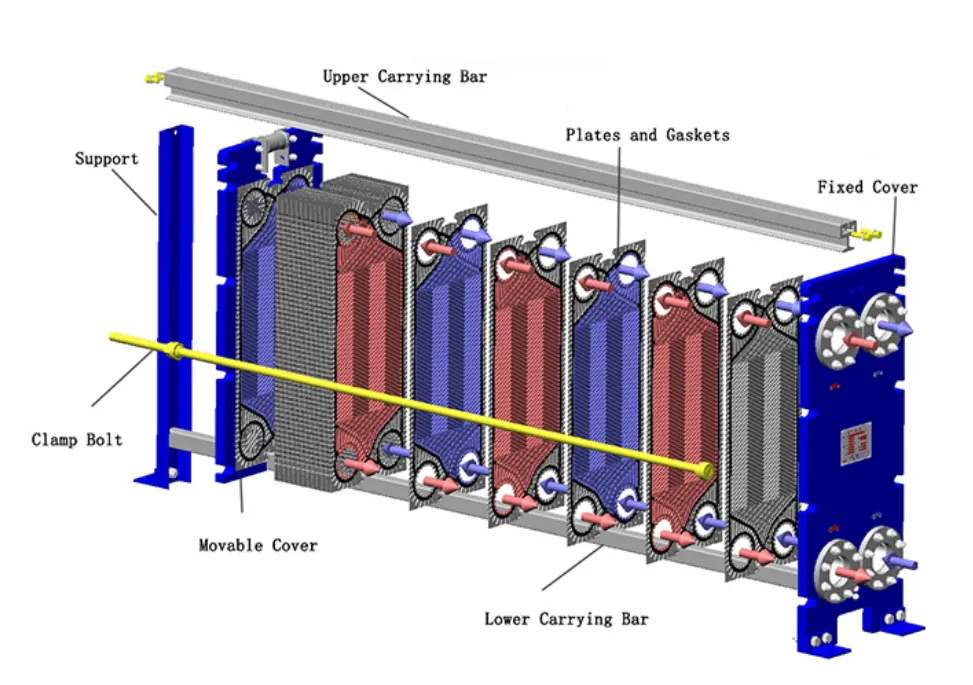
How temperature and chemistry age a gasket
Gaskets don't fail randomly — they age through three mechanisms, and understanding them helps you predict replacement. Thermal ageing hardens the elastomer over time; the hotter the duty relative to the compound's rating, the faster it embrittles, which is why running NBR near its limit shortens its life dramatically. Chemical attack swells or degrades a mismatched compound — the reason oil on EPDM or hot water on NBR fails early. Compression set is the gradual loss of the gasket's springiness under constant clamping load, so it can no longer take up small movements and starts to weep. All three are slower when the compound is correctly matched with margin to the duty, which is the single biggest lever on gasket life. Sizing the exchanger so the gasket runs comfortably below its temperature ceiling — rather than at it — can double the interval between reglasketing.
Gasket cost vs downtime: the real economics
A set of gaskets is a small fraction of an exchanger's value, but a gasket failure can stop a whole process line. That asymmetry is why gasket decisions should be made on reliability, not unit price. Choosing the correct compound with thermal margin, using clip-on attachment for fast field changes, and replacing on a planned interval all cost a little more upfront but avoid the far larger cost of an unplanned leak and shutdown. Pairing a sensible reglasketing schedule with condition monitoring turns gaskets from a source of surprise failures into a routine, budgeted maintenance item — which is exactly how a well-run plant treats them.
Genuine vs aftermarket gaskets: does it matter?
Yes. A gasket must match the plate groove geometry and the required compound exactly. An ill-fitting or wrong-compound aftermarket gasket may seal at first but fail early, leak, or contaminate the process. Sourcing gaskets from the exchanger's manufacturer — or a specialist who confirms plate model and duty — ensures the correct fit, material and lifetime. It is a small part with an outsized impact on uptime.
Planning a reglasketing: spares and lead time
Because a plate pack can hold dozens or hundreds of plates, a full reglasketing is a set of many gaskets, and you should plan it rather than react to a leak. Two practical points help. First, keep the plate and gasket details on file — the plate model, gasket compound and quantity — so a replacement set can be ordered quickly when the interval comes due; hunting for these specs during an unplanned outage wastes days. Second, hold a spares strategy suited to criticality: for a critical exchanger, a spare gasket set (or even a spare plate pack) on the shelf turns a multi-week lead time into a same-shift swap. For less critical units, ordering to a planned schedule is enough. A specialist manufacturer can advise on the right stocking level and confirm the exact compound and quantity for your unit, so the reglasketing is a smooth, budgeted event rather than an emergency. Building this into your maintenance plan is the difference between gaskets being a quiet routine and a recurring source of unplanned downtime.
Matching the gasket to the duty
SHPHE approaches gasket selection as an engineering decision, not a default. Its engineers pick the elastomer to suit both fluids and the peak temperature — NBR, EPDM or Viton — and the attachment type to suit the customer's field-maintenance practice, so the gasketed exchanger reaches its full service life without premature leaks. As a plate-heat-exchanger manufacturer since 2005 with ASME, CE, BV and SGS certification, SHPHE supplies genuine, correctly-specified gaskets and full regasketing guidance, and pairs them with Smart Eye monitoring so seal condition is tracked rather than guessed. The result is fewer unplanned shutdowns and a predictable maintenance schedule.
Source: SHPHE product information. Temperature ranges are indicative and depend on the specific compound and fluid.
As a specialist plate-heat-exchanger manufacturer, SHPHE (Shanghai Heat Transfer Equipment Co., Ltd.) supplies correctly-specified gaskets, plates and full gasketed plate heat exchanger solutions, backed by ASME/CE/BV/SGS certification and 30+ patents.
Send SHPHE your plate model and fluids for the correct gasket material and spec.
Consult our engineers →In short, the gasket is a small component with an outsized influence on a plate exchanger's reliability and service life. Matching gasket material, style and maintenance to the actual fluids, temperatures and cleaning regime — rather than accepting a default — is what keeps a unit sealed, safe and efficient for years, and it is exactly the care SHPHE applies to every gasket specification.
Frequently asked questions
What gasket material should I use for a plate heat exchanger?
Match it to both fluids and the peak temperature: NBR for water/oil (~110–140 °C), EPDM for hot water/steam and many chemicals (~150–170 °C), Viton/FKM for oils, fuels and aggressive media (~180 °C).
What is the difference between NBR and EPDM gaskets?
NBR resists oils but not hot water; EPDM resists hot water, steam and many chemicals but swells in mineral oils. Never use NBR on hot water or EPDM on oil.
How do I know when to replace my gaskets?
External leaks or weeping, cross-contamination between fluids, hardened/cracked gaskets on opening, and loss of bolt tension all indicate replacement is due.
Are clip-on gaskets better than glued?
For field servicing, yes — clip-on gaskets fit without adhesive or cure time, cutting downtime. Glued gaskets suit high-shear duties but take longer to replace.
Can I use aftermarket gaskets?
Only if they exactly match the plate groove and required compound. A wrong fit or compound seals at first but fails early — source from the manufacturer or a verified specialist.
Sources & further reading: SHPHE product information; general plate-heat-exchanger gasket conventions. Temperature limits are indicative — confirm the compound against your specific fluids and duty.