
Wide channel gaps form the backbone of every anti-clogging heat exchanger. This design allows fluids with high viscosity, slurries, or even coarse solids to move freely, preventing blockages and reducing fouling. Anti-clogging design is critical for industrial systems, as it helps maintain reliability and lowers maintenance costs. The wide gap welded plate heat exchanger from SHPHE stands out for its anti-clogging performance.
Industries see:
Improved uptime and thermal efficiency
Up to 25% greater energy savings
Easier maintenance and tailored configurations
Engineers and plant managers often ask how these features impact reliability, maintenance, and overall performance. This technology delivers clear answers.
Wide channel gaps in heat exchangers allow fluids with solids and high viscosity to flow freely, reducing the risk of clogging.
The anti-clogging design leads to improved efficiency, with some systems achieving over 90% heat transfer efficiency.
Easy maintenance features, like an openable design, simplify cleaning and reduce downtime, saving time and costs.
Self-flushing effects from high flow velocities help keep the system clean, minimizing the need for manual cleaning.
Choosing the right heat exchanger design can lead to significant energy savings and enhanced reliability in industrial applications.
Wide channel gaps are larger spaces between the plates inside a heat exchanger. These gaps allow fluids to move through the system without getting stuck. Most standard plate heat exchangers have smaller gaps, which can trap particles and fibers. In contrast, a wide flow channel design creates more room for different types of fluids, including those with solids or high viscosity.
Tip: Choosing the right channel size is important for handling challenging fluids.
Here is a table that compares typical dimensions and features of wide and standard channel gaps:
Feature | Wide Channel Gaps | Standard Channel Gaps |
|---|---|---|
Gap Size | 6-20 mm (customizable) | Smaller, less flexible |
Fluid Handling Capability | Handles fibers, particulates, and thick fluids | Best for clean, thin fluids |
Clogging Issues | Avoids clogging problems | Can clog with certain fluids |
Wide channel gaps are often found in anti-clogging heat exchanger systems. These systems use a wide flow channel design to keep fluids moving smoothly, even when they contain particles or sticky materials.
The main role of wide channel gaps in an anti-clogging heat exchanger is to prevent fouling and blockages. When fluids with fibers or coarse particles enter the exchanger, the wide gaps let them pass through without building up. This reduces the risk of fouling, which can slow down or stop the flow.
Suitable for fibrous fluids
Effective for highly viscous fluids
Designed for fluids containing coarse particles
Wide channel gaps also improve flow dynamics. The extra space helps particles move along with the fluid, instead of collecting at bends or corners. This keeps the system running efficiently and lowers maintenance needs.
Wide gaps play a key role in the anti-clogging heat exchanger. These gaps create more space between each channel, which allows fluids to move without getting stuck. In many industrial settings, fluids contain fibers, particles, or even high-solids slurries. Standard designs often struggle with these materials, leading to blockage and reduced heat exchange efficiency.
The wide flow channel design in SHPHE’s Wide Gap Welded Plate Heat Exchanger supports channels ranging from 8mm to 30mm. This range can handle particles and fibers up to 12 mm in diameter. As a result, the system can process high-viscosity fluids and challenging slurries that would otherwise cause clogging in traditional exchangers.
Note: The wide channel also helps maintain a steady flow, which is important for preventing fouling and blockage.
Studies show that increasing flow velocity inside a heat exchanger reduces fouling accumulation. When flow slows down, fouling builds up faster, which can lead to severe blockage. Structural optimizations, like those found in the anti-clogging heat exchanger, help keep flow velocity uniform. This reduces the risk of fouling and keeps the system running smoothly.
Key benefits of wide gaps:
Allow fibers, solids, and sticky materials to pass through
Reduce the chance of blockage and fouling
Support reliable operation in tough industrial environments
The anti-clogging design uses self-flushing and free flow effects to keep the system clean. When fluids move quickly through the wide flow channel design, they create turbulence. This turbulence helps sweep away particles and deposits before they can stick to the channel walls.
Self-flushing means the system cleans itself as it operates, reducing the need for frequent manual cleaning.
The SHPHE WGPHE’s wide channels allow for free movement of both liquids and solids. This design is especially effective for anti-clogging because it prevents buildup in the first place. The combination of wide gaps and strong flow means that even high-solids slurries can move through the exchanger without causing blockage.
Here is a quick look at how these effects work together:
Feature | Impact on Blockage and Fouling |
|---|---|
Wide channel | Allows solids to pass through easily |
Self-flushing flow | Removes deposits before buildup occurs |
High flow velocity | Reduces fouling and blockage risk |
The anti-clogging design of the SHPHE Wide Gap Welded Plate Heat Exchanger starts with its strong structure. The unit uses a fully welded, gasket-free architecture. This means there are no gaskets that can wear out or leak. The welded plates create a secure seal, which helps maintain high heat transfer efficiency and prevents unwanted leaks. The robust construction uses premium metals and precision robotic welding. These materials resist corrosion and damage, even when handling high-viscosity fluids or aggressive chemicals.
Optimized plate corrugations play a key role in the wide flow channel design. These corrugations increase turbulence inside the channels. More turbulence means better mixing and improved heat exchange efficiency. The design also supports a reliable filtration system, which helps separate solids and fibers from the main flow. This combination of features ensures the anti-clogging design works well in tough industrial settings.
Note: The anti-clogging design allows for efficient operation with minimal risk of blockage, even when processing fluids with large particles.
Easy maintenance is another important part of the anti-clogging design. The SHPHE WGPHE features an openable design. Operators can access all sides of the unit for inspection and cleaning. This makes it simple to remove any buildup or deposits. Cleaning methods include automated Clean-in-Place (CIP) systems, high-pressure water jets, and ultrasonic cleaning. These methods help keep the flow channels clear and maintain high efficiency.
A table below shows the main cleaning options:
Cleaning Method | Benefit |
|---|---|
CIP | Fast, automated cleaning |
Water Jets | Removes tough deposits |
Ultrasonic Cleaning | Deep, thorough cleaning |
The anti-clogging features reduce downtime and make routine maintenance easier. This leads to longer service life and better performance for the filtration system. The anti-clogging design ensures that the heat exchanger stays reliable, even in demanding applications.
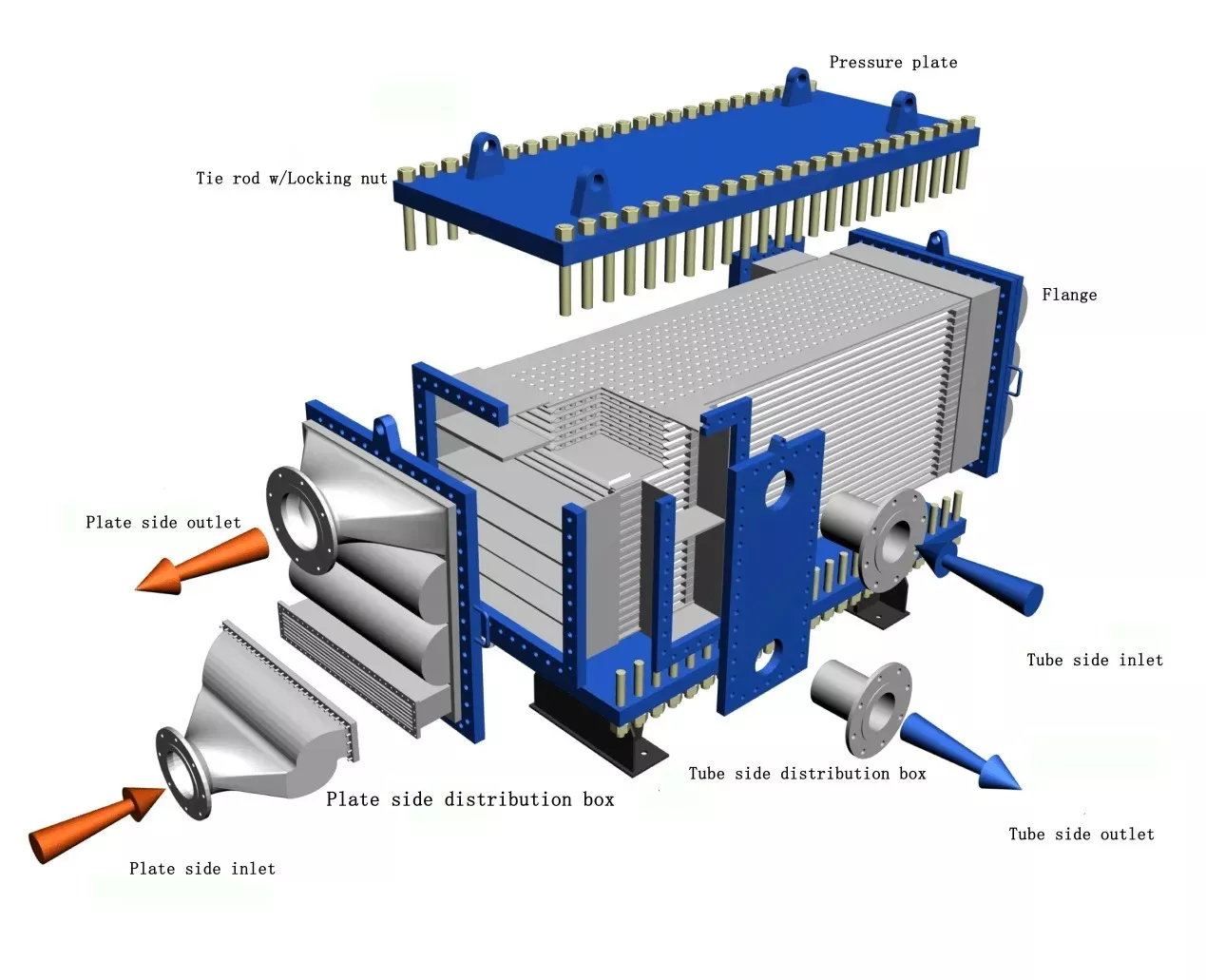
Many industrial plants use traditional brazed plate heat exchanger systems with narrow channels. These designs often face clogging problems when handling challenging fluids. The risk of blockage increases when fluids contain fibers, sludge, or suspended particles. Narrow channels can also trap scale and crystals, which leads to reduced flow and higher maintenance needs.
Common clogging risks in traditional brazed plate heat exchanger units include:
Fluids containing fibers
Sludge buildup
Scale formation
Crystals from chemical reactions
Suspended particles in the process stream
When these materials enter a narrow channel, they can stick to the walls or collect at bends. This buildup slows down the flow and can stop the system. Operators must clean the equipment more often, which increases downtime and costs.
Wide gap heat exchangers offer a clear advantage over traditional brazed plate heat exchanger models. The wide channel design allows fluids with solids or high viscosity to move freely. This reduces the risk of blockage and keeps the system running smoothly. In many cases, wide gap exchangers reach efficiency ratings of over 90%. This means less energy is lost during heat transfer.
Materials like stainless steel, used in wide gap exchangers, have thermal conductivity values between 15 and 25 W/m·K. This helps boost overall performance. The robust structure also means fewer leaks and less wear over time. Plants using wide gap exchangers report fewer shutdowns and lower maintenance costs.
A comparison table highlights the main differences:
Feature | Brazed Plate Heat Exchanger (Narrow) | Wide Gap Heat Exchanger |
|---|---|---|
Channel Size | Small | Wide |
Clogging Risk | High | Low |
Efficiency | Moderate | Over 90% |
Maintenance Frequency | Frequent | Reduced |
Suitable for Solids/Viscous | No | Yes |
Wide gap exchangers provide reliable performance in tough conditions. They help plants avoid costly downtime and keep operations efficient.
The anti-clogging design of the SHPHE Wide Gap Welded Plate Heat Exchanger makes cleaning and inspection simple. The openable design allows operators to access the entire interior. This feature means that technicians can use manual cleaning or high-pressure washing to remove deposits. The table below shows how openable and non-openable designs compare:
Feature | Openable Design | Non-Openable Design |
|---|---|---|
Cleaning Method | Manual cleaning or high-pressure washing | Clean-in-place (CIP) system |
Maintenance Efficiency | Enhanced due to easy access | Limited access increases downtime |
Downtime | Minimized due to easy disassembly | Increased due to complex cleaning |
With total internal access, the anti-clogging design reduces the time needed for maintenance. Operators can inspect all surfaces and quickly remove any buildup. This approach helps keep the filtration system working at peak performance and supports high heat exchange efficiency.
The SHPHE WGPHE offers several operational advantages. The anti-clogging design leads to less downtime and lower maintenance costs. Plate and frame heat exchangers, especially those with openable features, simplify maintenance. One technician can open, clean, and reassemble the unit, which minimizes labor costs and keeps the system running. Regular maintenance planning and leak tests also help reduce unexpected downtime.
Wide gap heat exchangers are versatile. They handle fluids with large fibers and particles, which makes them useful in many industries. The ability to configure asymmetrical channels ensures smooth flow and prevents clogging. This adaptability is important for sectors like food processing and pharmaceuticals, where process hygiene and energy recovery matter.
The anti-clogging design also supports a compact plant footprint. The SHPHE WGPHE fits into tight spaces while maintaining high performance. The robust construction ensures durability and long service life. The filtration system works efficiently, even with challenging fluids. The design also provides low pressure loss, which helps maintain system efficiency.
The SHPHE Wide Gap Welded Plate Heat Exchanger stands out compared to a brazed plate heat exchanger. It offers better performance, easier cleaning, and reliable operation for demanding applications.
Wide channel gaps and anti-clogging design help stop fouling and keep heat exchangers working well. The SHPHE Wide Gap Welded Plate Heat Exchanger shows strong performance and easy maintenance. Future trends in the industry include:
High-efficiency and compact designs for better performance and smaller space
Use of advanced materials for more durability
Focus on energy efficiency and green manufacturing
These changes will help plants handle clogging and improve reliability.
This heat exchanger works with many fluids. It handles viscous liquids, slurries, and fluids with fibers or solids. It is ideal for tough industrial processes.
The wide channel gaps let solids and fibers pass through. This reduces blockages and keeps the filtration process smooth and reliable.
No. The openable design allows easy access. Operators can use water jets, ultrasonic cleaning, or Clean-in-Place systems. Maintenance is quick and simple.
Yes. The design increases heat transfer efficiency. Plants use less energy and see lower costs over time.
Yes. The robust construction and welded plates allow the unit to handle high pressures and temperatures. It works well in demanding environments.



 English EN


