English EN


What Are The Different Types of Plate Heat Exchangers
Plate Heat Exchangers include gasketed, brazed, welded, semi-welded, shell and plate, and specialty types for varied industrial uses.
More
John A. Thermal
Jun-16-2026
Compact heat exchangers achieve superior thermal performance through fundamental design principles that maximize surface area-to-volume ratios, enabling rapid heat transfer within minimal spatial footprints. Material innovation and microchannel technology further drive higher thermal conductivity and compactness, allowing these systems to handle extreme temperatures and pressures while maintaining structural integrity. By reducing fluid inventory and minimizing energy losses associated with pumping and leakage, compact exchangers significantly lower operational costs across applications. Their versatility spans industries from aerospace and automotive to chemical processing and electronics cooling, adapting seamlessly to harsh, vibration-prone, or space-constrained environments. Comparative performance analysis consistently demonstrates that compact designs outperform traditional shell-and-tube systems in thermal efficiency, pressure drop management, and overall lifecycle economy, making them the preferred choice for modern thermal management challenges where every square millimeter and every watt count.
The core advantage of compact heat exchangers lies in their ability to achieve exceptionally high surface area-to-volume ratios. Unlike conventional shell-and-tube designs, compact geometries such as corrugated plates, printed circuit channels, or welded plate packs dramatically increase the heat transfer surface within a given volume. This fundamental design principle directly translates into superior thermal performance, allowing for closer approach temperatures and significantly higher heat transfer coefficients.
By reducing the hydraulic diameter of the flow passages, compact heat exchangers promote turbulent flow at lower Reynolds numbers. This enhances convective heat transfer while maintaining a compact footprint. The resulting efficiency gains are critical for applications where space, weight, and energy conservation are paramount—from aerospace thermal management to industrial waste heat recovery.
For engineers evaluating thermal management solutions, the surface area-to-volume ratio is the most direct indicator of potential efficiency. Compact heat exchangers routinely achieve ratios exceeding 700 m²/m³, compared to 100-150 m²/m³ for conventional shell-and-tube units. This order-of-magnitude improvement enables dramatic reductions in equipment size and fluid inventory, while simultaneously improving thermal response and reducing parasitic pumping losses.
The practical implications are substantial: lower capital costs, reduced installation space requirements, and enhanced system-level energy efficiency. These attributes make compact heat exchangers the preferred choice for modern thermal management challenges across diverse industries.
Explore advanced compact heat exchanger configurations: Plate Air Preheater, Printed Circuit Heat Exchanger, Gasketed Plate Heat Exchanger
Advanced materials such as high-conductivity alloys, ceramics, and composites are redefining the thermal performance boundaries of compact heat exchangers. These materials enable significantly higher heat transfer coefficients while maintaining structural integrity under extreme temperatures and pressures.
Microchannel technology further amplifies efficiency by creating intricate fluid pathways that maximize surface-area-to-volume ratios. Channels as small as 100-500 microns promote turbulent flow, reducing thermal resistance and enabling heat flux densities exceeding 100 W/cm².
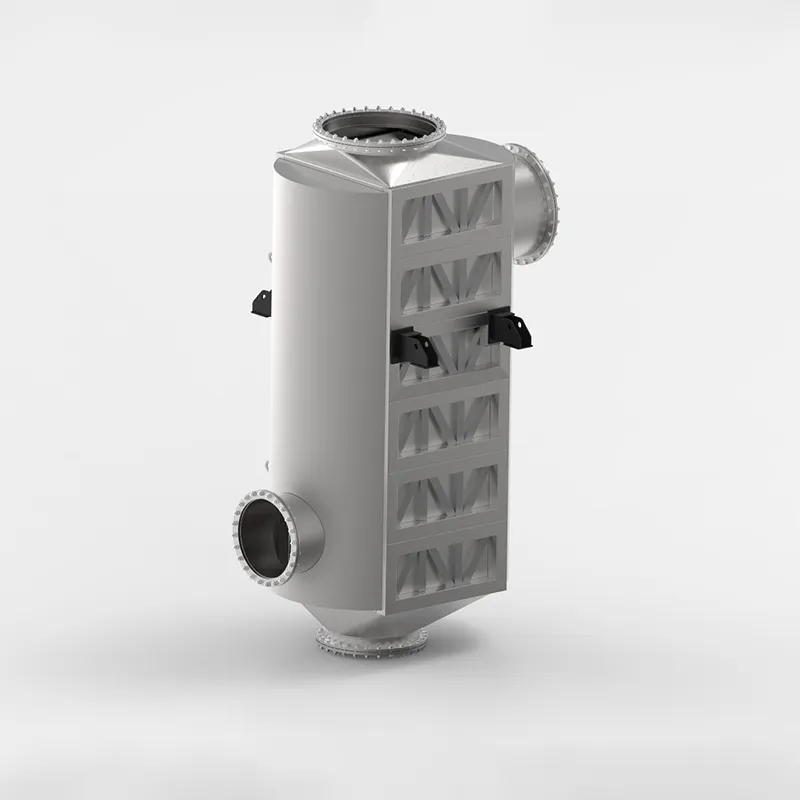
The synergy between material science and microchannel design yields exchangers that are 40-60% smaller than conventional shell-and-tube units, with comparable or superior thermal performance. This compactness directly benefits industries where space and weight are critical—aerospace, electric vehicles, and data center cooling.
By integrating these innovations, modern thermal management systems achieve unprecedented levels of energy efficiency, reduced material usage, and lower lifecycle costs. The result is a scalable solution that meets the demanding requirements of next-generation electronics, renewable energy systems, and industrial processes.
Compact heat exchangers are engineered to minimize the volume of working fluid required within the system. This reduction in fluid inventory directly translates to lower expenses for expensive refrigerants, heat transfer fluids, or process chemicals. Furthermore, their highly optimized internal geometry significantly reduces parasitic pressure drops, leading to diminished pumping energy consumption over the equipment lifecycle.
The combination of lower fluid hold-up and enhanced thermal effectiveness means that systems require less input power to achieve the desired heat transfer duty. This dual benefit is particularly critical in applications such as chemical processing, HVAC, and renewable energy systems, where operational efficiency dictates overall profitability.
| Parameter | Conventional Exchanger | Compact Exchanger | Reduction (%) |
|---|---|---|---|
| Fluid Inventory (L) | 120 | 45 | 62.5% |
| Pressure Drop (kPa) | 85 | 38 | 55.3% |
| Pumping Power (kW) | 7.2 | 2.9 | 59.7% |
| Annual Energy Cost (USD) | 4,800 | 1,950 | 59.4% |
Table data illustrates a typical industrial scenario where replacing a conventional shell-and-tube unit with a compact plate or printed circuit heat exchanger yields substantial savings. The reduction in fluid inventory not only cuts initial fill costs but also minimizes ongoing makeup and disposal expenses. Simultaneously, lower energy consumption directly improves the system's coefficient of performance.
For engineers and plant managers seeking to optimize total cost of ownership, compact exchangers present a clear advantage. Explore specific compact exchanger designs such as printed circuit heat exchangers or welded plate heat exchangers to evaluate their fit for your thermal management requirements.
Compact heat exchangers excel in demanding industrial settings where space is limited and operating conditions are severe. Their robust construction and high thermal efficiency make them ideal for applications ranging from chemical processing to power generation, ensuring reliable performance under extreme temperatures and pressures.
Engineered with precision, these units withstand corrosive fluids and vibration-rich environments while maintaining compact footprints. Industries such as oil and gas, pharmaceuticals, and HVAC benefit from reduced maintenance needs and enhanced heat transfer rates, driving operational cost savings and sustainability goals.
Customizable configurations allow seamless integration into existing systems, from offshore platforms to mobile equipment. By optimizing thermal management in constrained spaces, compact heat exchangers deliver unmatched adaptability and long-term durability across diverse industrial sectors.
Compact heat exchangers achieve up to 70% higher thermal efficiency per unit volume compared to conventional shell-and-tube designs. This performance advantage stems from fundamentally different heat transfer mechanisms and surface area optimization strategies.
Compact designs such as printed circuit heat exchangers offer surface area densities of 500-2500 m²/m³, while shell-and-tube systems typically achieve only 50-150 m²/m³. This 10-50x increase in surface area directly translates to enhanced heat transfer rates without proportional increases in footprint.
Advanced geometries in welded plate heat exchangers generate higher turbulence and thinner boundary layers. Typical overall heat transfer coefficients range from 500-1500 W/m²K for compact units versus 100-500 W/m²K for shell-and-tube designs, representing a 3-5x improvement in thermal performance.
Compact exchangers like pillow plate designs achieve temperature approaches as low as 1-3°C, compared to 5-10°C for shell-and-tube systems. This capability for closer temperature approaches enables greater heat recovery and improved system efficiency in applications such as waste heat recovery and process cooling.
While compact designs often operate at higher pressure drops per unit length, their significantly shorter flow paths and optimized channel geometries result in lower overall pressure drop for equivalent thermal duty. Wide gap welded plate exchangers demonstrate 30-50% lower pumping power requirements compared to shell-and-tube units for the same heat transfer rate.
The high surface area density of compact designs reduces material requirements by 40-60% compared to shell-and-tube systems. Gasketed plate heat exchangers and TP welded plate exchangers achieve weight reductions of 50-70% for equivalent thermal performance, making them ideal for offshore, aerospace, and space-constrained installations.
Contrary to common assumptions, modern compact designs such as plate air preheaters exhibit superior fouling resistance due to higher wall shear stresses and smoother surfaces. Cleaning intervals are extended by 30-50% compared to shell-and-tube units, reducing downtime and operational costs.
When evaluated on a total cost of ownership basis, compact heat exchangers consistently demonstrate 20-40% better efficiency across diverse applications. Their ability to integrate multiple process streams, handle extreme temperatures and pressures, and maintain performance over extended operational periods makes them the preferred choice for modern thermal management challenges.
Compact heat exchangers achieve superior thermal performance through design principles that maximize surface area-to-volume ratios, enabling more efficient heat transfer within a smaller footprint. This geometric optimization is further enhanced by material innovation and microchannel technology, which together drive higher thermal conductivity and allow for extreme compactness without sacrificing structural integrity.
The reduced fluid inventory and minimized energy loss inherent to these designs directly translate into lower operational costs. By requiring less working fluid and reducing parasitic pumping power, compact exchangers offer a more economical solution over the equipment lifecycle compared to traditional systems.
Their versatility across industries is a critical advantage, as compact heat exchangers can be adapted to harsh and space-constrained environments where conventional shell-and-tube units cannot function effectively. This adaptability ensures reliable thermal management in applications ranging from aerospace to chemical processing.
A comparative performance analysis consistently demonstrates that compact designs outperform traditional shell-and-tube systems in efficiency. The combination of higher heat transfer coefficients, lower temperature approach, and reduced weight makes them the most effective solution for modern thermal management challenges.
In conclusion, the convergence of advanced geometry, material science, and application-specific engineering positions compact heat exchangers as the optimal choice for achieving high-performance thermal management in contemporary industrial systems.
We provide you with comprehensive foreign trade solutions to help enterprises achieve global development
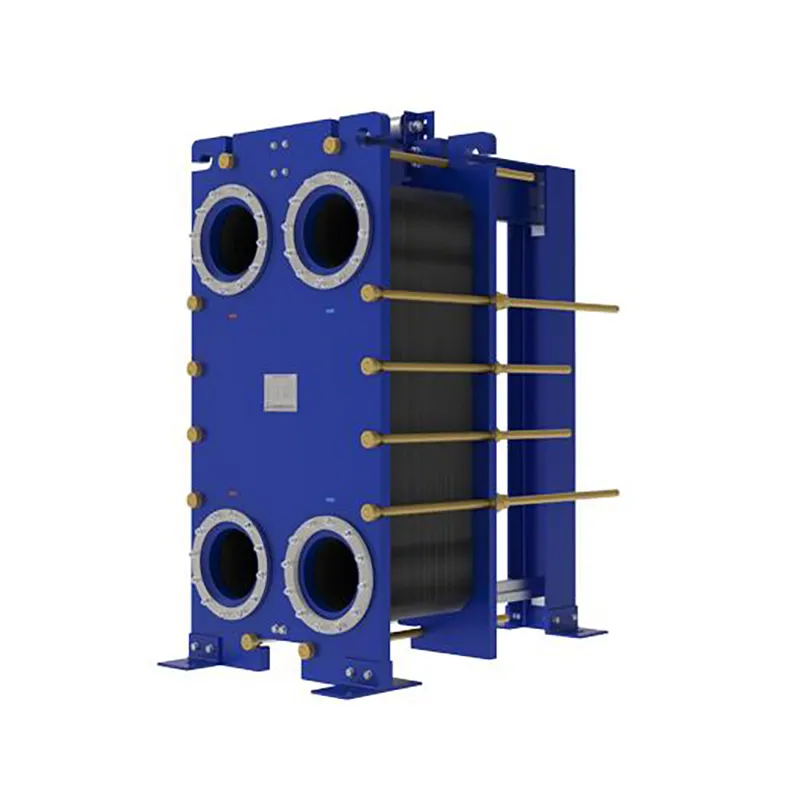
Since the invention of the plate heat exchanger (PHE) in 1923, thermal technology has evolved from standard food-grade processing to highly complex industrial operations. At SHPHE, we take this classic, versatile design and transform it into highly bespoke heat transfer solutions tailored to your unique process fluids and thermal loads. While traditional gasketed PHEs offer high efficiency and compact footprints, SHPHE optimizes plate corrugations, metallurgy, and sealing systems to handle your specific chemical, HVAC, or energy recovery parameters. Our custom-engineered gasketed plate heat exchangers provide outstanding scalability and ease of maintenance, serving as an indispensable asset for heavy industries—including oil and gas, metallurgy, and food processing—where uptime, energy recovery, and long-term sustainability are top priorities.
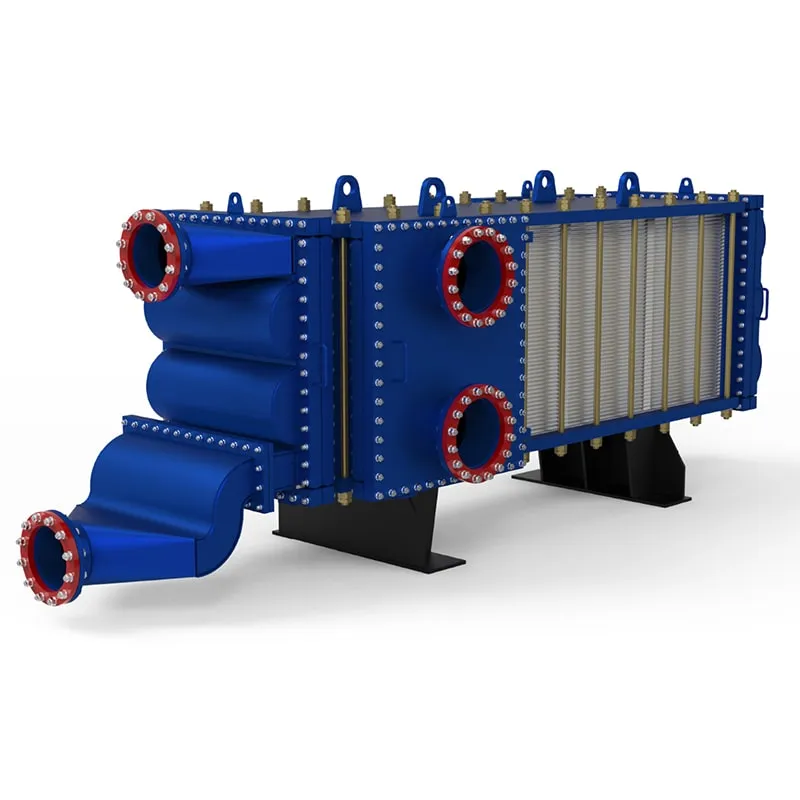
Custom-Engineered Anti-Clogging Solutions for High-Viscosity Slurries:
Deployed specifically to conquer severe industrial fouling, SHPHE wide gap welded plate heat exchangers are tailor-built to handle complex media containing dense fibers, coarse crystals, or solid suspensions without clogging. Each non-obstructed channel is calculated and formed by laser-welded plate packs matching your fluid’s exact rheology and grain size, completely eliminating structural "dead zones" and media stagnation. Available in highly compact vertical and versatile horizontal configurations, our vertical engineering drastically reduces plant footprints while maintaining unhindered product throughput, minimal pressure drops, and flawless continuous operations across harsh process loops.
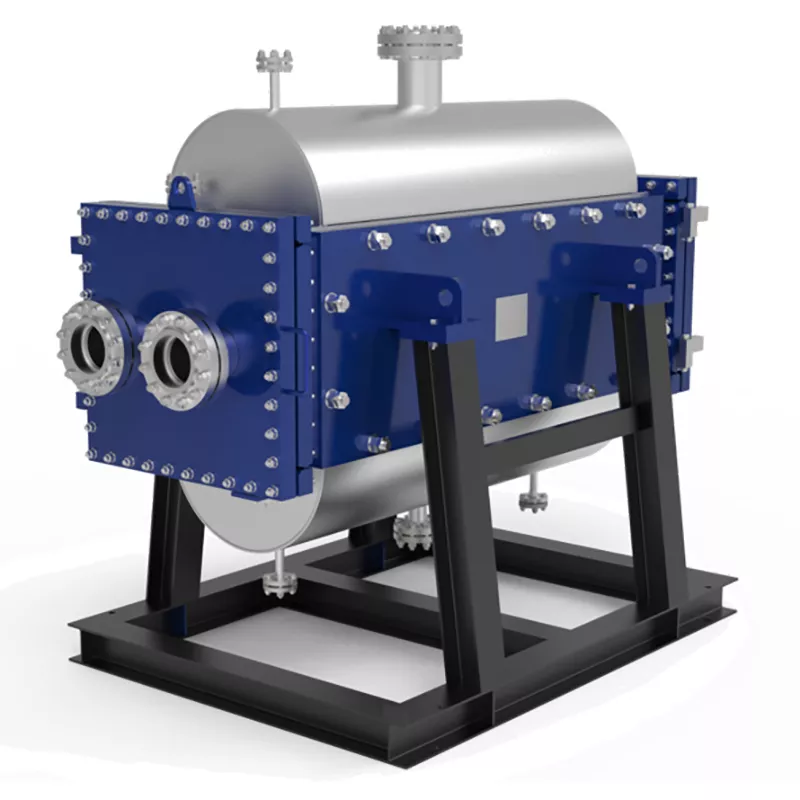
Industrial processes involving particle-laden slurries, high-viscosity syrups, or fiber-rich pulp demand more than standard equipment—they require target-engineered thermal management. At SHPHE, we configure the TP Welded Plate Heat Exchanger to directly conquer your plant's severe fouling, blockage, and erosion threats. Combining custom-tailored channel geometries, wear-resistant metallurgy, and integrated CIP (Cleaning-in-Place) systems, we deliver absolute production continuity where conventional heat exchangers fail.
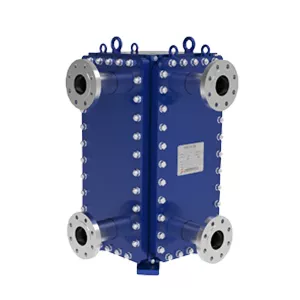
Custom-Engineered for Severe Process Demands. At SHPHE, we don't just supply equipment; we design tailored thermal solutions. Our HT-Bloc welded plate heat exchangers are custom-configured by our experienced engineers to overcome your specific industry challenges—whether handling high-viscosity media, extreme temperatures, or strict space constraints.