Why Choose a Semi Welded Plate Heat Exchanger for Ammonia Systems
Ammonia refrigeration and processing systems demand heat exchange equipment that can withstand high pressures, resist corrosion, and deliver consistent thermal performance. Semi welded plate heat exchangers have become a preferred solution in these demanding applications, combining the flexibility of gasketed designs with the durability of fully welded units. This article examines the key technical advantages, construction features, and real-world considerations that make semi welded plate heat exchangers a smart choice for ammonia-based systems.
Understanding the Semi Welded Plate Heat Exchanger Design
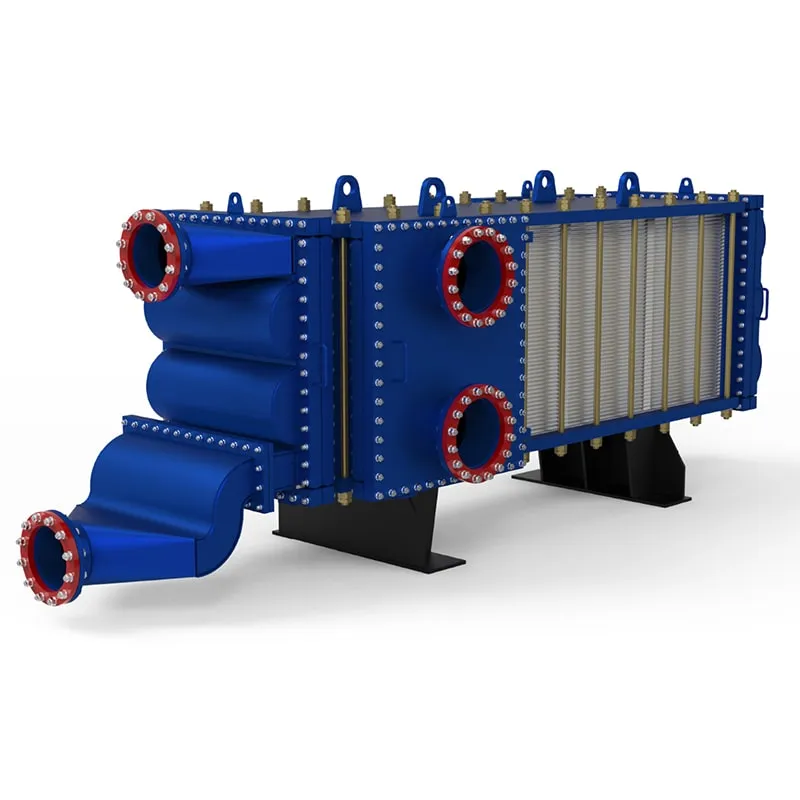
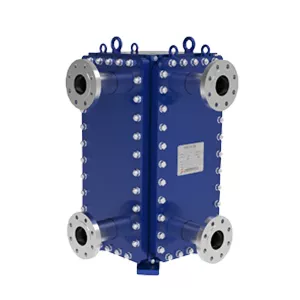
A semi welded plate heat exchanger is constructed by laser-welding pairs of plates together along the periphery of the gasket groove. This creates two distinct flow channels: one channel is sealed by the welded joints, while the other remains accessible through conventional gaskets. For ammonia systems, the welded side typically handles the ammonia refrigerant, while the secondary fluid (often water, brine, or glycol) flows through the gasketed side.
This hybrid construction offers a practical middle ground. The welded channels eliminate the risk of ammonia leakage through gasket materials that may degrade over time, while the gasketed channels allow for mechanical cleaning, inspection, and plate replacement when servicing the secondary fluid side. This design is particularly valuable in ammonia applications where safety and maintenance accessibility are equally important.
Pressure and Temperature Capabilities for Ammonia Duty
Ammonia systems often operate at elevated pressures, especially in large industrial refrigeration plants where the condensing pressure can reach 20 to 25 bar depending on ambient conditions. Semi welded plate heat exchangers are typically rated for design pressures up to 30 bar on the welded side, making them suitable for most ammonia applications without requiring excessive safety margins.
The operating temperature range for these units generally spans from -40°C to +180°C, covering the full spectrum of ammonia refrigeration duty, including low-temperature evaporator service and high-temperature desuperheating or heat recovery applications. The welded seam construction eliminates the need for elastomeric gaskets on the ammonia side, which is a significant advantage because many gasket materials become brittle or swell when exposed to anhydrous ammonia over extended periods.
Material Selection and Corrosion Resistance
Standard plate materials for ammonia service include stainless steel grades such as AISI 316L, which offers good general corrosion resistance. However, when ammonia contains moisture or when the secondary fluid is seawater or chloride-bearing brine, higher alloy materials like titanium or Alloy 254 SMO may be specified. The semi welded design allows for different plate materials on the two sides, so the welded ammonia channel can be manufactured from a material optimised for ammonia compatibility, while the gasketed channel uses a material suited to the secondary fluid.
For ammonia systems where stress corrosion cracking is a concern, particularly in the presence of oxygen and moisture, selecting the correct plate material becomes critical. Many manufacturers offer plates with enhanced nickel content or molybdenum-bearing alloys to mitigate this risk. The laser-welded seam itself, when properly executed, maintains the corrosion resistance of the base material, provided the welding parameters are carefully controlled to avoid sensitisation of the heat-affected zone.
Thermal Efficiency and Compact Footprint
The corrugated plate pattern in semi welded heat exchangers creates high turbulence even at moderate flow velocities. This results in heat transfer coefficients that are typically three to five times higher than those achieved in shell-and-tube exchangers of comparable duty. For ammonia systems, this means a significantly smaller heat transfer surface area is required, reducing both the physical footprint and the refrigerant charge volume.
A lower ammonia inventory is a substantial safety and economic benefit. Smaller refrigerant charge reduces the potential impact of a leak, lowers the cost of refrigerant, and simplifies compliance with environmental regulations that limit the use of high-GWP refrigerants. Although ammonia itself has zero ODP and zero GWP, reducing charge volume remains advantageous for operational safety and system efficiency.
Maintenance and Serviceability Considerations
One of the primary reasons engineers select semi welded plate heat exchangers for ammonia duty is the ability to service the unit without breaking into the ammonia circuit. The welded channels remain sealed, so the ammonia side is never exposed to the atmosphere during routine maintenance of the secondary side. This reduces the risk of moisture ingress into the ammonia system, which can cause corrosion and the formation of ammonium hydroxide.
When the gasketed side requires cleaning, the plate pack can be opened by loosening the compression bolts. Individual plates can be removed, inspected, and replaced if necessary. This is a significant advantage over fully welded units, where chemical cleaning is the only option for fouled channels. For ammonia systems that use river water or cooling tower water on the secondary side, periodic mechanical cleaning is often necessary to maintain thermal performance, making the semi welded design particularly practical.
Leak Detection and Operational Safety
The double-wall construction inherent in the semi welded design provides an additional safety feature: a leak detection channel between the welded and gasketed plate pairs. If a pinhole develops in either the welded seam or the gasketed plate, the fluid will migrate to this intermediate channel rather than mixing directly with the other fluid. This allows operators to detect a potential cross-contamination event before it becomes a critical failure.
In ammonia systems, this early warning capability is invaluable. Ammonia leaks into a water circuit can cause pH shifts and biological growth issues, while water leaking into the ammonia side can lead to ice formation and system blockages. The ability to monitor for such events through a simple pressure or conductivity sensor on the leak detection port significantly enhances overall system reliability and safety.
Comparing Semi Welded with Fully Welded and Gasketed Designs
Fully welded plate heat exchangers eliminate all gaskets, which is advantageous for aggressive chemicals and extremely high pressures. However, they cannot be mechanically cleaned and require chemical cleaning procedures that may not be effective for all fouling types. For ammonia systems where the secondary fluid is clean (such as closed-loop glycol), a fully welded unit may be appropriate. But when the secondary side is subject to fouling, the semi welded design offers a clear advantage.
Conventional gasketed plate heat exchangers are less expensive initially and offer maximum flexibility for capacity changes. However, standard elastomeric gaskets are not compatible with ammonia. Special gasket materials such as EPDM or HNBR can be used, but they have a limited service life and must be replaced periodically. The semi welded design removes this concern entirely for the ammonia side, providing a more robust long-term solution without sacrificing the ability to service the secondary side.
Application Examples in Ammonia Refrigeration
Semi welded plate heat exchangers are widely used as condensers, evaporators, desuperheaters, and subcoolers in ammonia refrigeration plants. In a typical two-stage ammonia system, a semi welded unit may serve as an intercooler between the high-stage and low-stage compressors, where the ammonia-to-ammonia heat exchange requires a welded channel to prevent any possibility of leakage.
In food processing facilities, these exchangers are commonly used for glycol cooling duties where the glycol loop serves multiple cold rooms and process chillers. The ammonia side is welded for safety, while the glycol side can be opened for inspection and cleaning during scheduled maintenance shutdowns. This arrangement has proven reliable in hundreds of installations worldwide, with service intervals of five years or more between major overhauls.
Economic Considerations and Lifecycle Costs
While the initial purchase price of a semi welded plate heat exchanger is higher than a comparable gasketed unit, the total lifecycle cost is often lower. The elimination of gasket replacement on the ammonia side reduces maintenance labour and downtime. The ability to mechanically clean the secondary side extends the operational life of the unit and maintains peak thermal efficiency, which translates directly into lower energy consumption.
For ammonia systems that operate continuously, such as those in cold storage warehouses or chemical processing plants, the cost of unscheduled downtime far exceeds any difference in equipment pricing. The robustness of the semi welded design, combined with its serviceability, provides a compelling economic case for most ammonia applications.
Selecting the Right Manufacturer and Configuration
When specifying a semi welded plate heat exchanger for ammonia service, it is essential to work with a manufacturer that has proven experience in this application. Key factors to evaluate include the quality of the laser welding process, the availability of plate materials suitable for ammonia, and the manufacturer's ability to provide pressure vessel certification in accordance with relevant codes such as PED, ASME, or GB/T standards.
The plate pattern and chevron angle should be selected based on the specific flow rates, allowable pressure drop, and desired thermal performance. For ammonia condensing duties, a plate pattern that promotes film-wise condensation is preferred. For liquid-to-liquid duties, a higher turbulence pattern may be more appropriate. A reputable manufacturer will use thermal design software to optimise the plate configuration for each application.
For those evaluating different heat exchanger types for ammonia systems, it is also worth reviewing the specifications of TP welded plate heat exchangers and HT-Bloc welded plate heat exchangers to understand how they compare. Additionally, for applications involving viscous fluids or particulates, a wide gap welded plate heat exchanger may be more suitable. The selection ultimately depends on the specific process conditions and maintenance philosophy of the plant.
Installation and Commissioning Best Practices
Proper installation is critical to realising the full benefits of a semi welded plate heat exchanger in ammonia service. The unit should be mounted with adequate clearance on the gasketed side to allow for plate removal during maintenance. Piping connections should be supported independently to avoid transmitting excessive loads to the exchanger nozzles, which could distort the plate pack and compromise the gasket seals.
During commissioning, the ammonia side should be pressure-tested with dry nitrogen to the design pressure before introducing refrigerant. The gasketed side should be tested separately to ensure there is no cross-leakage through the double-wall construction. Once the unit is in service, regular monitoring of the leak detection ports should be incorporated into the plant's preventive maintenance schedule.
Future Trends and Industry Adoption
As the refrigeration industry moves toward natural refrigerants with lower global warming potential, ammonia is experiencing renewed interest. This has driven further development of semi welded plate heat exchanger technology, including improved welding techniques that reduce distortion and enhance the fatigue life of the plate pack. Manufacturers are also expanding their range of plate sizes and connection options to accommodate larger capacity ammonia systems.
The trend toward industrial IoT and predictive maintenance is also influencing the design of these units. Some manufacturers now offer optional sensors that can be integrated into the leak detection channel to provide continuous remote monitoring. This allows plant operators to receive early warnings of potential issues, further enhancing the reliability of ammonia systems equipped with semi welded plate heat exchangers.
In summary, the semi welded plate heat exchanger offers a balanced combination of safety, performance, and maintainability that is well suited to the demanding requirements of ammonia refrigeration and processing systems. Its growing adoption across industries reflects a practical engineering solution that addresses both operational needs and safety considerations.

 English EN





User Comments
Service Experience Sharing from Real Customers
Elena Rossi
Process EngineerWe swapped out an old gasketed unit for this semi-welded on our ammonia chiller loop. The leak rate dropped to zero. Installation was straightforward, and the pressure drop is noticeably lower than I expected. Solid build quality.
Marcus Chen
Maintenance SupervisorHandling anhydrous ammonia is always a headache, but this unit gives me peace of mind. The welded channels mean no gasket failures in the ammonia side. Only reason it's not 5 stars is the initial cost, but the reduced downtime makes it worth it.
Priya Sharma
Senior Process EngineerI've specified these for three ammonia plants now. The thermal performance is exactly as calculated, and the semi-welded design handles the thermal cycling better than fully bolted alternatives. No fugitive emissions so far, which is huge for our safety audits.
Tom O'Brien
Plant OperatorBeen running this on our ammonia condenser for six months. It's quiet, no vibrations, and cleaning the water side is a breeze compared to the old shell-and-tube. The only small gripe is the bolts on the water cover are a bit tight to reach, but that's minor.