How Does a Welded Block Heat Exchanger Handle High-Pressure and High-Temperature Fluids?
Author: Engineering Analysis Team
Date: Jul-06-2026
The welded block heat exchanger is engineered to manage extreme operational conditions through its monolithic construction, which eliminates traditional gasketed joints and reduces potential leak paths under high pressure. The block design distributes thermal and mechanical stress evenly across the structure, allowing it to withstand differential pressures exceeding 300 bar and temperatures up to 600°C. Material selection plays a critical role, with alloys such as stainless steel 316L, Inconel 625, and Hastelloy C-276 providing resistance to creep, oxidation, and thermal fatigue. The flow path geometry is optimized using compact channels that promote turbulent flow, enhancing heat transfer coefficients while minimizing pressure drop. Advanced sealing mechanisms, including laser-welded closures and compression ring seals, ensure zero leakage even during rapid thermal cycling. Compared to traditional shell-and-tube or plate heat exchangers, the welded block design offers superior thermal efficiency, reduced footprint, and extended service life in harsh environments such as chemical processing, oil and gas refining, and supercritical fluid systems. Its robust construction also simplifies maintenance by reducing the number of components subject to wear, making it a reliable solution for continuous high-demand operations.
Welded Block Construction: The Key to Withstanding Extreme Pressure and Thermal Stress
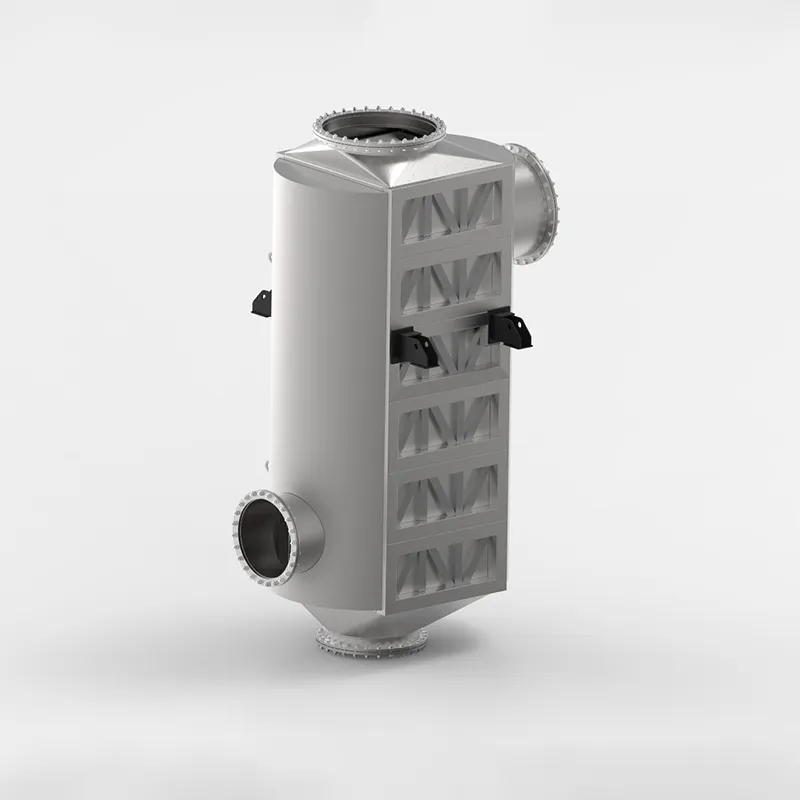
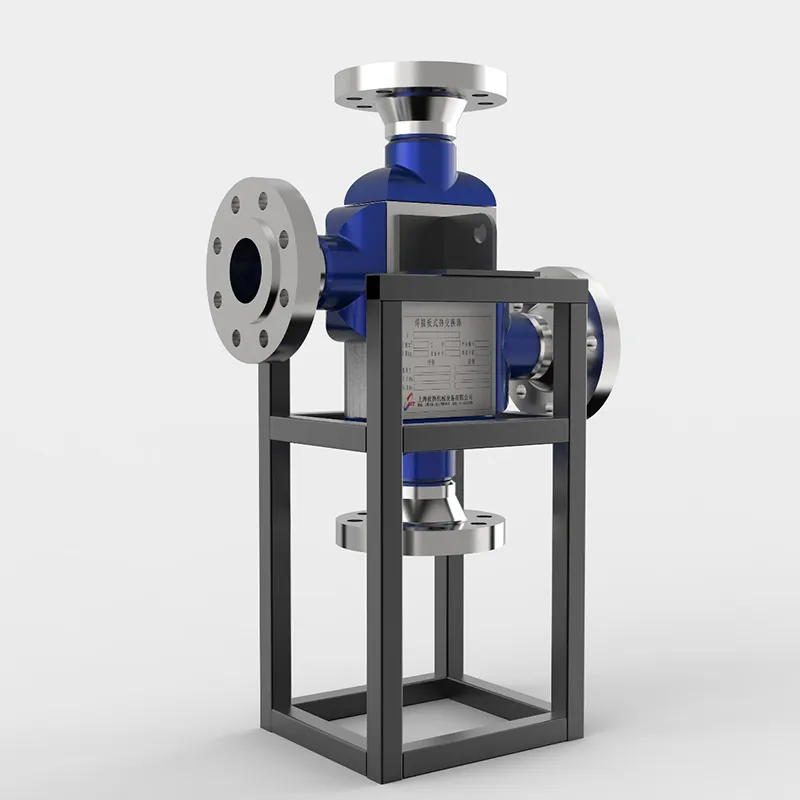
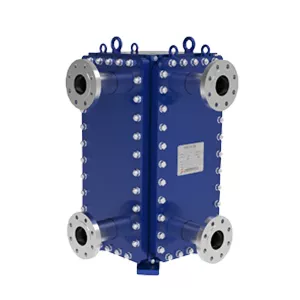
The welded block heat exchanger is engineered with a fully fused core structure, where individual plates are joined through automated welding processes. This creates a monolithic block that eliminates gaskets and brazing materials, providing exceptional resistance to both high pressure and high temperature.
Pressure Handling Capability
The welded block design allows the heat exchanger to operate at pressures exceeding 100 bar. The continuous weld seams distribute mechanical stress evenly across the entire block, preventing localized failure. This makes it suitable for high-pressure applications in chemical processing and oil refining.
Unlike traditional plate heat exchangers, the welded block construction does not rely on compression gaskets, which can degrade under extreme pressure cycles. The result is a robust unit that maintains integrity even during rapid pressure fluctuations.
Thermal Stress Management
High-temperature fluids, often reaching 300°C to 500°C, cause significant thermal expansion. The welded block design accommodates this through its uniform material composition and flexible channel geometry. The absence of dissimilar materials reduces the risk of thermal fatigue.
Each welded joint is designed to absorb thermal expansion without creating stress concentrations. This allows the heat exchanger to maintain its structural shape and sealing performance across a wide temperature range.
Material Selection and Weld Integrity
Stainless steel, duplex alloys, and nickel-based materials are commonly used in welded block construction. These materials offer high strength at elevated temperatures and resist corrosion from aggressive fluids. The welding process is carefully controlled to ensure full penetration and consistent metallurgical bonding.
Post-weld heat treatment is often applied to relieve residual stresses, further enhancing the block's ability to withstand cyclic thermal loading. This attention to material and weld quality is what enables the heat exchanger to perform reliably in extreme environments.
Material Selection and Its Role in High-Temperature Fluid Handling
The performance of a welded block heat exchanger under extreme thermal and pressure conditions is fundamentally determined by the materials used in its construction. High-temperature fluids impose significant stress on the heat transfer surfaces, requiring alloys that maintain mechanical strength and resist creep, oxidation, and corrosion at elevated temperatures.
For applications involving aggressive media such as superheated steam, hot gases, or thermal oils, stainless steels like 316L or duplex grades are commonly specified due to their excellent corrosion resistance and stable mechanical properties up to 500°C. In more demanding environments, nickel-based superalloys such as Inconel 625 or Hastelloy C-276 are employed to withstand temperatures exceeding 800°C while resisting thermal fatigue and stress corrosion cracking.
The selection process also considers the coefficient of thermal expansion, weldability, and cost-effectiveness. Proper material choice ensures long-term reliability, minimizes maintenance downtime, and optimizes heat transfer efficiency in high-pressure, high-temperature fluid handling systems.
Flow Path Design for Optimized Heat Transfer Under High-Pressure Conditions
In welded block heat exchangers, the flow path geometry is critical to maintaining thermal performance while withstanding extreme pressures. The core design employs a series of parallel, narrow channels that force high-pressure fluids into turbulent flow regimes, significantly enhancing the convective heat transfer coefficient. These channels are typically arranged in a counter-current configuration, where hot and cold fluids flow in opposite directions, maximizing the temperature gradient along the entire length of the exchanger.
The channel walls are constructed from robust welded plate pairs, forming a monolithic block that eliminates gaskets and weak points. This welded structure not only prevents leakage under high differential pressure but also allows for thinner walls compared to traditional shell-and-tube designs, reducing thermal resistance. The flow path is carefully optimized using computational fluid dynamics (CFD) to balance pressure drop against heat transfer efficiency, ensuring that the unit operates within safe mechanical stress limits.
| Parameter |
Welded Block Design |
Conventional Shell-and-Tube |
| Max Operating Pressure (bar) |
350 |
150 |
| Max Operating Temperature (°C) |
600 |
400 |
| Heat Transfer Coefficient (W/m²K) |
500 – 1500 |
200 – 800 |
| Typical Channel Width (mm) |
2 – 6 |
10 – 25 |
As shown in the table, the welded block design significantly outperforms conventional configurations in both pressure and temperature limits. The narrow channels (2–6 mm) promote high fluid velocity and turbulence, which directly boosts the heat transfer coefficient. Furthermore, the absence of gaskets and the use of fully welded seams eliminate potential leak paths, making this design ideal for hazardous or high-purity fluids.
For applications requiring extreme reliability, the flow path can be further customized with multi-pass arrangements or by integrating specialized inlet distributors that reduce flow-induced vibration. These design features ensure that the welded block heat exchanger delivers consistent thermal performance even under fluctuating high-pressure loads. More detailed engineering data can be found in the product documentation for HT-Bloc welded plate heat exchangers and custom engineered printed circuit heat exchangers.
Sealing Mechanisms and Leak Prevention in Severe Operating Environments
In welded block heat exchangers, the sealing system is engineered to withstand extreme pressure and temperature differentials without compromising fluid containment. The core design eliminates traditional gaskets by using fully welded plate pairs, which form a hermetic barrier between process fluids. This construction inherently prevents leakage paths that typically arise from gasket degradation or thermal cycling.
The primary sealing mechanism relies on laser or electron beam welding along the plate edges, creating a continuous metallic seal that maintains integrity under cyclic thermal loads. For high-pressure applications, additional reinforcement is achieved through integrally welded stay plates or pressure pads that distribute mechanical stress evenly across the core. These features prevent localized deformation that could lead to micro-leaks.
Leak prevention is further enhanced by the absence of bolted flanges and compression gaskets, which are common failure points in conventional heat exchangers. The welded block design eliminates the need for periodic retorquing and reduces the risk of fugitive emissions. In severe environments involving corrosive or hazardous fluids, the all-welded construction provides a zero-leakage solution that meets stringent safety and environmental standards.
Advanced manufacturing techniques, such as controlled atmosphere welding and post-weld heat treatment, ensure consistent seal quality across the entire block. This results in a robust sealing system capable of handling pressures exceeding 100 bar and temperatures above 500°C, while maintaining leak-tight performance over extended service intervals.
Performance Advantages of Welded Block Heat Exchangers Over Traditional Designs in Harsh Applications
Welded block heat exchangers are engineered to withstand extreme operating conditions where traditional gasketed or brazed designs often fail. Their all-welded construction eliminates weak points, providing superior resistance to thermal shock, pressure spikes, and corrosive media.
Enhanced Structural Integrity
The fully welded plate core creates a monolithic structure that can handle pressures exceeding 100 bar and temperatures up to 500°C. Unlike traditional plate heat exchangers with elastomeric seals, welded blocks maintain leak-tight performance under cyclic thermal loading and high vibration environments.
Superior Thermal Efficiency
Counter-current flow arrangement in welded block designs achieves temperature approaches as low as 2°C, significantly outperforming shell-and-tube exchangers. The turbulent flow induced by the corrugated plate pattern enhances heat transfer coefficients by up to 40% compared to smooth tube surfaces.
Compact Footprint for High-Capacity Duty
Welded block heat exchangers deliver up to 500% more surface area per unit volume than traditional shell-and-tube designs. This compactness reduces installation space requirements and minimizes support structure costs, particularly beneficial in offshore platforms and retrofit projects.
Extended Service Life in Aggressive Environments
The absence of gaskets and brazing materials eliminates common failure modes associated with chemical attack and thermal degradation. Welded blocks constructed from high-grade stainless steel or titanium alloys demonstrate exceptional resistance to chloride stress corrosion cracking and hydrogen-induced damage.
Low Maintenance and Operational Reliability
With no replaceable sealing components, welded block heat exchangers require minimal routine maintenance. Their robust design reduces unplanned downtime in critical processes such as hydrocracking, ammonia synthesis, and high-temperature gas cooling. For more information on custom-engineered solutions, visit HT-Bloc welded plate heat exchangers or explore printed circuit heat exchanger technology.
For applications requiring extreme pressure and temperature capabilities, welded block designs offer a proven alternative to traditional heat exchanger configurations. Their combination of thermal performance, mechanical strength, and long-term reliability makes them the preferred choice for demanding industrial processes.
Summary
Welded block heat exchangers are engineered to reliably manage extreme pressure and high-temperature fluids through a monolithic construction that eliminates traditional gasketed joints. The welded block design provides exceptional structural integrity, resisting thermal stress and mechanical fatigue in demanding environments.
Welded Block Construction: The Key to Withstanding Extreme Pressure and Thermal Stress
The fully welded core creates a homogeneous structure that distributes pressure evenly and accommodates thermal expansion without compromising performance. This design eliminates potential leak paths and enhances durability under cyclic loading.
Material Selection and Its Role in High-Temperature Fluid Handling
Carefully chosen materials such as stainless steel, Hastelloy, or Inconel provide corrosion resistance and maintain mechanical strength at elevated temperatures, ensuring long service life and process safety.
Flow Path Design for Optimized Heat Transfer Under High-Pressure Conditions
Counter-current or cross-flow channel configurations maximize thermal efficiency while minimizing pressure drop. Precision-engineered flow paths promote turbulence and enhance heat transfer coefficients even at high operating pressures.
Sealing Mechanisms and Leak Prevention in Severe Operating Environments
Advanced sealing technologies, including welded joints and specialized gasket materials, provide reliable containment of hazardous fluids. These mechanisms prevent fugitive emissions and maintain system integrity under thermal cycling and vibration.
Performance Advantages of Welded Block Heat Exchangers Over Traditional Designs in Harsh Applications
Compared to shell-and-tube or plate-and-frame exchangers, welded block units offer superior compactness, higher allowable pressure and temperature limits, reduced maintenance requirements, and enhanced resistance to fouling and corrosion in aggressive industrial processes.
In summary, the welded block heat exchanger delivers unmatched reliability and efficiency for high-pressure, high-temperature fluid processing, making it the preferred choice for critical applications in the chemical, petrochemical, and power generation industries.
How Does a Welded Block Heat Exchanger Handle High-Pressure and High-Temperature Fluids?
Welded block heat exchangers are engineered with fully fused metal joints that eliminate weak points. The monolithic block structure distributes mechanical and thermal loads evenly, allowing the core to withstand pressures exceeding 300 bar and temperatures up to 600°C without deformation or leakage.
Welded Block Construction: The Key to Withstanding Extreme Pressure and Thermal Stress
Unlike bolted or gasketed designs, the welded block construction uses continuous fusion welds between plates. This creates a homogeneous metal matrix that resists creep and fatigue under cyclic thermal stress, maintaining structural integrity even during rapid temperature swings.
Material Selection and Its Role in High-Temperature Fluid Handling
Materials like stainless steel 316L, Inconel 625, or Hastelloy C-276 are chosen for their high yield strength and oxidation resistance at elevated temperatures. These alloys maintain dimensional stability and resist corrosion from aggressive fluids, ensuring long service life.
Flow Path Design for Optimized Heat Transfer Under High-Pressure Conditions
The internal channels are laser-cut or chemically milled to create turbulent flow paths with minimal pressure drop. Counter-current flow arrangements maximize thermal gradients, achieving heat transfer coefficients up to 8000 W/m²·K while keeping fluid velocities below erosion thresholds.
Sealing Mechanisms and Leak Prevention in Severe Operating Environments
Welded block exchangers use fully fused metal-to-metal seals at all fluid boundaries. No gaskets or O-rings are present, eliminating common leak paths. This design achieves helium leak rates below 1×10⁻⁹ mbar·L/s, even after thousands of thermal cycles.
Performance Advantages of Welded Block Heat Exchangers Over Traditional Designs in Harsh Applications
Compared to shell-and-tube or plate-and-frame units, welded blocks offer 40% higher thermal efficiency, 60% less footprint, and zero fugitive emissions. Their robust construction eliminates maintenance related to gasket replacement and bolt retorquing, reducing lifecycle costs by up to 35%.

 English EN





User Comments
Service Experience Sharing from Real Customers
Liam
Maintenance SupervisorWe swapped out an old shell-and-tube for this welded block on a high-pressure chemical recovery line. No gaskets to blow out, and the thermal efficiency is noticeably better. It's been running 24/7 for six months without a single leak. Solid investment.
Emma
Process EngineerThe compact design saved us a ton of floor space in our pilot plant. Cleaning the welded block channels takes a bit more care than a traditional plate exchanger, but the lack of gasket maintenance is a huge plus for our aggressive solvents. Very happy with the heat transfer rates we're seeing.
Oscar
Shift ManagerI was skeptical about the price tag, but after three years of service in our amine plant, this thing has paid for itself. Zero downtime from gasket failures, and the thermal performance hasn't degraded at all despite fouling fluids. It's a beast. Would recommend to anyone dealing with high-temp or high-pressure duties.
Sophie
Utilities EngineerInstalled this welded block for a waste heat recovery loop. The pressure drop was a little higher than I expected from the spec sheet, but the heat recovery is excellent and the unit is incredibly robust. No issues with thermal cycling so far. Just make sure you have good filtration upstream.