How a Semi Welded Plate Heat Exchanger Enhances Thermal Performance in Harsh Environments
Article Summary
Semi welded plate heat exchangers bridge the gap between traditional gasketed units and fully welded designs, offering a robust solution for demanding industrial processes. This article explores how the combination of laser-welded channel pairs and elastomer gaskets in the remaining channels delivers superior thermal efficiency, pressure containment, and chemical compatibility in harsh operating conditions. We look at real-world performance data, design principles, and maintenance considerations that make this technology a preferred choice for refineries, chemical plants, and offshore installations.
Understanding the Semi Welded Plate Heat Exchanger Design
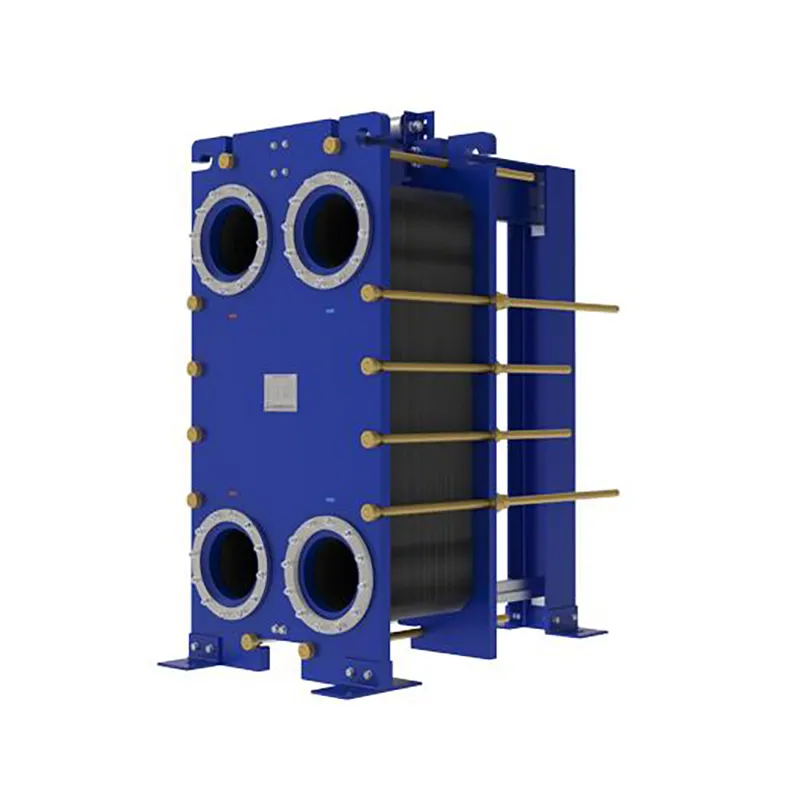
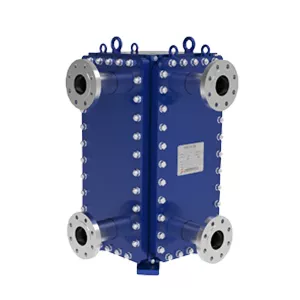
A semi welded plate heat exchanger uses a hybrid construction method. Every second plate pair is welded together using laser or MIG welding techniques, forming a sealed channel for aggressive or high-pressure media. The remaining channels between these welded pairs are sealed with conventional gaskets, allowing access for cleaning and inspection. This configuration means the aggressive fluid never contacts elastomers, while the service fluid can still benefit from easy maintenance access.
From a thermal standpoint, the corrugated plate pattern remains identical to standard gasketed designs, which means the heat transfer coefficients stay high. The welded pockets can handle pressures up to 40 bar and temperatures ranging from -40°C to 350°C, depending on the gasket material used on the service side. This makes the exchanger particularly suitable for applications involving ammonia, hydrocarbons, or heat transfer oils that would quickly degrade standard gaskets.
Thermal Performance in Aggressive Media Applications
When handling corrosive or hazardous fluids, the primary concern is always leakage and material degradation. In a fully gasketed unit, the elastomer is exposed to the process medium, which limits both chemical compatibility and maximum operating temperature. By welding the primary channels, the semi welded design eliminates this weak point entirely. The result is a heat exchanger that can maintain thermal performance over longer operational cycles without unscheduled shutdowns.
For example, in a typical offshore gas processing platform, semi welded units are used to cool rich amine solution using seawater. The amine side operates at 120°C and 25 bar, conditions that would quickly attack standard NBR or EPDM gaskets. With welded channels, the unit achieves a heat transfer coefficient of approximately 3500 W/m²K, which is comparable to a fully gasketed unit but with significantly improved reliability. The seawater side remains gasketed, allowing periodic opening for tube bundle cleaning and inspection.
Pressure and Temperature Capabilities Compared to Gasketed Units
Standard gasketed plate heat exchangers typically operate within 16 to 25 bar and up to 180°C, depending on gasket material. Semi welded designs extend these limits considerably. The welded channels can handle design pressures up to 40 bar and temperatures up to 350°C when using appropriate plate materials like AISI 316L or duplex stainless steel. This opens up applications in high-pressure steam heating, thermal oil systems, and processes involving volatile organic compounds.
The pressure drop across a semi welded unit is comparable to a gasketed unit of the same plate count because the plate geometry remains unchanged. This is an important consideration for engineers who need to retrofit existing installations without replacing pumps or modifying piping systems. In many cases, a semi welded unit can be installed in the same footprint as an existing gasketed unit, providing a straightforward upgrade path.
Maintenance and Cleaning Considerations
One of the main advantages of the semi welded concept is that it retains the ability to open the unit for mechanical cleaning on the gasketed side. This is particularly valuable in applications where fouling is expected, such as cooling water loops or processes with suspended solids. The welded channels, which handle the clean or aggressive fluid, rarely require internal cleaning. If they do, chemical cleaning in place (CIP) can be performed without dismantling the unit.
In practice, maintenance intervals are often extended by 30% to 50% compared to fully gasketed units in similar service. This translates directly into lower operating costs and reduced downtime. For industries where continuous operation is critical, such as LNG liquefaction or petrochemical production, this reliability improvement is a key driver for technology selection.
Material Selection for Corrosive Environments
The plate material in a semi welded heat exchanger can be selected independently for the welded and gasketed sides. This is a significant advantage when handling fluids with different corrosive characteristics. For instance, the welded channels might use titanium or Hastelloy for handling hydrochloric acid, while the service side uses cheaper stainless steel plates. This flexibility reduces overall equipment cost without compromising safety or performance.
Welding quality is critical in this design. Laser welding creates a narrow, deep weld that minimizes heat-affected zones and preserves the corrosion resistance of the base material. Each weld is typically subjected to helium leak testing to ensure zero leakage at the design pressure. This level of quality assurance is essential for applications where even minor leaks could lead to safety incidents or product contamination.
Real-World Performance Data
In a recent installation at a European chemical plant, a semi welded unit replaced an aging shell-and-tube exchanger for cooling sulfuric acid (98%) from 85°C to 45°C. The unit, constructed with AISI 316L plates and PTFE gaskets on the cooling water side, achieved a heat transfer rate of 620 kW with a log mean temperature difference of just 12°C. The overall heat transfer coefficient was measured at 2800 W/m²K, which is 40% higher than the previous shell-and-tube design. The customer reported no maintenance issues after 18 months of continuous operation.
Another example from the pharmaceutical industry involved a semi welded unit used for cooling a solvent mixture containing acetone and methanol. The welded channels handled the solvent at 15 bar and 130°C, while chilled glycol circulated through the gasketed channels. The unit provided precise temperature control (±1°C) required for product consistency, and the welded design eliminated any risk of solvent leakage into the environment.
Design Flexibility and Customization Options
Semi welded plate heat exchangers can be customized to meet specific process requirements. Plate patterns can be selected to optimize heat transfer or pressure drop, depending on the application. The number of welded pairs can be varied to accommodate different flow rates and temperature approaches. Connections can be positioned on the fixed frame or the movable frame, depending on space constraints and piping layouts.
For extreme conditions, manufacturers offer fully welded plate heat exchangers as an alternative, but these sacrifice the ability to open the unit for cleaning. The semi welded design remains the preferred choice when both high performance and maintainability are required. For applications involving viscous fluids or fluids with particulates, a wide gap welded plate heat exchanger might be more appropriate, as it offers larger flow passages.
Installation and Operational Considerations
When installing a semi welded unit, proper support and piping alignment are essential to avoid excessive stress on the nozzles. The unit should be mounted on a level foundation with adequate clearance for plate removal on the gasketed side. It is also important to ensure that the gasket material selected for the service side is compatible with the cleaning chemicals used during maintenance.
Operationally, the semi welded unit behaves similarly to a gasketed unit, with the same startup and shutdown procedures. However, thermal cycling should be controlled to avoid excessive stress on the welded joints. Most manufacturers provide guidelines for maximum heating and cooling rates, typically around 2-3°C per minute for large units. Adhering to these guidelines ensures long-term integrity of the welds and gaskets.
Cost-Benefit Analysis
While the initial cost of a semi welded plate heat exchanger is higher than a comparable gasketed unit, the total cost of ownership is often lower. The extended maintenance intervals, reduced downtime, and longer service life typically offset the higher upfront investment within 12 to 24 months. For applications involving expensive or hazardous fluids, the improved safety and leak prevention provide additional value that is difficult to quantify but essential for risk management.
When comparing to shell-and-tube exchangers, the semi welded plate design offers a significantly smaller footprint, typically 30-50% less space for the same duty. This is particularly valuable in offshore platforms or retrofits where space is at a premium. The lower hold-up volume also means less inventory of expensive process fluid, which is an important consideration for high-value products.
Conclusion
Semi welded plate heat exchangers offer a compelling combination of thermal performance, reliability, and maintainability for harsh environments. By welding the channels that handle aggressive or high-pressure fluids, they eliminate the most common failure point in traditional designs while retaining the ability to open the unit for cleaning on the service side. With proven performance in refineries, chemical plants, and offshore installations, this technology continues to gain acceptance as a standard solution for demanding heat transfer applications.
For engineers evaluating heat exchanger options, the semi welded design deserves serious consideration whenever operating conditions exceed the limits of standard gasketed units. The combination of high thermal efficiency, robust construction, and practical maintainability makes it a versatile choice that balances performance with operational practicality. As process conditions become increasingly demanding across industries, the semi welded plate heat exchanger is well-positioned to meet these challenges effectively.

 English EN





User Comments
Service Experience Sharing from Real Customers
Liam Chen
Senior Process EngineerWe switched to a semi welded plate heat exchanger for our ammonia cooling loop last quarter. The leak-free performance on the welded side is a game-changer—no more gasket blowouts every six months. Installation was straightforward, and the thermal efficiency matches what the supplier promised. Only wish the gasket side was a bit easier to clean, but for the reliability gain, it’s totally worth it.
Emma Torres
Maintenance SupervisorI was skeptical at first because we’ve always used fully gasketed units, but the semi welded design has reduced our downtime significantly. The welded channels handle the aggressive refrigerant without any weeping, and the plate pack is more compact than I expected. Had a small issue with the tightening bolts on delivery, but the vendor sorted it fast. Solid choice for cold storage.
Jack O'Brien
Lead HVAC TechnicianInstalled these in a large district cooling plant. The semi welded plate heat exchanger handles the high-pressure differential like a champ. We’ve been running 24/7 for three months, and the approach temperature hasn’t drifted at all. My guys love that they can open the service side without disturbing the welded circuit. No leaks, no fuss. Would buy again.
Sophia Patel
Project ManagerSpecified this unit for a new dairy pasteurization line. The semi welded construction gave us the best of both worlds: high heat recovery on the product side and easy access for cleaning the service side. It’s been running six months now, and the CIP cycle is faster than with our old frame. Only gave 4 stars because the initial pressure drop was slightly higher than the datasheet—but after a few tweaks, it’s fine.