How an LNG Heat Exchanger Optimizes Cryogenic Thermal Management
In LNG liquefaction and regasification, thermal management directly impacts energy consumption and operational reliability. A well-designed LNG heat exchanger minimizes temperature gradients, reduces boil-off gas, and ensures stable heat transfer under extreme cryogenic conditions. This article examines how modern plate heat exchanger technology—particularly welded and printed-circuit designs—addresses these challenges, with practical guidance for process engineers and procurement teams.
What Makes an LNG Heat Exchanger Different from Standard Units?
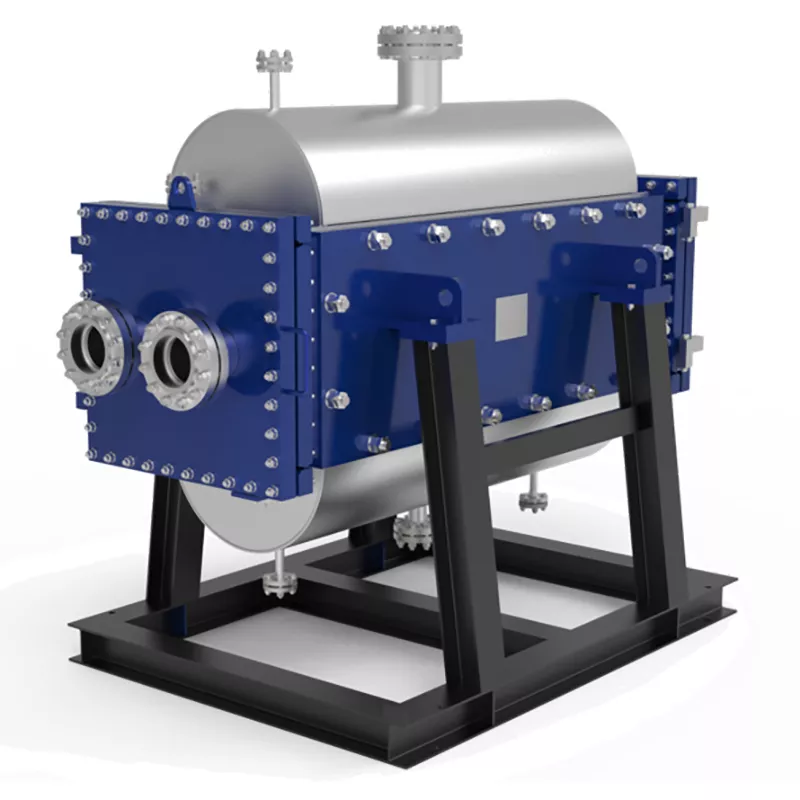
Standard heat exchangers often fail under LNG service because of extreme temperature differentials (as low as -162°C), high pressure (up to 100 bar), and the risk of thermal stress cracking. An LNG heat exchanger must handle cyclic thermal loads without leakage or fatigue. The core difference lies in material selection—typically stainless steel or nickel alloys—and construction type. Welded plate heat exchangers, such as the HT-Bloc and TP series, eliminate gaskets that become brittle at cryogenic temperatures. Similarly, printed-circuit heat exchangers (PCHE) use diffusion-bonded channels to withstand high pressure and temperature swings. These designs deliver consistent thermal performance while minimizing maintenance downtime.
How Does a Welded Plate Heat Exchanger Improve Cryogenic Efficiency?
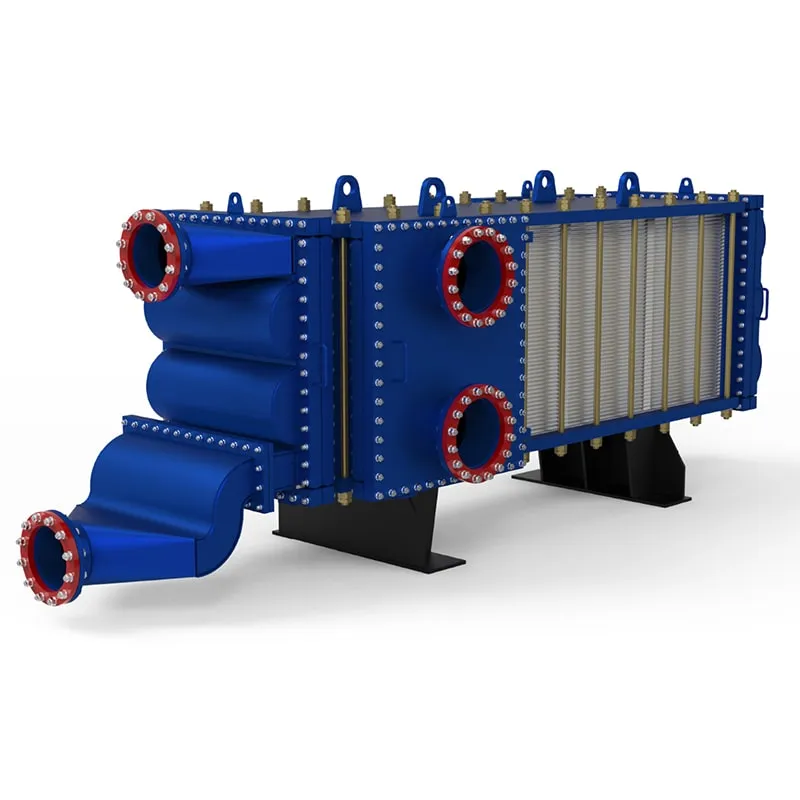
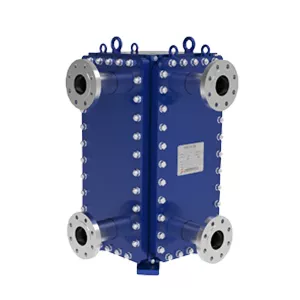
Welded plate heat exchangers, like the TP welded plate heat exchanger, use laser-welded plate pairs to create fully sealed flow channels. This construction eliminates the risk of cross-contamination and allows operation at pressures up to 60 bar and temperatures down to -200°C. The corrugated plate pattern induces turbulent flow even at low velocities, which enhances heat transfer coefficients by 30–50% compared to shell-and-tube designs. For LNG processes, this means smaller footprint, lower refrigerant charge, and reduced capital expenditure. Additionally, the compact geometry reduces thermal inertia, enabling faster response to load changes in liquefaction trains.
Key Features and Typical Parameter Ranges
When evaluating an LNG heat exchanger, focus on these parameters:
- Design temperature range: -200°C to +250°C (welded plate) or up to +600°C (PCHE).
- Maximum operating pressure: 60 bar (welded plate) to 100 bar (PCHE).
- Heat transfer coefficient: 1,500–5,000 W/m²·K depending on fluid properties and flow regime.
- Flow capacity: Single-unit throughput from 10 m³/h to 2,000 m³/h for LNG services.
- Pressure drop: Typically 0.5–2.0 bar per pass, optimized via channel geometry.
- Material compatibility: 316L stainless steel, duplex, or Inconel for cryogenic duty.
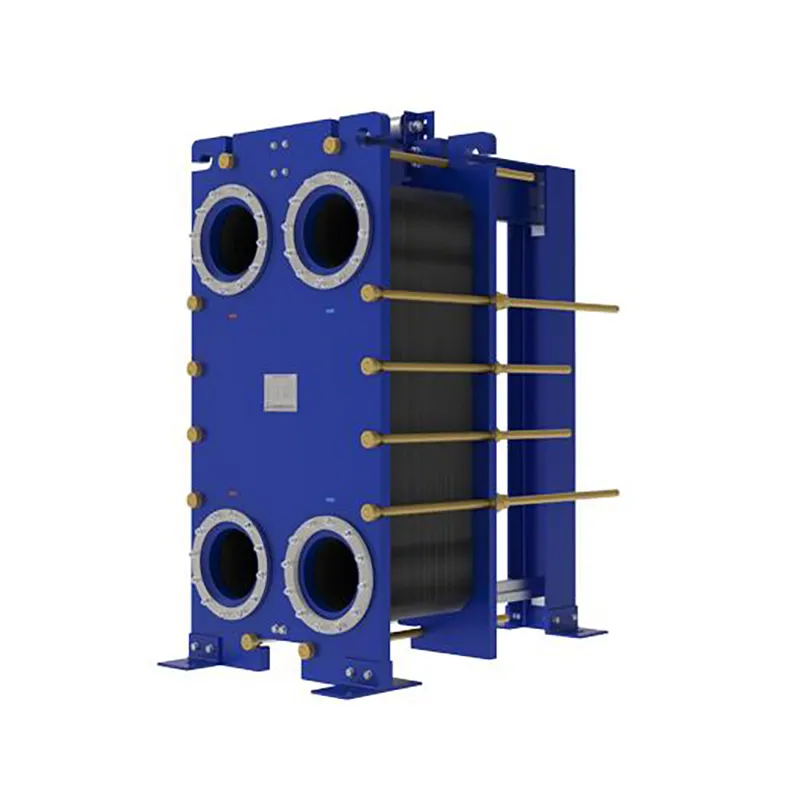
These ranges are industry-generic; actual values depend on specific process conditions. For example, a wide gap welded plate heat exchanger handles fluids with solids or fibers, while a gasketed plate heat exchanger suits lower-pressure applications where maintenance access is prioritized.
Applications and Recommended Solutions
LNG heat exchangers are deployed across the entire cryogenic value chain:
- Liquefaction pre-cooling: Use welded plate heat exchangers to cool natural gas with propane or mixed refrigerants.
- Regasification vaporizers: PCHE units handle high-pressure gas heating with seawater or glycol loops.
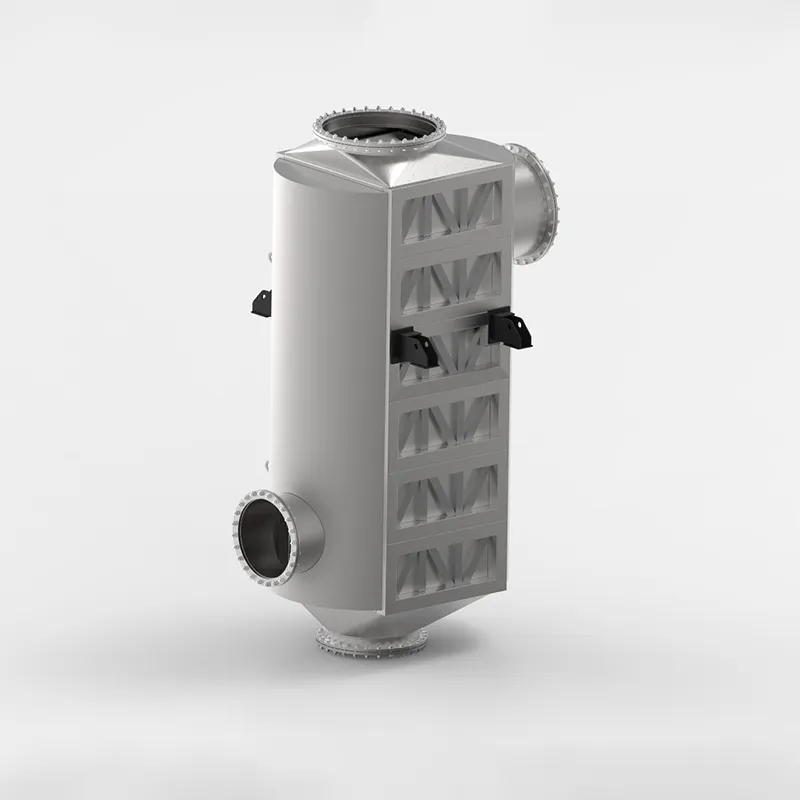
- Boil-off gas recovery: Compact plate air preheaters recondense vapors from storage tanks.
- Cold energy utilization: Pillow plates in secondary loops capture LNG cold for power generation or air separation.
For each application, the choice between welded plate, PCHE, or gasketed designs depends on pressure, temperature, and maintenance strategy. A custom-engineered printed-circuit heat exchanger is often preferred for high-pressure regasification, while a wide gap welded plate heat exchanger suits dirty or viscous streams.
Why SHPHE for Your LNG Heat Exchanger Needs
SHPHE, a Shanghai-based plate heat exchanger manufacturer founded in 2005, brings two decades of cryogenic expertise to the LNG market. Our product lines include HT-Bloc and TP welded plate heat exchangers, wide gap welded plate heat exchangers, gasketed plate heat exchangers, PCHE, plate air preheaters, and pillow plates. We hold ISO9001 and ASME U certifications, and our units are exported to more than 20 countries. Every LNG heat exchanger we supply comes with free thermal design and selection service, ensuring the unit matches your exact process parameters. Whether you need a replacement for existing Alfa Laval or Compabloc units, or a custom solution for a new liquefaction plant, our engineering team delivers a compatible alternative with optimized thermal performance.
Frequently Asked Questions
Q: What is the typical lifespan of an LNG heat exchanger in cryogenic service?
A: With proper material selection and maintenance, a welded plate LNG heat exchanger typically lasts 15–20 years. PCHE units can exceed 25 years due to diffusion-bonded construction that resists fatigue.
Q: Can a gasketed plate heat exchanger be used for LNG applications?
A: Generally no, because standard gaskets become brittle below -40°C. For cryogenic LNG duty, welded plate or PCHE designs are required. Gasketed units are only suitable for pre-cooling loops above -30°C.
Q: How do I size an LNG heat exchanger for a regasification terminal?
A: Sizing requires flow rate, inlet/outlet temperatures, pressure drop limits, and fluid properties. SHPHE provides free thermal design; simply submit your process data, and we will recommend a unit with guaranteed performance.
Q: What maintenance is required for a welded plate LNG heat exchanger?
A: Welded plate units require minimal maintenance—mainly periodic cleaning of the external surface and inspection of welds. Unlike gasketed units, there are no seals to replace, reducing downtime.
Q: Is SHPHE’s LNG heat exchanger compatible with existing Alfa Laval systems?
A: Yes, our welded plate and PCHE units are designed as direct replacements or alternatives to Alfa Laval, Compabloc, and GEA models. We match connection sizes, duty parameters, and footprint.
Q: What certifications does SHPHE hold for cryogenic heat exchangers?
A: SHPHE is ISO9001 and ASME U certified. All LNG heat exchangers are designed and tested per ASME Section VIII, with full material traceability and pressure documentation.
Request a Quote for Your LNG Heat Exchanger
To ensure your LNG heat exchanger delivers optimal cryogenic thermal management, we need your process details. Please provide flow rate, inlet and outlet temperatures, operating pressure, and media composition. Our engineering team will perform free thermal design and selection, delivering a proposal within 48 hours. Contact us today to start your project.

 English EN





User Comments
Service Experience Sharing from Real Customers
Marcus
Senior Process EngineerWe installed this LNG heat exchanger at our new liquefaction train six months ago, and it’s been rock solid. The thermal efficiency is noticeably better than the old shell-and-tube units we used before. The pressure drop is lower than expected, which helps with our compressor load. Only minor gripe is the initial commissioning took a bit longer due to the control logic, but once tuned, it runs like a dream.
Elena
Maintenance TechnicianI’m the guy who has to keep these things running, and I gotta say, the access panels on this model are actually usable. I’ve worked on some real nightmares where you need three extensions and a prayer to reach the tube bundles. This one lets me get in and do a visual inspection without pulling half the skid apart. Only reason I’m not giving 5 stars is the gasket material seems a bit soft—had to replace one after a thermal cycle.
Raj
Project ManagerFrom a project planning perspective, this heat exchanger was a win. The vendor actually delivered on time (shocking, I know) and the documentation was clear enough that our installation crew didn’t have to call support every hour. We’re seeing consistent outlet temperatures even when feed gas composition fluctuates. It’s not cheap, but the reliability saves us downtime costs. Would spec again for our next expansion.
Hannah
Shift SupervisorI’ve been running this unit for about four months now. It handles the cold side really well—no frost buildup issues like we had with the previous exchanger. The auto-drain function actually works, which is nice because I don’t have to send someone out to manually purge every shift. My only complaint is the insulation jacket could be thicker; we had to add a layer in our climate. Otherwise, solid piece of equipment.