Why the Compabloc Heat Exchanger Excels in Heavy Duty Thermal Management
For process engineers and procurement managers handling high-temperature, high-pressure fluids, the Compabloc heat exchanger offers a robust, welded-plate alternative to traditional shell-and-tube units. This article explains how it works, where it fits best, and what parameters to consider before specifying one for your next heavy-duty project.
When your process involves aggressive chemicals, high thermal loads, or frequent cleaning cycles, a standard gasketed plate heat exchanger may not hold up. That is where the Compabloc heat exchanger comes in. Designed as a fully welded plate block, it combines the compact footprint of a plate unit with the durability of a welded construction. Whether you are upgrading an existing line or designing a new plant, understanding its capabilities helps you make a cost-effective, long-term decision.
What Is a Compabloc Heat Exchanger?
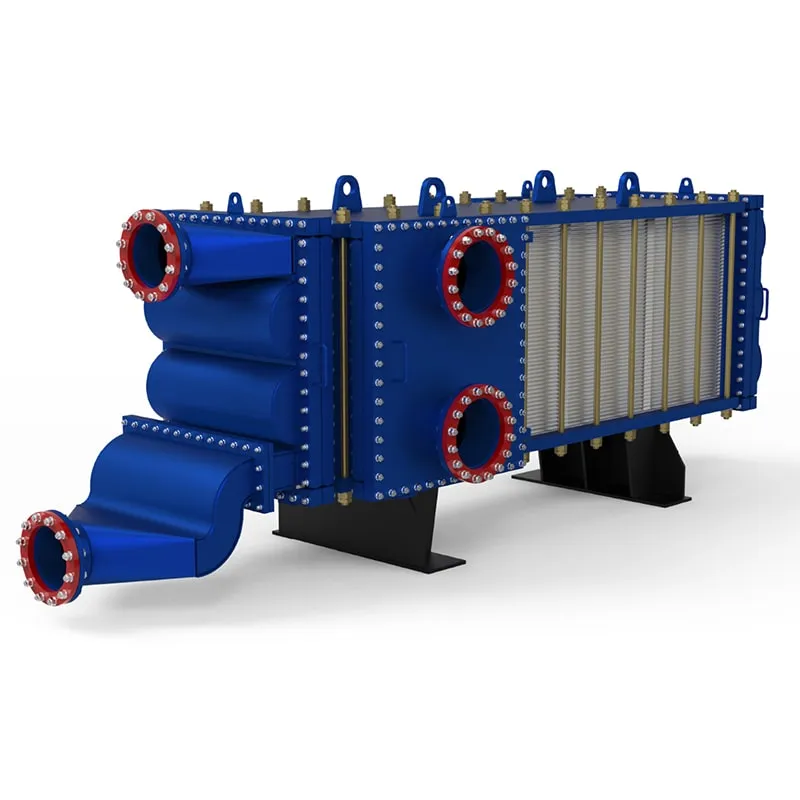
A Compabloc heat exchanger is a welded plate heat exchanger where the plate pack is enclosed in a frame, but the plates themselves are laser-welded together without gaskets. This eliminates the risk of leakage between fluids and allows operation at higher temperatures and pressures than gasketed designs. It is often used as a direct replacement or an alternative to Alfa Laval Compabloc units, offering similar performance with a fully customizable plate pattern.
The core advantage is that you get true countercurrent flow in a compact package. Each plate pair creates a channel for one fluid, while the adjacent channel handles the other. The welded seam ensures no cross-contamination, making it suitable for hazardous or valuable media. For process engineers, this means fewer maintenance stops and higher reliability over the equipment lifespan.
How Does It Handle Heavy Duty Conditions?
Heavy duty thermal management means dealing with high temperatures (up to 400°C or more), high pressures (up to 30 bar or higher depending on design), and fluids that may contain solids or cause fouling. The Compabloc heat exchanger handles these through:
- Welded plate channels – no gaskets to fail or leak, even under thermal cycling.
- All-welded construction – allows operation at pressures that would blow out gasketed units.
- Wide gap options – plate spacing can be increased to handle slurries or fibrous media.
- Multiple material choices – stainless steel, titanium, Hastelloy, and other alloys for corrosion resistance.
- Compact footprint – typically 30–50% smaller than an equivalent shell-and-tube unit.
For example, in a chemical plant handling hot sulfuric acid, a Compabloc heat exchanger can run continuously for years without a gasket replacement. That directly reduces downtime and spare parts inventory. If you need to handle fouling fluids, consider our wide gap welded plate heat exchanger which offers even larger channel openings.
What Are the Typical Parameter Ranges?
While exact numbers depend on the specific model and plate geometry, the following ranges are commonly achievable with a Compabloc heat exchanger:
| Parameter |
Typical Range |
| Design pressure |
Up to 30 bar (higher on request) |
| Design temperature |
Up to 400°C |
| Flow rate per unit |
1–500 m³/h (depending on port size) |
| Heat transfer area |
1–500 m² per block |
| Plate thickness |
0.5–1.2 mm (standard) |
| Channel gap |
3–12 mm (standard); up to 20 mm for wide gap |
These values make the Compabloc heat exchanger suitable for applications like interchangers, condensers, reboilers, and heat recovery in refineries, petrochemical plants, and power generation. If your process requires even higher pressures, consider our printed circuit heat exchanger (PCHE) which can handle up to 600 bar.
What Are the Best Applications for a Compabloc Heat Exchanger?
The Compabloc heat exchanger excels in processes where you need to recover heat from dirty or corrosive streams. Common applications include:
- Chemical processing – heating or cooling acids, caustics, solvents, and monomers.
- Refining – crude oil heating, desalter wash water, and product cooling.
- Pharmaceuticals – sterile processes where gaskets are not allowed.
- Food and beverage – pasteurization of products with high pulp content.
- Waste heat recovery – capturing energy from flue gases or hot liquid effluents.
For each application, the plate pattern can be optimized for either high turbulence (to reduce fouling) or low pressure drop (to save pumping energy). Our engineering team provides free thermal design and selection to match your specific process conditions. If you need to handle high-temperature gases, also look at our plate air preheaters which are built for gas-to-gas heat recovery.
Why Choose SHPHE for Your Compabloc Heat Exchanger?
SHPHE (Shanghai-based, founded in 2005) has been manufacturing plate heat exchangers for nearly two decades. We export to over 20 countries and hold ISO9001 and ASME U certifications. Our product range includes the HT-Bloc and TP welded plate heat exchangers, wide gap welded plate units, gasketed plate heat exchangers, PCHE, plate air preheaters, and pillow plates. Every Compabloc heat exchanger we produce is designed with your duty cycle in mind.
What sets us apart is our commitment to customization. We do not force you into a standard plate pattern. Instead, we analyze your fluid properties, temperature approach, and allowable pressure drop, then select the optimal plate geometry. This approach often yields a smaller, more efficient unit compared to off-the-shelf alternatives. For example, our HT-Bloc welded plate heat exchanger is a direct competitor to the Compabloc design, offering the same welded reliability with additional flexibility in port sizes.
We also provide free thermal design and selection service. Send us your process parameters, and we will return a detailed proposal with drawings, performance curves, and a price quote. No hidden fees, no obligation.
Frequently Asked Questions
1. Can a Compabloc heat exchanger be repaired if a plate leaks?
Yes, individual plates can be replaced. The welded block is designed so that a damaged plate can be cut out and a new one welded in. However, because the entire block is welded, repair requires specialized equipment and is typically done at the factory or by an authorized service center. For most users, the reliability of the welded design means repairs are rare.
2. How does it compare to a shell-and-tube heat exchanger?
The Compabloc heat exchanger is typically 30–50% smaller and lighter than a shell-and-tube unit for the same duty. It also offers true countercurrent flow, which means a closer temperature approach and higher thermal efficiency. On the downside, it is not suitable for extremely high pressures (above 30 bar) or very large flow rates (above 500 m³/h) without multiple units in parallel.
3. What fluids can it handle?
It can handle most liquids and gases that are compatible with the plate material. Common fluids include water, steam, oils, chemicals, hydrocarbons, and refrigerants. For corrosive fluids, plates can be made from titanium, Hastelloy, or other alloys. For fluids with suspended solids, a wide gap version is recommended to prevent clogging.
4. How often does it need cleaning?
Cleaning frequency depends on the fluid quality. For clean fluids like demineralized water, it can run for years without cleaning. For dirty fluids, chemical cleaning in place (CIP) is possible if the design includes cleaning ports. Mechanical cleaning is more difficult than with gasketed units because the plates are welded, so proper upfront fluid analysis is important.
5. Is it compatible with existing Alfa Laval Compabloc installations?
Yes, SHPHE designs its welded plate heat exchangers to be dimensionally compatible with Alfa Laval Compabloc units. This means you can use our unit as a drop-in replacement or as an alternative for new installations. We can match the port locations, bolt patterns, and overall envelope to fit your existing piping and foundation.
6. What certifications does SHPHE hold?
SHPHE is ISO9001 certified and holds ASME U stamp certification. This means our Compabloc heat exchangers are manufactured under a quality management system that meets international standards. We also provide full documentation, including material certificates, weld maps, and pressure test reports, for your project files.
Request a Quote for Your Compabloc Heat Exchanger
If you are evaluating a Compabloc heat exchanger for your next heavy duty thermal management project, we invite you to send us your process conditions. To receive a free thermal design and a competitive quotation, please provide the following details:
- Flow rate for each fluid (in m³/h or kg/h)
- Inlet and outlet temperatures (in °C)
- Operating pressure (in bar)
- Fluid composition and any known fouling tendencies
- Allowable pressure drop (if specified)
Our engineering team typically responds within 48 hours with a preliminary selection, including plate count, dimensions, and estimated weight. We can also provide a 3D model for integration into your plant layout. The Compabloc heat exchanger from SHPHE gives you the welded reliability you need for demanding processes, backed by nearly two decades of manufacturing experience.

 English EN





User Comments
Service Experience Sharing from Real Customers
Liam
Process EngineerWe swapped out an old shell-and-tube for a Compabloc last quarter. The footprint reduction alone was worth it, but the heat transfer efficiency on our solvent recovery loop is genuinely better than I expected. No fouling issues yet, and cleaning is a breeze. Solid piece of kit.
Emma
Maintenance SupervisorHonestly, I was skeptical about a brazed plate exchanger for our hot water preheat duty. But after two years, the Compabloc hasn't needed a single gasket replacement. The only reason it's not a 5 is that the initial installation required some custom piping adapters. Otherwise, it's been rock solid.
Ethan
Senior Mechanical DesignerSpec'd these for a new pharmaceutical skid. The compact design let me fit a much larger duty into a tiny footprint. No cross-contamination worries with the fully welded construction. Client was impressed during the FAT. Would recommend for any clean service where space is tight.
Olivia
Plant ManagerWe installed two Compablocs in parallel for a batch reactor cooling loop. They handle thermal cycling much better than our old plate-and-frames did. Had one minor leak at a nozzle weld in the first month, but Alfa Laval support sorted it quickly. Overall, a very robust design for food-grade applications.