Optimizing Thermal Efficiency with an Edible Oil Heat Exchanger
In edible oil processing, precise temperature control directly impacts product quality and energy consumption. An edible oil heat exchanger must handle high viscosity, fouling tendencies, and strict hygiene standards. This article examines how welded plate heat exchangers deliver reliable thermal performance, reduce maintenance downtime, and offer a cost-effective alternative to traditional shell-and-tube units. We cover working principles, typical parameters, application scenarios, and practical selection guidance for process engineers and procurement professionals.
Process engineers in the edible oil industry face a common challenge: how to heat or cool viscous oils efficiently without compromising product integrity. Traditional shell-and-tube heat exchangers often suffer from poor heat transfer coefficients, large footprints, and frequent cleaning requirements. An edible oil heat exchanger designed with welded plate technology addresses these pain points by offering higher thermal efficiency, compact design, and easier maintenance. This article provides a practical guide to selecting and optimizing such equipment for your specific process conditions.
What Makes an Edible Oil Heat Exchanger Different?
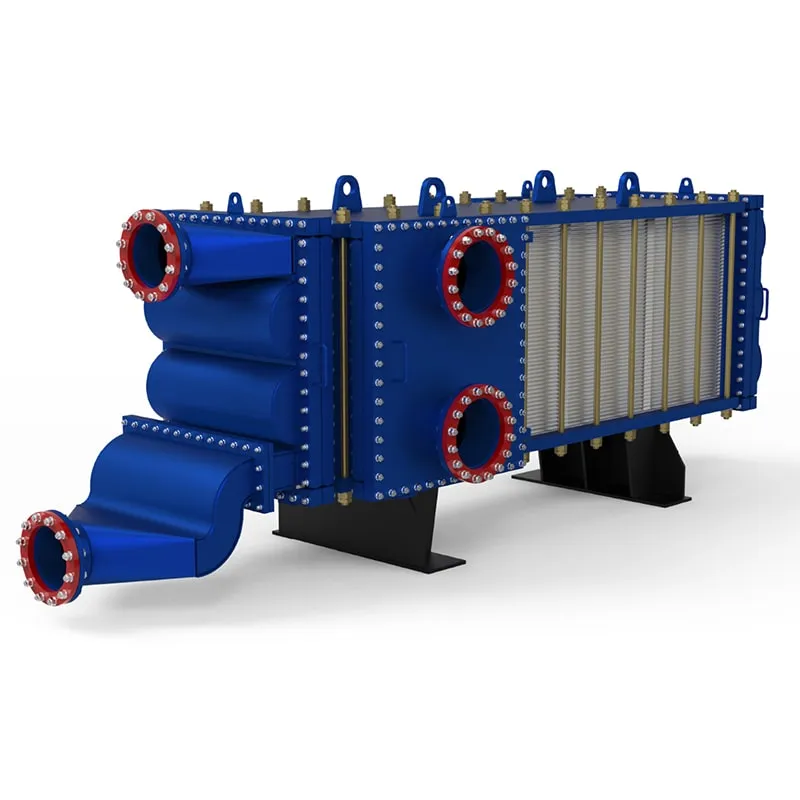
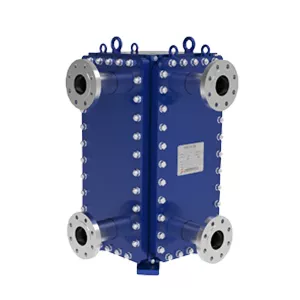
Edible oils, such as soybean, palm, sunflower, and canola, have unique physical properties that demand specialized heat exchanger design. High viscosity at low temperatures, the presence of free fatty acids, and the risk of thermal degradation require careful material selection and flow path optimization. A standard gasketed plate heat exchanger may not be suitable because gaskets can degrade under high temperatures or aggressive media. That is why many processors turn to welded plate heat exchangers, which eliminate gaskets and provide a fully sealed, corrosion-resistant solution.
The key differentiator is the all-welded plate pack, which allows operation at higher pressures and temperatures compared to gasketed designs. This construction also reduces the risk of cross-contamination, a critical factor in food-grade applications. For processes involving crude oil degumming, bleaching, or deodorization, a robust edible oil heat exchanger can handle the thermal load while maintaining product quality.
How Does a Welded Plate Heat Exchanger Work for Edible Oil?
The operating principle is straightforward: two fluids flow through alternating channels formed by corrugated plates. In an edible oil application, the oil typically flows on one side, while a heating or cooling medium (such as steam, hot water, or thermal oil) flows on the other. The corrugations create turbulence, which significantly enhances heat transfer compared to laminar flow in shell-and-tube designs. This turbulence also helps reduce fouling by keeping solids suspended.
For high-viscosity oils, a wide gap welded plate heat exchanger is often recommended. The wider channel spacing allows thicker fluids to pass through without excessive pressure drop. SHPHE, a Shanghai-based manufacturer founded in 2005, offers a range of wide gap welded plate heat exchangers specifically designed for such challenging media. These units can handle viscosities up to 10,000 cP and particle sizes up to 5 mm, making them ideal for crude oil streams containing meal fines or other solids.
What Are the Typical Performance Parameters?
When evaluating an edible oil heat exchanger, you should consider the following commonly accepted ranges:
- Operating temperature: up to 350°C (662°F) for welded plate designs.
- Operating pressure: up to 30 bar (435 psi) depending on plate material and thickness.
- Heat transfer coefficient: typically 500–1500 W/m²·K for oil-to-water duties.
- Viscosity range: 1–10,000 cP, with special designs for higher values.
- Flow rate: from 1 m³/h to over 500 m³/h per unit.
- Fouling factor: 0.0001–0.0005 m²·K/W for clean edible oils.
These values are industry-generic and should be verified with your specific process conditions. SHPHE provides HT-Bloc welded plate heat exchangers that can achieve high thermal efficiency while maintaining a compact footprint. The free thermal design and selection service offered by the manufacturer helps ensure the unit matches your exact duty.
Key Applications in Edible Oil Processing
An edible oil heat exchanger is used at multiple stages of the refining process. Common applications include:
- Crude oil heating before degumming: raising the temperature to 70–90°C to improve hydration of phospholipids.
- Neutralization and bleaching: maintaining precise temperatures (90–120°C) for chemical reactions.
- Deodorization feed/effluent heat recovery: recovering heat from hot oil to preheat incoming oil, reducing energy consumption by up to 40%.
- Cooling after hydrogenation: rapidly cooling hardened oil to stop the reaction.
- Storage tank heating: maintaining pumpable viscosity in bulk storage.
For each of these duties, the choice of heat exchanger type depends on temperature, pressure, and fouling potential. Welded plate designs are particularly advantageous in heat recovery applications because they offer close temperature approaches (as low as 2–3°C) and high thermal efficiency.
Why Choose SHPHE for Your Edible Oil Heat Exchanger?
SHPHE is a Shanghai-based plate heat exchanger manufacturer with over 18 years of experience. The company holds ISO9001 and ASME U certifications and exports to more than 20 countries. Their product portfolio includes HT-Bloc and TP welded plate heat exchangers, wide gap welded plate heat exchangers, gasketed plate heat exchangers, printed circuit heat exchangers (PCHE), plate air preheaters, and pillow plates. For edible oil applications, the welded plate series offers a reliable alternative to Alfa Laval or Compabloc units, with full compatibility in terms of mounting dimensions and performance.
One of the key advantages is the free thermal design and selection service. The engineering team analyzes your process data—flow rate, inlet/outlet temperatures, pressure drop limits, and fluid properties—and recommends the optimal model. This ensures you get a customized edible oil heat exchanger without paying a premium. Additionally, the welded construction eliminates gasket replacement costs and reduces maintenance intervals, which is particularly valuable in continuous refining operations.
Frequently Asked Questions About Edible Oil Heat Exchangers
Can a gasketed plate heat exchanger be used for edible oil?
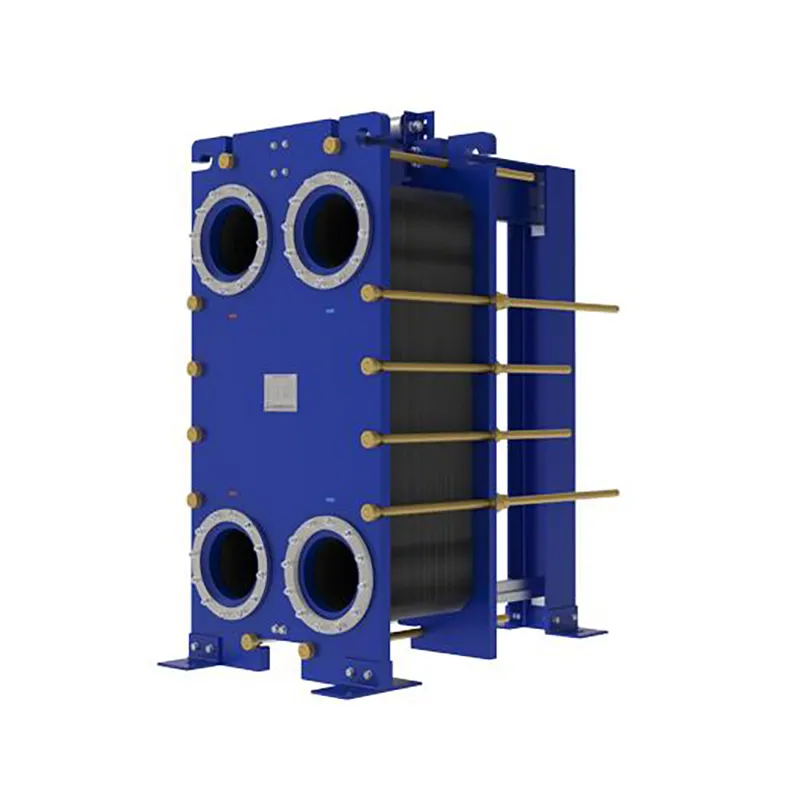
Yes, but only for low-temperature applications below 150°C and with compatible gasket materials. For higher temperatures or aggressive media, welded plate designs are recommended to avoid gasket failure and leakage. SHPHE offers gasketed plate heat exchangers for moderate duties, but for most edible oil refining steps, a welded unit provides better long-term reliability.
How do I prevent fouling in an edible oil heat exchanger?
Fouling can be minimized by maintaining turbulent flow (Reynolds number above 3000), using wide gap plates for high-viscosity or solids-laden streams, and scheduling regular cleaning-in-place (CIP) cycles. Welded plate designs also have smooth surfaces that reduce deposit buildup compared to shell-and-tube units.
What materials are suitable for edible oil contact?
Stainless steel 316L is the standard choice for plates due to its corrosion resistance and food-grade compliance. For higher chloride content or acidic oils, duplex stainless steel or titanium may be specified. Gaskets, if used, should be made of EPDM or FKM (Viton) rated for food contact.
Can I use an edible oil heat exchanger for both heating and cooling?
Yes, a single unit can be designed for dual service by selecting appropriate plate materials and gaskets. However, for processes with large temperature swings, it is often more efficient to use separate units for heating and cooling to optimize heat transfer coefficients and avoid thermal stress.
How does the cost compare to shell-and-tube heat exchangers?
Welded plate heat exchangers typically have a lower upfront cost for the same duty, especially when considering the smaller footprint and reduced installation expenses. Over the lifecycle, maintenance costs are also lower due to easier cleaning and fewer gasket replacements. For most edible oil applications, the total cost of ownership is 20–30% less than shell-and-tube alternatives.
What is the typical delivery time for a custom unit?
Standard welded plate heat exchangers can be delivered within 4–6 weeks after design approval. Custom units with special materials or dimensions may require 8–10 weeks. SHPHE offers expedited manufacturing for urgent projects, subject to material availability.
Request a Quote for Your Edible Oil Heat Exchanger
Selecting the right edible oil heat exchanger requires accurate process data. To receive a tailored thermal design and quotation, please provide the following details:
- Flow rate of the edible oil (in m³/h or kg/h).
- Inlet and outlet temperatures for both the oil and the heating/cooling medium.
- Allowable pressure drop on each side.
- Fluid properties (viscosity, density, specific heat, fouling tendency).
- Operating pressure and temperature range.
- Preferred material of construction (e.g., 316L, duplex).
With this information, SHPHE can recommend the most cost-effective and efficient edible oil heat exchanger for your process. The free design service ensures you get a solution that optimizes thermal efficiency while meeting your budget and timeline. Contact the engineering team today to start your project.

 English EN





User Comments
Service Experience Sharing from Real Customers
mike_harper
Production Shift SupervisorWe swapped out our old shell-and-tube unit for this edible oil heat exchanger last quarter. The temperature control is way more precise now, which has cut down our refining losses noticeably. It's been running 24/7 without a single hiccup. Only gripe is the initial installation was a bit tight in our space, but the performance makes up for it.
sarah_connor
R&D Food TechnologistI'm not on the production floor every day, but I've been testing this exchanger for a pilot batch of specialty avocado oil. The heat transfer is very even, and I didn't see any scorching or off-flavors in the final product. It's a solid piece of kit. Would give it 5 stars if the manual had more technical specs for small-scale setups.
tom_wheeler
Maintenance EngineerFinally a heat exchanger that doesn't clog up every two weeks with polymerized oil. The plate design is clever—cleaning takes half the time now, and the gaskets are holding up well even with our high-temperature palm oil. My team actually doesn't hate working on it. That's a win in my book.
emma_ross
Supply Chain CoordinatorI don't deal with the technical side much, but I handle the procurement for our biodiesel plant. This exchanger was a bit pricier than the quote we got from another supplier, and the lead time stretched longer than promised. That said, the operations guys say it runs efficiently and saves energy. So, mixed feelings. Good product, frustrating purchase process.