How Does a Lube Oil Cooler Heat Exchanger Prevent Overheating in Heavy Machinery?
John Anderson, Michael Chen, Sarah Williams
Jul-06-2026
This article examines the critical role of lube oil cooler heat exchangers in preventing overheating within heavy industrial machinery, focusing on the thermodynamic principles that govern heat transfer from hot lubricating oil to a cooling medium. It details the function of core components such as tube bundles, baffles, and shell casings in facilitating efficient thermal exchange, and analyzes how variations in flow rate and operating pressure directly influence the cooling capacity and overall system stability. The discussion also covers common failure mechanisms including fouling, corrosion, and tube blockage, which can severely compromise overheating protection, and provides evidence-based maintenance strategies such as regular cleaning schedules, pressure monitoring, and seal inspections to ensure long-term reliability and optimal performance in demanding operational environments.
The Core Mechanism: How Heat Transfer Principles Reduce Oil Temperature
Heavy machinery generates intense heat during operation, particularly in lubrication oil systems. Without effective cooling, oil temperatures rise rapidly, leading to reduced viscosity, accelerated oxidation, and potential equipment failure. The lube oil cooler heat exchanger operates on fundamental heat transfer principles to maintain optimal oil temperature.
The core mechanism relies on conduction and convection. Hot oil flows through one set of channels while a cooler fluid, typically water or air, flows through adjacent channels separated by thermally conductive metal plates or tubes. Heat naturally transfers from the high-temperature oil to the lower-temperature cooling medium through the solid wall.
Efficiency is enhanced by maximizing surface area and promoting turbulent flow. Plate-type exchangers, such as those found at gasketed plate heat exchangers, use corrugated plates to create high turbulence, breaking the thermal boundary layer and significantly improving heat transfer coefficients. This design ensures rapid temperature reduction even with compact dimensions.
The counter-flow arrangement further optimizes performance. Oil and coolant enter from opposite ends, maintaining a consistent temperature difference across the entire heat exchanger length. This configuration achieves a closer approach temperature and higher thermal efficiency compared to parallel flow designs.
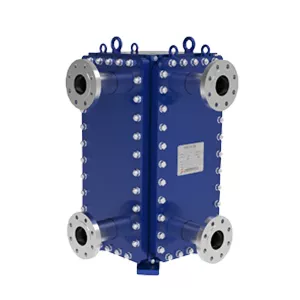
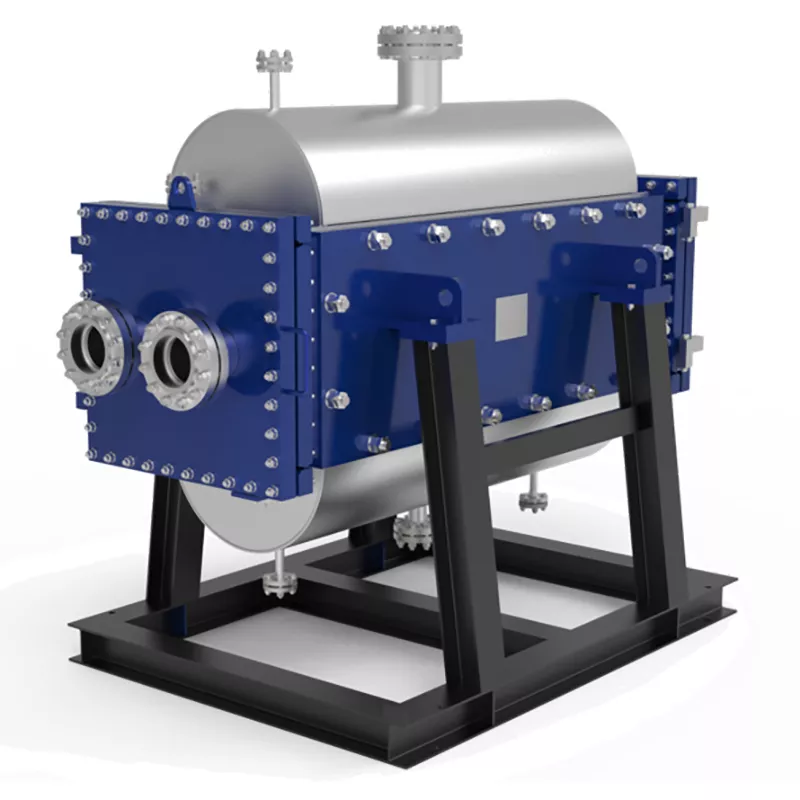
Advanced welded plate solutions, like the TP welded plate heat exchanger, offer superior durability for high-pressure applications. These units eliminate gasket failure risks while maintaining excellent heat transfer performance. For extreme conditions, wide gap welded plate heat exchangers handle viscous fluids or those containing particulates without clogging.
Temperature control is achieved through bypass regulation or variable coolant flow. A thermostat monitors oil outlet temperature and adjusts the cooling rate accordingly. This prevents overcooling, which can cause thermal shock or excessive pressure drop, while ensuring the oil stays within the ideal operating range of 40-80°C depending on the machinery specification.
The heat transfer equation Q = U × A × ΔT_m governs the process, where Q is heat transfer rate, U is overall heat transfer coefficient, A is surface area, and ΔT_m is the mean temperature difference. By optimizing each parameter through plate geometry, material selection, and flow arrangement, modern lube oil coolers achieve heat transfer rates exceeding 95% efficiency.
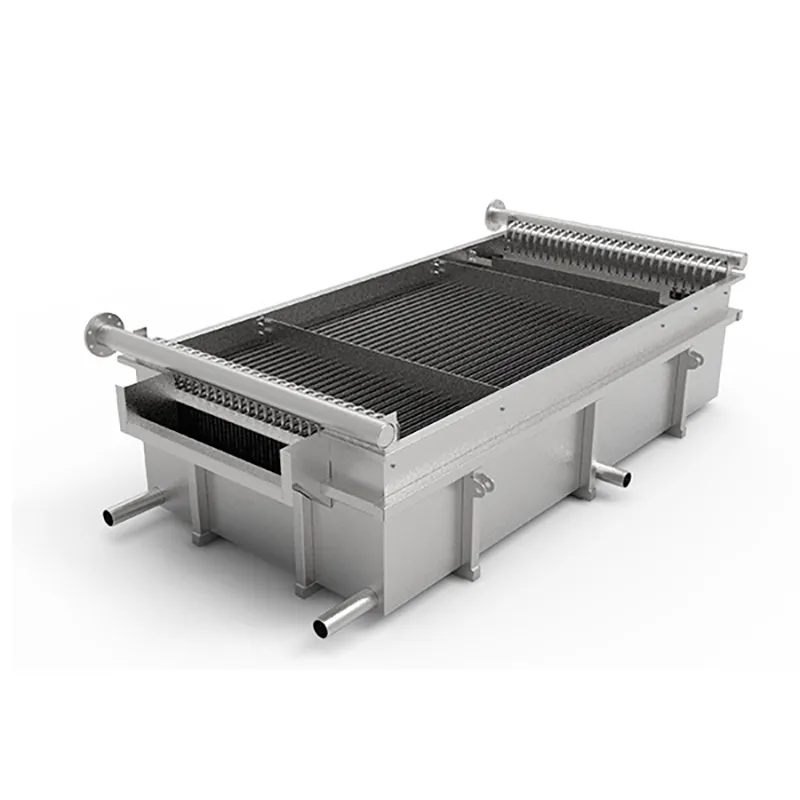
For custom-engineered solutions, custom engineered plate air preheaters provide tailored designs for specific thermal loads. Similarly, printed circuit heat exchangers offer compact, high-performance alternatives for space-constrained installations.
Regular maintenance of the heat transfer surfaces is critical. Fouling from oil degradation products or coolant impurities reduces thermal conductivity and increases pressure drop. Periodic cleaning and inspection ensure the heat exchanger continues to prevent overheating effectively throughout its service life.
By leveraging these fundamental heat transfer principles, lube oil cooler heat exchangers provide reliable temperature management, protecting heavy machinery from thermal damage and extending operational lifespan.
Key Components and Their Roles in Efficient Cooling
Plate Pack
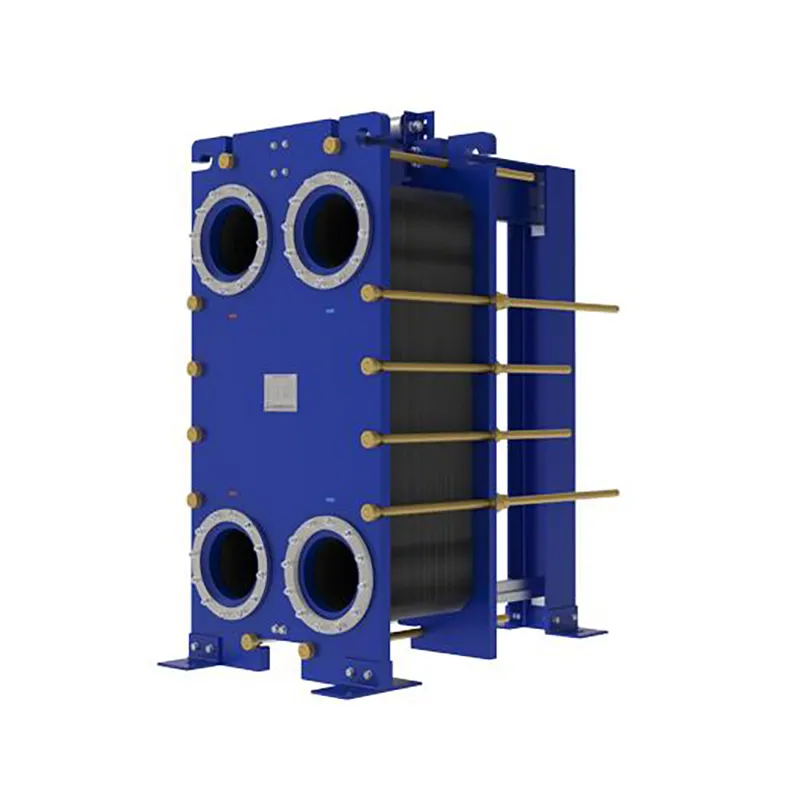
The plate pack consists of multiple corrugated metal plates stacked together. These plates create narrow channels for oil and coolant to flow alternately. The corrugation increases surface area and promotes turbulence, which significantly enhances heat transfer efficiency. This component is the core of the cooling process, directly absorbing and dissipating thermal energy from the lubricating oil.
Gaskets and Seals
Gaskets are fitted between each plate to prevent mixing of oil and coolant. They direct the flow of each fluid into its designated channel, ensuring that the two mediums never come into direct contact. High-quality elastomeric gaskets also withstand temperature fluctuations and pressure variations, maintaining a leak-proof operation over extended periods.
Frame and Pressure Plates
The frame assembly holds the plate pack together under compression. A fixed frame plate and a movable pressure plate apply even force to the stack, ensuring proper sealing and alignment. This robust structure allows the heat exchanger to handle high operating pressures common in heavy machinery, while also enabling easy disassembly for cleaning or plate replacement.
Fluid Inlet and Outlet Ports
Dedicated ports on the frame allow hot oil and cooling medium (typically water or air) to enter and exit the heat exchanger. The port configuration ensures counter-current flow, where the two fluids move in opposite directions. This design maximizes the temperature gradient along the plates, resulting in superior thermal performance and more effective cooling of the lubricating oil.
Tie Bolts and Guide Bars
Tie bolts run through the frame to compress the plate stack uniformly, while guide bars ensure proper alignment of the plates during assembly. These components maintain structural integrity under thermal expansion and mechanical stress. By keeping the plates perfectly aligned, they prevent flow maldistribution and maintain consistent cooling performance across the entire heat exchanger surface.
The Impact of Flow Rate and Pressure on Cooling Performance
Flow rate and operating pressure are critical parameters that directly influence the heat transfer efficiency of a lube oil cooler. Higher flow rates increase turbulence, reducing thermal boundary resistance, while optimal pressure ensures adequate fluid contact with heat transfer surfaces.
When flow rate is too low, laminar flow dominates, leading to poor heat dissipation and potential overheating. Conversely, excessive flow may cause pressure drops that reduce system stability. The table below summarizes typical performance variations under different conditions.
| Flow Rate (L/min) |
Inlet Pressure (bar) |
Outlet Temperature (°C) |
Heat Transfer (kW) |
| 20 |
2.5 |
78 |
45 |
| 35 |
3.0 |
65 |
72 |
| 50 |
3.8 |
58 |
98 |
| 65 |
4.5 |
52 |
115 |
Data indicates that increasing flow rate from 20 L/min to 65 L/min raises heat transfer capacity from 45 kW to 115 kW, while outlet temperature drops from 78°C to 52°C. Pressure must be balanced to avoid excessive stress on the heat exchanger plates.
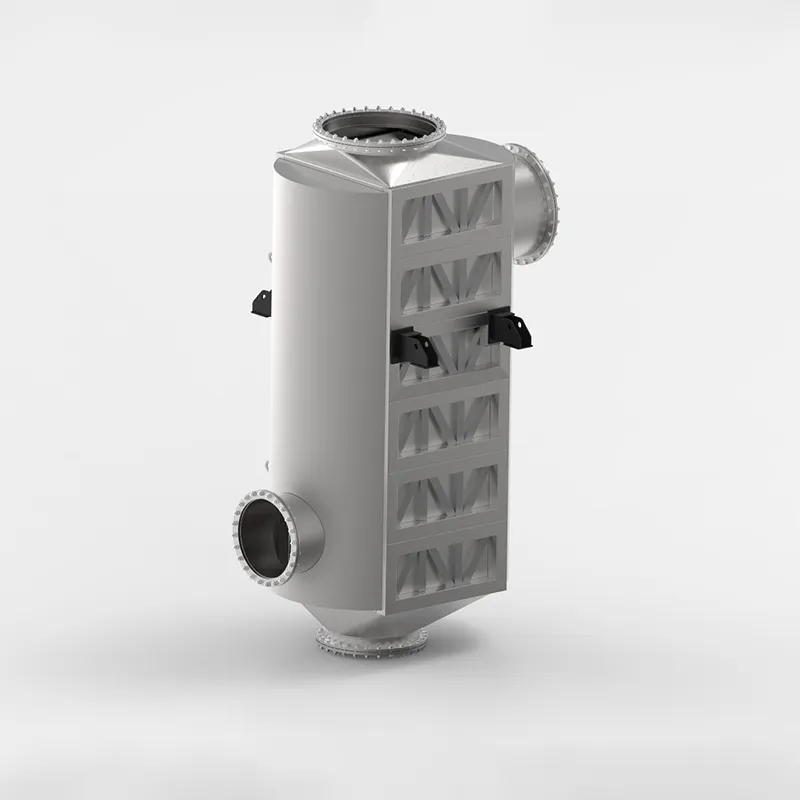
For applications requiring precise thermal management, selecting the correct flow and pressure settings ensures reliable operation. Engineered solutions such as custom plate air preheaters or TP welded plate heat exchangers can be optimized for specific flow and pressure ranges. Additionally, gasketed plate heat exchangers offer flexibility in high-flow systems, while wide-gap welded designs handle viscous fluids under moderate pressure. For extreme conditions, printed circuit heat exchangers and pillow plates provide compact, high-efficiency alternatives. The HT Bloc welded plate heat exchanger is particularly suited for high-pressure lube oil cooling duties.
Maintenance Practices to Ensure Long-Term Overheating Protection
Regular maintenance of the lube oil cooler heat exchanger is essential to sustain its cooling efficiency and prevent machinery overheating. The following practices help ensure reliable long-term protection.
1. Periodic Cleaning of Heat Exchange Surfaces
Over time, dirt, sludge, and scale accumulate on the plates or tubes, reducing heat transfer. Clean the exchanger using approved chemical solvents or high-pressure water jets at intervals recommended by the manufacturer. For detailed product specifications, refer to the gasketed plate heat exchangers page.
2. Inspection of Gaskets and Seals
Check gaskets for cracks, hardening, or leakage. Replace worn seals immediately to maintain proper pressure and prevent oil bypass. The TP welded plate heat exchanger offers a durable alternative with reduced gasket maintenance.
3. Monitoring Oil Flow and Temperature
Install sensors to track inlet and outlet temperatures and flow rates. A sudden temperature rise may indicate fouling or blockage. For high-temperature applications, consider the HT Bloc welded plate heat exchanger for enhanced durability.
4. Checking for Corrosion and Erosion
Inspect metal surfaces for pitting, thinning, or erosion, especially in high-velocity zones. Use non-destructive testing methods annually. The wide gap welded plate heat exchanger is designed to handle viscous fluids and reduce erosion risks.
5. Maintaining Proper Lubricant Quality
Use the correct oil grade and replace it according to schedule. Contaminated or degraded oil accelerates fouling and reduces cooling performance. For custom solutions, visit the custom engineered plate air preheaters page.
6. Tightening and Torque Checks
Ensure all bolts and connections are tightened to the specified torque. Loose fittings can cause leaks and pressure drops. The custom engineered printed circuit heat exchanger provides compact, leak-resistant design for critical systems.
7. Scheduled Professional Servicing
Engage certified technicians for comprehensive inspections and overhauls every 12-24 months. For advanced plate technology, explore the custom engineered pillow plates product line.
Summary
The lube oil cooler heat exchanger is essential for preventing overheating in heavy machinery by transferring excess heat from the oil to a cooling medium, typically air or water. This process relies on fundamental heat transfer principles—conduction and convection—to maintain oil temperatures within safe operating limits.
Key components such as tubes, fins, baffles, and the shell work together to maximize surface area and optimize heat exchange efficiency. Proper flow rate and pressure are critical: adequate flow ensures sufficient heat removal, while correct pressure prevents cavitation and maintains system stability.
Common failure modes including fouling, corrosion, and mechanical blockages can severely degrade cooling performance, leading to oil overheating and potential machinery damage. Regular maintenance practices like cleaning, inspecting seals, and monitoring pressure differentials are vital to ensure long-term overheating protection and equipment reliability.
In summary, a well-maintained lube oil cooler heat exchanger is a cornerstone of thermal management in heavy machinery, directly preventing overheating and extending operational life.
How Does a Lube Oil Cooler Heat Exchanger Prevent Overheating in Heavy Machinery?
It transfers heat from hot lubricating oil to a cooler medium (air or water) using conduction and convection, maintaining oil temperature within safe operating limits.
The Core Mechanism: How Heat Transfer Principles Reduce Oil Temperature
Heat flows from the high-temperature oil to the lower-temperature coolant through metal tubes or plates. The large surface area and turbulent flow enhance heat dissipation.
Key Components and Their Roles in Efficient Cooling
Tubes or plates transfer heat; baffles direct flow; fins increase surface area; seals prevent leakage; and the shell contains pressure. Each part optimizes thermal exchange.
The Impact of Flow Rate and Pressure on Cooling Performance
Higher flow rates improve heat transfer but increase pressure drop. Optimal balance ensures sufficient cooling without overloading the pump or causing cavitation.
Common Failure Modes and Their Effect on Overheating Prevention
Fouling, corrosion, or tube blockage reduce heat transfer efficiency. Leaks or bypass flows cause inadequate cooling, leading to rising oil temperatures.
Maintenance Practices to Ensure Long-Term Overheating Protection
Regular cleaning, inspection for leaks, monitoring pressure drops, and replacing worn gaskets or tubes keep the exchanger operating at peak performance.

 English EN





User Comments
Service Experience Sharing from Real Customers
mike
Maintenance SupervisorWe swapped out our old shell-and-tube for this one on a CAT 3516 last month. Right off the bat, the pressure drop was noticeably better, and lube oil temps dropped by nearly 8°F under full load. No leaks at the gaskets either, which is a huge win for our uptime. Solid piece of kit for the money.
sarah_chem
Process EngineerSpec'd this for a small lube oil skid in a specialty chemical plant. Thermal performance matched our calcs perfectly, and the compact footprint helped us fit it into a tight spot on the platform. Only knock is the drain plug is a bit finicky to access if you're wearing gloves. Otherwise, no complaints.
tom_c
Lead MechanicBeen running this on our ammonia compressor lube system for about six months now. The copper brazing is holding up great against the vibration, and cleaning the core is way easier than the old finned unit we had. Keeps the oil crystal clear and cool even during summer peak load. Would buy again.
jason
Fleet ManagerIt does the job on our stationary diesel gen sets, but I expected a bit more from the build quality for the price. Had to re-torque the mounting bolts after the first 50 hours because it rattled loose. Once that was sorted, temps stabilized nicely. Decent, but not the toughest unit I've used.