Optimizing Thermal Performance with a Brine Heat Exchanger in Industrial Applications
Selecting the right brine heat exchanger is critical for maintaining process efficiency in refrigeration, chemical cooling, and marine HVAC systems. This guide covers working principles, performance parameters, and practical selection criteria for process engineers and procurement managers. We also explore how SHPHE’s plate heat exchanger designs deliver reliable thermal performance across demanding brine applications.
What Is a Brine Heat Exchanger and Why Does It Matter?
A brine heat exchanger transfers thermal energy between a brine solution (typically calcium chloride, sodium chloride, or potassium formate) and another fluid. In industrial settings, brine serves as a secondary coolant because of its low freezing point and high heat capacity. The challenge lies in the corrosive nature of brine and the potential for fouling or scaling at elevated temperatures. A properly designed brine heat exchanger must balance corrosion resistance, thermal efficiency, and pressure drop constraints.
For overseas process engineers and purchasing managers, the choice of heat exchanger technology directly impacts operating costs and system uptime. Plate heat exchangers, especially welded and gasketed variants, have become the preferred solution for brine duties due to their compact footprint and high heat transfer coefficients. SHPHE, a Shanghai-based plate heat exchanger manufacturer founded in 2005, offers several product lines that are compatible with brine media. The company holds ISO9001 and ASME U certifications and exports to more than 20 countries.
How Does a Brine Heat Exchanger Work in a Typical Process Loop?
In a closed-loop refrigeration system, the brine heat exchanger cools the brine after it absorbs heat from the process. The warm brine enters the exchanger and transfers its heat to a refrigerant or cooling water on the other side. The cooled brine then returns to the evaporator or process equipment. This cycle repeats continuously.
Key process parameters that affect performance include:
- Brine inlet and outlet temperatures (typically -40°C to +50°C for calcium chloride)
- Flow rate and allowable pressure drop
- Brine concentration and viscosity at operating temperature
- Presence of particulates or scaling tendencies
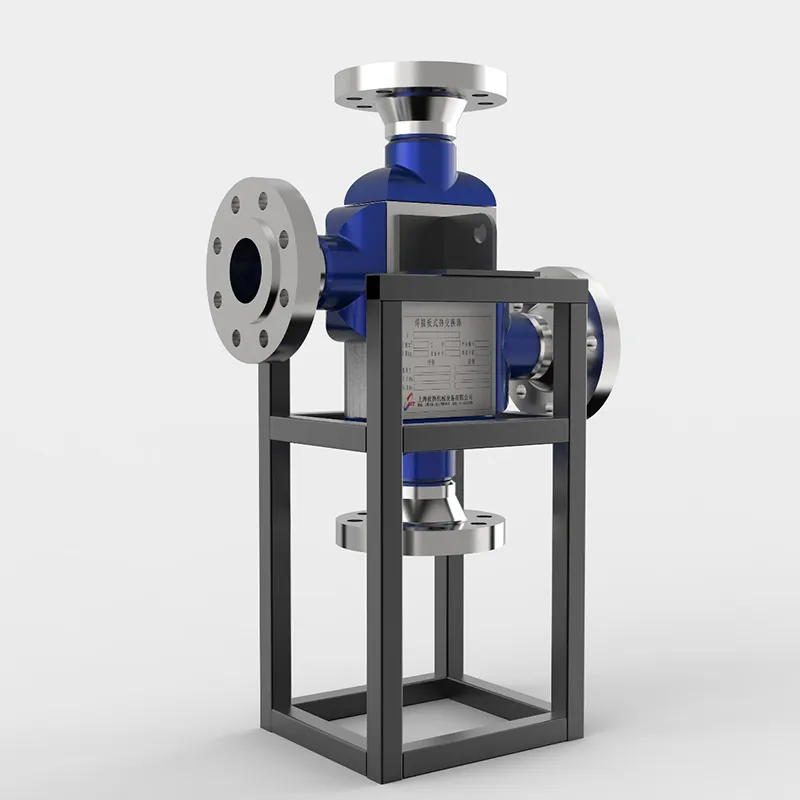
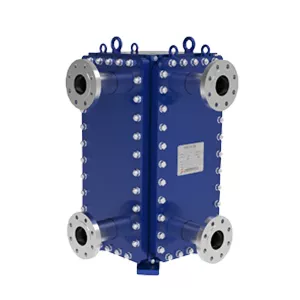
Plate heat exchangers handle these conditions well because the turbulent flow between corrugated plates enhances heat transfer and reduces fouling. For highly viscous or particulate-laden brine, a Wide Gap Welded Plate Heat Exchanger is often recommended. You can learn more about this design on our wide gap welded plate heat exchanger page.
Key Features and Typical Parameter Ranges for Brine Heat Exchangers
When evaluating a brine heat exchanger, focus on material compatibility, thermal performance, and mechanical integrity. Below are common parameter ranges found in industrial plate heat exchangers designed for brine service:
| Parameter |
Typical Range |
| Operating temperature |
-40°C to +150°C |
| Design pressure |
Up to 30 bar (gasketed) / 60 bar (welded) |
| Plate material |
SS316L, Titanium, Hastelloy C-276 |
| Gasket material |
EPDM, Viton, NBR |
| Heat transfer coefficient |
2,000–7,000 W/m²K (depending on brine type) |
| Fouling factor |
0.00005–0.0002 m²K/W |
SHPHE offers free thermal design and selection service to help you match these parameters to your specific brine duty. Their product range includes gasketed plate heat exchangers for lower-pressure applications and fully welded units for aggressive media. For extreme conditions, the HT-Bloc welded plate heat exchanger provides robust performance without gasket limitations.
Applications and Recommended Solutions for Brine Heat Exchangers
Brine heat exchangers are used across multiple industries. Common applications include:
- Refrigeration and cold storage: brine as a secondary coolant in ammonia or CO₂ systems
- Chemical processing: cooling exothermic reactions with brine
- Marine HVAC: seawater and brine loops for shipboard air conditioning
- Food and beverage: rapid chilling of products using brine
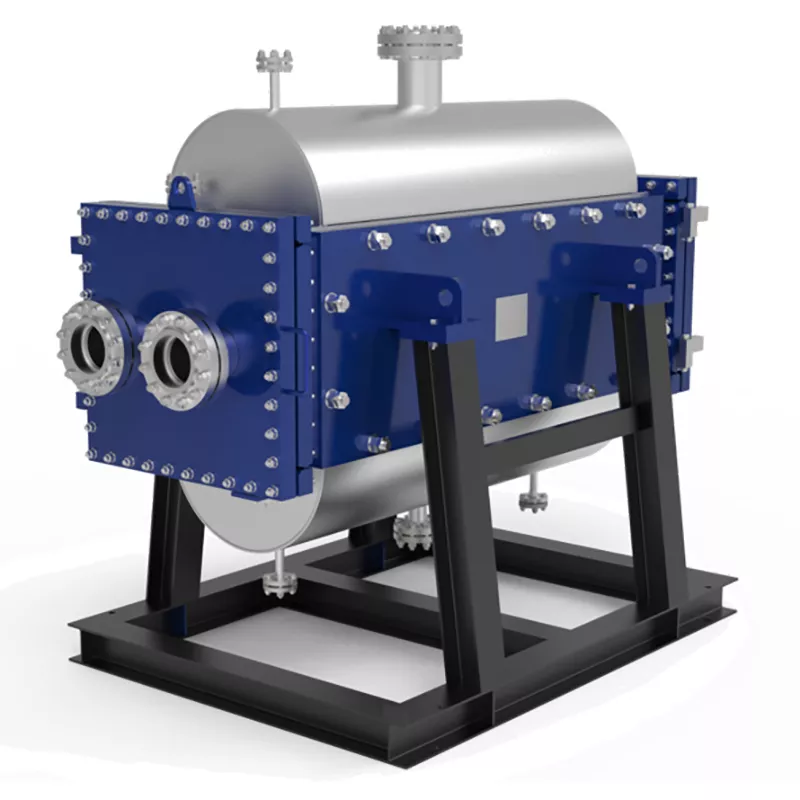
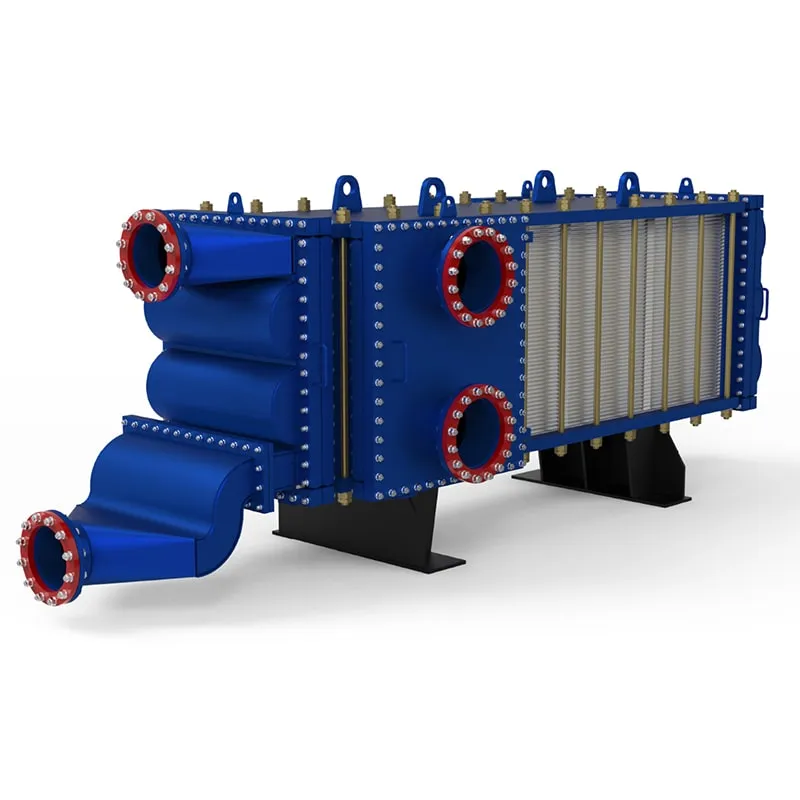
For each application, the recommended solution depends on temperature and pressure. Gasketed plate heat exchangers work well for moderate pressures and non-aggressive brines. When the brine contains chlorides at high concentrations, titanium plates offer superior corrosion resistance. For high-pressure or high-temperature brine duties, consider a TP Welded Plate Heat Exchanger. Detailed information is available on our TP welded plate heat exchanger page.
Why Choose SHPHE for Your Brine Heat Exchanger Needs?
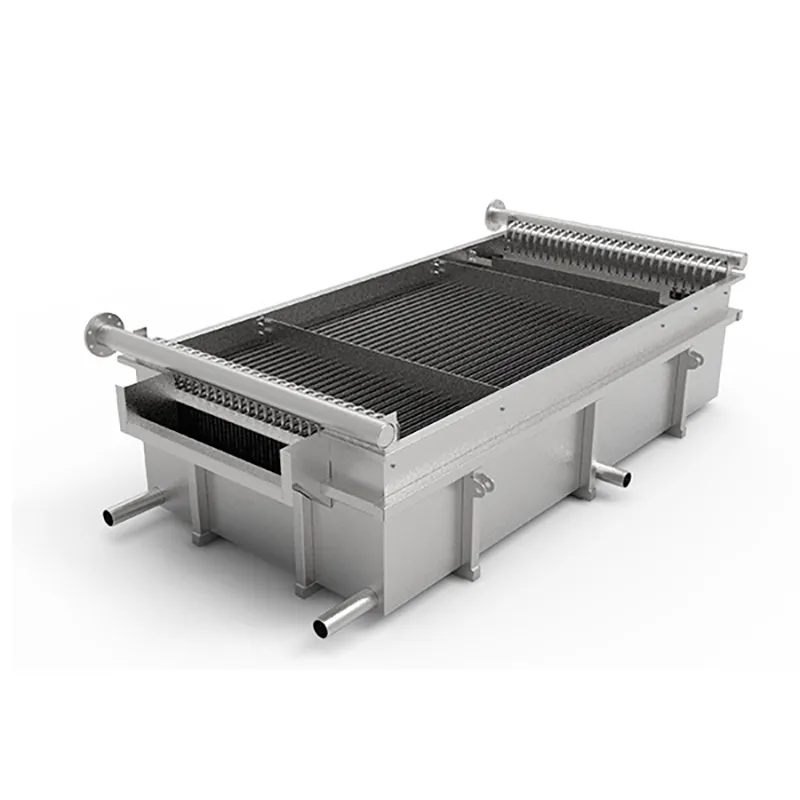
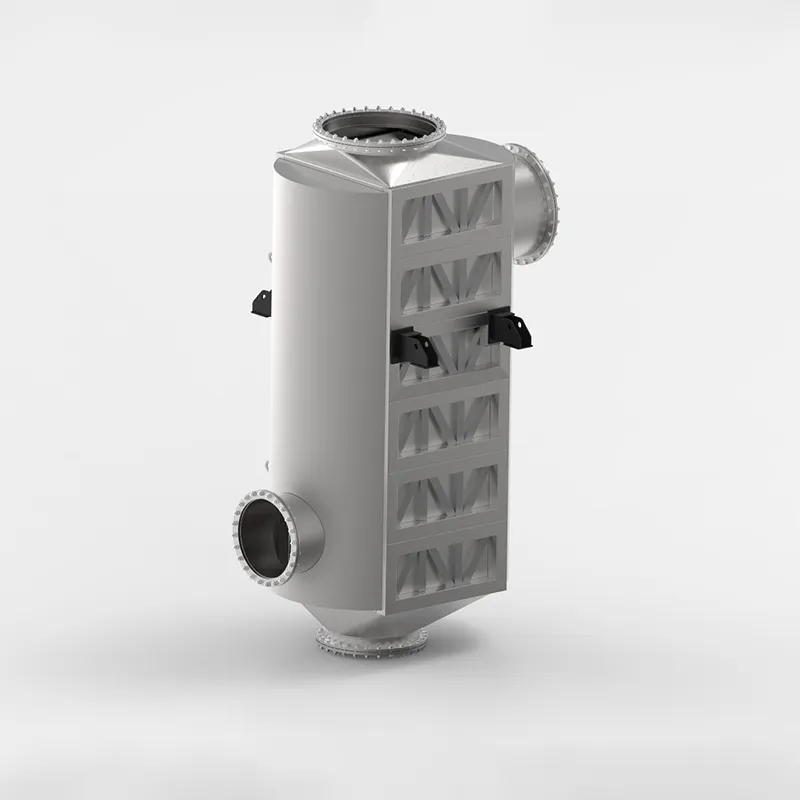
SHPHE has been engineering plate heat exchangers since 2005. The company’s product portfolio includes HT-Bloc and TP Welded Plate Heat Exchangers, Wide Gap Welded Plate Heat Exchangers, Gasketed Plate Heat Exchangers, PCHE, Plate Air Preheaters, and Pillow Plates. All units are designed with brine service in mind, using materials that withstand corrosion and thermal cycling.
Key advantages of working with SHPHE include:
- Free thermal design and selection service based on your process data
- ISO9001 and ASME U certified manufacturing
- Compatibility with Alfa Laval, Compabloc, and GEA frame geometries
- Custom-engineered solutions for unique brine compositions
SHPHE also offers alternative designs such as printed circuit heat exchangers (PCHE) for compact high-pressure brine loops, and pillow plates for tank heating or cooling with brine. These options give process engineers flexibility when designing efficient thermal systems.
Frequently Asked Questions About Brine Heat Exchangers
What material is best for brine heat exchanger plates?
Stainless steel 316L is suitable for low-chloride brines. For higher chloride concentrations, titanium or Hastelloy C-276 provide better corrosion resistance. The choice depends on brine concentration, temperature, and pH.
Can a gasketed plate heat exchanger handle brine?
Yes, gasketed plate heat exchangers are commonly used for brine duties within moderate pressure and temperature ranges. Ensure the gasket material is compatible with the brine chemistry. EPDM and Viton are typical choices.
What is the typical pressure drop for a brine heat exchanger?
Pressure drop varies with flow rate, plate geometry, and brine viscosity. In most industrial designs, allowable pressure drop ranges from 0.5 to 2 bar per side. SHPHE can optimize the plate pattern to meet your specific pressure drop target.
How do I prevent fouling in a brine heat exchanger?
Maintain proper brine filtration and control pH levels. Using a wide gap plate design reduces fouling risk. Regular cleaning cycles with appropriate chemical agents also help maintain thermal performance.
Is a welded plate heat exchanger better than a gasketed one for brine?
Welded units eliminate gasket failure risks and handle higher pressures and temperatures. For aggressive brines or high-pressure systems, a welded plate heat exchanger is more reliable. Gasketed units are more cost-effective for standard conditions.
Can I use a brine heat exchanger as an alternative to a shell-and-tube design?
Yes, plate heat exchangers offer higher thermal efficiency and a smaller footprint compared to shell-and-tube units. They are a proven alternative for brine cooling and heating duties in many industries.
Request a Quote for Your Brine Heat Exchanger Project
To get a precise thermal design and quotation for your brine heat exchanger, please provide the following details:
- Flow rate of brine and secondary fluid (m³/h or kg/s)
- Inlet and outlet temperatures for both streams
- Allowable pressure drop on each side
- Brine composition and concentration
- Operating pressure and any special requirements
SHPHE’s engineering team will review your data and provide a free thermal selection and budget proposal. Contact us through the website to start your brine heat exchanger project today.

 English EN





User Comments
Service Experience Sharing from Real Customers
Marcus
Senior Process EngineerWe swapped out our old shell-and-tube for this brine heat exchanger on a cold-storage retrofit. The pressure drop is noticeably lower, and the titanium plates are holding up perfectly against the aggressive chloride levels. Installation was straightforward—no leaks on startup. Solid piece of kit for the price.
Leila
Maintenance SupervisorHad a minor hiccup with the gasket alignment on first assembly, but once we got it seated right, the unit has been running like a dream for six months. Cleaning is way easier than our previous model—the clamp design actually makes sense. Would buy again, just wish the manual had better torque specs.
Raj
HVAC Project ManagerSpec'd this for a large district cooling loop where we needed to handle a 25% glycol brine mix. Thermal performance exceeded our simulation by about 8%. No fouling issues so far, and the compact footprint saved us serious space in the mechanical room. My controls team loves the predictable response curve.
Olivia
Shift OperatorI'm the one who actually runs this thing day in and day out. It's quiet, doesn't vibrate weirdly like the old unit, and the drain valves are actually placed where you can reach them without a yoga move. Only gripe: the nameplate is tiny and hard to read when you're wearing gloves. But performance-wise, it's a champ.