Understanding the Role of a CDU Heat Exchanger in Refinery Operations
A CDU heat exchanger is a critical component in crude distillation units, directly influencing energy efficiency and throughput. This article explains how these exchangers work, what parameters matter, and how to select reliable solutions for your refinery. We cover common pain points, practical specifications, and answer real buyer questions to help you make informed decisions.
What Is a CDU Heat Exchanger and Why Does It Matter?
In a crude distillation unit (CDU), heat exchangers preheat crude oil before it enters the furnace. This preheating step reduces furnace fuel consumption and overall operating costs. A well-designed CDU heat exchanger can recover up to 60–70% of the waste heat from product streams, making the entire process more energy-efficient.
Without an efficient heat exchanger, refineries face higher energy bills, reduced throughput, and more frequent maintenance shutdowns. The exchanger must handle fouling, high temperatures, and pressure differentials typical in CDU service. Choosing the right design directly impacts your bottom line.
How Does a CDU Heat Exchanger Work in a Typical Refinery?
Crude oil enters the CDU at ambient temperature and passes through a series of heat exchangers. Hot product streams from the distillation column—such as naphtha, kerosene, and diesel—flow on the opposite side of the plates or tubes. Heat transfers from the hot products to the cold crude, raising its temperature to around 250–300 °C before it reaches the furnace.
This process is called preheat train. A typical CDU preheat train includes 8 to 15 exchangers arranged in series and parallel. The final temperature approach between crude and hot products is usually 10–30 °C, depending on design and fouling conditions.
Key Features and Typical Parameter Ranges for CDU Heat Exchangers
When evaluating a CDU heat exchanger, focus on these parameters:
- Operating temperature: Typically 50–350 °C on the crude side, and up to 400 °C on the hot product side.
- Design pressure: Ranges from 10 to 40 bar, depending on the exchanger location in the preheat train.
- Fouling factor: Commonly 0.0003–0.0006 m²·K/W for crude oil service.
- Heat transfer coefficient: 200–600 W/m²·K for gasketed plate designs; 100–300 W/m²·K for shell-and-tube.
- Material selection: Stainless steel 304/316L for plates, carbon steel for frames and nozzles.
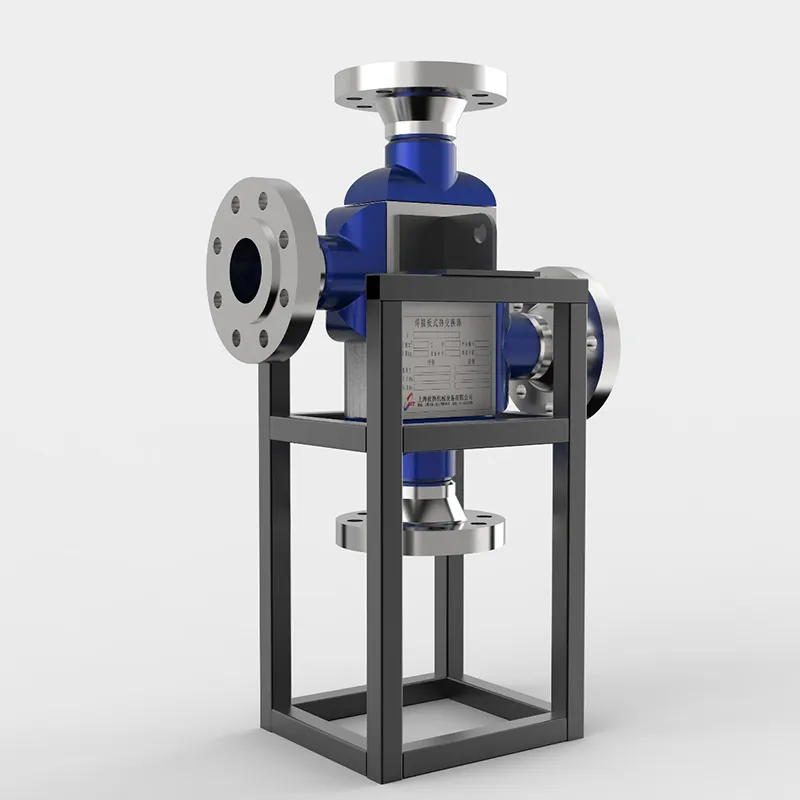
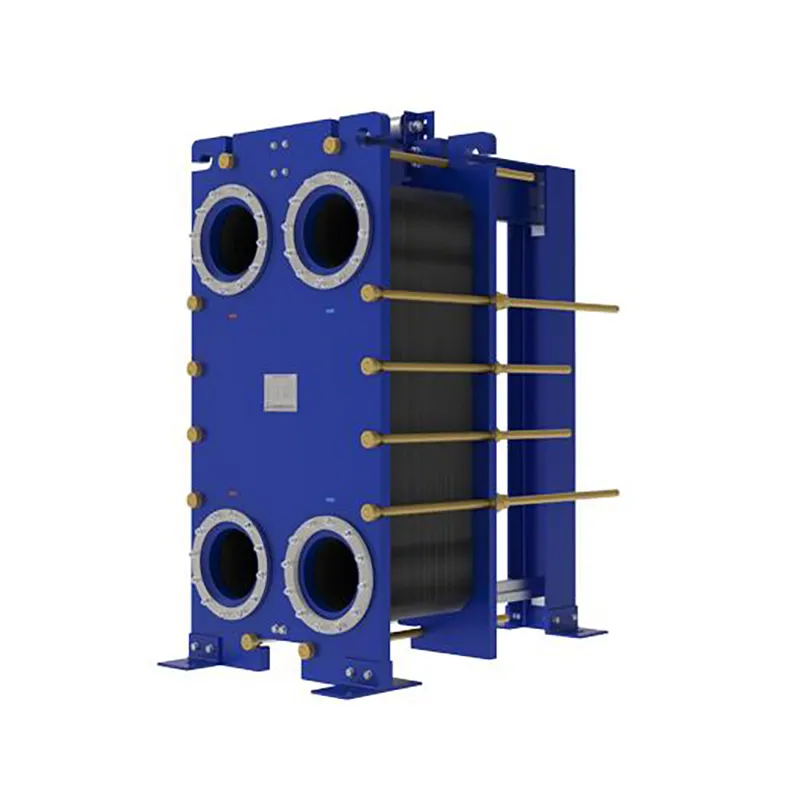
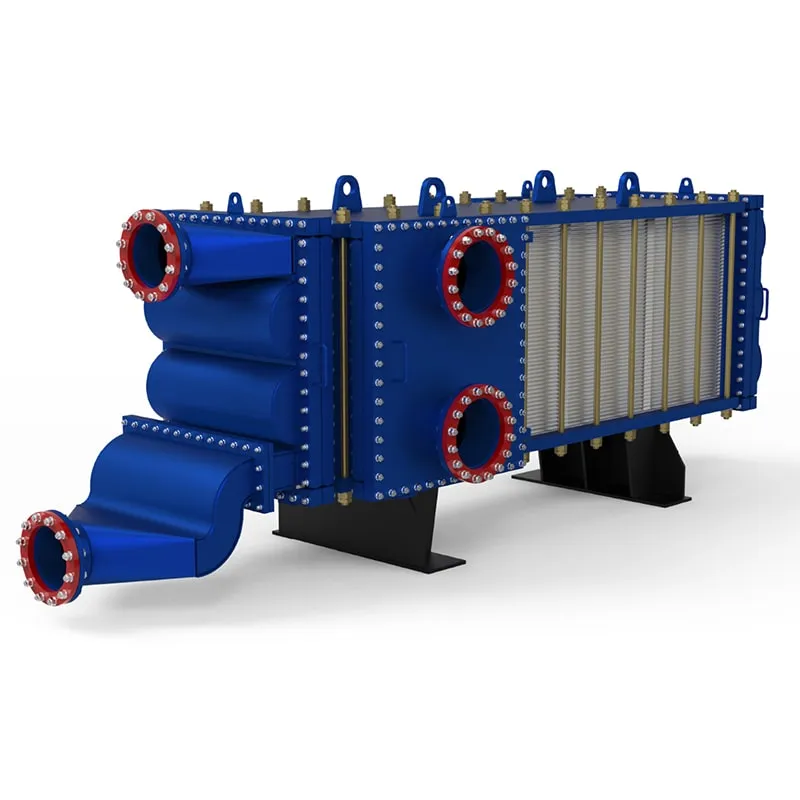
Plate heat exchangers offer higher thermal efficiency and a smaller footprint compared to traditional shell-and-tube units. For CDU applications, welded plate designs are often preferred to avoid gasket failures at high temperatures.
Applications and Recommended Solutions for CDU Heat Exchangers
CDU heat exchangers are used in several key areas within the preheat train:
- Crude preheating before desalter: Low-temperature exchangers (50–150 °C) using gasketed plate designs.
- Crude preheating after desalter: Medium-temperature exchangers (150–250 °C) using welded plate designs.
- Final preheating before furnace: High-temperature exchangers (250–350 °C) using fully welded or wide gap designs.
For fouling services like crude oil, wide gap welded plate heat exchangers are recommended. They allow larger flow passages and reduce clogging. For clean product-to-crude duties, gasketed plate heat exchangers offer cost-effective performance. In high-temperature zones, HT-Bloc welded plate heat exchangers provide excellent durability.
If you are looking for an alternative to Alfa Laval or Compabloc units, SHPHE offers compatible designs with equivalent thermal performance and shorter lead times.
Why SHPHE Is a Reliable Partner for CDU Heat Exchangers
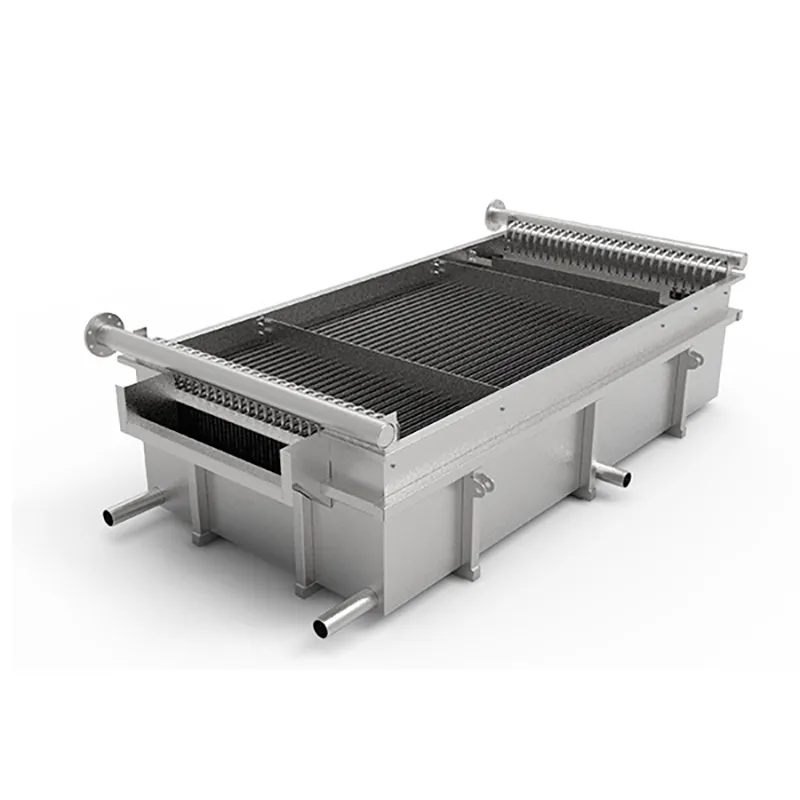
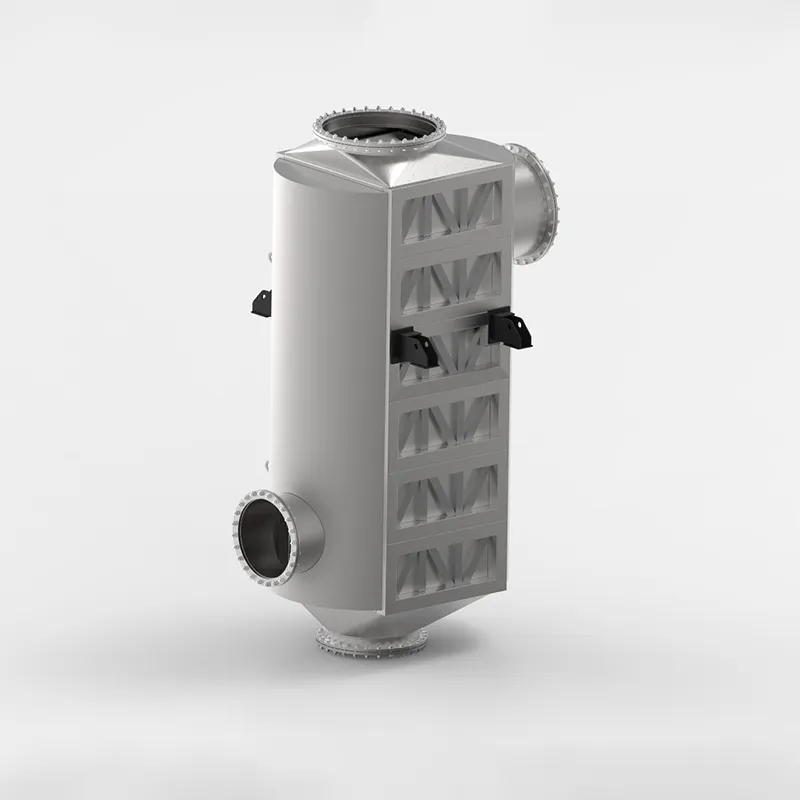
SHPHE is a Shanghai-based plate heat exchanger manufacturer founded in 2005. We export to over 20 countries and hold ISO9001 and ASME U certifications. Our product lines include HT-Bloc welded plate heat exchangers, TP welded plate heat exchangers, wide gap welded plate heat exchangers, gasketed plate heat exchangers, printed circuit heat exchangers (PCHE), plate air preheaters, and pillow plates.
We provide free thermal design and selection services. Our engineers analyze your process conditions—flow rates, temperatures, pressures, and media properties—and recommend the optimal exchanger configuration. This ensures you get a CDU heat exchanger that matches your specific refinery needs without overpaying.
For example, our HT-Bloc welded plate heat exchanger handles temperatures up to 400 °C and pressures up to 40 bar, making it ideal for high-temperature CDU duties. Our wide gap welded plate heat exchanger is designed for fouling fluids like crude oil, with gap widths up to 12 mm to prevent blockages.
Frequently Asked Questions About CDU Heat Exchangers
What is the typical lifespan of a CDU heat exchanger?
A well-maintained CDU heat exchanger lasts 10–15 years in refinery service. Plate packs may need replacement after 5–8 years depending on fouling and corrosion rates. Regular cleaning and proper material selection extend service life significantly.
How do I choose between a gasketed and welded plate heat exchanger for CDU?
Use gasketed designs for temperatures below 180 °C and clean fluids. For higher temperatures or fouling crude, choose welded plate designs. Welded units eliminate gasket failure risks and handle thermal cycling better. SHPHE offers both types with free selection guidance.
Can I replace an existing shell-and-tube exchanger with a plate design?
Yes, in most cases. Plate heat exchangers provide 2–4 times higher heat transfer coefficients, reducing footprint by up to 50%. However, you must verify pressure drop limits and fouling characteristics. SHPHE can design a retrofit package that fits your existing piping and supports.
What causes fouling in CDU heat exchangers and how to mitigate it?
Fouling comes from asphaltenes, salts, and suspended solids in crude oil. Mitigation strategies include using wide gap plates, installing online cleaning systems, and maintaining proper flow velocities above 0.5 m/s. SHPHE wide gap exchangers reduce fouling frequency by 30–50% in field tests.
Are SHPHE heat exchangers compatible with Alfa Laval or GEA frames?
Yes, SHPHE offers replacement plate packs and gaskets that are compatible with Alfa Laval, GEA, and other major brands. Our plates are dimensionally interchangeable and meet the same thermal performance standards. This allows you to upgrade existing units without changing the frame.
What certifications does SHPHE hold for CDU heat exchangers?
SHPHE is ISO9001 and ASME U certified. Our manufacturing facility follows strict quality control procedures. Each CDU heat exchanger undergoes hydrostatic testing and dimensional inspection before shipment. We also provide material certificates and weld maps upon request.
Request a Quote for Your CDU Heat Exchanger
To get a tailored recommendation for your CDU heat exchanger, please provide the following details:
- Flow rate of crude oil and hot product streams (m³/h or kg/h)
- Inlet and outlet temperatures for both sides (°C)
- Operating pressure and allowable pressure drop (bar)
- Media composition and fouling tendency
- Preferred material of construction
Our engineering team will perform a free thermal design and selection within 24 hours. Contact SHPHE today to discuss your CDU heat exchanger requirements and receive a competitive quotation.
A reliable CDU heat exchanger is essential for refinery efficiency and profitability. With SHPHE, you get proven technology, global certifications, and responsive support. Let us help you optimize your preheat train.

 English EN





User Comments
Service Experience Sharing from Real Customers
Elena
Lead Process EngineerWe swapped out an older shell-and-tube for this CDU heat exchanger during a turnaround. The temperature approach is tighter than I expected, and the pressure drop is well within our limits. Installation was straightforward, and we haven't seen any vibration issues. Solid piece of kit for crude preheat.
Marcus
Maintenance SupervisorBeen using this on our crude unit for about eight months now. The bundle pulls cleanly, which is a big deal when you're on a tight shutdown schedule. I knocked off one star because the gasket surface needed a quick cleanup before seating—minor, but worth noting. Otherwise, no leaks, no fouling surprises.
Priya
Senior Project ManagerSpec'd this exchanger for a revamp project in a medium-sized refinery. Delivery was on time, and the thermal performance matched the datasheet within 2%. The operators love that it doesn't hammer during startup. For the price point, it's a no-brainer for CDU service.
Tomás
Shift OperatorIt does the job most days, but I've had to bump up the wash water rate twice because of fouling on the tube side. Maybe it's our crude blend being heavy, but the previous unit handled it better. Works fine when clean, just feels a bit sensitive to feed changes.