How to Select the Right Flat Plate Heat Exchanger for Your Application?
Choosing a flat plate heat exchanger isn't just about matching flow rates or connection sizes. It's about understanding your process conditions, thermal targets, and maintenance expectations. This guide walks through the key selection criteria — from plate material and gasket compatibility to pressure drop and serviceability — so you can confidently pick a unit that performs reliably for years. Whether you're working with clean water, aggressive chemicals, or viscous fluids, we break down what actually matters when comparing options.
Start with Your Process Fluids and Temperatures
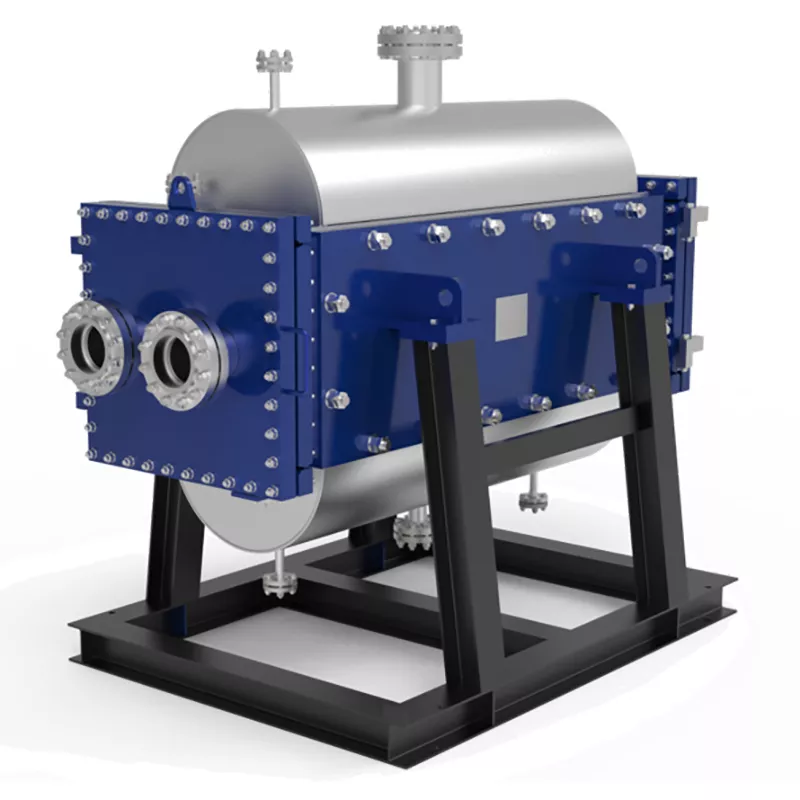
The first thing to nail down is what fluids you're actually running through the exchanger. Is it water-to-water, steam-to-liquid, or something more demanding like a heat transfer oil or a caustic solution? Each fluid brings its own set of requirements in terms of chemical compatibility, viscosity, and fouling tendency. For instance, if you're handling a fluid with suspended solids or fibrous material, a standard gasketed plate unit might struggle with clogging. In that case, a wide-gap welded plate heat exchanger could be a better fit, as it offers larger channel openings that let particulates pass through without blocking the flow path.
Temperature also plays a huge role in material selection. Standard EPDM gaskets handle up to about 150°C, while Viton or PTFE options push that higher, but they cost more and may not be compatible with every fluid. If your process runs above 180°C or involves thermal cycling, a welded or fully welded design removes gasket failure from the equation entirely. That's why it's worth looking at HT-Bloc welded plate heat exchangers, which are engineered for high-temperature duties without the risk of gasket blowout.
Understand Your Thermal Duty and Pressure Drop Constraints
Once you know the fluids, you need to quantify the heat transfer requirement. This means calculating the required duty in kilowatts or BTUs per hour, along with the inlet and outlet temperatures on both sides. From there, you can determine the log mean temperature difference (LMTD), which is the driving force for heat exchange. A flat plate heat exchanger is highly efficient because it achieves a close temperature approach — often within 1°C to 2°C — which makes it ideal for heat recovery applications where every degree counts.
But efficiency comes with a trade-off: pressure drop. More plates or tighter corrugation patterns increase heat transfer but also raise the pressure loss across the unit. You have to balance this against your pump capacity and the allowable pressure drop in your system. A good rule of thumb is to keep pressure drop between 0.3 and 0.8 bar per pass for most liquid applications. If you're working with a viscous fluid or a low-pressure gas, you might need a plate design with a wider channel or a lower corrugation angle to keep the pressure drop manageable.
Plate Material and Gasket Compatibility
The plate material is the heart of the exchanger. Stainless steel 304 or 316 is the default for clean water and many industrial fluids, offering good corrosion resistance and a reasonable price point. But if you're dealing with chlorides, seawater, or acidic environments, you'll need something more robust like titanium or a high-alloy material such as Hastelloy. These materials resist pitting and stress corrosion cracking, which can otherwise shorten the life of a standard stainless steel unit dramatically.
Gaskets are just as critical. They seal the plates and prevent cross-contamination between the two fluid streams. The gasket material must be compatible with both the fluid and the operating temperature. NBR (nitrile) is a common choice for oils and moderate temperatures up to 110°C. EPDM handles hot water and steam up to 150°C. For aggressive chemicals or high temperatures, Viton or PTFE are the go-to options, though they come at a premium. If you're unsure about the exact chemical exposure, it's always safer to consult with a manufacturer who can recommend the right gasket compound based on your specific fluid analysis.
Consider Maintenance and Cleaning Requirements
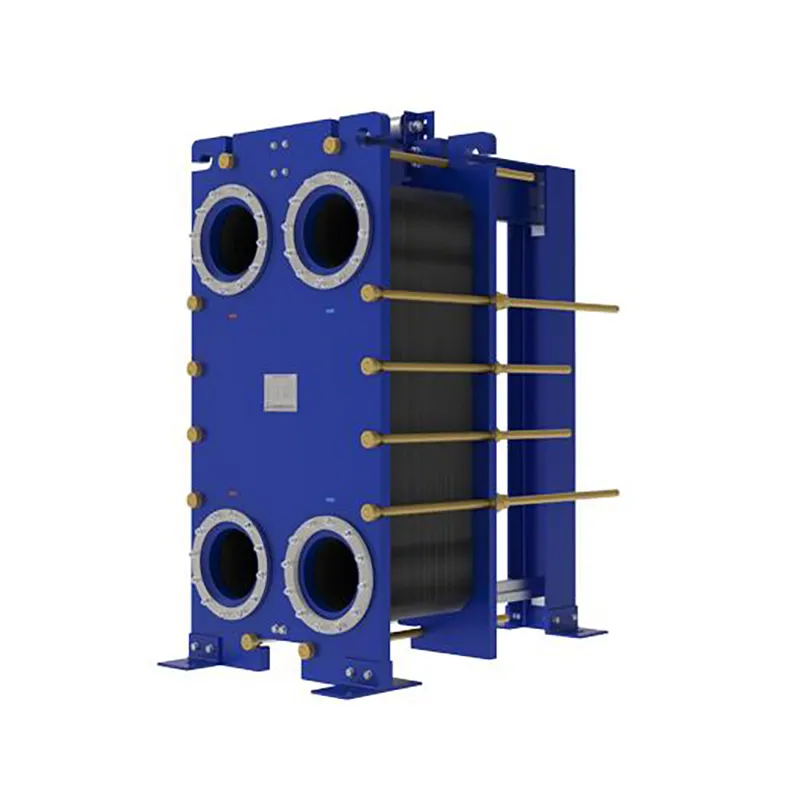
One of the biggest advantages of a gasketed plate heat exchanger is that you can open it up and clean the plates individually. This is a huge plus if your process fluid tends to foul or scale. You can also add or remove plates to adjust the capacity, which gives you flexibility if your thermal duty changes over time. The downside is that gaskets wear out and need replacement every few years, and the unit requires space to pull the plates apart for maintenance.
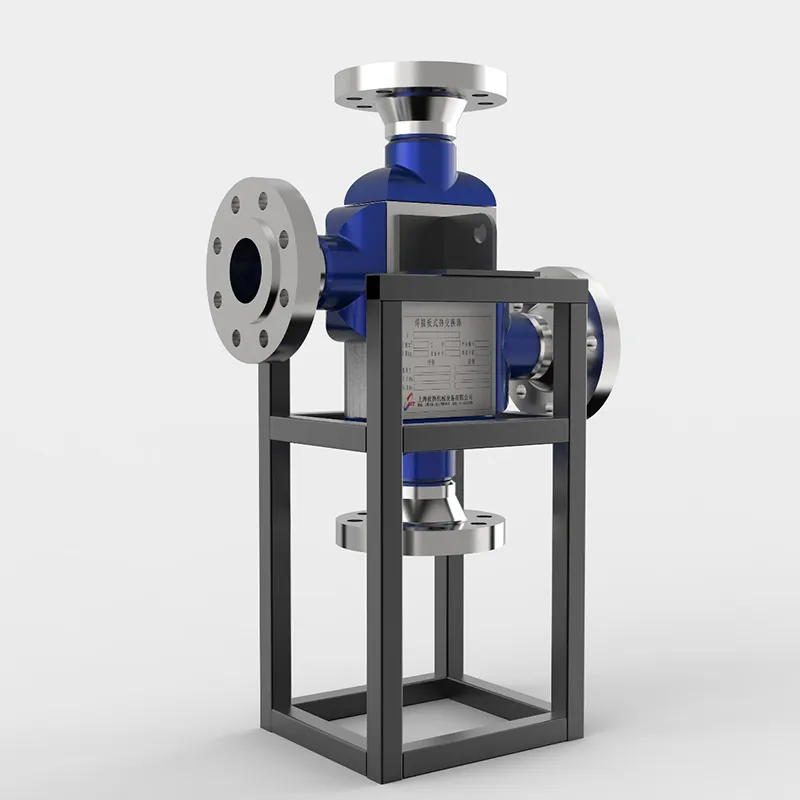
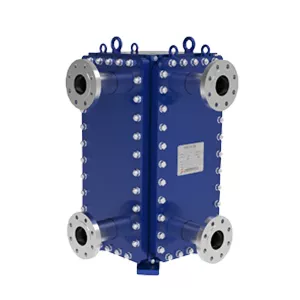
On the other hand, a welded plate heat exchanger eliminates gaskets entirely, which means no leak points and a longer service life. But you lose the ability to clean the plates mechanically — you'd need to do chemical cleaning in place (CIP). For applications where the fluid is clean and fouling is minimal, a welded design like the TP welded plate heat exchanger offers a compact, leak-proof solution that requires very little maintenance over its lifetime. If you expect to do routine cleaning, a gasketed unit is usually the more practical choice.
Flow Configuration and Connection Sizing
The way fluids flow through the exchanger — counter-current, co-current, or cross-flow — affects the thermal performance. Counter-current flow gives you the highest efficiency because it maintains a more consistent temperature difference along the entire plate length. Most flat plate heat exchangers are designed for counter-current flow by default, which is why they can achieve such tight temperature approaches.
Connection sizes matter too. If the nozzles are too small, you'll get high velocity and excessive pressure drop. If they're too large, the flow distribution across the plates becomes uneven, which reduces efficiency. A good manufacturer will size the connections based on your flow rate and allowable pressure drop. It's also worth checking whether the connections are threaded or flanged — flanged connections are easier to install and maintain, especially for larger pipe sizes.
Evaluate Space Constraints and Installation Flexibility
Flat plate heat exchangers are inherently compact compared to shell-and-tube units. They can deliver the same thermal duty in a fraction of the footprint, which is why they're so popular in retrofit projects where space is tight. But you still need to account for clearance around the unit — enough room to pull the plates for cleaning or to access the tightening bolts. A typical gasketed unit needs about one and a half times its own length in front of the fixed end to slide the plates out.
If vertical space is limited, you can mount the unit horizontally or even at an angle, but this may affect draining and venting. Some designs, like the custom-engineered pillow plates, offer even more flexibility because they can be shaped to fit into existing equipment or tanks. That's a good option if you're integrating the heat transfer surface directly into a vessel or a reactor rather than using a standalone exchanger.
Look at the Bigger Picture: Total Cost of Ownership
The purchase price is just the starting point. You need to factor in installation costs, energy consumption (pumping power), maintenance intervals, and downtime. A cheaper unit with higher pressure drop might save money upfront but cost you more in electricity over the years. Similarly, a unit that requires frequent gasket replacements could rack up maintenance costs quickly.
It's also worth thinking about future capacity changes. If you expect your process to scale up, a gasketed unit lets you add plates to increase capacity without buying a whole new exchanger. That's a significant advantage for growing operations. On the other hand, if your process is stable and you want a set-and-forget solution, a welded or brazed unit might be more cost-effective in the long run.
Don't Overlook Customization Options
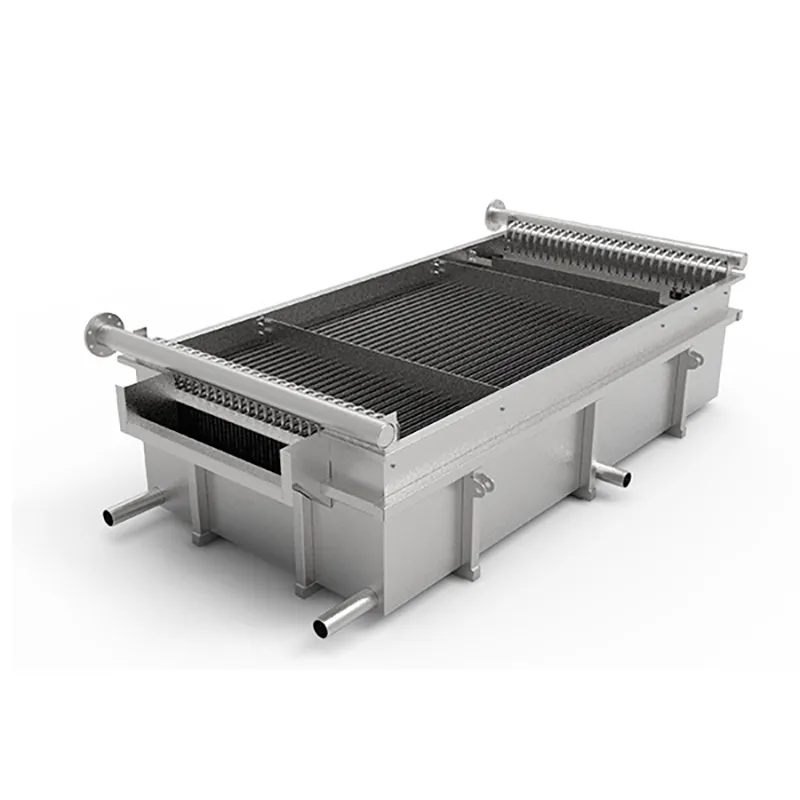
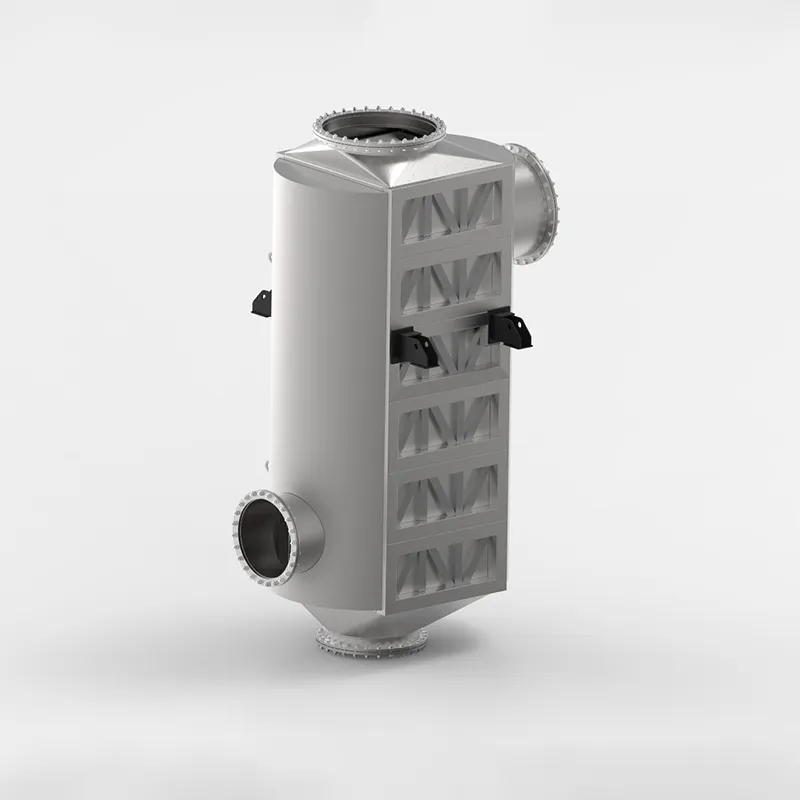
Sometimes a standard off-the-shelf unit just doesn't cut it. If you have an unusual combination of temperature, pressure, and fluid chemistry, a custom-engineered solution might be the way to go. For example, custom-engineered plate air preheaters are designed specifically for air-side heat recovery in combustion or drying processes. These units are built to handle large volumes of air at moderate temperatures, with plate spacing optimized to minimize pressure drop while maximizing heat transfer.
Similarly, printed circuit heat exchangers are a high-tech option for extreme conditions — very high pressures (up to 500 bar) and temperatures (up to 900°C). They use chemically etched channels instead of plates and gaskets, which makes them incredibly robust and compact. If your application pushes the boundaries of what standard heat exchangers can handle, it's worth exploring these advanced designs.
Final Thoughts on Making the Right Choice
Selecting the right flat plate heat exchanger comes down to a clear understanding of your process conditions and a realistic assessment of your maintenance and budget constraints. Start by defining your fluids, temperatures, flow rates, and allowable pressure drop. Then, evaluate the different designs — gasketed, welded, wide-gap, or custom — based on how they handle fouling, cleaning, and future expansion. Don't be afraid to reach out to manufacturers with your specific data; a reputable supplier will help you match the right plate material, gasket compound, and configuration to your needs.
Remember, the goal isn't to find the cheapest unit or the one with the highest heat transfer coefficient. It's to find the exchanger that delivers reliable, efficient performance over its entire lifespan, with minimal downtime and reasonable operating costs. When you weigh all these factors together, you'll be in a strong position to make a decision that serves your operation well for years to come.

 English EN





User Comments
Service Experience Sharing from Real Customers
Mike
Maintenance SupervisorWe swapped out our old shell-and-tube for this flat plate unit in the HVAC loop. Installation was straightforward, and the pressure drop is noticeably lower. Six months in, zero fouling issues. It’s a solid upgrade for any plant floor.
Sarah
Lead Process EngineerSpec’d this for a pilot-scale dairy pasteurizer. The thermal efficiency is impressive for such a compact footprint. Only reason I’m not giving 5 stars is the gasket replacement took a bit longer than expected the first time, but once you get the hang of it, it’s fine.
Tom
Facility ManagerNeeded a reliable heat exchanger for a school’s geothermal loop. This flat plate handles the glycol mix like a champ. Quiet operation, easy to clean during summer shutdown. Our maintenance team loves it. Would buy again without hesitation.
Elena
Chemical OperatorWe use it to cool a corrosive chemical stream. The titanium plates hold up well, and the heat transfer is consistent. I wish the manual had clearer torque specs for reassembly, but overall it’s a workhorse that hasn’t let us down in two years.