What Are the Key Design Features of a Gasket Plate Heat Exchanger?
A gasket plate heat exchanger is a compact, high-efficiency thermal transfer device widely used in HVAC, chemical processing, food and beverage, and marine industries. This article breaks down the core design features of a gasket plate heat exchanger, including plate geometry, gasket materials, flow arrangement, and maintenance flexibility. Whether you are a process engineer evaluating new equipment or a procurement manager comparing suppliers, understanding these design elements helps you select a reliable solution for your heat transfer needs.
What Makes a Gasket Plate Heat Exchanger Different From Other Types?
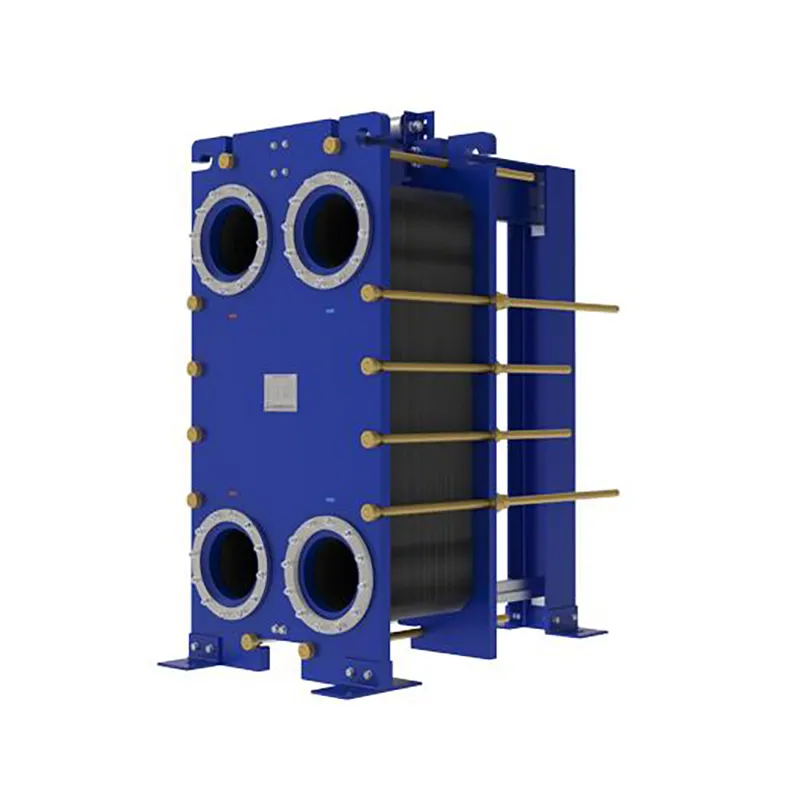
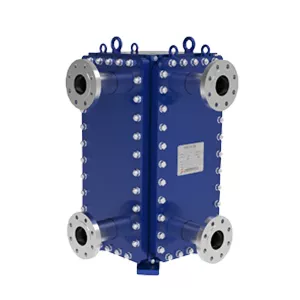
Unlike shell-and-tube or welded plate designs, a gasket plate heat exchanger uses a series of corrugated metal plates sealed with elastomeric gaskets. These plates are clamped together between a fixed frame and a movable pressure plate. The gaskets create alternating channels for hot and cold fluids, allowing efficient heat transfer without cross-contamination. The key difference lies in its serviceability: you can open the unit, inspect, clean, or replace individual plates and gaskets. This makes it a preferred choice for applications requiring frequent cleaning or process changes.
Core Design Features of a Gasket Plate Heat Exchanger
The performance and reliability of a gasket plate heat exchanger depend on several well-engineered design features. Below are the most critical ones:
- Plate Corrugation Pattern: Chevron or herringbone patterns create turbulence at low flow rates, enhancing heat transfer coefficients. Typical chevron angles range from 30° to 65°, with higher angles providing greater thermal performance but higher pressure drop.
- Gasket Material Selection: Gaskets are made from NBR, EPDM, Viton, or silicone, depending on fluid compatibility and temperature range. NBR handles oils and temperatures up to 140°C, while EPDM is suitable for water and steam up to 160°C. Viton can withstand aggressive chemicals and temperatures up to 200°C.
- Plate Material: Stainless steel (AISI 304, 316L) is standard. Titanium, Hastelloy, and nickel alloys are used for corrosive media. Plate thickness typically ranges from 0.4 mm to 0.8 mm.
- Flow Arrangement: Counter-current flow is the most common, providing maximum temperature cross. Single-pass, multi-pass, and multi-section configurations are available to meet specific process requirements.
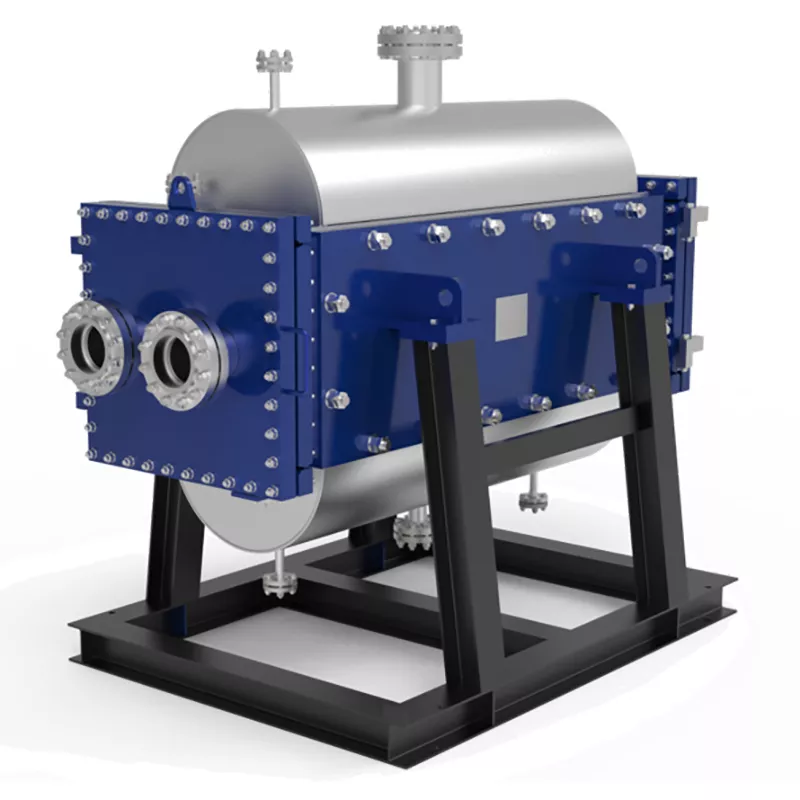
- Frame Design: The frame includes a fixed head, movable pressure plate, carrying bar, and tightening bolts. Frame materials are carbon steel with epoxy coating or stainless steel. The design allows for easy plate addition or removal to adjust capacity.
- Port Sizes and Nozzle Connections: Port diameters range from 25 mm to 400 mm, with threaded, flanged, or sanitary connections. Larger ports reduce pressure drop and accommodate higher flow rates.
- Working Pressure and Temperature Limits: Standard gasketed designs operate up to 25 bar and 200°C. Special designs with high-pressure gaskets and reinforced frames can handle up to 40 bar.
How Does the Gasket Design Affect Maintenance and Reliability?
The gasket is both a sealing element and a critical maintenance component. In a gasket plate heat exchanger, gaskets are either glued or clip-mounted onto the plate edges. Clip-on gaskets reduce replacement time and eliminate adhesive residue. Proper gasket selection ensures leak-free operation under thermal cycling and pressure fluctuations. Regular inspection and replacement every 3 to 5 years, depending on service conditions, maintain unit integrity. Many operators prefer designs with double gaskets and leak detection grooves, which provide an early warning of seal failure without interrupting production.
Typical Parameter Ranges for Gasket Plate Heat Exchangers
| Parameter |
Typical Range |
| Plate material thickness |
0.4 – 0.8 mm |
| Maximum working pressure |
Up to 25 bar (standard), up to 40 bar (high-pressure) |
| Maximum working temperature |
Up to 200°C (with Viton or silicone gaskets) |
| Port diameter |
25 – 400 mm |
| Heat transfer coefficient |
3,000 – 7,000 W/m²·K (water-to-water) |
| Number of plates per unit |
10 – 700 plates |
Common Applications and Recommended Solutions
Gasket plate heat exchangers are used in a wide range of industries. For HVAC systems, they handle chiller and boiler isolation, free cooling, and district heating. In the chemical industry, they process acids, caustics, and solvents. Food and beverage applications include pasteurization, CIP heating, and cooling of juices or dairy products. Marine and offshore units require compact, corrosion-resistant designs. For heavy fouling or viscous fluids, consider a wide gap welded plate heat exchanger as an alternative. If you need high temperature and pressure capability with no gasket maintenance, explore the HT-Bloc welded plate heat exchanger line.
Why Choose SHPHE for Your Gasket Plate Heat Exchanger?
SHPHE is a Shanghai-based plate heat exchanger manufacturer founded in 2005. We export to over 20 countries and hold ISO9001 and ASME U certifications. Our gasket plate heat exchanger range is compatible with major brands like Alfa Laval and GEA, offering direct replacement plates and gaskets. We also provide free thermal design and selection services. Our product portfolio includes gasketed plate heat exchangers, HT-Bloc and TP welded plate heat exchangers, wide gap welded plate heat exchangers, PCHE, plate air preheaters, and pillow plates. Every unit is designed for long service life and easy maintenance.
Frequently Asked Questions About Gasket Plate Heat Exchangers
1. How often should gaskets be replaced in a gasket plate heat exchanger?
Gaskets typically need replacement every 3 to 5 years, depending on operating temperature, pressure, and chemical exposure. Regular visual inspection for cracks, hardening, or leaks is recommended. SHPHE offers genuine replacement gaskets for all our models.
2. Can I add more plates to an existing gasket plate heat exchanger?
Yes, most frame designs allow adding plates to increase capacity, as long as the frame length and tightening bolts have enough travel. SHPHE provides frame sizing that accommodates future expansion. Contact us with your current plate count and desired capacity increase.
3. What is the maximum temperature for a gasket plate heat exchanger?
Standard gasketed designs operate up to 200°C with Viton or silicone gaskets. For higher temperatures, consider a welded plate heat exchanger like the TP welded plate heat exchanger, which can handle up to 350°C.
4. Are SHPHE gasket plate heat exchangers compatible with Alfa Laval or GEA units?
Yes, SHPHE manufactures replacement plates and gaskets that are fully compatible with Alfa Laval, GEA, and other major brands. Our plates are dimensionally identical and tested for thermal performance. We also offer complete units as cost-effective alternatives.
5. How do I clean a gasket plate heat exchanger?
Cleaning is done by opening the unit and manually brushing plates, or by circulating a cleaning solution in a CIP (clean-in-place) loop. For heavy fouling, plates can be removed and soaked. SHPHE provides cleaning guidelines with every unit.
6. What information do I need to get a thermal design for my application?
You need to provide flow rate, inlet and outlet temperatures, operating pressure, and fluid properties (viscosity, density, specific heat). SHPHE offers free thermal design and selection. Our engineers will recommend the optimal plate size, number of plates, and gasket material for your process.
Request a Quote for Your Gasket Plate Heat Exchanger
Choosing the right gasket plate heat exchanger starts with accurate process data. To receive a customized thermal design and quotation, please provide the following details: flow rate, inlet and outlet temperatures, operating pressure, and media type. Our team at SHPHE will respond within 24 hours with a solution tailored to your needs. Contact us today through our website at www.shpheglobal.com.

 English EN





User Comments
Service Experience Sharing from Real Customers
Elena
Maintenance SupervisorWe swapped out our old brazed units for these gasket plate heat exchangers in the brewery last quarter. Cleaning is finally something my guys can do in an hour instead of a full shift. The plates came out of the frame without any sticking, and the gasket seating is solid even after three thermal cycles. No weeping at the seals yet. Big win for uptime.
Marcus
Process EngineerSpec’d these for a small glycol loop in a pharmaceutical pilot plant. The thermal performance matches the datasheet closely, and the pressure drop is actually a bit lower than I estimated, which helps with our existing pump. Only minor gripe is the tightening torque spec felt a little high for the frame bolts, but once we got it torqued evenly, no leaks. Solid piece of kit for the price.
Priya
HVAC Service TechnicianBeen installing these on large commercial heat recovery systems for the past six months. The gasket design is forgiving—I don’t have to baby the plates during assembly like with some other brands. Had one unit that arrived with a slightly scratched gasket surface, but it still sealed fine after a quick wipe. My customers love how easy it is to add or remove plates for capacity changes. Definitely my go-to now.
Tomás
Plant OperatorWe’ve got two of these running on a hot water preheat circuit in a chemical plant. They do the job, but I’m not thrilled with the gasket retention. Had one pop out of the groove during a routine plate pull last month—took me twenty minutes to reseat it properly. Performance is fine when it’s together, but I expected a bit more ruggedness for the daily abuse in our environment. Not bad, not great.