How to Select the Right Hisaka Plate Heat Exchanger Gasket for Your System
Selecting the correct Hisaka plate heat exchanger gasket is critical for maintaining system efficiency, preventing leaks, and extending equipment life. This guide provides process engineers and purchasing managers with practical criteria—covering material compatibility, temperature and pressure limits, and proper sizing—to make an informed decision. We also explore common failure modes, maintenance best practices, and when to consider a compatible replacement from a reliable manufacturer like SHPHE.
A plate heat exchanger relies on its gaskets to seal the channels between plates, directing fluid flow and preventing cross-contamination. Over time, gaskets degrade due to thermal cycling, chemical attack, or mechanical stress. Choosing the wrong replacement can lead to costly downtime, reduced heat transfer, or even system failure. This article walks you through the key factors to consider when selecting a Hisaka plate heat exchanger gasket, with practical advice grounded in real-world engineering.
What Makes a Hisaka Plate Heat Exchanger Gasket Different?
Hisaka gaskets are designed to fit specific plate geometries, with precise groove dimensions and material formulations. While many aftermarket options claim compatibility, only a correctly matched gasket ensures proper compression and sealing. Key differences include:
- Material grade: NBR (nitrile), EPDM, Viton (FKM), or HNBR—each suited to different fluid types and temperature ranges.
- Clip vs. glue-on design: Clip-on gaskets simplify installation, while glue-on types offer a more permanent seal for high-pressure applications.
- Hardness and compression set: A gasket that is too soft may extrude; one too hard may not seal properly.
- Certification: Look for FDA, WRAS, or NSF approvals if the system handles potable water or food products.
For example, a standard NBR gasket works well for water and oil applications up to 120°C, while EPDM is preferred for steam and dilute acids. Viton handles higher temperatures (up to 200°C) and aggressive chemicals. Always verify the material data sheet against your process conditions.
How Do Operating Conditions Affect Gasket Selection?
The operating temperature, pressure, and fluid chemistry are the three primary drivers. A gasketed plate heat exchanger typically operates within these ranges:
| Parameter |
Common Range |
Gasket Consideration |
| Temperature |
-20°C to 200°C |
EPDM for steam; Viton for high-temp chemical |
| Pressure |
Up to 25 bar (gasketed) |
Clip-on gaskets may need reinforcement at higher pressures |
| Fluid pH |
2–12 |
EPDM resists mild acids; Viton for strong acids |
| Viscosity |
Up to 10,000 cP |
Wide-gap designs for viscous fluids |
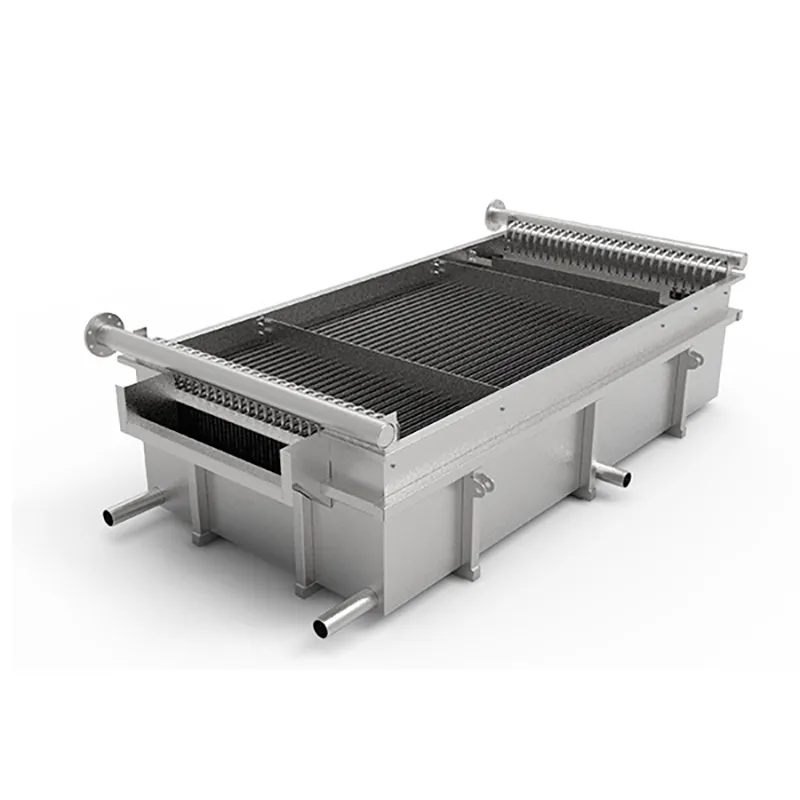
If your system handles viscous or fibrous media, consider a wide gap welded plate heat exchanger as an alternative—these units use welded channels and no gaskets, eliminating seal degradation issues entirely.
When Should You Replace a Hisaka Plate Heat Exchanger Gasket?
Regular inspection is essential. Signs that a gasket needs replacement include:
- Visible cracks, hardening, or compression set (the gasket no longer springs back).
- Leakage between plates or at the gasket groove.
- Increased pressure drop across the heat exchanger, indicating blocked or distorted flow paths.
- Fluid contamination (e.g., water in oil) suggesting cross-channel leakage.
Typical gasket life ranges from 3 to 8 years, depending on duty cycle and maintenance. For critical systems, schedule replacement every 5 years as a preventive measure.
How to Measure and Order the Correct Gasket
To order a replacement, you need the plate model number, gasket part number (if available), and material specification. If the part number is missing, measure:
- Plate length and width (overall dimensions).
- Gasket groove depth and width.
- Number of bolt holes and their spacing.
Many manufacturers, including SHPHE, offer free thermal design and selection services. They can cross-reference your existing gasket with their inventory and recommend a compatible replacement. For example, SHPHE’s HT-Bloc welded plate heat exchangers provide a gasket-free alternative for high-temperature applications, reducing maintenance needs.
Why Choose SHPHE for Your Hisaka-Compatible Gaskets?
SHPHE, a Shanghai-based manufacturer founded in 2005, exports to over 20 countries and holds ISO9001 and ASME U certifications. Their product range includes gasketed plate heat exchangers, welded plate heat exchangers, PCHE, plate air preheaters, and pillow plates. For gasket replacement, they offer:
- High-quality aftermarket gaskets compatible with Hisaka, Alfa Laval, and other major brands.
- Materials sourced from certified suppliers, with full traceability.
- Free technical support to verify fitment and material selection.
Whether you need a standard NBR gasket for a water system or a Viton gasket for chemical processing, SHPHE can supply it with short lead times.
Frequently Asked Questions About Hisaka Plate Heat Exchanger Gaskets
Q: Can I use a gasket from another brand on a Hisaka plate?
A: Yes, but only if the gasket is specifically designed to match the plate groove geometry and material compatibility. Aftermarket suppliers like SHPHE offer dimensionally equivalent gaskets that meet or exceed OEM specs.
Q: How do I know if my gasket is NBR or EPDM?
A: Check the color coding—NBR is typically black, EPDM is dark gray or blue, and Viton is brown. If uncertain, a simple burn test or density check can identify the material. Always refer to the manufacturer’s label.
Q: What is the typical lifespan of a Hisaka plate heat exchanger gasket?
A: Under normal operating conditions (clean fluids, moderate temperatures), gaskets last 5–8 years. Harsh chemicals or frequent thermal cycling can reduce this to 2–3 years.
Q: Can I replace gaskets without removing the entire heat exchanger?
A: In most cases, the plate pack must be disassembled to access the gaskets. This is a routine maintenance procedure that requires careful handling to avoid damaging plates.
Q: Do I need to replace all gaskets at once?
A: Yes, it is recommended to replace all gaskets in a plate pack simultaneously to ensure uniform compression and prevent uneven wear. Mixing old and new gaskets can cause leakage.
Q: What is the cost difference between OEM and aftermarket Hisaka gaskets?
A: Aftermarket gaskets from reputable suppliers like SHPHE are typically 30–50% less expensive than OEM parts, with comparable quality and performance. Always request a material certificate for traceability.
Request a Quote for Your Hisaka Plate Heat Exchanger Gasket
To ensure you receive the correct Hisaka plate heat exchanger gasket, please provide the following details when requesting a quote: flow rate, operating temperature, pressure, and media type (including any chemical composition). SHPHE’s engineering team will review your system requirements and recommend the optimal gasket material and design. Contact them today for a free consultation and competitive pricing.
Selecting the right Hisaka plate heat exchanger gasket is a straightforward process when you understand your system’s operating parameters and the material options available. With proper selection and regular maintenance, your heat exchanger will deliver reliable performance for years.

 English EN





User Comments
Service Experience Sharing from Real Customers
Tommy
Maintenance SupervisorWe swapped out our old plates with these Hisaka gaskets last month. Fit like a glove and zero leaks so far. The material feels more pliable than the OEM ones, which made installation way easier. My guys didn't even complain about the job, and that's saying something.
Elena
Process EngineerOrdered a batch for our dairy pasteurizers. The gaskets handled the hot CIP cycles well. One was slightly off in the corner groove, but a quick trim fixed it. Overall good value for the price, and delivery was faster than expected. Would buy again.
Marcus
Plant ManagerI've been in HVAC for 20 years and these are the best aftermarket Hisaka gaskets I've come across. They seal tight even with our older, slightly warped plates. We've had them running 24/7 for three months now with no degradation. Solid product.
Sofia
Reliability TechnicianHad a sudden plate pack failure last Thursday. These gaskets came in on Friday morning and we had the heat exchanger back online by Saturday afternoon. The adhesive backing held strong during reassembly. No more cross-contamination worries. Lifesaver.