Why Viton Gasket Heat Exchanger Technology Outperforms Standard Sealing Options
Article Summary: This article explains why Viton gasket heat exchanger technology delivers superior sealing performance compared to standard elastomeric options in demanding industrial applications. We cover the working principles, key performance parameters, application scenarios, and how SHPHE’s gasketed plate heat exchangers leverage this technology. The content is written for process engineers and purchasing managers seeking reliable, long-lasting sealing solutions.
When selecting a heat exchanger for aggressive chemical or high-temperature processes, the sealing material often becomes the weakest link. Standard gaskets made from NBR or EPDM degrade quickly under harsh conditions, leading to leaks, downtime, and safety risks. Viton gasket heat exchanger technology offers a proven solution, providing exceptional resistance to heat, chemicals, and pressure. This technology is especially critical in industries such as chemical processing, pharmaceuticals, and oil refining, where equipment reliability directly impacts production efficiency. SHPHE, a Shanghai-based plate heat exchanger manufacturer founded in 2005, integrates Viton gaskets into its gasketed plate heat exchangers to meet these demanding requirements. With ISO9001 and ASME U certifications, SHPHE exports to over 20 countries and provides free thermal design and selection services.
What Makes Viton Gasket Heat Exchanger Technology Different?
Standard sealing options like NBR (nitrile) or EPDM gaskets are cost-effective for mild conditions but fail when exposed to temperatures above 120°C or aggressive chemicals. Viton, a fluoroelastomer, maintains its sealing integrity at continuous temperatures up to 200°C and offers excellent resistance to oils, acids, and solvents. In a gasketed plate heat exchanger, the gasket material directly affects the unit’s maximum operating pressure and service life. Viton gasket heat exchanger technology allows for higher pressure ratings—commonly up to 25 bar in standard designs—while reducing the risk of blowout or extrusion. This makes it a preferred choice for processes involving steam, hot thermal fluids, or corrosive media.
How Does Viton Gasket Technology Work in a Plate Heat Exchanger?
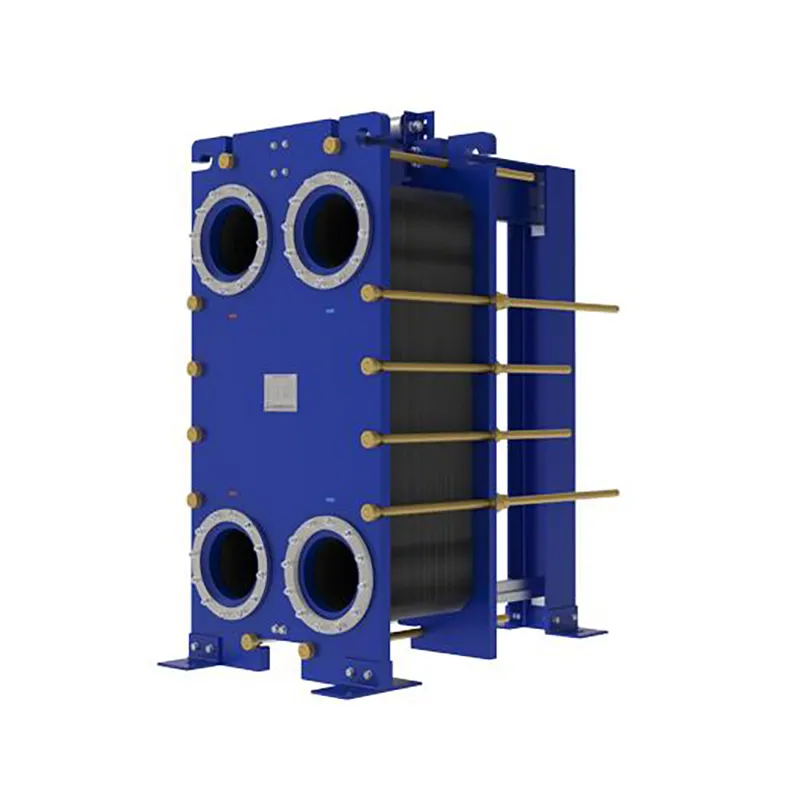
In a gasketed plate heat exchanger, the gasket acts as a seal between adjacent plates, directing fluid flow and preventing cross-contamination. Viton gaskets are typically molded or bonded into the plate grooves, providing a tight seal even under thermal cycling. The material’s elasticity allows it to maintain compression over time, compensating for minor plate movements. Compared to standard gaskets, Viton offers lower compression set, meaning it retains its shape and sealing force longer. This is particularly important in applications with frequent start-stop cycles or fluctuating temperatures. SHPHE’s gasketed plate heat exchangers, compatible with brands like Alfa Laval and GEA, use Viton gaskets as an upgrade option for enhanced durability.
Key Performance Parameters of Viton Gasket Heat Exchanger Technology
The following table summarizes typical performance ranges for Viton gasket heat exchanger technology in industrial applications. These values are based on commonly accepted industry standards and SHPHE’s design experience.
| Parameter |
Standard Gasket (NBR) |
Viton Gasket |
| Maximum Continuous Temperature |
120°C |
200°C |
| Chemical Resistance (Acids, Solvents) |
Limited |
Excellent |
| Typical Max Operating Pressure |
16 bar |
25 bar |
| Compression Set Resistance |
Moderate |
High |
| Service Life in Harsh Conditions |
1–2 years |
3–5 years |
These parameters highlight why Viton gasket heat exchanger technology is a superior investment for processes that demand long-term reliability. For more details on SHPHE’s gasketed plate heat exchangers, please refer to the product page.
What Are the Common Applications for Viton Gasket Heat Exchanger Technology?
Viton gasket heat exchanger technology is widely used in industries where standard seals fail prematurely. Typical applications include:
- Chemical processing: handling acids, caustics, and organic solvents.
- Pharmaceutical production: where cleanliness and chemical resistance are critical.
- Oil and gas: for heat recovery from hot hydrocarbon streams.
- Power generation: in cooling circuits with aggressive water treatment chemicals.
- Food and beverage: for CIP (clean-in-place) systems using hot caustic solutions.
SHPHE offers a range of solutions tailored to these applications, including wide gap welded plate heat exchangers for viscous or fouling fluids, and HT-Bloc welded plate heat exchangers for high-temperature duties.
Why Choose SHPHE for Viton Gasket Heat Exchanger Technology?
SHPHE has been a trusted manufacturer of plate heat exchangers since 2005, with a strong focus on quality and customization. Our gasketed plate heat exchangers are designed to accommodate Viton gaskets as a standard upgrade, ensuring compatibility with existing installations from brands like Alfa Laval and Compabloc. We provide free thermal design and selection services, helping you choose the right plate pattern, gasket material, and frame size for your process. With ISO9001 and ASME U certifications, every unit is built to international standards. Our team works closely with clients to optimize heat transfer efficiency while minimizing pressure drop. Whether you need a standard unit or a custom-engineered solution, SHPHE delivers reliable performance backed by decades of experience.
Frequently Asked Questions About Viton Gasket Heat Exchanger Technology
1. Can Viton gaskets be used with steam applications?
Yes, Viton gaskets are suitable for steam applications up to 200°C. They resist hydrolysis better than many standard elastomers, making them a reliable choice for steam heating or condensate recovery systems.
2. How does Viton compare to PTFE gaskets in heat exchangers?
Viton offers better elasticity and sealing force retention than PTFE, which can be prone to creep. PTFE is more chemically inert but requires higher compression. Viton provides a balanced solution for most industrial processes.
3. What is the typical lifespan of a Viton gasket in a plate heat exchanger?
In moderate chemical environments at temperatures below 180°C, a Viton gasket can last 3 to 5 years. Harsh conditions with strong oxidizers may reduce this to 1–2 years, but it still outperforms NBR significantly.
4. Are Viton gaskets compatible with food-grade applications?
Viton is not typically FDA-approved for direct food contact, but it is used in food processing for non-contact heat transfer fluids. For direct food contact, consult SHPHE for alternative gasket materials like EPDM.
5. Can I retrofit my existing heat exchanger with Viton gaskets?
Yes, most gasketed plate heat exchangers can be retrofitted with Viton gaskets, provided the plate groove dimensions are compatible. SHPHE offers retrofit kits for many standard models, including those from Alfa Laval and GEA.
6. What is the maximum pressure for a Viton-gasketed plate heat exchanger?
Standard designs typically handle up to 25 bar, but higher pressures are possible with reinforced frames and specialized plate designs. SHPHE can engineer solutions for pressures up to 30 bar upon request.
Request a Quote for Your Viton Gasket Heat Exchanger
To ensure the best performance from Viton gasket heat exchanger technology, it is essential to provide accurate process data. When requesting a quote, please include the following details: flow rate (for both hot and cold sides), inlet and outlet temperatures, operating pressure, and the media involved (including chemical composition). SHPHE’s engineering team will perform a free thermal design and recommend the optimal gasketed plate heat exchanger configuration. Contact us today to discuss your project and experience the reliability of Viton gasket technology.

 English EN





User Comments
Service Experience Sharing from Real Customers
Liam Foster
Maintenance SupervisorSwapped out the old gaskets on our shell-and-tube heat exchanger last month. The Viton material handled the 180°C steam cycling without any cracking. No leaks so far, which is a huge relief for our production line. Fit perfectly on the first try.
Sofia Reyes
Process EngineerWe use these gaskets in a corrosive brine environment. So far, after six weeks of continuous operation, there's zero swelling or degradation. Only gave 4 stars because the initial compression set took a bit more torque than expected, but once seated, they hold tight.
Ethan Park
Reliability EngineerBeen through three different gasket suppliers for our heat exchangers in the pharma plant. This Viton gasket is the first that didn't require a re-torque after the first thermal cycle. The sealing surface stayed clean, no extrusion. Ordering more for the next shutdown.
Olivia Chen
HVAC TechnicianWorked fine on a smaller plate heat exchanger for a chiller retrofit. Good chemical resistance, but the price is steep compared to standard EPDM. If your system doesn't see aggressive fluids or high temps, you might be overpaying. For my application, it did the job, just not blown away.