Optimizing Thermal Management with FPSO Heat Exchanger Technology
Effective thermal management is critical for floating production storage and offloading (FPSO) vessels, where compactness, reliability, and efficiency directly impact operational costs. This article explores how advanced FPSO heat exchanger technology, including welded and gasketed plate designs, addresses common pain points like space constraints, fouling, and high-pressure demands. We cover working principles, key parameters, and practical selection guidance for process engineers and procurement managers.
What Makes FPSO Thermal Management Challenging?
FPSO vessels operate in harsh offshore environments, where space is limited and uptime is non-negotiable. Traditional shell-and-tube exchangers often fall short due to their large footprint and susceptibility to fouling from crude oil, produced water, or seawater. Process engineers need equipment that delivers high heat transfer efficiency while withstanding corrosive fluids and fluctuating pressures. This is where modern FPSO heat exchanger designs, particularly welded plate types, offer a practical solution.
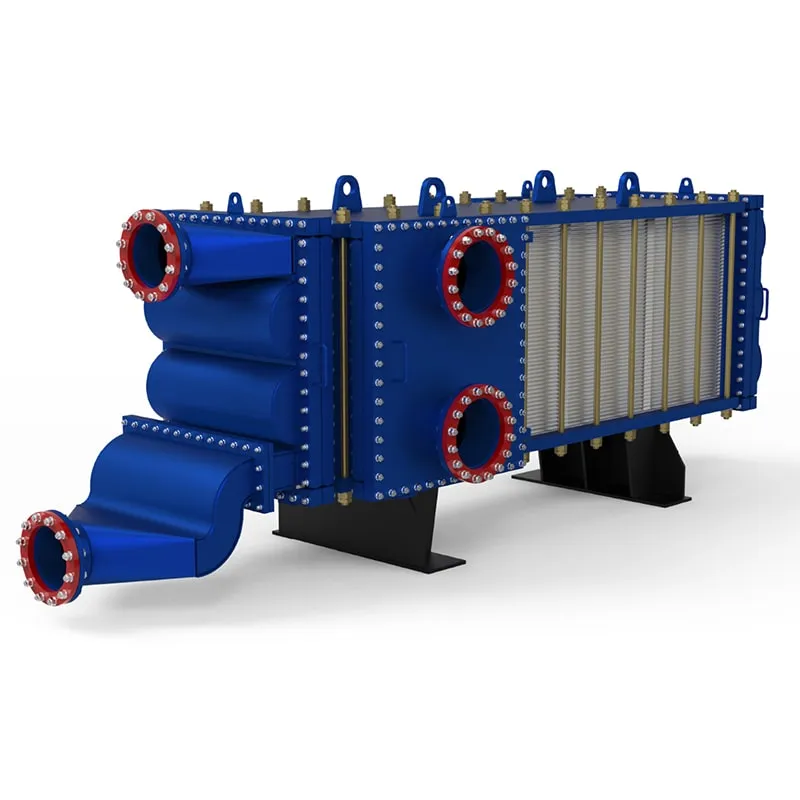
How Does a Welded Plate Heat Exchanger Work on an FPSO?
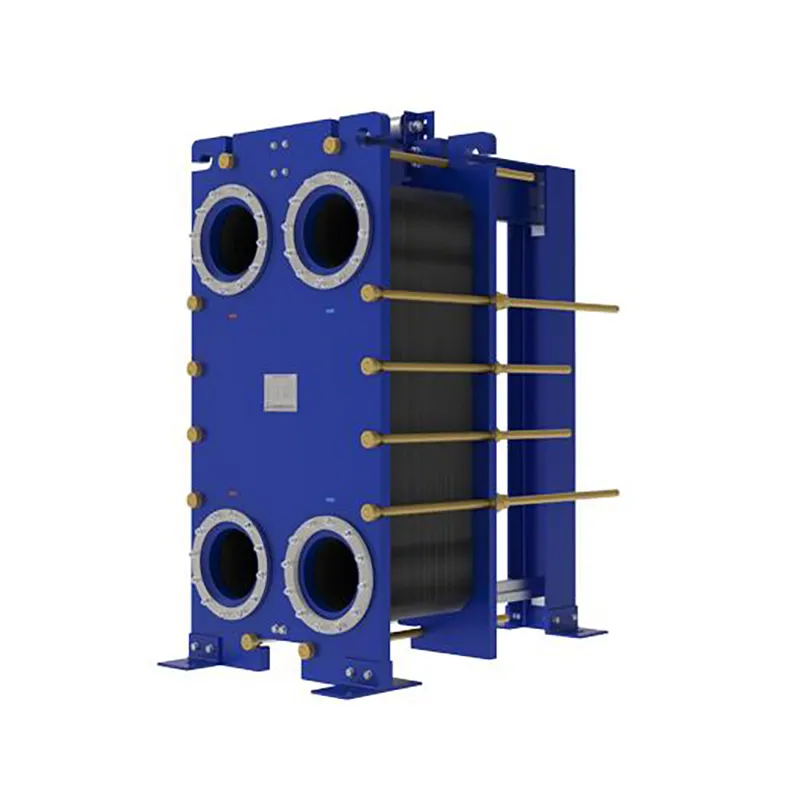
A welded plate heat exchanger uses a series of corrugated metal plates brazed or welded together, creating alternating channels for hot and cold fluids. Unlike gasketed units, the welded construction eliminates elastomer seals, making it ideal for high-temperature and high-pressure duties common in FPSO topside processing. The counter-current flow pattern maximizes temperature cross, achieving approach temperatures as low as 1°C. This design is particularly effective for crude oil heating, produced water cooling, and gas compression interstage cooling.
Key Features and Typical Parameter Ranges
When selecting an FPSO heat exchanger, engineers should evaluate these standard performance ranges:
- Operating pressure: Up to 100 bar (gasketed) and 200 bar (welded plate designs)
- Temperature range: -40°C to 400°C for welded units
- Heat transfer coefficient: 3,000–7,000 W/m²K in liquid-liquid service
- Plate material: Stainless steel 316L, titanium, or duplex alloys for seawater resistance
- Connection sizes: 2 to 24 inches, depending on flow rate
- Fouling factor: Typically 0.0001–0.0005 m²K/W for clean fluids
These parameters make welded plate exchangers a strong alternative to traditional shell-and-tube units, especially when weight and footprint are critical.
What Are the Best FPSO Heat Exchanger Solutions for Different Duties?
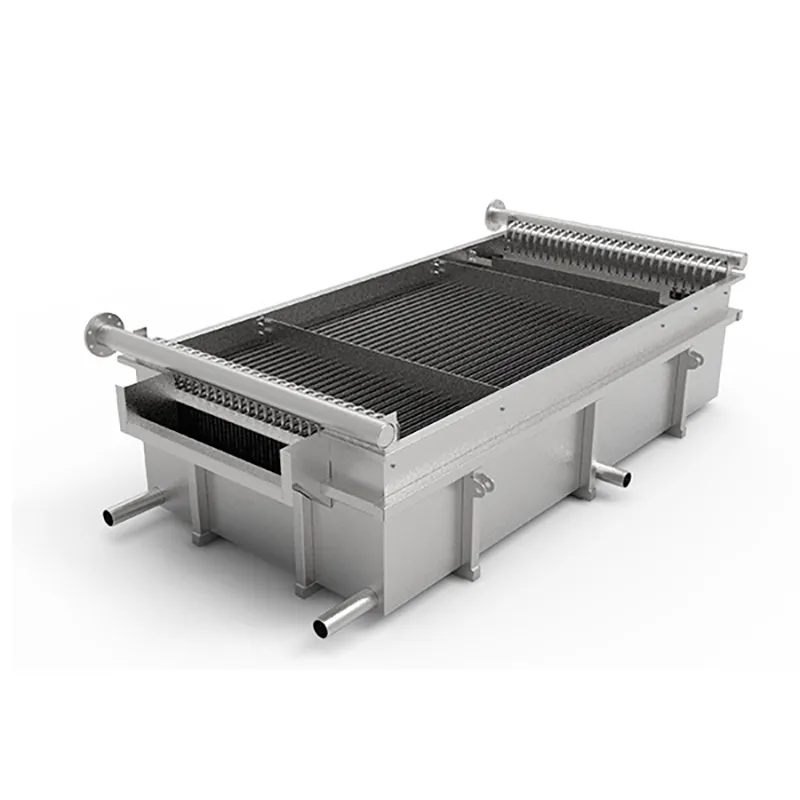
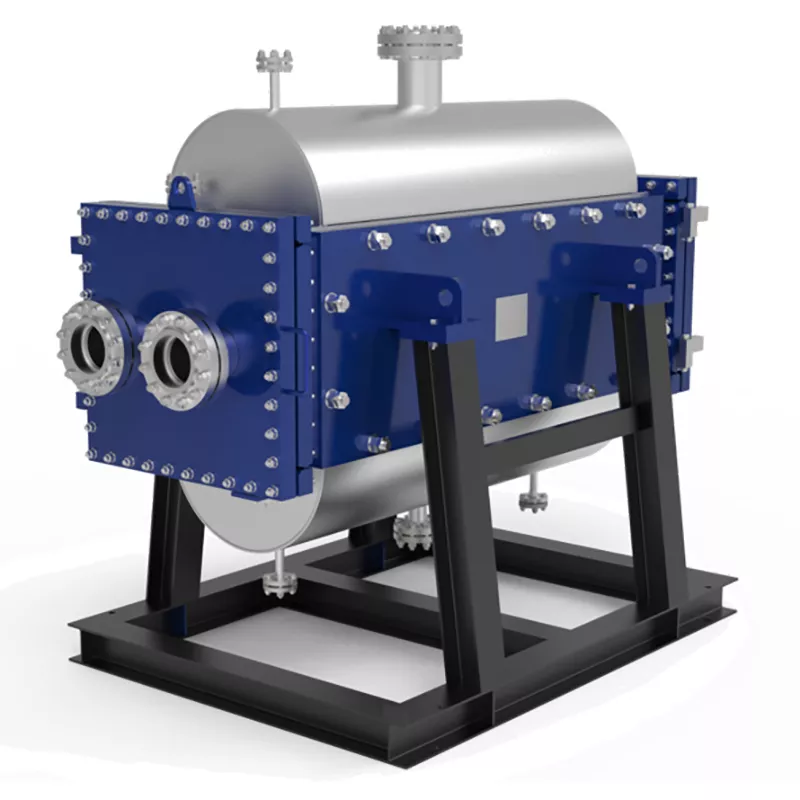
For crude oil heating and produced water cooling, HT-Bloc welded plate heat exchangers offer high thermal efficiency and compactness. In gas processing or amine systems, wide gap welded plate heat exchangers handle viscous or particle-laden fluids without clogging. For seawater cooling loops, gasketed plate heat exchangers with titanium plates provide corrosion resistance and easy maintenance. Each design is compatible with existing Alfa Laval or Compabloc installations, allowing retrofit without major piping changes.
Why Choose SHPHE for Your FPSO Heat Exchanger Needs?
SHPHE, a Shanghai-based manufacturer founded in 2005, brings nearly two decades of experience to the offshore industry. Our product lines include HT-Bloc and TP welded plate heat exchangers, wide gap designs, gasketed units, PCHE, plate air preheaters, and pillow plates. We hold ISO9001 and ASME U certifications, and our equipment is exported to over 20 countries. Every FPSO heat exchanger we supply comes with free thermal design and selection service, ensuring you get the right unit for your process conditions without overpaying for oversized equipment.
Frequently Asked Questions About FPSO Heat Exchangers
Can welded plate heat exchangers handle high fouling fluids like crude oil?
Yes, wide gap welded plate designs are specifically engineered for fluids with suspended solids or high viscosity. The gap between plates can be increased to 5–15 mm, reducing the risk of blockage while maintaining good heat transfer performance.
How does the thermal design service work?
Simply provide your process parameters—flow rates, inlet/outlet temperatures, operating pressure, and fluid properties. Our engineers run thermal simulations to select the optimal plate pattern, material, and size, delivering a datasheet within 2–3 business days at no cost.
Are SHPHE heat exchangers compatible with existing Alfa Laval or GEA frames?
Yes, many of our gasketed and welded plate designs are dimensionally interchangeable with major brands. We can supply replacement plate packs or complete units that fit existing frames, minimizing downtime during retrofits.
What certifications do your FPSO heat exchangers carry?
Our manufacturing facility is ISO9001 certified, and we hold ASME U stamp for pressure vessel fabrication. Units can also be supplied with DNV, ABS, or Lloyd’s certification upon request for offshore projects.
What is the typical lead time for a custom FPSO heat exchanger?
For standard welded plate units, lead time is 8–12 weeks from design approval. Custom designs with exotic materials or special coatings may require 14–16 weeks. We offer expedited delivery for urgent maintenance shutdowns.
How do I maintain a welded plate heat exchanger offshore?
Welded units require minimal maintenance since there are no gaskets to replace. Periodic chemical cleaning or backflushing is recommended to remove deposits. We provide a detailed maintenance manual with every shipment.
Request a Quote for Your FPSO Heat Exchanger Project
Optimizing thermal management with FPSO heat exchanger technology starts with accurate sizing. To receive a free thermal design and quotation, please provide the following details:
- Flow rate (m³/h or kg/s) for both hot and cold streams
- Inlet and outlet temperatures
- Operating pressure and allowable pressure drop
- Fluid composition and any fouling tendencies
Our team will respond within 48 hours with a preliminary selection and budget estimate. Contact us today to ensure your FPSO heat exchanger delivers reliable performance for years to come.

 English EN





User Comments
Service Experience Sharing from Real Customers
Mike Torres
Lead Process EngineerWe've been using this FPSO heat exchanger on our latest project offshore Brazil, and I have to say, the thermal performance is rock solid even under fluctuating crude flow. Installation was straightforward, and the maintenance access is way better than the old shell-and-tube units we had. Only wish the delivery lead time was a bit shorter.
Sarah Kim
Rotating Equipment TechnicianBeen working with these exchangers for about six months now. They handle the high-viscosity crude without fouling up as fast as I expected. Had a small leak on a gasket last month, but the support team sent a replacement kit overnight. Not perfect, but honestly, it's the most reliable unit on our FPSO deck right now.
Jake Henderson
Senior Project ManagerSpec'd this heat exchanger for a new FPSO conversion project and it passed FAT with zero non-conformances. The compact design saved us about 15% deck space compared to the competitor's bid, and the pressure drop numbers matched the datasheet exactly. My client's inspection team was impressed. Definitely my go-to for future topside modules.
Elena Rossi
Process Safety EngineerI'm usually the one who finds fault during HAZOP reviews, but this exchanger checked all the boxes for relief sizing and material compatibility with sour service. The titanium clad tubesheet feels robust. Only gave it 4 stars because the documentation pack could be more detailed on the thermal cycling limits for start-up scenarios.