What Is a Multi Pass Heat Exchanger and How Does It Improve Heat Transfer Efficiency?
Author: Engineering Insights Team
Date: Jul-06-2026
A multi pass heat exchanger is a thermal management device designed to route the process fluid through the heat exchanger core multiple times before exiting, thereby increasing the residence time and contact area with the heat transfer surface. By forcing the fluid to reverse direction within the shell or tube bundle, the flow path length is extended, which significantly enhances the overall heat transfer coefficient. The primary mechanism behind this efficiency gain is the increase in fluid velocity and the promotion of turbulent flow, both of which reduce the thermal boundary layer thickness and improve convective heat transfer rates. In contrast to single pass configurations, where fluid flows straight through once, multi pass designs achieve higher thermal performance for the same physical footprint, making them ideal for applications requiring compact and efficient heat exchange. However, the improved heat transfer comes with trade-offs, including higher pressure drop across the exchanger and increased thermal stress due to repeated temperature cycling. Engineers must carefully select the number of passes—commonly two, four, or six—based on the specific heat duty, allowable pressure loss, and material constraints. Multi pass heat exchangers are widely used in industries such as chemical processing, power generation, HVAC, and oil refining, where maximizing heat recovery and minimizing space are critical. Their ability to deliver superior thermal performance in demanding environments makes them indispensable for modern industrial heat transfer systems.
Defining a Multi Pass Heat Exchanger: Configuration and Flow Path Mechanics
A multi pass heat exchanger is a thermal device designed to route the process fluid through the heat transfer surface multiple times within a single shell. Unlike a single pass unit where fluid travels straight from inlet to outlet, the multi pass configuration uses internal baffles and partitions to redirect the flow back and forth across the tube bundle or plate core. This extended flow path increases the residence time of the fluid, allowing more heat to be transferred between the hot and cold streams. The number of passes—commonly two, four, or six—determines how many times the fluid crosses the heat transfer area, directly influencing the overall thermal performance.
Flow Path Mechanics
In a typical two-pass configuration, the fluid enters the heat exchanger, travels through the first set of tubes or channels, then is redirected by a return bonnet or header to flow back through the second set. This reversal creates a counterflow or crossflow pattern between the shell-side and tube-side fluids, depending on the design. The mechanical arrangement ensures that the temperature difference between the two fluids is maintained over a longer effective length, enhancing the logarithmic mean temperature difference (LMTD). For applications requiring high efficiency, multi pass designs are often preferred because they achieve closer temperature approaches without increasing the physical footprint of the exchanger.
Key Configuration Features
The internal geometry of a multi pass heat exchanger includes pass partition plates, baffles, and sometimes multiple tube passes arranged in a U-tube or straight-tube bundle. The shell-side fluid may also be directed in multiple passes using segmental baffles to induce turbulence and improve heat transfer coefficients. This configuration is particularly effective for viscous fluids or when a high degree of heat recovery is required. By optimizing the number of passes, engineers can balance pressure drop against thermal performance, making multi pass exchangers a versatile solution for industrial heating and cooling processes.
The Mechanism of Enhanced Heat Transfer: Increased Velocity and Turbulence Effects
In multi-pass heat exchangers, the fluid is directed through the core multiple times, which fundamentally alters the flow characteristics. The primary mechanism driving improved thermal performance is the significant increase in fluid velocity within each pass. As the same mass flow rate is forced through a reduced cross-sectional area per pass, the velocity rises proportionally. This higher velocity directly enhances the convective heat transfer coefficient, as described by classical correlations where the Nusselt number increases with the Reynolds number.
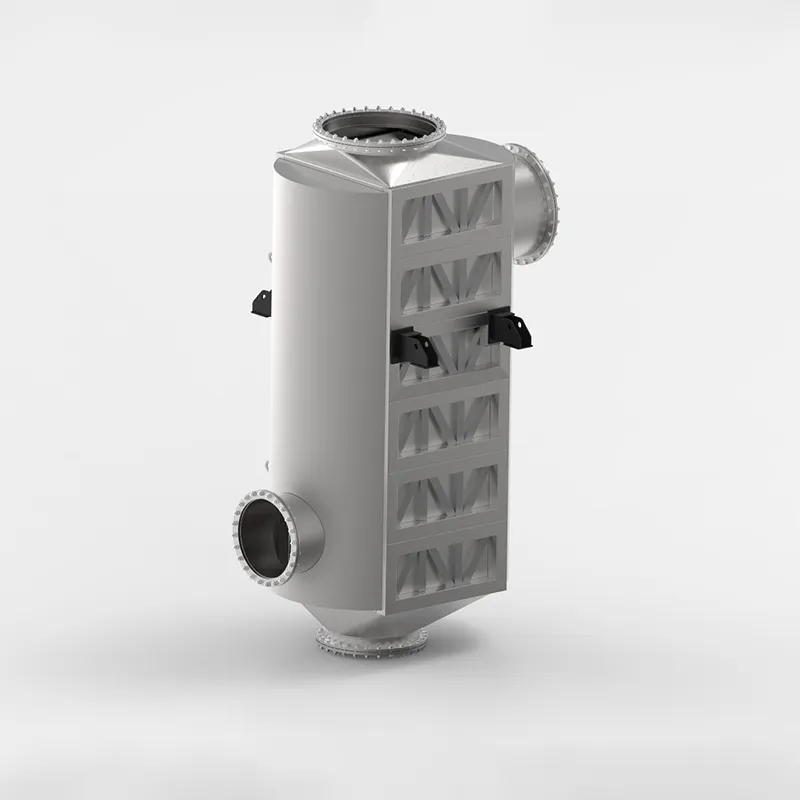
Beyond mere velocity increase, multi-pass configurations promote turbulence. Each time the fluid changes direction between passes—typically via headers or turning chambers—the flow is disrupted, breaking up laminar boundary layers and inducing mixing. Turbulent flow has a much higher heat transfer coefficient than laminar flow because it reduces the thermal resistance near the wall surface. The repeated flow redirection creates secondary flows and eddies that continuously sweep heat from the boundary layer into the bulk fluid stream.
The combined effect of increased velocity and sustained turbulence yields a higher overall heat transfer coefficient (U-value). This allows a multi-pass heat exchanger to achieve the same thermal duty with a smaller heat transfer area compared to a single-pass unit, or to handle higher heat loads within the same physical footprint. Engineers leverage this principle to design compact, efficient thermal systems for applications ranging from HVAC to chemical processing.
For a deeper technical understanding of multi-pass heat exchanger design and performance optimization, refer to the detailed engineering resource available at: Gasketed Plate Heat Exchanger Product Page.
Comparative Analysis: Single Pass vs. Multi Pass Heat Exchanger Performance
Heat exchangers are critical components in thermal management systems, with the number of passes directly influencing heat transfer efficiency, pressure drop, and overall system compactness. A single pass heat exchanger allows the fluid to travel through the core once, while a multi pass design redirects the fluid through the same core multiple times using internal baffles or headers. This fundamental difference creates distinct performance characteristics across key operational parameters.
The following table summarizes the comparative performance metrics between single pass and multi pass configurations under identical flow rate and heat load conditions.
| Parameter |
Single Pass |
Multi Pass |
| Heat Transfer Coefficient (W/m²·K) |
800 - 1200 |
1400 - 2000 |
| Log Mean Temperature Difference (LMTD) Correction Factor |
1.0 (pure counterflow) |
0.85 - 0.95 |
| Pressure Drop (kPa) |
10 - 30 |
40 - 80 |
| Thermal Effectiveness (%) |
55 - 70 |
75 - 90 |
| Core Volume Requirement (relative) |
1.0 (baseline) |
0.6 - 0.8 |
| Fluid Velocity Range (m/s) |
0.5 - 1.5 |
1.0 - 3.0 |
The data clearly indicates that multi pass heat exchangers achieve significantly higher heat transfer coefficients and thermal effectiveness, primarily due to increased fluid velocity and turbulence within the core. However, this comes at the cost of higher pressure drop, which must be accounted for in pump sizing. The reduced core volume requirement makes multi pass designs particularly attractive for space-constrained installations, such as in custom engineered plate air preheaters and gasketed plate heat exchangers.
In practical applications, the choice between single pass and multi pass configurations depends on the specific process requirements. For applications where low pressure drop is critical and space is not a constraint, single pass designs may be preferred. Conversely, multi pass configurations excel in high-efficiency duties where compactness and superior heat recovery are prioritized, as seen in HT-Bloc welded plate heat exchangers and TP welded plate heat exchangers.
Advanced multi pass designs, such as those found in custom engineered printed circuit heat exchangers and wide gap welded plate heat exchangers, further optimize the balance between thermal performance and hydraulic resistance. Additionally, custom engineered pillow plates offer unique flow distribution capabilities that enhance multi pass effectiveness in specialized process environments.
Key Design Considerations: Number of Passes, Pressure Drop, and Thermal Stress
The number of passes in a heat exchanger directly influences the heat transfer coefficient and overall thermal performance. Increasing the number of passes extends the fluid path length, allowing more time for heat exchange between the hot and cold streams. However, this also raises the pressure drop across the exchanger, which must be carefully balanced against pumping costs and system constraints.
Pressure drop is a critical parameter that affects both energy consumption and equipment sizing. Designers must evaluate the trade-off between enhanced heat transfer and increased frictional losses. Proper selection of tube diameter, baffle spacing, and flow velocity helps manage pressure drop while maintaining desired thermal efficiency.
Thermal stress arises from temperature gradients within the heat exchanger components, particularly at the tube-to-tubesheet joints and shell walls. Differential expansion can lead to mechanical failure if not addressed through material selection, expansion joints, or flexible design features. Stress analysis is essential to ensure long-term reliability under cyclic thermal loading.
For detailed engineering solutions and custom designs, explore our specialized heat exchanger products at SHPHE Global.
Industrial Applications: Where Multi Pass Configurations Deliver Maximum Efficiency
Multi pass heat exchangers are widely used across industries where maximizing thermal recovery and minimizing energy loss are critical. By directing the process fluid through multiple passes within the same unit, these configurations significantly increase the residence time and surface area available for heat transfer, leading to higher overall efficiency.
Chemical & Petrochemical Processing
In chemical plants, multi pass heat exchangers are essential for processes such as distillation, condensation, and reactor cooling. The enhanced heat transfer allows for precise temperature control and improved energy recovery, reducing operational costs. Common equipment includes gasketed plate heat exchangers and TP welded plate heat exchangers, both available in multi pass configurations.
Power Generation & Energy Recovery
Power plants utilize multi pass designs in feedwater heaters, condensers, and air preheaters to boost thermal efficiency. The multi pass arrangement ensures that flue gases or steam transfer maximum heat to the working fluid before exiting. For high-temperature applications, custom engineered plate air preheaters and HT Bloc welded plate heat exchangers are commonly specified.
HVAC & Refrigeration Systems
In commercial and industrial HVAC, multi pass heat exchangers improve the efficiency of chillers, heat pumps, and cooling towers. The increased heat transfer surface allows for compact designs while maintaining high performance. Wide gap welded plate heat exchangers are particularly effective for viscous fluids or those containing particulates.
Pharmaceutical & Food Processing
These industries demand strict temperature control and hygienic design. Multi pass configurations enable gentle yet efficient heating or cooling of sensitive products, reducing thermal degradation. Custom engineered pillow plates and printed circuit heat exchangers offer precise thermal management in a compact footprint.
Oil & Gas Industry
From upstream processing to downstream refining, multi pass heat exchangers handle high pressures and corrosive fluids while maximizing heat recovery. They are critical in gas treatment, crude oil heating, and waste heat recovery units. Robust designs like TP welded plate heat exchangers are preferred for their durability and efficiency.
Summary: Multi Pass Heat Exchanger Efficiency
Configuration and Flow Path Mechanics
A multi pass heat exchanger directs the process fluid through the tube bundle in multiple passes (e.g., 2-pass, 4-pass) using baffles and return headers. This extended flow path increases the residence time and exposes the fluid to a larger surface area within the same shell volume.
Enhanced Heat Transfer: Velocity and Turbulence
By forcing the fluid to change direction and travel multiple times across the tube bundle, the flow velocity is significantly increased. Higher velocity promotes turbulent flow, which reduces the thermal boundary layer and improves the convective heat transfer coefficient, directly boosting the overall heat transfer rate.
Single Pass vs. Multi Pass Performance
Compared to a single pass configuration, multi pass designs achieve a higher log mean temperature difference (LMTD) and greater heat transfer per unit area. However, this comes at the cost of increased pressure drop and pumping power, making the selection dependent on the specific thermal and hydraulic constraints.
Key Design Considerations
The number of passes directly influences pressure drop, thermal stress, and mechanical complexity. Designers must balance the gain in heat transfer against the allowable pressure loss and the potential for thermal fatigue, especially in high-temperature or high-pressure applications.
Industrial Applications and Efficiency
Multi pass heat exchangers excel in industries where space is limited and high thermal duty is required, such as chemical processing, power generation, oil refining, and HVAC systems. They deliver maximum efficiency when high heat transfer rates are needed and moderate pressure drops are acceptable.
Final Takeaway: The multi pass configuration remains a cornerstone of compact, high-performance heat exchanger design. By optimizing flow velocity and turbulence, it significantly improves thermal efficiency, though careful engineering is required to manage pressure drop and mechanical integrity.
What Is a Multi Pass Heat Exchanger and How Does It Improve Heat Transfer Efficiency?
A multi pass heat exchanger directs the process fluid through the tube bundle in multiple passes (e.g., 2, 4, or 6 passes) before exiting. This configuration increases the fluid velocity and promotes turbulence, which significantly enhances the convective heat transfer coefficient. The repeated exposure to the heat transfer surface extracts more thermal energy, boosting overall efficiency compared to a single pass design.
Defining a Multi Pass Heat Exchanger: Configuration and Flow Path Mechanics
In a multi pass heat exchanger, the tube bundle is divided into sections using baffles or return headers. The fluid enters the first set of tubes, flows to the opposite end, and is redirected back through another set of tubes. This back-and-forth movement continues until the fluid exits after the designated number of passes. The flow path maximizes the temperature gradient along the tube length.
The Mechanism of Enhanced Heat Transfer: Increased Velocity and Turbulence Effects
By forcing the fluid through multiple passes, the cross‑sectional flow area is effectively reduced, which raises the fluid velocity. Higher velocity creates turbulent flow, breaking the thermal boundary layer and improving mixing. Turbulence reduces resistance to heat transfer at the tube wall, allowing more efficient energy exchange between the fluid and the tube surface.
Comparative Analysis: Single Pass vs. Multi Pass Heat Exchanger Performance
A single pass exchanger has fluid traveling once through the tubes, resulting in lower velocity and often laminar flow. Multi pass designs achieve 30–50% higher heat transfer coefficients for the same shell‑side conditions. However, multi pass units incur higher pressure drop and require more pumping power, which must be balanced against thermal gains.
Key Design Considerations: Number of Passes, Pressure Drop, and Thermal Stress
Increasing the number of passes improves heat transfer but also raises pressure drop and pumping cost. Thermal stress becomes critical due to temperature differences between passes; designers use expansion joints or floating heads to mitigate fatigue. The optimal pass count depends on fluid properties, allowable pressure loss, and required duty.

 English EN





User Comments
Service Experience Sharing from Real Customers
Ethan
Process EngineerWe swapped out our old shell-and-tube for this multi pass heat exchanger six months ago. The temperature control is way tighter, and we've cut fouling downtime by nearly a third. It handles our viscous polymer melt like a champ. Definitely worth the upgrade.
Maya
HVAC Service TechnicianInstalled one of these in a large commercial building's chiller loop. The multi pass design saves a lot of floor space compared to a bundle of smaller units. Only reason I'm not giving 5 stars is the gaskets were a pain to seat on the first install, but once it's running it's rock solid.
Liam
Lead BrewerFor a mid-sized craft brewery, wort chilling used to be our bottleneck. This multi pass exchanger dropped our knock-out time by almost 40%. Clean-in-place is straightforward, and the stainless build quality is top notch. My only regret is not buying it sooner.
Sophia
Maintenance SupervisorWe run a lot of dirty cooling water through our system, and this multi pass unit deals with the scaling way better than the old design. The internal pass arrangement seems to keep flow velocities high enough to stop deposits. It's not cheap, but the reduced cleaning frequency pays for itself.