How Do Plate Heat Exchanger Plates Impact Heat Transfer and System Longevity?
Jul-06-2026
Author: Thermal Engineering Research Group
The geometric configuration and pattern design of plate heat exchanger plates play a critical role in enhancing turbulence and heat transfer efficiency by disrupting laminar flow and promoting effective fluid mixing. Material selection directly influences thermal conductivity, corrosion resistance, and structural integrity, with stainless steel and titanium offering distinct advantages depending on operating conditions. Plate thickness and flow distribution must be carefully balanced to manage pressure drop while maintaining optimal thermal performance, as excessive thickness increases resistance and uneven flow leads to localized wear. Surface treatments and coatings, such as anti-fouling layers, significantly extend operational lifespan by mitigating scaling and deposit accumulation, which otherwise degrade heat transfer and increase maintenance frequency. Furthermore, the integrity of plate sealing gaskets is fundamental to leakage prevention and long-term system reliability, as gasket degradation under thermal and chemical stress can compromise performance and lead to costly downtime. Together, these factors determine not only the immediate thermal efficiency but also the durability and economic viability of plate heat exchanger systems across industrial applications.
The Role of Plate Geometry and Pattern Design in Enhancing Turbulence and Heat Transfer Efficiency
Plate heat exchanger performance is fundamentally governed by the geometric configuration of its plates. The surface pattern, corrugation depth, chevron angle, and channel spacing directly influence fluid flow behavior, particularly the transition from laminar to turbulent flow. Enhanced turbulence disrupts thermal boundary layers, significantly improving convective heat transfer coefficients. For instance, herringbone or chevron patterns induce secondary flows and vortices, which increase fluid mixing and heat transfer rates by up to 50% compared to plain plates. The plate geometry also determines pressure drop characteristics; optimized designs balance high heat transfer with manageable pumping power. Advanced patterns like dimpled or embossed surfaces further augment heat transfer by creating localized flow acceleration and recirculation zones. These geometric innovations are critical for achieving compact, energy-efficient heat exchanger systems.
Chevron Angle and Corrugation Depth
The chevron angle, typically ranging from 30° to 65°, is a primary design parameter. A larger chevron angle (e.g., 60°) creates more aggressive flow redirection, generating higher turbulence and heat transfer coefficients at the cost of increased pressure drop. Conversely, smaller angles (e.g., 30°) produce smoother flow with lower pressure drop but reduced thermal performance. Corrugation depth influences the hydraulic diameter and flow cross-section; deeper corrugations increase turbulence intensity and heat transfer area but also raise pressure loss. Modern plate designs often use mixed-angle or asymmetric patterns to optimize performance across varying flow rates. The interaction between adjacent plates, with alternating chevron orientations, creates complex three-dimensional flow structures that enhance heat transfer while maintaining structural rigidity.
Surface Pattern Innovations for Turbulence Enhancement
Beyond traditional chevron patterns, advanced surface geometries such as dimples, protrusions, and wavy fins are increasingly employed. Dimpled plates create localized flow separation and reattachment, promoting turbulent mixing without excessive pressure drop. Wavy or sinusoidal patterns induce continuous flow oscillation, which sustains turbulence even at low Reynolds numbers. Some designs incorporate micro-grooves or textured surfaces to disrupt the viscous sublayer, further enhancing heat transfer. These patterns are particularly beneficial for viscous fluids or applications with strict pressure drop constraints. The choice of pattern also affects fouling resistance; smoother patterns may reduce fouling but offer lower heat transfer, while more complex patterns can improve self-cleaning through higher shear forces. Manufacturers often tailor plate patterns to specific fluid properties and operating conditions.
Impact on System Longevity and Reliability
Plate geometry directly influences mechanical stress distribution and thermal fatigue resistance. Optimized corrugation patterns provide structural support, allowing plates to withstand higher operating pressures and temperatures. Uniform flow distribution across the plate pack reduces localized thermal gradients, minimizing thermal stress and potential cracking. Properly designed patterns also reduce vibration-induced wear and erosion, particularly in high-velocity applications. The contact points between plates, determined by the geometric pattern, affect heat transfer conduction and mechanical stability. Advanced patterns with optimized contact distributions improve heat transfer while maintaining robust mechanical integrity. Additionally, enhanced turbulence reduces fouling deposition rates, which is a major factor in long-term performance degradation. Cleaner surfaces maintain higher heat transfer efficiency and reduce maintenance intervals, directly contributing to extended system lifespan. For critical applications, custom-engineered plate geometries can be designed to meet specific durability and performance targets.
Material Selection and Its Influence on Thermal Conductivity, Corrosion Resistance, and Structural Integrity
The choice of material for plate heat exchanger plates directly determines the efficiency and durability of the entire system. Metals such as stainless steel, titanium, and nickel alloys each offer distinct advantages in thermal performance and resistance to chemical attack.
Thermal Conductivity
High thermal conductivity materials like copper and aluminum alloys enable rapid heat transfer, reducing the number of plates required for a given duty. Stainless steel grades, while lower in conductivity, provide a balance of strength and moderate heat transfer suitable for many industrial applications.
Corrosion Resistance
Exposure to aggressive fluids demands materials with high corrosion resistance. Titanium and Hastelloy alloys excel in chloride-rich or acidic environments, preventing pitting and crevice corrosion that could lead to premature failure. Proper material selection extends the operational lifespan significantly.
Structural Integrity
Mechanical strength and fatigue resistance are critical for withstanding pressure fluctuations and thermal cycling. Duplex stainless steels and nickel-based superalloys offer superior yield strength, allowing thinner plates without compromising structural stability, which enhances both heat transfer and system longevity.
The Impact of Plate Thickness and Flow Distribution on Pressure Drop and Thermal Performance Balance
Plate thickness directly influences thermal conduction resistance and mechanical strength, while flow distribution uniformity determines local heat transfer coefficients and pressure loss. The interplay between these factors governs the overall efficiency and durability of plate heat exchangers.
Key design considerations:
- Thinner plates (0.4–0.6 mm) reduce conductive resistance and improve heat transfer but may compromise pressure retention and corrosion allowance.
- Thicker plates (0.8–1.2 mm) enhance structural integrity and service life but increase thermal resistance and material cost.
- Uneven flow distribution leads to stagnant zones, fouling acceleration, and localized overheating, reducing both thermal performance and system longevity.
| Parameter |
Thin Plate (0.5 mm) |
Medium Plate (0.8 mm) |
Thick Plate (1.2 mm) |
| Thermal Conductance (W/m²·K) |
~5200 |
~3800 |
~2600 |
| Pressure Drop (kPa) @ 2 m/s |
45 |
42 |
38 |
| Design Pressure Limit (bar) |
16 |
25 |
35 |
| Fouling Resistance (m²·K/W) |
0.00012 |
0.00009 |
0.00007 |
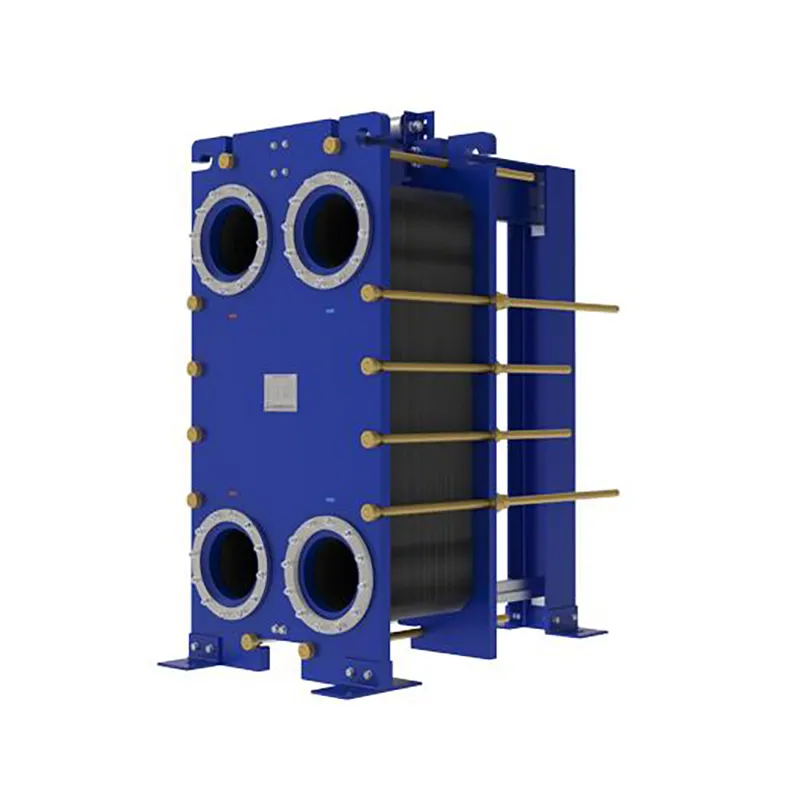
The data illustrates that while thinner plates offer superior thermal conductance, they exhibit higher pressure drop and lower pressure retention capability. Medium thickness plates provide a balanced trade-off between heat transfer efficiency and mechanical robustness. Flow distribution quality further modulates these effects: even distribution minimizes maldistribution losses and fouling, thereby preserving thermal performance and extending equipment life. For applications requiring high durability and low maintenance, thicker plates combined with optimized flow channel design are recommended. Reference design examples can be found in gasketed plate heat exchangers and wide gap welded plate heat exchangers.
Achieving the optimal balance requires careful selection of plate geometry, thickness, and flow distribution features. Advanced computational fluid dynamics (CFD) simulations and empirical testing are often employed to tailor the design for specific operating conditions. Additional insights are available from HT-Bloc welded plate heat exchangers and custom engineered pillow plates.
How Plate Surface Treatments and Coatings Extend Operational Lifespan by Mitigating Fouling and Scaling
Surface treatments and coatings applied to plate heat exchanger plates create a barrier that reduces adhesion of foulants and scale-forming minerals. This protective layer minimizes deposit buildup, maintaining thermal efficiency and fluid flow over time.
By preventing corrosion and chemical attack, these coatings preserve the structural integrity of the plates. This directly extends the operational lifespan of the heat exchanger, reducing maintenance frequency and replacement costs.
Advanced coating technologies, such as fluoropolymer or epoxy-based layers, offer enhanced resistance to aggressive media and high temperatures. This ensures reliable performance even in demanding industrial environments, contributing to sustained system longevity.
The Relationship Between Plate Sealing Gaskets and Leakage Prevention in Long-Term System Reliability
In plate heat exchangers, sealing gaskets serve as the critical barrier between fluid channels. Their material composition and compression characteristics directly determine the unit's ability to maintain leak-free operation over extended service periods. A gasket that loses elasticity or degrades chemically will inevitably compromise the entire sealing interface.
The gasket's groove design on the plate periphery must accommodate thermal expansion and pressure fluctuations without permanent deformation. When gaskets are properly selected for temperature ranges and fluid compatibility, they distribute clamping force evenly across the plate pack, preventing localized stress that could lead to creep relaxation and eventual leakage paths.
Long-term system reliability depends on the gasket's resistance to compression set. Over time, repeated thermal cycling can cause gasket materials to lose their rebound capability. High-quality elastomers with low compression set values maintain sealing pressure even after thousands of operating cycles, directly extending the interval between gasket replacement and reducing unplanned downtime.
The interaction between gasket hardness and plate surface finish also influences leakage prevention. Softer gaskets conform better to minor surface irregularities but may extrude under high pressure. Harder compounds resist extrusion but require tighter manufacturing tolerances. Optimal gasket selection balances these factors to achieve consistent sealing force across the entire plate contact area.
Proper gasket installation and torque specifications are equally vital. Uneven bolt tightening creates non-uniform gasket compression, leading to high-stress zones that accelerate aging and low-stress zones prone to leakage. Following manufacturer torque patterns ensures the gasket experiences uniform compressive stress, maximizing its service life and maintaining system integrity.
For applications involving aggressive fluids or extreme temperatures, advanced gasket materials such as EPDM, NBR, or Viton offer enhanced chemical resistance and thermal stability. These materials resist swelling, hardening, and cracking, which are common failure modes that compromise sealing performance. Selecting the correct gasket grade for the specific process conditions is fundamental to achieving long-term leak-free operation.
Regular inspection of gasket condition during maintenance intervals allows early detection of wear indicators such as surface cracking, permanent deformation, or loss of elasticity. Proactive replacement before gasket failure occurs prevents cross-contamination between fluids and avoids costly system shutdowns. A well-maintained gasket system directly contributes to the overall reliability and longevity of the plate heat exchanger.
The Role of Plate Geometry and Pattern Design in Enhancing Turbulence and Heat Transfer Efficiency
Optimized chevron angles, corrugation depths, and herringbone patterns disrupt laminar flow, promoting higher turbulence and convective heat transfer coefficients. As a result, thermal performance improves significantly without proportionally increasing pumping power, enabling compact exchanger designs.
Material Selection and Its Influence on Thermal Conductivity, Corrosion Resistance, and Structural Integrity
Stainless steels (304/316L), titanium, and nickel alloys provide tailored balances between high thermal conductivity and resistance to chloride stress corrosion. Proper material choice ensures long-term dimensional stability under thermal cycling and aggressive fluid environments.
The Impact of Plate Thickness and Flow Distribution on Pressure Drop and Thermal Performance Balance
Thinner plates reduce conductive resistance and material cost but may compromise pressure containment. Uniform flow distribution through precisely stamped channels minimizes maldistribution, lowering pressure drop while maintaining effective heat transfer across the entire plate pack.
How Plate Surface Treatments and Coatings Extend Operational Lifespan by Mitigating Fouling and Scaling
Electropolishing, anti-fouling epoxy coatings, or amorphous diamond-like carbon layers reduce surface energy and adhesion of deposits. This mitigates scaling and biofouling, sustaining thermal efficiency and reducing cleaning frequency in demanding applications.
The Relationship Between Plate Sealing Gaskets and Leakage Prevention in Long-Term System Reliability
Elastomeric gaskets (EPDM, NBR, Viton) with precisely molded grooves create a positive seal under compression. Proper gasket material compatibility with process fluids and temperature ranges prevents inter-plate leakage and ensures leak‑free operation over extended service intervals.
Collectively, plate geometry, material grade, thickness optimization, surface treatments, and gasket integrity form an interdependent system. Each factor directly influences turbulence, thermal efficiency, corrosion resistance, pressure drop, and sealing reliability—ultimately dictating the long-term performance and service life of plate heat exchangers.
How do plate heat exchanger plates impact heat transfer and system longevity?
Plate geometry, material, thickness, surface treatment, and gasket integrity collectively determine thermal efficiency and resistance to fouling, corrosion, and leakage. Optimized corrugation patterns enhance turbulence, while robust materials and coatings reduce degradation over time.
What is the role of plate geometry and pattern design in enhancing turbulence and heat transfer efficiency?
Chevron, herringbone, or dimpled patterns create flow disruption and secondary vortices, increasing convective heat transfer coefficients. Deeper corrugations and smaller pitch angles generate higher turbulence but also increase pressure drop, requiring a balanced design.
How does material selection influence thermal conductivity, corrosion resistance, and structural integrity?
Stainless steel (304/316) offers good conductivity and corrosion resistance; titanium excels in aggressive media; nickel alloys withstand high temperatures. Material thickness and hardness affect pressure rating and long-term mechanical stability under thermal cycling.
What is the impact of plate thickness and flow distribution on pressure drop and thermal performance balance?
Thinner plates reduce thermal resistance and improve heat transfer but may compromise pressure containment. Uniform flow distribution minimizes maldistribution and localized fouling; uneven flow increases pressure drop and reduces effective surface area.
How do plate surface treatments and coatings extend operational lifespan by mitigating fouling and scaling?
Electropolishing, PTFE, or epoxy coatings create low‑energy surfaces that reduce adhesion of deposits. This maintains heat transfer efficiency, lowers cleaning frequency, and prevents under‑deposit corrosion, directly extending service life.

 English EN





User Comments
Service Experience Sharing from Real Customers
Ethan
Maintenance SupervisorWe swapped out our old gasketed plates for these and the heat transfer improvement was immediate. No more hot spots in our process lines. The clamping torque feels solid too.
Lena
Process EngineerOrdered a batch for a pilot project. The corrugation pattern is consistent and the material thickness matched the spec sheet exactly. Only gave 4 stars because the packaging could use more edge protection for shipping.
Marcus
HVAC TechnicianBeen installing these plates in commercial boiler systems for the last two months. They fit perfectly into the existing frame without any filing or adjustments. No leaks so far, which is more than I can say for some other brands I've tried.
Priya
Plant Operations ManagerWe run a 24/7 dairy pasteurization line and these plates have held up well under constant thermal cycling. The nitrile gaskets seem to be bonding properly. One plate arrived with a tiny burr on the edge, but customer service sent a replacement overnight.