What Are the Core Design Features of a Plate to Plate Heat Exchanger?
Jul-06-2026
Author: Engineering Research Team
This article explores the essential design characteristics that define plate-to-plate heat exchangers, focusing on their fundamental geometry and flow arrangement which typically involves alternating hot and cold fluid channels formed by stacked plates. Critical gasket and sealing technologies are examined to ensure leak-proof operation under varying thermal and pressure conditions. The role of plate corrugation patterns is analyzed in detail, as these surface textures significantly enhance heat transfer efficiency by promoting turbulence and increasing effective surface area. Material selection is discussed with respect to its direct impact on thermal performance and corrosion resistance, considering common choices such as stainless steel, titanium, and nickel alloys. Additionally, design considerations for pressure drop, flow distribution, and maintenance access are addressed to provide a comprehensive understanding of how these systems achieve optimal thermal exchange while remaining reliable and serviceable in industrial applications. The interplay between these core features determines the overall effectiveness, durability, and operational cost of plate-to-plate heat exchangers in sectors ranging from chemical processing to HVAC systems.
The Fundamental Geometry and Flow Arrangement of Plate-to-Plate Heat Exchangers
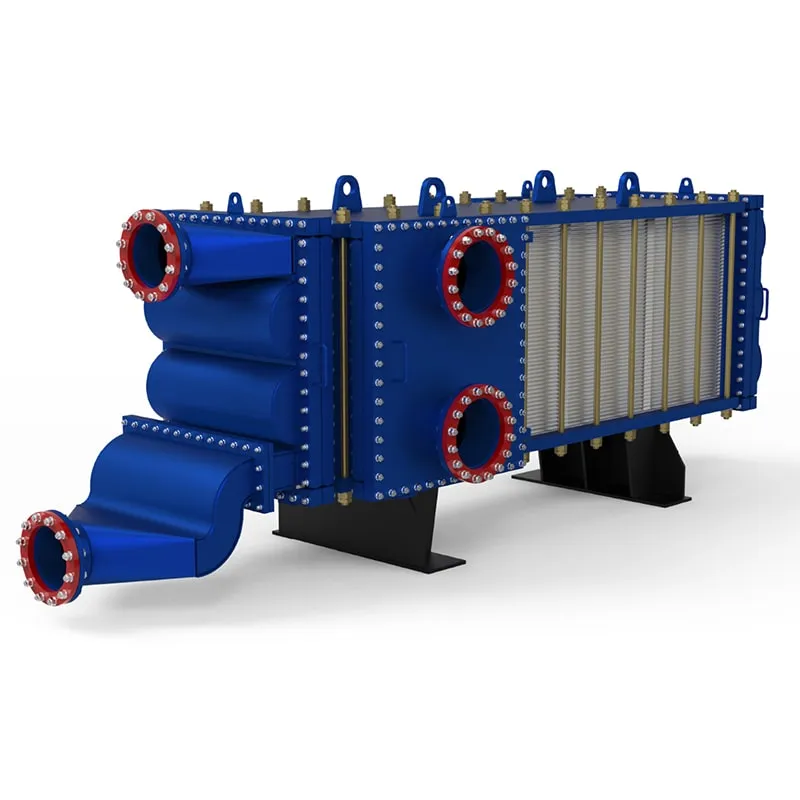
Plate-to-plate heat exchangers are defined by a series of thin, corrugated metal plates stacked together. This geometry creates narrow flow channels between adjacent plates, maximizing the surface area available for thermal transfer. The corrugation pattern not only increases turbulence but also provides structural rigidity, allowing the plates to withstand moderate pressure differentials.
The flow arrangement is typically counter-current or co-current, with hot and cold fluids passing through alternating channels. In a counter-current configuration, the two fluids flow in opposite directions, which optimizes the temperature gradient along the entire length of the heat exchanger and enhances overall efficiency. This arrangement is particularly effective for applications requiring close temperature approach.
Each plate features gaskets or welded seams that seal the channels and direct the fluids into the correct paths. The inlet and outlet ports are positioned at the corners of the plates, enabling easy manifold connection. The compact stacking of plates allows for a high heat transfer area per unit volume, making these exchangers suitable for space-constrained installations.
The modular nature of the design means that capacity can be adjusted by adding or removing plates. This flexibility, combined with the efficient flow arrangement, makes plate-to-plate heat exchangers a preferred choice in industries such as HVAC, chemical processing, and power generation. For further details on specific engineered variants, please refer to the custom plate air preheaters or the gasketed plate heat exchangers product pages.
Critical Gasket and Sealing Technologies for Leak-Proof Operation
The integrity of a plate heat exchanger relies heavily on advanced gasket and sealing technologies designed to prevent leakage under extreme pressure and temperature variations. Modern elastomeric gaskets, often made from EPDM, NBR, or Viton, are precisely molded to fit the plate grooves, creating a tight seal that isolates fluid channels.
Innovative clip-on or snap-in gasket systems simplify installation and replacement, reducing maintenance downtime. Additionally, double gasket designs with leak detection ports provide an extra layer of safety, allowing operators to identify potential seal failure before cross-contamination occurs.
For high-temperature or aggressive chemical applications, compressed fiber or metal-reinforced gaskets offer superior durability. Proper gasket compression, controlled by the tightening torque of the frame bolts, ensures uniform sealing pressure across the entire plate pack, preventing bypass leakage and optimizing thermal performance.
Regular inspection and timely replacement of gaskets, guided by manufacturer specifications, are essential for maintaining leak-proof operation and extending the service life of the heat exchanger.
The Role of Plate Corrugation Patterns in Enhancing Heat Transfer Efficiency
Plate corrugation patterns are fundamental to the thermal performance of plate-to-plate heat exchangers. These geometric features create turbulence, increase surface area, and improve fluid mixing, directly impacting heat transfer coefficients and overall efficiency. The specific pattern design—whether chevron, herringbone, or dimpled—determines flow characteristics and pressure drop.
The corrugation angle, depth, and pitch are critical parameters. Steeper angles (e.g., 60°) generate higher turbulence and heat transfer but also increase pressure loss, while shallower angles (e.g., 30°) offer lower resistance with moderate thermal enhancement. Optimizing these patterns allows engineers to balance thermal duty with pumping power requirements.
| Corrugation Pattern |
Angle (Degrees) |
Heat Transfer Coefficient (W/m²·K) |
Pressure Drop (kPa) |
Typical Application |
| Chevron (High Angle) |
60 |
4500 – 6000 |
80 – 120 |
High viscosity fluids |
| Chevron (Low Angle) |
30 |
2500 – 3500 |
30 – 50 |
Low pressure drop systems |
| Herringbone |
45 |
3500 – 5000 |
50 – 90 |
General purpose |
| Dimpled |
N/A |
2000 – 3000 |
20 – 40 |
Sanitary / food processing |
The data above illustrates how different corrugation geometries directly influence thermal and hydraulic performance. Selecting the appropriate pattern is essential for achieving target heat transfer rates while managing operational costs. Engineers often use computational fluid dynamics (CFD) to fine-tune these patterns for specific process conditions.
For further insights into plate heat exchanger design and custom engineered solutions, explore resources on gasketed plate heat exchangers and custom engineered pillow plates. Advanced corrugation patterns continue to evolve, driven by the need for higher efficiency in industries such as HVAC, chemical processing, and power generation.
Material Selection and Its Impact on Thermal Performance and Corrosion Resistance
The choice of materials in a plate to plate heat exchanger directly determines both thermal conductivity and long-term durability against corrosive fluids. Metals such as stainless steel, titanium, and nickel alloys are commonly selected based on operating temperature, pressure, and chemical compatibility.
High thermal conductivity materials like copper alloys enhance heat transfer efficiency, while corrosion-resistant alloys prevent pitting and stress corrosion cracking in aggressive environments. Proper material selection extends equipment lifespan and reduces maintenance costs. For more details, visit this resource.
Design Considerations for Pressure Drop, Flow Distribution, and Maintenance Access
Effective plate-to-plate heat exchanger design requires balancing thermal performance with operational constraints. Three critical factors—pressure drop, flow distribution, and maintenance access—directly influence system efficiency and lifecycle costs.
Pressure Drop Management
Pressure drop across the plate pack is determined by plate geometry, channel spacing, and fluid velocity. Corrugated patterns increase turbulence and heat transfer but also raise resistance. Designers must select plate chevron angles and gap widths to stay within allowable pump capacity while achieving required thermal duty. For viscous fluids, wider gaps reduce fouling risk and pressure loss. Computational fluid dynamics (CFD) simulations help optimize port sizes and flow paths to minimize maldistribution. Regular monitoring of differential pressure indicates fouling buildup and signals when cleaning is needed.
Flow Distribution Uniformity
Non-uniform flow distribution reduces effective heat transfer area and causes localized hot or cold spots. Even flow across all channels is achieved through properly designed inlet and outlet manifolds, tapered distributors, and symmetrical plate arrangements. In multi-pass configurations, careful nozzle placement prevents preferential channeling. For single-phase fluids, using distribution plates or baffles in the header region improves uniformity. In two-phase applications, gravity and phase separation effects must be considered. Field adjustments such as orifice plates or flow restrictors can correct persistent imbalances.
Maintenance Access and Serviceability
Plate heat exchangers require periodic cleaning and gasket replacement. Design features that facilitate maintenance include hinged or removable covers, adequate clearance for plate removal, and lifting points for heavy plate packs. For gasketed units, quick-release clamping bolts and alignment guides speed disassembly. In welded or brazed designs, access ports and drain valves are essential for chemical cleaning. The unit should be installed with sufficient space on both sides for plate extraction and inspection. Online cleaning systems, such as back-flush or CIP (clean-in-place) connections, reduce downtime. Documentation of plate layout and gasket materials simplifies spare parts management.
Summary of Key Design Considerations
The plate-to-plate heat exchanger relies on a fundamental geometry of stacked plates with alternating flow channels to achieve efficient thermal transfer. Gasket and sealing technologies are critical for maintaining leak-proof operation, with material selection directly influencing long-term reliability under varying pressure and temperature conditions.
Plate corrugation patterns play a central role in enhancing heat transfer efficiency by promoting turbulent flow and increasing surface area. The choice of materials—ranging from stainless steel to titanium—must balance thermal performance against corrosion resistance, especially in aggressive fluid environments.
Effective design also requires careful attention to pressure drop, flow distribution, and maintenance access. Uniform flow distribution across plates prevents thermal stagnation, while accessible gasket and plate arrangements simplify cleaning and replacement, ensuring sustained operational efficiency over the equipment lifecycle.
What Are the Core Design Features of a Plate to Plate Heat Exchanger?
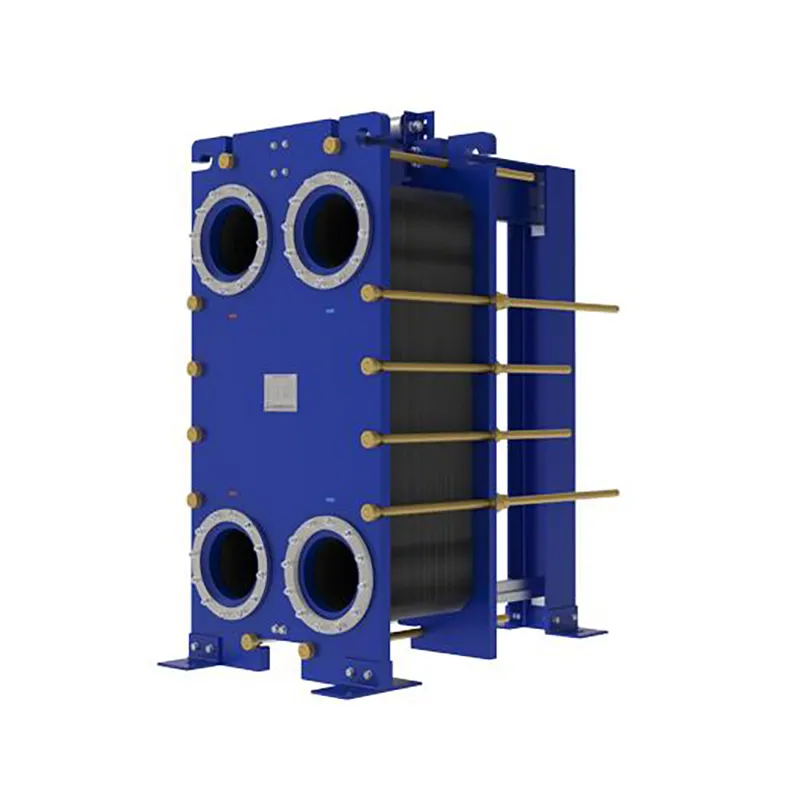
The core design features include a stack of thin, corrugated metal plates sealed by gaskets, creating alternating hot and cold fluid channels. The plates provide a large surface area relative to volume, while the corrugation pattern promotes turbulence and enhances heat transfer. The entire assembly is compressed between a fixed and a movable frame, allowing easy access for cleaning and inspection.
The Fundamental Geometry and Flow Arrangement of Plate-to-Plate Heat Exchangers
Plate-to-plate exchangers consist of rectangular plates with corner ports that direct fluids into alternate channels. The flow arrangement is typically counter-current, where hot and cold fluids flow in opposite directions, maximizing the temperature gradient. The parallel flow or cross-flow configurations are also possible, but counter-current is most efficient for thermal performance.
Critical Gasket and Sealing Technologies for Leak-Proof Operation
Gaskets are precision-molded from elastomers such as EPDM, NBR, or Viton, chosen for chemical compatibility and temperature range. They are fitted into grooves on the plate edges and around the ports, then compressed by tightening the frame bolts. Modern snap-in or glue-free gasket designs reduce assembly time and prevent misalignment, ensuring a reliable seal between fluid streams.
The Role of Plate Corrugation Patterns in Enhancing Heat Transfer Efficiency
Corrugation patterns (herringbone, chevron, or washboard) create multiple contact points between adjacent plates, forming complex flow paths that induce high turbulence even at low Reynolds numbers. This turbulence disrupts thermal boundary layers and increases the heat transfer coefficient by 2–5 times compared to smooth plates. The angle and depth of corrugation also influence pressure drop and fouling behavior.
Material Selection and Its Impact on Thermal Performance and Corrosion Resistance
Plates are typically made from stainless steel (304, 316L), titanium, or nickel alloys, depending on the fluid corrosiveness and operating temperature. Higher thermal conductivity materials like copper or aluminum are used in specific applications but may lack corrosion resistance. Proper material selection ensures long service life, minimal fouling, and consistent heat transfer efficiency under aggressive chemical or saline conditions.
What Are the Core Design Features of a Plate to Plate Heat Exchanger?
Core features include corrugated metal plates, elastomeric gaskets, and a compression frame. The plates create alternating channels for hot and cold fluids, maximizing surface area. The design enables high thermal efficiency, compact footprint, and easy disassembly for cleaning or plate replacement.
The Fundamental Geometry and Flow Arrangement of Plate-to-Plate Heat Exchangers
Each plate has four corner ports that direct fluid into narrow channels. The most common flow arrangement is counter-current, where hot and cold streams move in opposite directions. This geometry provides a high log mean temperature difference (LMTD) and allows close temperature approach, essential for energy recovery.
Critical Gasket and Sealing Technologies for Leak-Proof Operation
Gaskets are precision-molded from EPDM, NBR, or FKM, selected for fluid compatibility. They are clipped into plate grooves and compressed by tightening the frame. Advanced designs include double gasketing and leak detection channels, ensuring zero cross-contamination and safe operation even at high pressures.
The Role of Plate Corrugation Patterns in Enhancing Heat Transfer Efficiency
Chevron or herringbone corrugations induce strong turbulence and secondary flows, breaking up laminar boundary layers. This increases the heat transfer coefficient by up to 400% compared to flat plates. The corrugation angle (typically 30°–65°) balances heat transfer enhancement with acceptable pressure drop.
Material Selection and Its Impact on Thermal Performance and Corrosion Resistance — Design Considerations for Pressure Drop, Flow Distribution, and Maintenance Access
Plates are commonly 316L stainless steel, titanium, or Hastelloy, chosen for corrosion resistance and thermal conductivity. Material thickness (0.4–0.8 mm) affects both heat transfer and pressure rating. Proper flow distribution is achieved through port size and plate geometry, minimizing maldistribution. Maintenance access is facilitated by the removable plate pack, allowing individual plate cleaning or replacement without disturbing piping.

 English EN





User Comments
Service Experience Sharing from Real Customers
Marcus
Maintenance SupervisorWe swapped out an old shell-and-tube unit for this plate-to-plate exchanger last quarter. The thermal efficiency jump is noticeable—our process fluid now hits target temp in half the time. Cleaning it is a breeze compared to the old setup. Only gripe is the gaskets are a bit finicky to seat perfectly, but once you get the hang of it, it's solid.
Elena
HVAC Design EngineerSpec'd this for a commercial retrofit project where space was tight. The compact footprint saved us from having to relocate ductwork. Performance data matched the spec sheet within 2%. I'd give it a five if the pressure drop was a little lower at peak flow, but for the price point it's a great value. Installation crew said the ports lined up perfectly.
Tommy
Dairy Plant OperatorWe run pasteurization cycles back-to-back and this thing handles the thermal shock like a champ. No leaks, no warping after six months of daily use. The plates are easy to pull and inspect during CIP (clean-in-place). Honestly wish we'd switched to this brand years ago. My only minor complaint is the bolts could use a better anti-corrosion coating, but we just add a dab of food-grade grease.
Priya
Process EngineerIt does the job for our pilot plant trials—good heat transfer and easy to reconfigure for different flow arrangements. However, the manual is pretty sparse on troubleshooting when you get uneven flow distribution. Had to figure out on my own that we needed a different gasket material for our slightly acidic stream. Works fine now, but the learning curve was steeper than I expected.