How Does a Steam Plate Heat Exchanger Work in Steam Heating Systems?
Author: Engineering Insights Team
Date: Jul-06-2026
A steam plate heat exchanger operates by transferring thermal energy from steam to a cooler liquid through a series of corrugated metal plates that create alternating flow channels. The steam enters the exchanger and contacts the plates, releasing its latent heat as it condenses on the cooler plate surfaces. This condensation process is highly efficient because the phase change from vapor to liquid releases a large amount of energy at a constant temperature. The liquid, typically water or a process fluid, flows counter-currently or co-currently through the adjacent channels, absorbing the heat and raising its temperature. The plate design maximizes surface area and promotes turbulent flow, enhancing heat transfer rates. Temperature control is achieved by regulating steam pressure or modulating condensate removal, ensuring precise heating for applications such as district heating, food processing, and HVAC systems. The compact structure, ease of maintenance, and high thermal efficiency make steam plate heat exchangers a preferred choice in modern steam heating systems where space and energy savings are critical.
Basic Components and Structure of a Steam Plate Heat Exchanger
A steam plate heat exchanger is constructed from a series of thin, corrugated metal plates that are stacked together and sealed by gaskets or welded joints. These plates create alternating channels for steam and the fluid being heated, ensuring efficient thermal transfer without mixing the two media.
Plate Pack
The plate pack is the core assembly where heat exchange occurs. Each plate is stamped with a corrugated pattern that increases surface area and promotes turbulence, enhancing heat transfer. The plates are arranged so that steam flows through one set of channels while the process fluid flows through adjacent channels in a counter-current or co-current configuration.
Learn more about plate pack designs
Gaskets and Seals
Gaskets are fitted between each plate to prevent leakage and direct the flow of steam and fluid into their respective channels. They are typically made from elastomeric materials that can withstand high temperatures and pressures. In welded plate heat exchangers, the seals are permanently fused, offering higher durability for steam applications.
Explore welded plate sealing options
Frame and Pressure Plates
The frame consists of a fixed end plate and a movable pressure plate, which are held together by tie bolts. This structure compresses the plate pack, ensuring tight sealing and mechanical stability. The frame also includes connections for steam inlet and outlet, as well as fluid ports.
View frame configurations for steam systems
Steam Inlet and Condensate Outlet
Steam enters the exchanger through a dedicated inlet port, typically located at the top of the unit. As steam releases its latent heat to the process fluid, it condenses into water, which is then removed via a condensate outlet at the bottom. Proper drainage is critical to prevent water hammer and maintain efficiency.
Check wide-gap designs for condensate handling
Process Fluid Channels
The fluid to be heated flows through alternating channels, separated from the steam by the plate walls. The corrugations create a turbulent flow pattern, which significantly improves heat transfer coefficients. The channels are designed to minimize fouling and allow easy cleaning if needed.
See HT-Bloc channel technology
Support Columns and Tie Bolts
Support columns and tie bolts provide structural integrity to the entire assembly. They allow the frame to be tightened evenly, distributing compression across the plate pack. This design ensures leak-free operation even under fluctuating steam pressures and thermal expansion.
Discover pillow plate support structures
Heat Transfer Mechanism: From Steam to Liquid
In a steam heating system, the plate heat exchanger transfers thermal energy from steam to a liquid through a process of condensation and conduction. Steam enters the exchanger and flows through alternating channels, while the cooler liquid flows counter-currently through adjacent channels. The metal plates, typically made of stainless steel, act as the heat transfer surface.
As steam passes over the plates, it releases latent heat and condenses into water. This heat is conducted through the thin plate material and transferred to the liquid on the opposite side. The design maximizes surface area contact, enabling efficient heat exchange even with small temperature differences.
For more detailed engineering specifications, refer to the gasketed plate heat exchanger product page.
Role of Condensation in the Heat Exchange Process
Condensation is the phase change process where steam releases its latent heat of vaporization to the cooler surface of the plate, transforming into liquid condensate. This latent heat transfer is significantly more efficient than sensible heat transfer, making steam an effective heating medium.
As steam enters the plate heat exchanger channels, it contacts the cooler plate surface. The temperature difference causes steam to condense, releasing approximately 2,257 kJ/kg of energy at atmospheric pressure. This energy is rapidly transferred through the plate to the secondary fluid being heated.
The condensate film formed on the plate surface creates a thin liquid layer. Proper drainage of this condensate is essential to maintain heat transfer efficiency. If condensate accumulates, it acts as an insulating barrier, reducing the overall heat transfer coefficient.
| Parameter |
Sensible Heating |
Condensation (Latent) |
| Heat Transfer Coefficient (W/m²·K) |
500 – 1,500 |
5,000 – 15,000 |
| Energy Released per kg Steam |
~4.2 kJ/°C |
~2,257 kJ |
| Temperature Change Required |
Continuous gradient |
Isothermal at saturation |
The table above compares sensible heating with condensation-based heat transfer. The latent heat transfer coefficient is typically 5 to 10 times higher than sensible heating, enabling compact heat exchanger designs. Effective condensate removal systems, such as steam traps, ensure continuous operation.
In plate heat exchangers, the condensation process is further enhanced by the turbulent flow induced by plate corrugations. This turbulence thins the condensate film, improving heat transfer. For more details on plate heat exchanger designs, visit gasketed plate heat exchangers or TP welded plate heat exchangers.
Understanding condensation dynamics helps engineers optimize steam system performance, reduce energy waste, and extend equipment lifespan. Proper plate material selection and surface treatment can further enhance condensation efficiency.
For specialized applications, explore printed circuit heat exchangers or wide gap welded plate heat exchangers.
Flow Arrangements and Temperature Control Strategies
In steam heating systems, the flow arrangement of the steam and the process fluid significantly influences thermal efficiency and system responsiveness. The most common configurations are parallel flow, counterflow, and crossflow. Counterflow is widely preferred because it maintains a more uniform temperature difference across the heat transfer surface, enabling higher thermal effectiveness and more precise outlet temperature control.
Temperature control in steam plate heat exchangers typically relies on modulating the steam flow rate via control valves, often in response to a temperature sensor placed at the process fluid outlet. Condensate removal strategies, such as using steam traps or modulating condensate return, also play a critical role in preventing steam locking and ensuring stable heat transfer. Advanced systems may incorporate proportional-integral-derivative (PID) controllers to fine-tune steam injection based on real-time load demands.
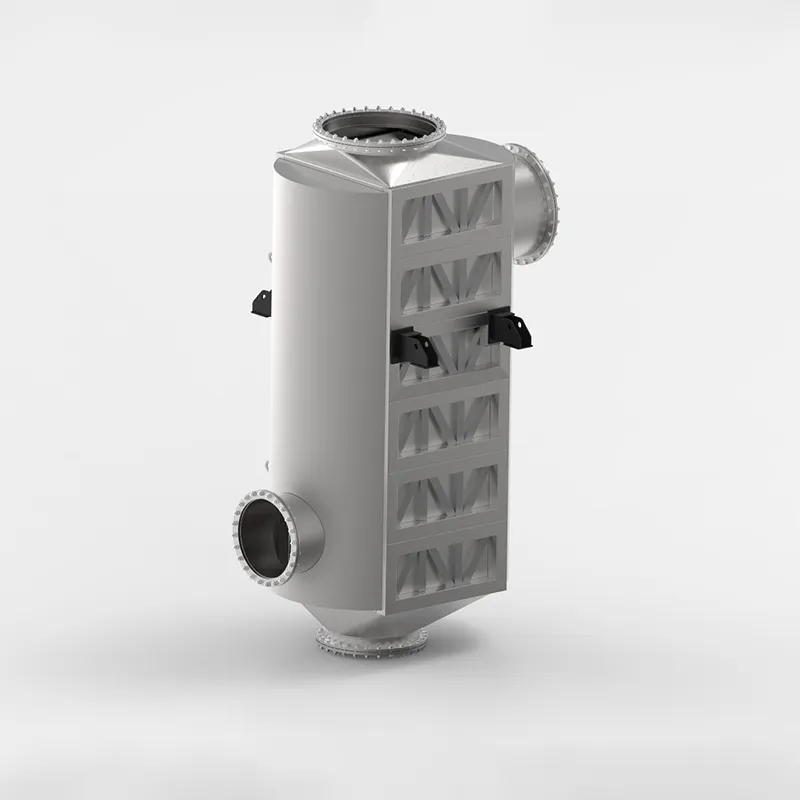
Effective temperature control strategies also involve balancing the steam pressure with the process fluid flow rate. In variable load applications, a combination of pressure-reducing valves and temperature-actuated control loops ensures that the heat exchanger operates within safe thermal limits while meeting the required heating duty. Proper selection of flow arrangement and control methodology directly impacts energy consumption, system stability, and equipment longevity.
Understanding these flow dynamics and control principles is essential for engineers designing or optimizing steam heating systems. By tailoring the flow path and implementing robust temperature regulation, operators can achieve consistent heating performance, minimize steam waste, and reduce maintenance intervals associated with thermal cycling or condensate-induced water hammer.
Common Applications and Efficiency Considerations in Steam Heating Systems
Steam plate heat exchangers are widely used across industries for their compact design and high thermal performance. Common applications include building heating systems, district heating networks, food processing plants, chemical manufacturing, and pharmaceutical production. In these settings, the exchanger transfers heat from steam to water or process fluids efficiently, ensuring stable temperature control and energy savings.
Efficiency in steam heating systems depends on several key factors. Proper condensate removal prevents steam trapping and maintains heat transfer rates. Regular plate cleaning reduces fouling, which can degrade performance. Selecting the correct plate material and gasket type for the operating temperature and pressure also enhances longevity and efficiency. Additionally, integrating a control valve to modulate steam flow based on demand minimizes energy waste.
For optimized system design, consider the steam supply pressure, required outlet temperature, and fluid properties. Plate heat exchangers offer high heat transfer coefficients and can be easily expanded or reconfigured. To explore specific product options for steam heating applications, please refer to the following resources:
By addressing these application and efficiency factors, steam heating systems can achieve reliable operation and reduced operational costs.
Summary
Basic Components and Structure
A steam plate heat exchanger consists of multiple corrugated plates, gaskets, and frame plates. The plates create alternating channels for steam and liquid, ensuring a compact design with high surface area for efficient thermal transfer.
Heat Transfer Mechanism: From Steam to Liquid
Steam enters the exchanger and releases latent heat as it condenses on the plate surface. This heat is conducted through the plate and transferred to the liquid flowing in adjacent channels, raising the liquid temperature without direct contact.
Role of Condensation in the Heat Exchange Process
Condensation is the key phase-change mechanism. As steam condenses, it releases a large amount of latent heat (enthalpy of vaporization), enabling a high heat flux and maintaining a nearly constant temperature on the steam side, which enhances thermal efficiency.
Flow Arrangements and Temperature Control Strategies
Typical flow arrangements include counterflow, parallel flow, and crossflow. Counterflow is most common for steam heating, providing the highest temperature difference. Control strategies such as modulating steam pressure, condensate removal, and bypass regulation allow precise outlet temperature management.
Common Applications and Efficiency Considerations
These exchangers are widely used in district heating, food processing, HVAC, and chemical industries. Efficiency is influenced by plate material, fouling resistance, steam quality, and proper condensate drainage. Regular maintenance and optimized flow arrangements ensure long-term performance and energy savings.
How Does a Steam Plate Heat Exchanger Work in Steam Heating Systems?
A steam plate heat exchanger transfers thermal energy from steam to a liquid (typically water) by passing steam through alternating plates while the liquid flows through adjacent channels. The steam condenses on the plate surface, releasing latent heat, which is conducted through the metal plate to heat the liquid without direct contact between the two fluids.
Basic Components and Structure of a Steam Plate Heat Exchanger
The core structure includes a stack of corrugated metal plates held between a fixed frame and a movable pressure plate. Each plate has gaskets that seal the channels and direct flow. Key components are the steam inlet and outlet ports, liquid inlet and outlet ports, plate pack, gaskets, and tightening bolts. The plates are arranged to create alternating steam and liquid channels.
Heat Transfer Mechanism: From Steam to Liquid
Heat transfer occurs in three stages. First, steam enters the plate channels and contacts the cold plate surface, releasing latent heat as it condenses into liquid water. Second, the heat conducts through the thin metal plate wall. Third, the heat transfers from the opposite plate surface into the liquid flowing in the adjacent channel, raising its temperature. The corrugated plate design creates turbulence, enhancing heat transfer efficiency.
Role of Condensation in the Heat Exchange Process
Condensation is critical because the phase change from steam to liquid releases a large amount of latent heat (approximately 2257 kJ/kg at atmospheric pressure). This latent heat transfer is much more efficient than sensible heat transfer alone. As steam condenses on the plate, it forms a thin liquid film that drains away, allowing fresh steam to contact the plate surface continuously. Proper condensate removal prevents flooding and maintains heat transfer performance.
Flow Arrangements and Temperature Control Strategies
Common flow arrangements include counterflow (liquid and steam flow in opposite directions) and parallel flow (both flow in the same direction). Counterflow provides the highest temperature difference and thermal efficiency. Temperature control is achieved by modulating steam flow via a control valve, adjusting condensate removal rate, or using a bypass loop to mix heated and unheated liquid. Some systems use a temperature sensor feedback loop to regulate steam supply for precise outlet temperature.
Common Applications and Efficiency Considerations in Steam Heating Systems
Steam plate heat exchangers are widely used in district heating, food processing, chemical plants, HVAC systems, and industrial hot water generation. Efficiency factors include proper plate material selection (stainless steel or titanium for corrosion resistance), maintaining clean plate surfaces to prevent fouling, ensuring complete condensate drainage, and optimizing flow velocity for turbulent heat transfer. Regular maintenance and monitoring of temperature approach (difference between steam and outlet liquid temperature) help sustain high thermal performance.

 English EN





User Comments
Service Experience Sharing from Real Customers
Tommy
Maintenance SupervisorWe swapped out an old gasketed unit for this steam plate model about six months ago. The difference in heat transfer efficiency is night and day—our steam consumption dropped by nearly 15%. Plus, it's way easier to pull apart for cleaning. No more wrestling with stuck bolts.
Emma
Process EngineerI was skeptical about plate heat exchangers for high-temp steam duty, but this one has held up well so far. The design handles thermal expansion better than I expected. Only reason I’m not giving 5 stars is that the gasket replacement kit took three weeks to arrive. Otherwise, solid piece of equipment.
Liam
Plant ManagerWe needed a compact solution for a retrofit in a tight mechanical room. This steam plate exchanger fit like a glove and gave us way more surface area than a shell-and-tube could in the same footprint. Installation was straightforward, and my guys had it up and running in an afternoon.
Olivia
HVAC TechnicianI’ve installed a bunch of these in commercial boiler systems. This one’s well-built—the plates are thick and the frame feels solid. Had a minor leak on a fitting on day one, but a bit of thread sealant fixed it. Overall, reliable performance and good value for the price.