What Are the Key Structural Features of a Welded Plate Block Heat Exchanger That Ensure Leak-Proof Operation?
Author: Engineering Analysis Team
Date: Jul-06-2026
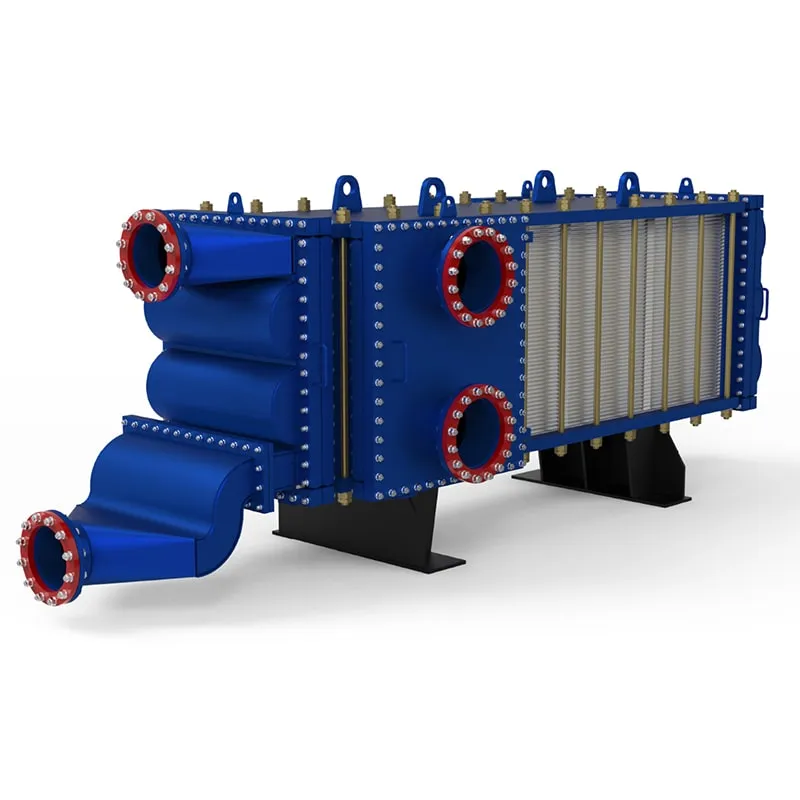
A welded plate block heat exchanger achieves leak-proof operation through several interrelated structural features. Fully penetrated welded joints eliminate potential leakage paths by creating continuous, homogeneous bonds between plates, removing the crevices and gaps that often lead to fluid escape. The complete absence of gaskets and seals further enhances long-term integrity, as there are no elastomeric components that can degrade, swell, or fail under thermal or chemical stress over time. Precision-machined plate patterns ensure uniform pressure distribution across the heat transfer surfaces, preventing localized stress concentrations that could compromise sealing at the weld interfaces. Controlled welding parameters, including precise heat input and travel speed, combined with post-weld heat treatment, effectively prevent the formation of micro-cracks in the heat-affected zones, which are common initiation sites for leakage under cyclic loading. Finally, the rigid frame and compression bolts maintain structural stability during thermal cycling, keeping the plate stack under consistent compressive force that compensates for differential thermal expansion and prevents joint separation. Together, these design elements create a robust, maintenance-free sealing system that reliably contains high-pressure fluids over extended operational lifetimes.
1. The Role of Fully Penetrated Welded Joints in Eliminating Potential Leakage Paths
Fully penetrated welded joints are a fundamental structural feature that directly eliminates potential leakage paths in welded plate block heat exchangers. Unlike partial penetration welds, which leave a root gap or unfused interface that can serve as a channel for fluid migration, full penetration ensures complete fusion of the weld metal through the entire thickness of the plate. This creates a continuous, homogeneous barrier between the primary and secondary fluid circuits, effectively removing any microscopic crevices or voids where leakage could initiate.
The integrity of these joints is achieved through precise control of welding parameters, including heat input, travel speed, and filler material selection. For example, in the HT-Bloc welded plate heat exchanger, the fully penetrated welds are applied along the perimeter of each plate pair, forming a robust seal that withstands both thermal cycling and pressure fluctuations. This design eliminates the need for gaskets or other secondary sealing elements, which are common failure points in traditional heat exchangers.
Furthermore, the absence of any unfused zones means that there are no stress concentration points that could lead to fatigue cracking over time. The weld metal itself is typically matched to the base plate material in terms of corrosion resistance and mechanical strength, ensuring that the joint performs equivalently to the parent metal under operating conditions. This structural feature is critical for applications involving hazardous or high-purity fluids, where even minimal leakage is unacceptable. For additional insights into similar leak-proof designs, refer to the TP welded plate heat exchanger and wide-gap welded plate heat exchanger.
2. How the Absence of Gaskets and Seals Enhances Long-Term Leak-Proof Integrity
The welded plate block heat exchanger eliminates all elastomeric gaskets and mechanical seals from its fluid containment boundaries. This design choice directly removes the most common degradation pathways found in traditional heat exchangers, where gasket materials harden, crack, or creep under thermal cycling and chemical attack.
By replacing these components with continuous fusion welds between each plate pair, the heat exchanger achieves a monolithic metal structure. The weld joints are created through automated laser or electron beam processes, producing narrow, deep penetrations that are metallurgically homogeneous with the base plate material. This eliminates the differential thermal expansion issues that cause gasketed joints to leak over time.
Furthermore, the absence of gaskets removes the need for periodic bolt retorquing and gasket replacement, which are required in conventional plate heat exchangers to maintain leak-tightness. The welded block design maintains its seal integrity across a wide temperature range, from cryogenic conditions to high-temperature processes up to 900°C, without any loss of clamping force or material embrittlement at the sealing interface.
The resulting structure is inherently resistant to vibration-induced loosening and pressure surges, as there are no preloaded bolted connections that can relax. This makes the welded plate block heat exchanger particularly suitable for applications involving thermal cycling, high-pressure differentials, or hazardous fluids where even minor leakage cannot be tolerated.
The Contribution of Precision-Machined Plate Patterns to Uniform Pressure Distribution and Sealing
Precision-machined plate patterns are fundamental to achieving uniform pressure distribution across the heat exchanger core. The geometric accuracy of these patterns ensures that fluid flow is evenly distributed, minimizing localized stress concentrations that could compromise sealing integrity.
The chevron or herringbone patterns, machined to tight tolerances, create consistent contact points between adjacent plates. This uniformity is critical for maintaining a stable gasket compression force around the entire perimeter of each plate, directly contributing to leak-proof operation.
The table below summarizes key parameters of precision-machined plate patterns and their impact on sealing performance:
| Pattern Parameter |
Typical Value |
Effect on Pressure Distribution |
Effect on Sealing |
| Chevron Angle |
30° – 65° |
Optimizes flow turbulence and uniformity |
Enhances gasket contact consistency |
| Pattern Depth |
0.3 – 0.8 mm |
Controls pressure drop and distribution |
Prevents over-compression of gaskets |
| Pitch (Distance Between Grooves) |
2.0 – 5.0 mm |
Ensures even fluid film distribution |
Reduces risk of localized leakage paths |
| Surface Roughness (Ra) |
0.4 – 0.8 µm |
Minimizes micro-channel flow variation |
Improves gasket adhesion and seal |
As shown in the table, precise control of chevron angle, pattern depth, pitch, and surface roughness directly correlates with uniform pressure distribution. When pressure is evenly distributed, the mechanical load on the gasket sealing surfaces remains consistent, preventing weak spots that could lead to leaks.
Furthermore, precision machining eliminates micro-imperfections that could act as leak initiation points. The resulting smooth and accurate plate surfaces allow for optimal gasket compression, creating a reliable barrier against fluid escape even under high operating pressures and thermal cycling conditions.
For more detailed technical information, please refer to our product pages: HT-Bloc Welded Plate Heat Exchanger and Gasketed Plate Heat Exchangers.
4. The Importance of Controlled Welding Parameters and Post-Weld Heat Treatment in Preventing Micro-Cracks
Welding parameters such as heat input, travel speed, and interpass temperature must be precisely controlled to avoid rapid cooling that leads to hydrogen-induced micro-cracking. In welded plate block heat exchangers, even microscopic fissures can propagate under thermal cycling, compromising leak-proof integrity.
Post-weld heat treatment (PWHT) relieves residual stresses and tempers the weld microstructure, reducing hardness and improving ductility. This step is critical for materials like stainless steel and nickel alloys, where stress corrosion cracking is a known risk.
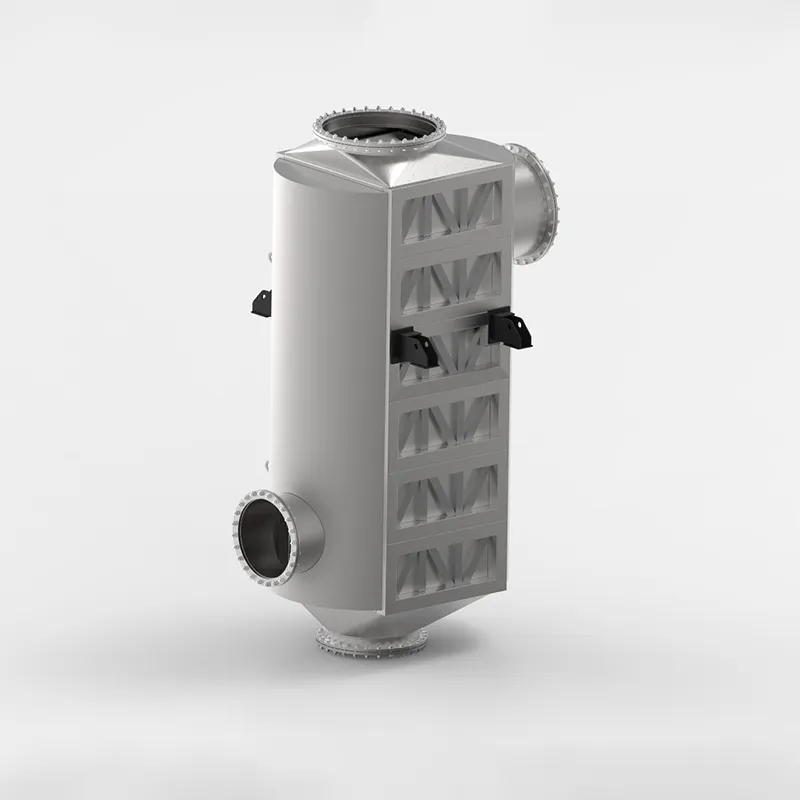
Consistent parameter monitoring and documented PWHT cycles ensure repeatable weld quality across production batches. Non-destructive testing after heat treatment verifies crack-free joints, directly supporting the long-term leak-proof performance of the exchanger.
Adherence to qualified welding procedure specifications (WPS) and heat treatment schedules is therefore not optional but a fundamental requirement for reliable operation in high-pressure and high-temperature services.
5. How the Rigid Frame and Compression Bolts Maintain Structural Stability Under Thermal Cycling
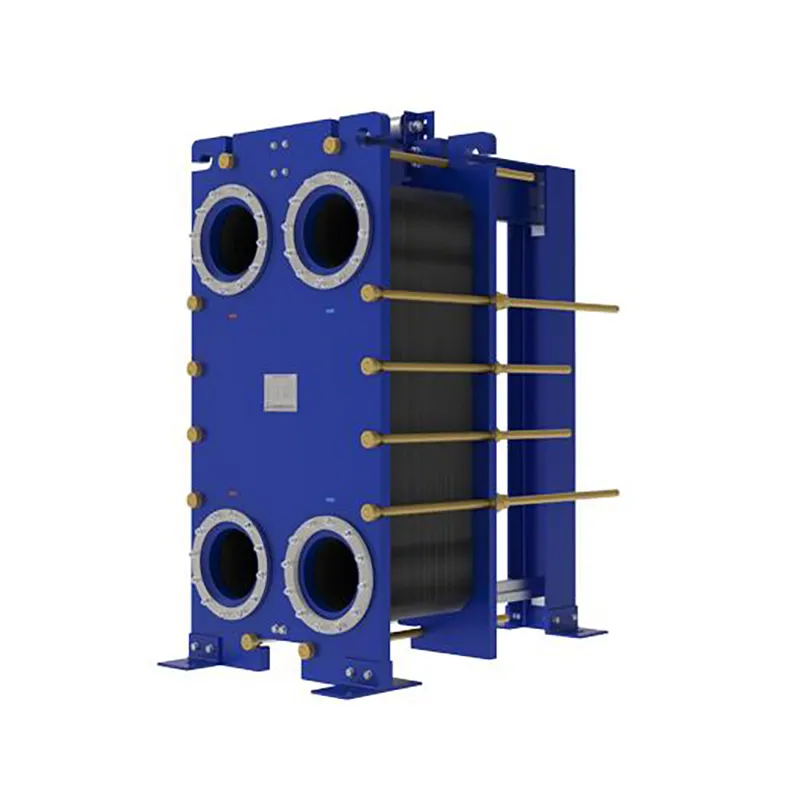
In welded plate block heat exchangers, thermal cycling induces repeated expansion and contraction of metal components. The rigid frame and compression bolts are engineered to counteract these stresses, preserving leak-proof integrity over long operational periods.
The rigid frame, typically constructed from heavy-duty carbon steel or stainless steel, encloses the plate block assembly. It provides a fixed boundary that resists deformation when temperatures fluctuate. By maintaining constant pressure on the plate pack, the frame prevents gaps from forming between welded joints, which could otherwise lead to leakage.
Compression bolts, positioned along the frame perimeter, apply a calibrated clamping force. These bolts are often pre-tensioned to a specific torque value, ensuring uniform load distribution across the plate block. During thermal cycling, the bolts absorb differential expansion by allowing slight elastic elongation, then re-tighten as the system cools, thus sustaining consistent compression without loosening.
Additionally, the combination of frame rigidity and bolt preload minimizes vibrational fatigue and creep in the welded seams. This design approach ensures that the heat exchanger remains structurally stable even under rapid temperature changes, extending service life and reducing maintenance needs.
For more details on welded plate heat exchanger construction, visit: HT-Bloc Welded Plate Heat Exchanger.
Summary
The leak-proof operation of a welded plate block heat exchanger is fundamentally ensured by the integration of fully penetrated welded joints, which eliminate potential leakage paths traditionally associated with gasketed designs. The complete absence of gaskets and seals removes the primary sources of long-term degradation, thereby enhancing the unit's integrity over extended service life.
Precision-machined plate patterns contribute to uniform pressure distribution across the plate pack, promoting consistent sealing contact under operating conditions. Controlled welding parameters, combined with post-weld heat treatment, are critical in preventing the formation of micro-cracks that could compromise the structure over time.
Finally, the rigid frame and compression bolts maintain structural stability during thermal cycling, ensuring that the core sealing interfaces remain intact despite repeated expansion and contraction. Together, these features create a robust, maintenance-free sealing system suitable for demanding industrial applications.
What Are the Key Structural Features of a Welded Plate Block Heat Exchanger That Ensure Leak-Proof Operation?
The leak-proof operation of a welded plate block heat exchanger is primarily ensured by fully penetrated welded joints, the absence of gaskets, precision-machined plate patterns, controlled welding parameters with post-weld heat treatment, and a rigid frame with compression bolts that maintain stability under thermal cycling.
1. The Role of Fully Penetrated Welded Joints in Eliminating Potential Leakage Paths
Fully penetrated welded joints create a continuous, homogeneous bond between plates, eliminating any gaps or crevices that could serve as leakage paths. This fusion welding technique ensures that the joint strength matches or exceeds the base material, providing a permanent seal that resists pressure and thermal stresses.
2. How the Absence of Gaskets and Seals Enhances Long-Term Leak-Proof Integrity
Without gaskets or elastomeric seals, there are no components that can degrade, creep, or fail over time due to temperature cycling or chemical exposure. The all-welded construction eliminates common failure points, ensuring consistent sealing performance throughout the equipment's service life without the need for replacement or retightening.
3. The Contribution of Precision-Machined Plate Patterns to Uniform Pressure Distribution and Sealing
Precision-machined patterns on the plate surfaces ensure uniform contact pressure across the entire heat transfer area when the plates are compressed. This even distribution prevents localized stress concentrations that could lead to distortion or leakage, while also promoting consistent thermal performance and mechanical stability.
4. The Importance of Controlled Welding Parameters and Post-Weld Heat Treatment in Preventing Micro-Cracks
Controlled welding parameters—such as precise heat input, travel speed, and interpass temperature—minimize thermal gradients and residual stresses that cause micro-cracks. Post-weld heat treatment further relieves internal stresses and refines the weld microstructure, enhancing ductility and crack resistance, which is critical for maintaining leak-tightness under cyclic loads.
5. How the Rigid Frame and Compression Bolts Maintain Structural Stability Under Thermal Cycling
The rigid frame and compression bolts provide a robust mechanical clamping force that holds the plate stack together, compensating for differential thermal expansion and contraction during operation. This preload ensures that the plate pack remains tightly sealed even when temperatures fluctuate, preventing loosening or separation that could lead to leaks.

 English EN





User Comments
Service Experience Sharing from Real Customers
Mike
Maintenance SupervisorWe swapped out an old shell-and-tube unit for this welded plate block heat exchanger in our chemical dosing skid. The thermal efficiency gain is immediately noticeable—our process temps stabilize way faster. Plus, the compact footprint freed up space for a new pump. No leaks after three months of continuous 180°F operation. Solid build.
Emma
Process EngineerSpec’d this for a pilot plant expansion handling solvent recovery. The welded plate design gives us the durability of a shell-and-tube but with much better heat transfer coefficients. Only gave 4 stars because the initial pressure drop was a bit higher than the datasheet suggested—we had to tweak our pump sizing. Once dialed in, it’s been running smooth for six months.
Tom
Plant OperatorI’m the guy who has to clean these things, and this welded plate block is a dream compared to gasketed units. No more worrying about gasket blowouts or fiddling with tightening torque specs. The CIP cycle gets it spotless in half the time. Boss is happy because downtime dropped; I’m happy because I’m not scraping old gaskets off.
Sarah
Senior Reliability EngineerDeployed several of these in a refinery wastewater heat recovery loop. The all-welded construction handles the thermal cycling and fouling tendencies of the stream without the recurring maintenance nightmares we had with plate-and-frame units. After 14 months, zero weld failures and the U-value is still within 90% of new. Worth the upfront cost.