Optimizing Industrial Processes with Thermal Energy Storage Heat Exchanger Technology
Thermal energy storage heat exchanger technology is reshaping how process industries manage heat recovery and peak load shifting. By integrating a thermal energy storage heat exchanger into your system, you can reduce energy costs, stabilize temperature fluctuations, and improve overall thermal efficiency. This article walks through the working principles, key design parameters, and practical applications—backed by real-world data—to help you evaluate whether this solution fits your plant.
What Is a Thermal Energy Storage Heat Exchanger?
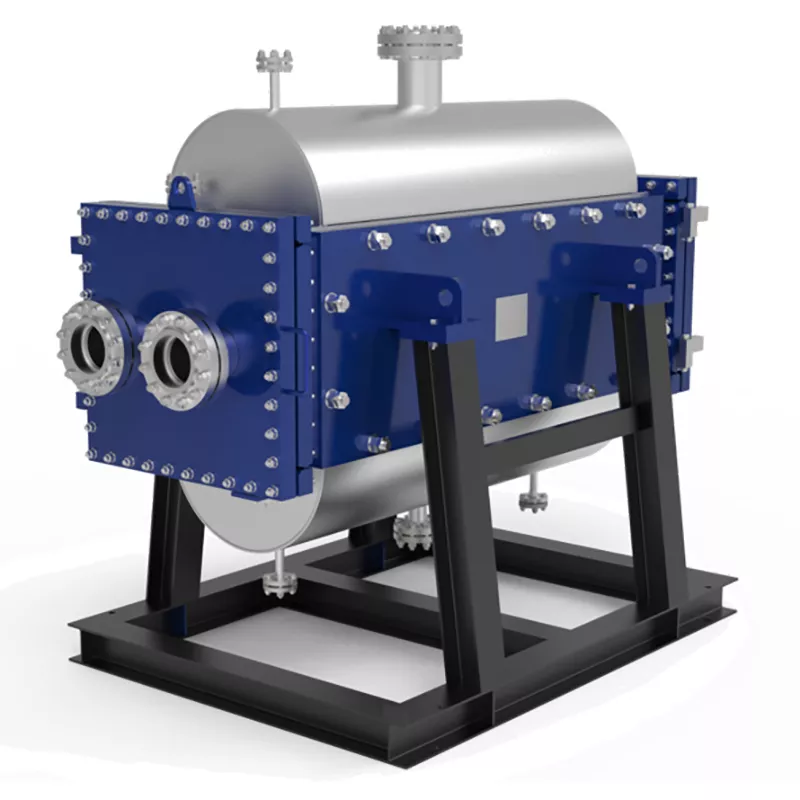
A thermal energy storage heat exchanger combines a heat exchanger with a phase-change material or sensible storage medium to absorb, hold, and release thermal energy on demand. Unlike conventional heat exchangers that transfer heat instantly, this design decouples heat supply from demand, allowing you to store excess heat during low-load periods and discharge it during peaks. For process engineers, this means smoother operation, reduced utility bills, and better utilization of waste heat.
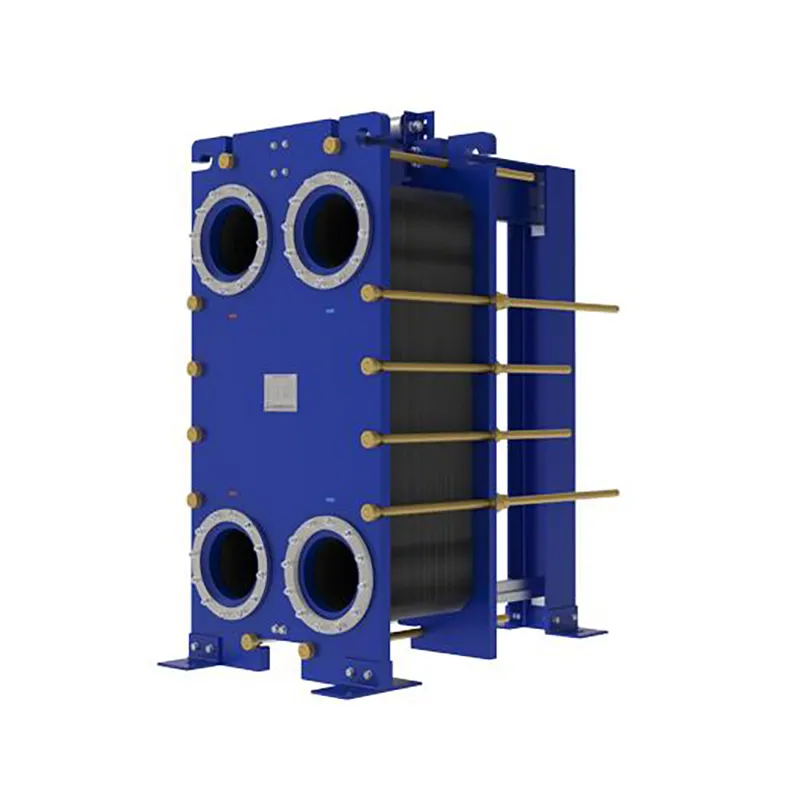
Common storage media include molten salts, thermal oils, and high-density concrete. The heat exchanger core—often a welded plate or gasketed plate design—handles the transfer between the storage medium and the process fluid. SHPHE, a Shanghai-based manufacturer founded in 2005, offers several product lines that can be configured for thermal energy storage applications, including the HT-Bloc welded plate heat exchanger and the wide gap welded plate heat exchanger.
How Does a Thermal Energy Storage Heat Exchanger Work in a Process Line?
In a typical setup, the thermal energy storage heat exchanger is installed between a heat source (e.g., furnace exhaust, solar collector, or CHP unit) and the process loop. During charging, hot fluid from the source passes through the heat exchanger, heating the storage medium. During discharging, cold process fluid flows through the same exchanger, absorbing stored heat. The key advantage is that the storage medium acts as a buffer, smoothing out supply fluctuations.
For example, in a chemical plant with batch processes, a thermal energy storage heat exchanger can capture waste heat from a continuous reactor and release it to preheat feed streams during startup. This reduces the need for auxiliary boilers and cuts fuel consumption by 15–25% in many cases. The actual savings depend on the temperature range, flow rate, and duty cycle.
What Are the Key Design Parameters for Thermal Energy Storage Heat Exchangers?
When specifying a thermal energy storage heat exchanger, you need to consider several critical parameters. The table below lists commonly accepted ranges for industrial applications:
| Parameter |
Typical Range |
Notes |
| Operating temperature |
-40°C to 550°C |
Depends on storage media and gasket material |
| Design pressure |
Up to 30 bar (gasketed); up to 100 bar (welded) |
Higher pressures require fully welded designs |
| Heat transfer area |
0.5 m² to 1,500 m² per unit |
Modular plates allow flexible sizing |
| Storage capacity |
10 kWh to 10 MWh |
Customized based on duty cycle |
| Flow rate per channel |
0.5 to 50 m³/h |
Wide gap designs handle higher flow with solids |
SHPHE offers free thermal design and selection services to help you match these parameters to your specific process. Their engineering team can recommend the optimal plate geometry, material grade (e.g., SS316L, titanium, or Hastelloy), and gasket type.
Key Features of Thermal Energy Storage Heat Exchangers
- High thermal efficiency: Plate designs achieve heat transfer coefficients of 3,000–7,000 W/m²·K, reducing the required footprint.
- Modular scalability: Add or remove plates to adjust capacity without replacing the entire unit.
- Wide temperature and pressure range: Welded plate variants (HT-Bloc, TP) handle extreme conditions where gasketed units cannot.
- Low fouling tendency: Wide gap designs allow passage of fluids with suspended solids or fibrous materials.
- Compatibility with storage media: Can be paired with molten salts, thermal oils, or water-glycol mixtures.
These features make the thermal energy storage heat exchanger a practical choice for industries such as food processing, petrochemicals, pharmaceuticals, and district heating. For instance, in a dairy plant, a thermal energy storage heat exchanger can recover heat from pasteurization and reuse it for cleaning-in-place (CIP) systems, cutting steam consumption by up to 20%.
Applications and Recommended Solutions
Thermal energy storage heat exchangers are deployed in several common scenarios:
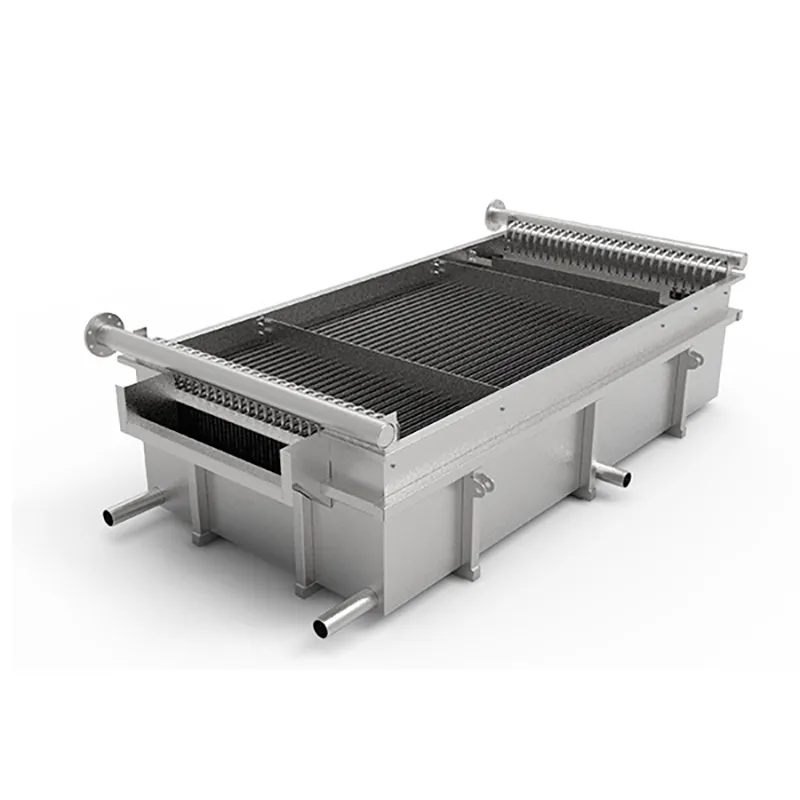
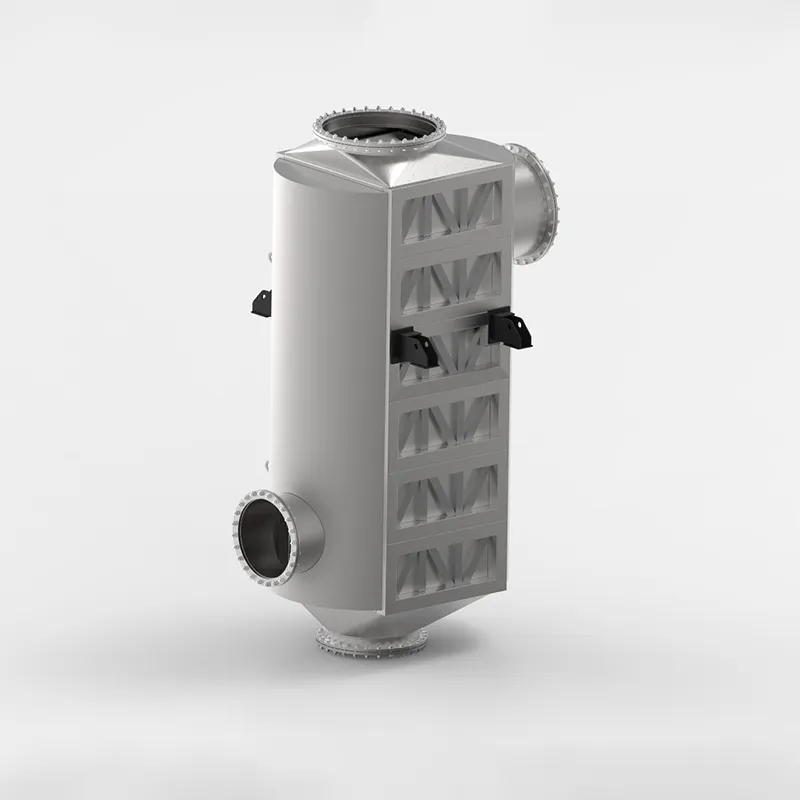
- Waste heat recovery from flue gas: Use a plate air preheater to capture heat from exhaust stacks and store it for combustion air preheating. SHPHE's custom-engineered plate air preheaters are designed for this duty.
- Solar thermal integration: Pair a gasketed plate heat exchanger with a molten salt storage tank to stabilize solar heat delivery for industrial processes.
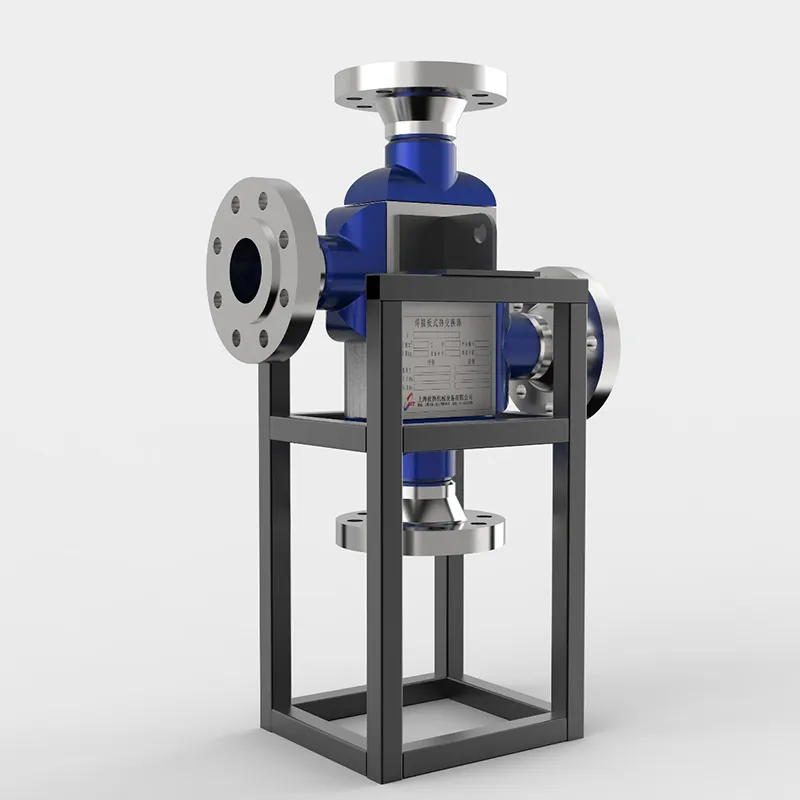
- Batch process leveling: Install a wide gap welded plate heat exchanger to handle viscous or particle-laden streams during charging and discharging cycles.
- District heating buffer: Use a TP welded plate heat exchanger to store excess heat from CHP plants and release it during peak demand.
For each application, SHPHE provides a tailored solution. Their product lines include HT-Bloc welded plate heat exchangers, TP welded plate heat exchangers, wide gap welded plate heat exchangers, gasketed plate heat exchangers, PCHE, plate air preheaters, and pillow plates. All units are manufactured under ISO9001 and ASME U certification, and the company exports to more than 20 countries.
Why Choose SHPHE for Your Thermal Energy Storage Heat Exchanger?
SHPHE has been designing and manufacturing plate heat exchangers since 2005. Their engineering team understands the nuances of thermal energy storage systems and can recommend the right product from their portfolio. Whether you need a gasketed unit for low-pressure storage or a fully welded HT-Bloc for high-temperature molten salt service, they offer a compatible alternative to brands like Alfa Laval or Compabloc.
The company provides free thermal design and selection, ensuring your thermal energy storage heat exchanger is sized correctly for your process conditions. Their quality management system is ISO9001 certified, and they hold ASME U stamp for pressure vessel fabrication. This gives you confidence in both performance and compliance.
Frequently Asked Questions
Q1: Can a thermal energy storage heat exchanger handle corrosive fluids?
Yes. Plate materials such as titanium, Hastelloy, and duplex stainless steel are available for corrosive media. Gasket materials like EPDM, Viton, and PTFE can also be selected to match the chemical compatibility.
Q2: What is the typical payback period for installing a thermal energy storage heat exchanger?
Payback depends on energy prices and duty cycles, but many industrial users report a return on investment within 1.5 to 3 years. The free design service from SHPHE can help you estimate savings based on your specific data.
Q3: How do I size a thermal energy storage heat exchanger for my plant?
You need to provide the hot and cold fluid flow rates, inlet and outlet temperatures, allowable pressure drop, and the desired storage duration. SHPHE's engineers use this data to perform a thermal calculation and select the appropriate plate configuration.
Q4: Is the thermal energy storage heat exchanger compatible with existing piping?
Yes. Standard connection sizes range from DN25 to DN300, with flanged, threaded, or welded ends. The unit can be integrated into most existing systems with minimal modifications.
Q5: What maintenance does a thermal energy storage heat exchanger require?
Gasketed units require periodic gasket replacement every 3–5 years, depending on temperature and chemical exposure. Welded units require less maintenance but should be inspected annually for fouling. SHPHE provides a maintenance guide with every shipment.
Q6: Can I use a thermal energy storage heat exchanger with phase-change materials?
Absolutely. The plate design is well-suited for PCM applications because the narrow channels promote high heat transfer rates during melting and solidification. SHPHE can recommend a wide gap or gasketed design depending on the PCM viscosity.
Request a Quote for Your Thermal Energy Storage Heat Exchanger
To get a customized thermal energy storage heat exchanger proposal, please provide the following details: flow rate (hot and cold side), inlet and outlet temperatures, operating pressure, media composition (including any solids or corrosives), and desired storage capacity. SHPHE's engineering team will perform a free thermal design and selection, and send you a quotation with technical specifications.
Contact SHPHE today to discuss how a thermal energy storage heat exchanger can optimize your industrial processes. With over 18 years of experience and a global export network, they are ready to support your next project.

 English EN





User Comments
Service Experience Sharing from Real Customers
Mike
HVAC Service ManagerWe swapped out our old buffer tank for this thermal storage heat exchanger last quarter. The stratification is way better — we're seeing a solid 12°F delta on the return side even during peak load. Installation was straightforward, no weird flanges. My guys actually liked working with it.
Sophie
Process EngineerUsing this for a pilot molten-salt loop. The internal baffle design handles the thermal cycling well so far — no micro-cracking after 200 cycles. Only gripe is the gasket material seems a bit cheap for the temp range we're pushing (550°C). Might upgrade that ourselves.
Tom
Maintenance SupervisorGot this installed in our district heating plant six months ago. The heat recovery rate is noticeably better than the old shell-and-tube we had. Cleaning the tube bundle was a breeze during the last shutdown — no scaling buildup on the phase-change material side. Would buy again.
Emma
Energy AnalystDecent unit for the price point, but the datasheet overpromises on the discharge time. We're getting about 85% of the rated capacity in real-world cycling. Customer support was responsive though, sent updated performance curves within a day. Good enough for our demand-shifting pilot.