Why a Plate Heat Exchanger for Geothermal Heating Is the Smart Choice for Energy Savings
Geothermal heating systems rely on efficient heat transfer to maximize energy savings and reduce operational costs. A plate heat exchanger for geothermal heating offers superior thermal performance, compact design, and long-term reliability. This article explains how these exchangers work, their key parameters, and why SHPHE provides cost-effective solutions for process engineers and purchasing managers.
When designing a geothermal heating loop, selecting the right heat exchanger directly impacts system efficiency and payback period. A plate heat exchanger for geothermal heating transfers heat between the ground loop fluid and the building's hydronic system with minimal temperature loss. Unlike shell-and-tube designs, plate exchangers achieve temperature approaches as low as 1–2°C, which is critical for low-temperature geothermal sources.
How Does a Plate Heat Exchanger Work in Geothermal Systems?
In a typical geothermal setup, a water-antifreeze mixture circulates through underground pipes, absorbing stable ground temperatures. This fluid then enters the heat exchanger, where it flows through alternating channels between corrugated plates. The building's loop fluid flows counter-currently on the opposite side. Heat transfers across the thin stainless steel plates without mixing the two streams. This design delivers high heat transfer coefficients—typically 3,000–7,000 W/m²·K depending on flow conditions—while keeping pressure drops manageable.
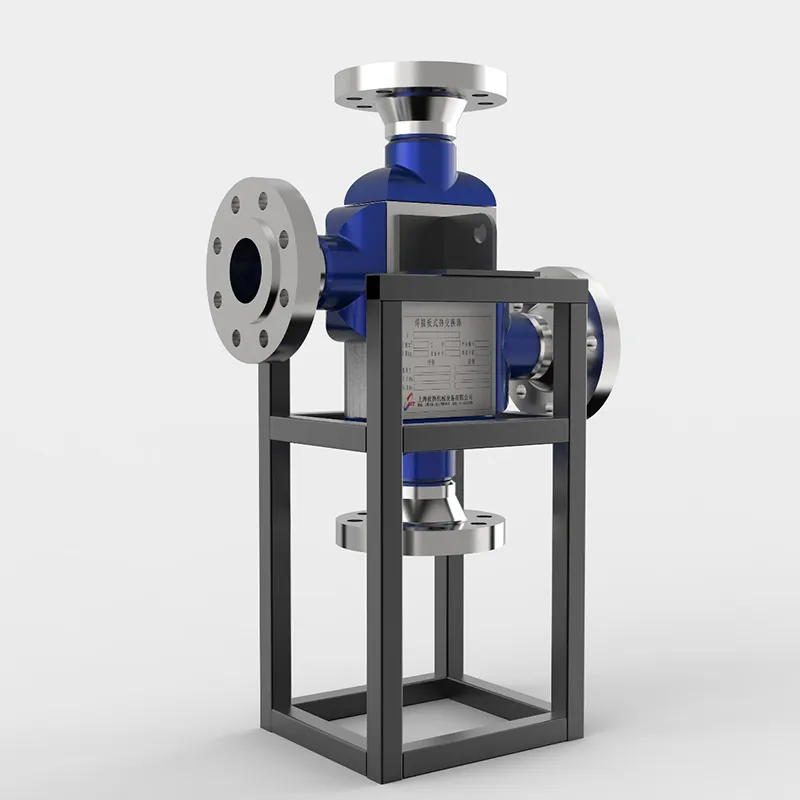
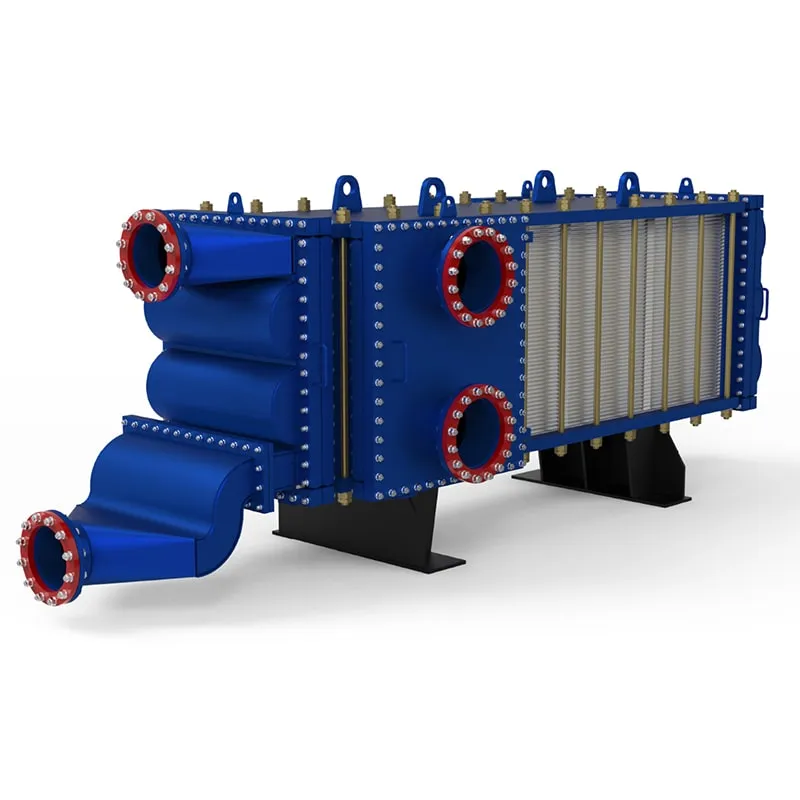
For ground-source heat pump systems, the plate heat exchanger often serves as the evaporator or desuperheater. It isolates the heat pump from ground loop debris and corrosion, protecting expensive compressor components. Many engineers pair a gasketed plate heat exchanger with a TP welded unit for high-temperature backup, ensuring year-round performance. SHPHE offers both gasketed plate heat exchangers and TP welded plate heat exchangers for such dual-loop configurations.
What Are the Key Performance Parameters for Geothermal Plate Heat Exchangers?
When specifying a plate heat exchanger for geothermal heating, focus on these commonly accepted ranges:
| Parameter |
Typical Range |
| Design pressure |
10–30 bar (gasketed); up to 100 bar (welded) |
| Design temperature |
–20°C to 180°C (gasketed); –200°C to 550°C (welded) |
| Plate material |
AISI 304/316L, titanium, or Hastelloy for corrosive brines |
| Flow capacity |
1–500 m³/h per unit; multiple units can be paralleled |
| Temperature approach |
1–5°C achievable with proper plate count |
| Fouling factor |
0.00005–0.0002 m²·K/W (clean geothermal fluids) |
These values represent industry-standard data. Always consult with a manufacturer for site-specific conditions. SHPHE provides free thermal design and selection services to match your exact ground loop temperature and flow profile.
Applications and Recommended Solutions for Geothermal Projects
Plate heat exchangers serve multiple roles in geothermal heating:
- Direct geothermal loops: Use gasketed plate units for clean, low-temperature water (30–60°C). They are easy to clean and expandable.
- High-temperature geothermal (80–120°C): TP welded or HT-Bloc welded units handle higher pressures and resist thermal cycling without gasket failure.
- Brines with suspended solids: Wide gap welded plate heat exchangers allow particles up to 5 mm to pass without clogging.
- District heating substations: Compact gasketed units fit in limited mechanical room space, reducing installation costs.
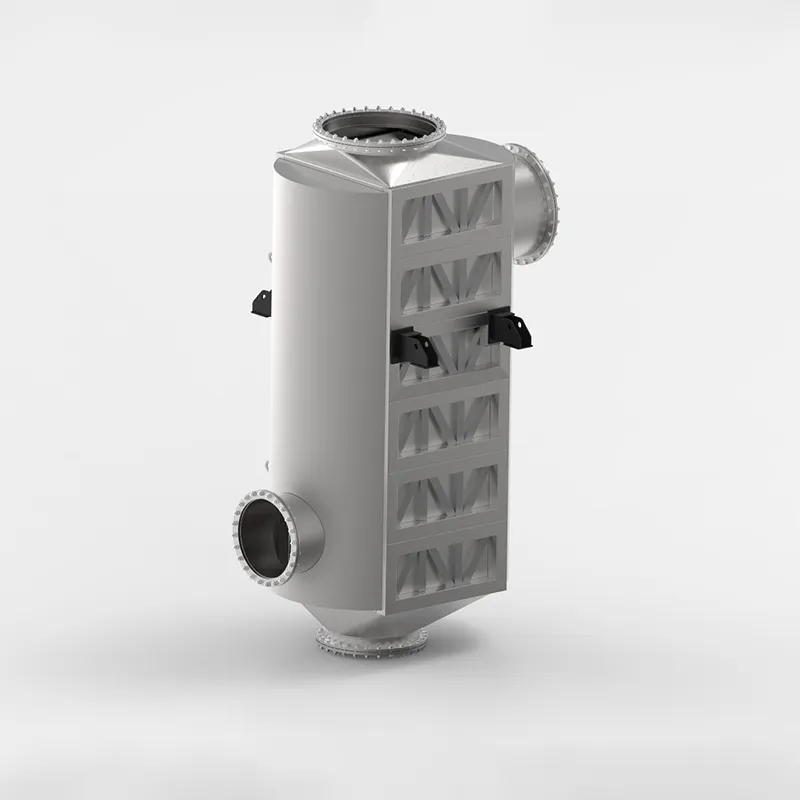
For projects requiring extreme compactness or high pressure, SHPHE also offers printed circuit heat exchangers (PCHE) and pillow plates for specialized geothermal loops.
Why SHPHE Is a Reliable Partner for Geothermal Heat Exchangers
SHPHE, founded in Shanghai in 2005, has exported plate heat exchangers to more than 20 countries. The company holds ISO9001 and ASME U certifications, ensuring consistent manufacturing quality. Their product range includes HT-Bloc welded plate heat exchangers, TP welded units, wide gap designs, gasketed models, PCHE, plate air preheaters, and pillow plates. For geothermal applications, SHPHE offers units compatible with Alfa Laval and GEA frame sizes, making retrofit or replacement straightforward.
Every plate heat exchanger for geothermal heating from SHPHE comes with free thermal design support. Their engineers calculate the exact plate count, channel arrangement, and pressure drop based on your ground loop data. This service eliminates oversizing and reduces capital expenditure. With short lead times and direct factory pricing, SHPHE helps process engineers and purchasing managers meet tight project budgets without compromising on performance.
Frequently Asked Questions
Can a gasketed plate heat exchanger handle geothermal brine?
Yes, but the gasket material must be compatible with the brine chemistry. EPDM or Viton gaskets resist most geothermal fluids. For highly corrosive brines, SHPHE recommends titanium plates with welded construction to eliminate gasket degradation.
What is the typical lifespan of a plate heat exchanger in geothermal service?
With proper water treatment and regular cleaning, gasketed units last 10–15 years. Welded plate heat exchangers often exceed 20 years because there are no gaskets to replace. SHPHE's TP welded units have been in continuous operation for over 15 years in European geothermal plants.
How do I size a plate heat exchanger for a geothermal heat pump?
You need the ground loop flow rate, entering and leaving fluid temperatures, and the desired approach temperature. SHPHE's free selection service uses these inputs to determine plate count, pressure drop, and connection size. A typical residential geothermal system requires 20–60 plates.
Is a plate heat exchanger better than a coaxial coil for geothermal?
For most applications, yes. Plate heat exchangers offer higher heat transfer coefficients and a smaller footprint. They also allow easy capacity changes by adding or removing plates. Coaxial coils are simpler but less efficient and harder to service.
Can I use a plate heat exchanger for both heating and cooling in a geothermal system?
Yes, plate heat exchangers handle bidirectional flow. In summer, the geothermal loop rejects heat from the building; in winter, it absorbs heat. SHPHE's gasketed units are designed for such seasonal reversal with proper gasket selection for temperature swings.
What maintenance does a geothermal plate heat exchanger require?
Gasketed units need periodic gasket inspection and plate cleaning, typically every 2–3 years. Welded units require minimal maintenance—just monitoring pressure drop and fluid quality. SHPHE provides cleaning guidelines and spare parts for all models.
Request a Quote for Your Geothermal Project
Choosing the right plate heat exchanger for geothermal heating directly affects your system's energy savings and reliability. To get an accurate recommendation, please provide the following details when contacting SHPHE: flow rate (m³/h), entering and leaving temperatures on both sides, design pressure, and media composition (e.g., water-glycol mixture, brine). Their engineering team will respond with a thermal design, dimensional drawing, and competitive pricing within 48 hours.
Whether you need a standard gasketed unit or a custom welded solution, SHPHE's experience in geothermal applications ensures you get a plate heat exchanger for geothermal heating that maximizes heat recovery and minimizes pumping costs. Contact them today with your project parameters.

 English EN





User Comments
Service Experience Sharing from Real Customers
Mike
HVAC TechnicianInstalled this plate heat exchanger for a residential geothermal loop last month. The compact design saved me a ton of space in the mechanical room, and the pressure drop was spot on with the spec sheet. Customer's been running it non-stop without any hiccups. Solid build quality for the price.
Samantha
Facility ManagerWe swapped out an old shell-and-tube unit for this plate heat exchanger in our community center's geothermal heating system. The efficiency gain is noticeable on our monthly energy bills. Only reason I'm not giving 5 stars is the gaskets felt a bit stiff during installation, but once torqued down, no leaks. Great value for a municipal project.
Tom
Geothermal System DesignerI've specified these for three commercial ground-source heat pump projects now. The titanium plates handle our slightly aggressive well water chemistry without corrosion. Thermal transfer is excellent—we're seeing approach temperatures under 2°C. Delivery was on time too. My clients are happy, which makes my job easier.
Jenna
Maintenance SupervisorBeen running this plate heat exchanger for a small office geothermal loop for about eight months. Performance is fine when it's clean, but we've had to backflush it twice already because of sediment from the loop. Maybe I should have ordered a model with wider channels. Not a bad unit, but it requires more maintenance than I expected for a geothermal setup.