
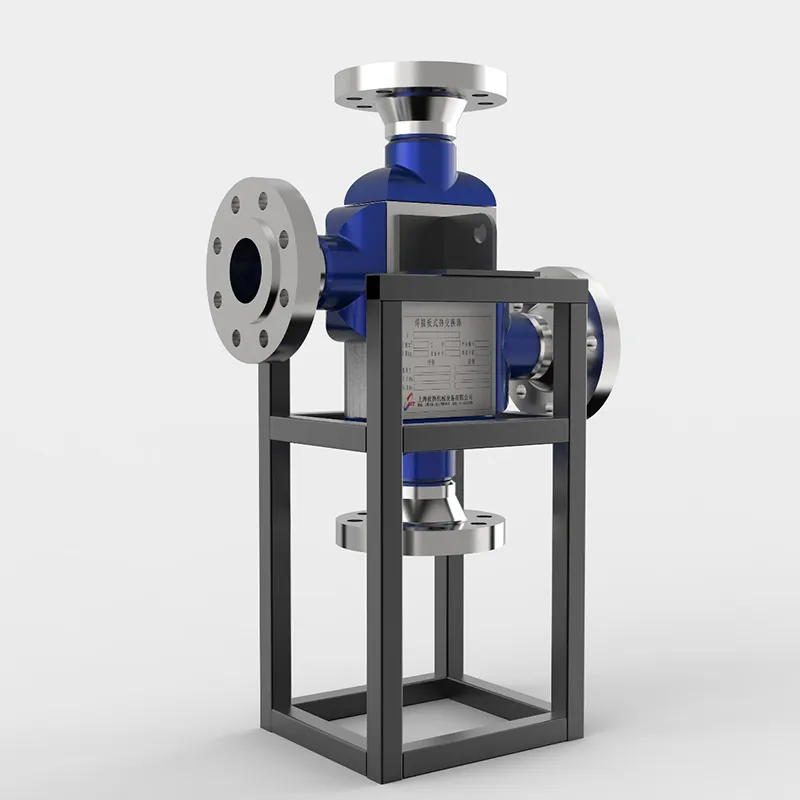
A Printed Circuit Heat Exchanger is a solid block of metal with thousands of microchannels etched into thin alloy plates. Those plates are stacked and diffusion-bonded in a vacuum furnace, where atomic diffusion merges them into a single piece. No gaskets, no brazing filler, no weld seams. The result is a monolithic core that behaves like parent metal — and holds tight at pressures conventional designs simply cannot match.
These units first proved themselves in aerospace and nuclear settings. Today they are found in LNG liquefaction trains, supercritical CO₂ power cycles, offshore gas compression, and high-pressure hydrogen systems. The common thread: space is tight, thermal duty is high, and downtime is not an option. A PCHE typically occupies 5 to 10 times less space than an equivalent shell-and-tube exchanger, which matters on an offshore platform where every square meter carries a cost.
No two thermal duties are identical, so channel geometry, depth, and cross-section are engineered per project. Materials range from 316L stainless and duplex 2205 to titanium and Hastelloy C-276, with plate thicknesses between 0.5 and 2.0 mm. CFD modeling and finite element stress analysis guide the design before any metal is etched. The finished core is helium leak-tested and hydrostatically verified to ASME, CE, or NB standards.
Maximum heat transfer area reaches 8000 m², channel gaps run from 0.4 to 4 mm, design temperature spans -196°C to 850°C, and maximum design pressure hits 1000 bar. Thermal effectiveness can reach 98%, enabling very tight temperature approaches that recover energy other designs leave behind.



 English EN