
 English EN


TL;DR — The quick answer
- The challenge: chemical process fluids range from mild to strongly corrosive, viscous or fouling.
- Material first: match the plate metallurgy (316L → titanium → 254 SMO → Hastelloy) to the chemistry and temperature.
- Design second: gasketed for clean/mild, welded for aggressive/high-P/T, wide-gap or TP for fouling/viscous.
- Safety: welded, gasket-free designs remove external-leak risk for hazardous media.
- Result: efficient, leak-free, long-life heat transfer across polymer, pharma and fertilizer duties.
Chemical processing subjects heat exchangers to some of the most demanding conditions in industry — corrosive acids, aggressive solvents, viscous polymers and fouling streams. Choosing the right chemical process heat exchanger is a two-part decision: the material that resists the chemistry, and the design that suits the fluid's behaviour. This guide walks through both, so you can specify a unit that lasts.
SHPHE custom-engineers plate heat exchangers for chemical duties by matching metallurgy and platform to each specific fluid — from a mild 316L gasketed unit to a Hastelloy welded exchanger for strong acids, or a wide-gap unit for a viscous, fouling polymer stream. Getting this match right is the difference between a reliable asset and a recurring corrosion or clogging problem.
Why are chemical duties so demanding?
Chemical fluids challenge exchangers in several ways at once. Many are corrosive — acids, alkalis and oxidisers attack ordinary stainless. Some are viscous or polymer-laden, resisting flow and fouling narrow channels. Others are hot or high-pressure, exceeding the gasketed envelope. And many are hazardous, so any external leak is a safety and environmental risk. A heat exchanger for chemical service must therefore address the specific combination of corrosivity, viscosity, temperature and hazard the fluid presents — which is why generic equipment so often fails and custom engineering pays off.
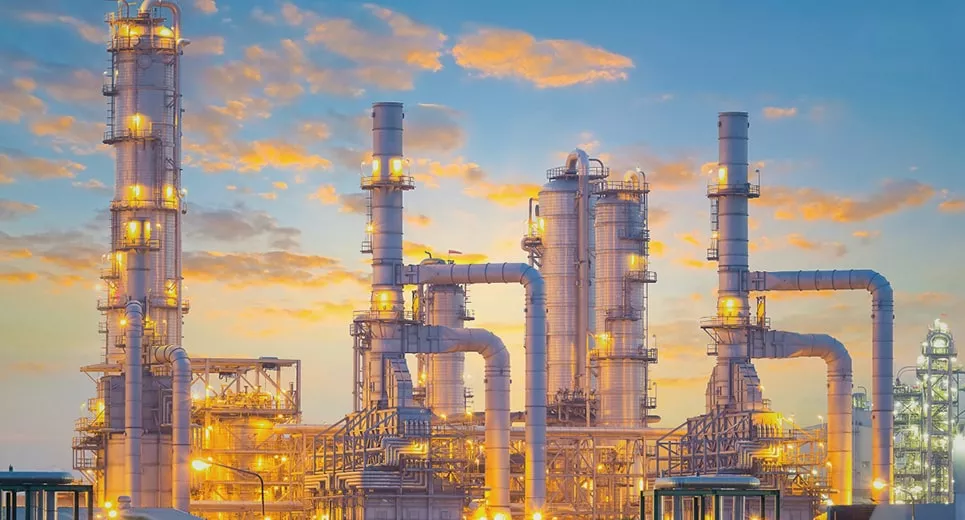
Step 1: match the material to the chemistry
Material selection is the foundation. The plate alloy must resist the most aggressive fluid at the operating temperature: 316L stainless for mild chemicals, titanium for chlorides, 254 SMO for aggressive brines, and Hastelloy or nickel alloys for strong acids and severe chemistries. On gasketed units the gasket compound (EPDM, Viton and others) must resist the same fluids, and on welded units the weld metallurgy must share the plate's resistance. Because the thin plates have little corrosion allowance, the material must genuinely resist — not merely tolerate — the chemistry. SHPHE selects the least-cost material that comfortably survives the specific acid, solvent or polymer for the design life.
Step 2: match the design to the fluid behaviour
With materials settled, the platform is chosen for how the fluid behaves:
| Fluid character | Best platform |
|---|---|
| Mild, clean, moderate P/T | Gasketed plate (easy cleaning) |
| Aggressive / high P/T | HT-Bloc welded (no leak, high envelope) |
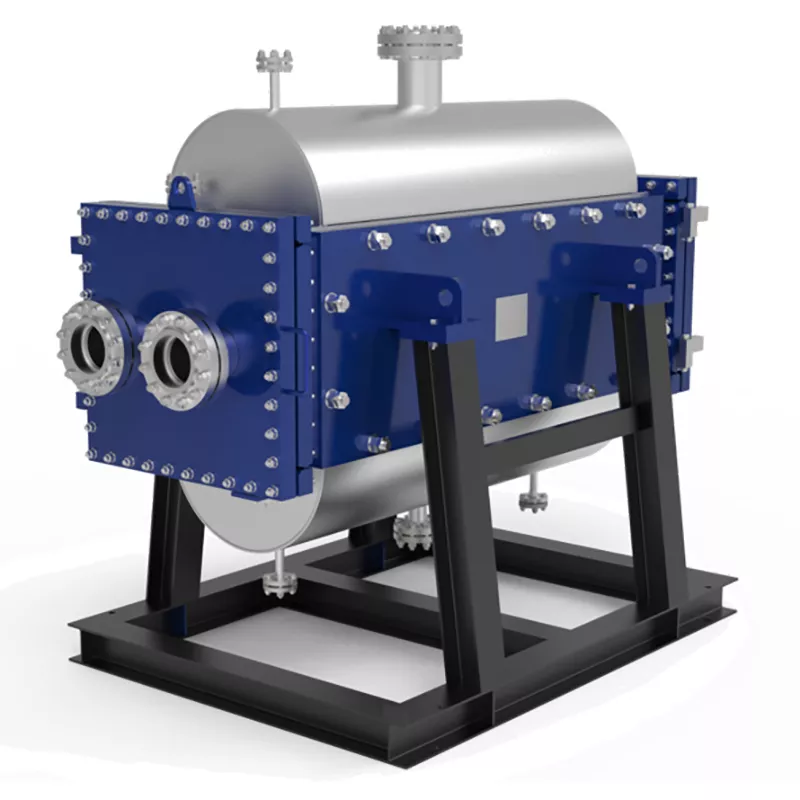
| Viscous / particle-laden | TP welded shell-and-plate |
| Fibrous / crystallising / high-solids | Wide-gap welded |
This two-step logic — material for the chemistry, design for the behaviour — ensures the unit both resists corrosion and keeps flowing, which are the two ways chemical exchangers most often fail.
How does gasket-free design improve chemical safety?
Many chemical fluids are hazardous, so an external leak is a serious safety and environmental event. Welded, gasket-free designs remove the gasket as a leak path, containing aggressive or toxic media reliably even at high pressure and temperature. This is a major reason welded plate exchangers are preferred for hazardous chemical duties, alongside their higher operating envelope. Where a gasketed unit is used for a milder, lower-risk service, the gasket compound is carefully matched to the fluid so it too remains leak-free. Safety-driven design — containing the chemistry with no external leakage — is central to selecting a chemical heat exchanger.
Which chemical sub-sectors does this cover?
Plate exchangers serve heating, cooling, condensation and evaporation across the chemical industry — polymer production (often viscous, fouling), pharmaceutical (hygienic, precise temperature control), fertilizer (corrosive, sometimes crystallising), and general fine and bulk chemicals. Each sub-sector combines corrosivity, viscosity and hazard differently, so the material and platform are chosen accordingly — a hygienic pharmaceutical duty may use a pillow plate or 316L gasketed unit, while a corrosive fertilizer stream may need a nickel-alloy welded or wide-gap exchanger. SHPHE's range across gasketed, welded, wide-gap, pillow-plate and PCHE platforms lets it match any chemical duty.
What role does temperature play in chemical corrosion?
Temperature is frequently the decisive factor that turns a manageable chemical duty into a corrosive one. Many acids and aggressive fluids that a given alloy tolerates at ambient temperature become far more corrosive when hot, so a material choice that looks adequate on chemistry alone can fail once the operating temperature is considered. A hot dilute acid can attack a stainless steel that would happily handle the same acid cold. This is why SHPHE always evaluates the corrosion chemistry at the actual operating temperature, and why the hottest section of a chemical exchanger often dictates the material for the whole unit. Overlooking temperature is one of the most common causes of premature corrosion failure in chemical service, and accounting for it properly is a hallmark of sound material selection.
How is heat recovery applied in chemical plants?
Beyond simply heating and cooling, plate exchangers let chemical plants recover energy between process streams, cutting utility cost and carbon. Their high efficiency and close temperature approach make them excellent interchangers — using a hot product stream to preheat a cold feed, for example — so less external heating and cooling is needed. As chemical producers face rising energy costs and decarbonisation targets, this heat-recovery capability is increasingly valuable, and the compact plate exchanger captures it in far less space than a shell-and-tube. Where the streams are corrosive or fouling, the appropriate metallurgy and platform (welded, wide-gap or TP) make the recovery reliable. SHPHE designs chemical heat-recovery duties to extract this energy safely from aggressive streams, turning an efficiency measure into both a cost saving and a sustainability gain.
Corrosion-and-behaviour-matched chemical exchangers
SHPHE engineers chemical-industry heat exchangers by matching both the metallurgy and the platform to each fluid. For corrosive acids and aggressive chemistries, it selects titanium, super-austenitic or nickel-alloy plates with matched welds and gaskets; for viscous, polymer-laden or crystallising streams, it applies wide-gap or TP welded designs that keep the fluid flowing; and for hazardous media, gasket-free welded construction eliminates external-leak risk. Serving polymer, pharmaceutical, fertilizer and fine-chemical duties, SHPHE delivers efficient, leak-free, long-life heat transfer where generic equipment corrodes or clogs. Certified to ASME, NB, CE, BV and SGS with 30+ patents since 2005, each unit is custom-engineered to the specific chemistry and fluid behaviour.
Source: SHPHE product information. See the chemical solutions page.
Can existing chemical exchangers be upgraded?
When an existing chemical exchanger corrodes or clogs, it can often be upgraded rather than replaced. A gasketed unit suffering corrosion can be re-plated with a higher alloy in the same frame; a unit clogging on a viscous or fouling stream can be replaced with a wide-gap or TP welded design sized to the fluid; and a leaking gasketed unit on a hazardous duty can be migrated to a welded, gasket-free platform. Diagnosing the root cause — material mismatch, wrong channel geometry, or unsuitable sealing — is the key to the right upgrade, and it usually costs far less than living with recurring failures. Because SHPHE builds the full range of platforms, it can recommend the most cost-effective upgrade for a troubled chemical duty rather than defaulting to a full replacement, which protects the plant budget while restoring reliability to a duty that had become a chronic maintenance burden and a drain on both budget and production time.
How do you avoid common chemical-duty failures?
Most chemical exchanger failures trace to a mismatch. Corrosion failures come from a plate, gasket or weld material that couldn't resist the fluid at temperature — avoided by rigorous material selection considering both fluids and the peak temperature. Clogging failures come from forcing a viscous or fouling fluid through a narrow channel — avoided by choosing a wide-gap or TP welded platform. Leaks come from a gasket unsuited to a hazardous fluid — avoided by welded, gasket-free designs. The through-line is matching the exchanger to the real fluid, not a generic assumption, which is precisely the custom-engineering discipline that makes chemical duties reliable.
As a specialist plate-heat-exchanger manufacturer, SHPHE (Shanghai Heat Transfer Equipment Co., Ltd.) custom-engineers chemical-process heat exchangers matched to the chemistry and fluid behaviour, backed by ASME/NB/CE/BV/SGS certification and 30+ patents.
In chemical service more than anywhere, the exchanger must be engineered to the specific fluid — its chemistry, temperature, viscosity and hazard — rather than chosen from a catalogue. That fluid-led, two-step approach of material for the chemistry and design for the behaviour is what makes the difference between a chemical heat exchanger that lasts and one that corrodes, clogs or leaks.
Send SHPHE your chemistry, temperature and fluid behaviour for a matched design.
Consult our engineers →| Medium | Material | Note |
|---|---|---|
| Dilute acids | 316L | Check chloride content |
| Chlorides / brine | Titanium | Excellent resistance |
| Strong / hot acids | Hastelloy / Ni alloy | High-end alloy |
| Caustics | 304 / 316L | Generally compatible |
In corrosive chemical service, material selection is the whole game: the right alloy for the specific media and temperature delivers years of reliable service, while the wrong one fails fast. Matching plate and gasket materials to the actual chemistry, as SHPHE does for every corrosive duty, is what turns an aggressive application into a dependable one.
Frequently asked questions
What heat exchanger is best for corrosive chemicals?
One with plate metallurgy matched to the chemistry — titanium for chlorides, 254 SMO for brines, Hastelloy for strong acids — and a gasket-free welded design for hazardous, high-pressure media.
How do I choose the plate material for a chemical duty?
Identify the most aggressive fluid, its concentration and temperature, and choose the least-cost alloy (316L, titanium, 254 SMO or nickel alloy) that comfortably resists it for the design life.
Which design suits viscous or fouling chemical fluids?
Wide-gap welded for fibrous, crystallising or high-solids streams; TP welded shell-and-plate for viscous, particle-laden fluids that would clog a compact pack.
Why are welded exchangers safer for hazardous chemicals?
They remove the gasket as a leak path, so aggressive or toxic media are contained even at high pressure — no external leakage.
What chemical industries use plate heat exchangers?
Polymer, pharmaceutical, fertilizer and fine/bulk chemicals, for heating, cooling, condensation and evaporation duties.
Sources & further reading: SHPHE product information; general chemical-process heat-exchanger practice. Material and design depend on the exact fluid — confirm with an engineered selection.