A solar thermal heat exchanger is the critical component that transfers captured solar energy into usable heat for industrial processes, district heating, and power generation. This article explains how these exchangers work, their key design parameters, and how to select the right type for your system. Whether you are a process engineer or a purchasing manager, you will find practical guidance on optimizing thermal efficiency and reliability.
In any solar thermal system, the solar thermal heat exchanger acts as the bridge between the solar collector loop and the process or storage loop. Without an efficient exchanger, the heat collected by the panels or troughs cannot be effectively delivered to the working fluid. This component directly impacts overall system efficiency, maintenance costs, and equipment lifespan.
What Is a Solar Thermal Heat Exchanger and Why Does It Matter?
A solar thermal heat exchanger is a device that transfers heat from a primary fluid (typically a glycol-water mixture or thermal oil heated in solar collectors) to a secondary fluid (water, steam, or process fluid) without mixing the two streams. This separation is essential to prevent contamination and to allow different pressure and temperature ratings on each side.
For overseas process engineers and purchasing managers, the choice of exchanger type affects not only thermal performance but also capital expenditure and long-term reliability. Key factors include operating temperature (up to 400°C for concentrated solar power), pressure (up to 30 bar), and the fouling tendency of the fluids involved.
How Does a Solar Thermal Heat Exchanger Work in a Typical System?
In a typical solar thermal installation, the collector loop absorbs solar radiation and heats a heat transfer fluid. This hot fluid then flows through the primary side of the exchanger, while the secondary fluid receives the heat. The exchanger's plates or tubes maximize surface area to achieve high heat transfer coefficients.
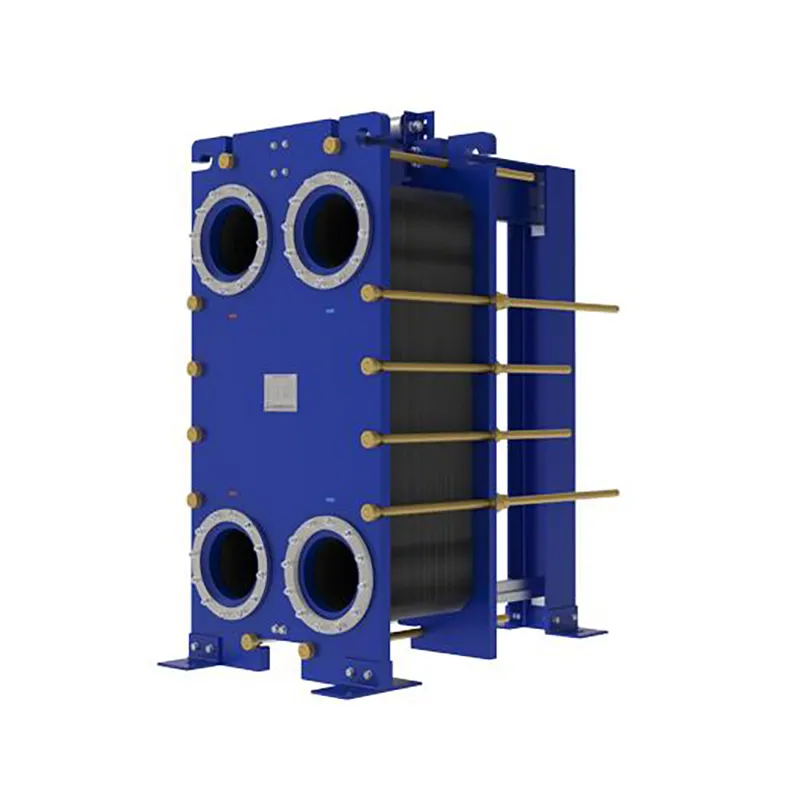
For example, in a parabolic trough CSP plant, thermal oil at around 390°C enters the exchanger and heats pressurized water to generate steam for a turbine. In a low-temperature solar hot water system, a gasketed plate heat exchanger transfers heat from the glycol loop to domestic water at 60–80°C.
Key Features and Typical Parameter Ranges
When evaluating a solar thermal heat exchanger, consider these common specifications:
- Heat transfer area: 1 m² to 500 m² per unit, depending on system scale.
- Operating temperature: -20°C to 400°C (higher for specialized designs).
- Design pressure: Up to 30 bar for gasketed types; up to 100 bar for welded or PCHE designs.
- Materials: Stainless steel 304/316L, titanium, or Hastelloy for corrosive fluids.
- Flow configuration: Counterflow, parallel flow, or crossflow, with counterflow offering highest efficiency.
These ranges are industry-generic and should be confirmed with the manufacturer for your specific application.
Applications and Recommended Solutions
Solar thermal heat exchangers are used across diverse sectors:
- Industrial process heat: Food processing, textile dyeing, chemical reactions requiring 100–250°C.
- District heating: Large-scale hot water networks using flat plate or welded exchangers.
- Concentrated solar power (CSP): High-temperature steam generation with welded plate or shell-and-tube designs.
- Solar cooling: Absorption chillers driven by hot water from solar collectors.
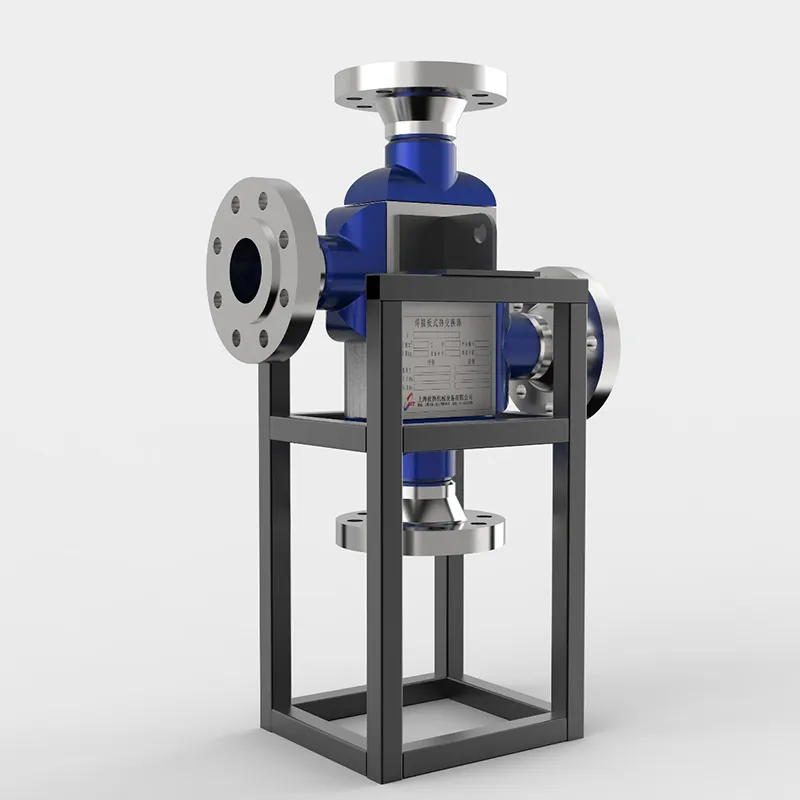
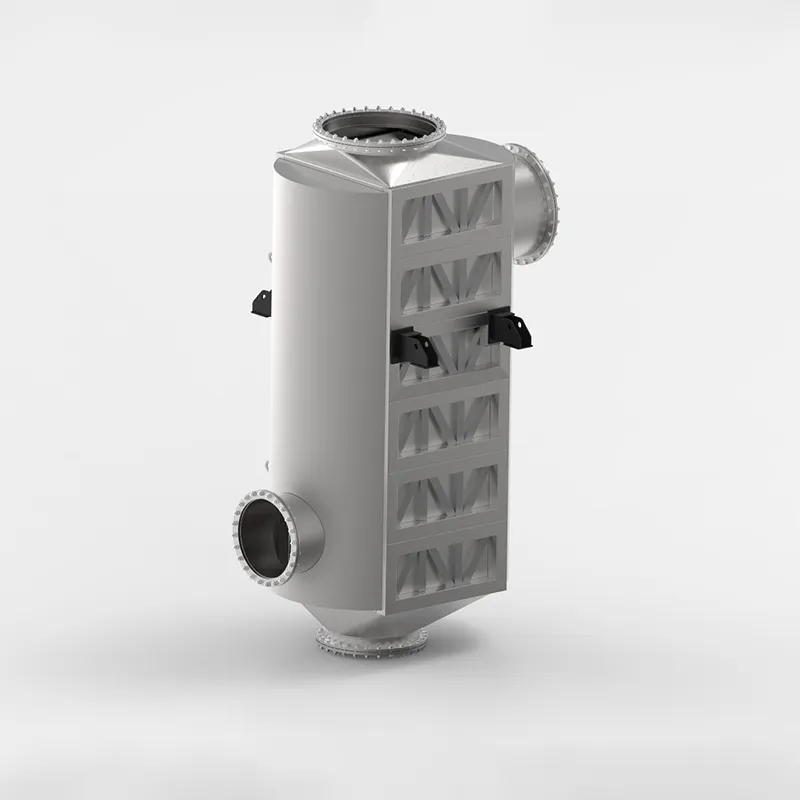
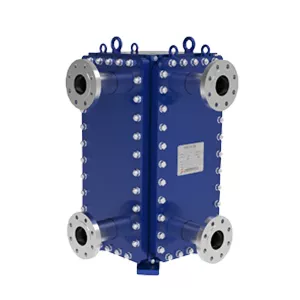
For each application, the recommended exchanger type varies. Gasketed plate heat exchangers work well for low-pressure, clean fluids. For high-temperature or aggressive media, consider TP welded plate heat exchangers or HT-Bloc welded plate units, which handle up to 400°C without gasket failure.
Why SHPHE for Your Solar Thermal Heat Exchanger Needs?
SHPHE, a Shanghai-based manufacturer founded in 2005, has supplied plate heat exchangers to over 20 countries. Our product lines include HT-Bloc and TP welded plate heat exchangers, wide gap welded plate heat exchangers, gasketed plate heat exchangers, PCHE, plate air preheaters, and pillow plates. We hold ISO9001 and ASME U certifications, ensuring quality and compliance with international standards.
Our team offers free thermal design and selection service. We can recommend the optimal solar thermal heat exchanger configuration based on your flow rate, temperature, pressure, and media properties. Whether you need a compact gasketed unit for a solar hot water project or a robust welded exchanger for a CSP plant, we provide solutions compatible with or as an alternative to Alfa Laval, Compabloc, and GEA designs.
Frequently Asked Questions
Q: What is the typical lifespan of a solar thermal heat exchanger?
A: With proper maintenance, a gasketed plate heat exchanger lasts 10–15 years, while welded designs can exceed 20 years. Regular cleaning and gasket replacement extend service life.
Q: Can I use a standard gasketed exchanger for high-temperature solar thermal oil?
A: No. Standard gaskets degrade above 150°C. For thermal oil up to 400°C, use a welded plate heat exchanger or a PCHE. SHPHE offers HT-Bloc welded units rated for these conditions.
Q: How do I size a solar thermal heat exchanger for my project?
A: Sizing requires the heat load (kW), inlet/outlet temperatures, flow rates, and fluid properties. Our free thermal design service calculates the required area and selects the best model.
Q: What maintenance does a solar thermal heat exchanger need?
A: Periodic cleaning to remove fouling, inspection of gaskets (if applicable), and checking for pressure drops. Welded types require less frequent maintenance.
Q: Are SHPHE exchangers compatible with existing Alfa Laval frames?
A: Yes, many of our gasketed plate heat exchangers are dimensionally compatible with Alfa Laval and GEA frames, offering a cost-effective replacement option.
Q: What is the difference between a wide gap and a standard gasketed exchanger?
A: Wide gap designs have larger plate spacing (typically 5–15 mm), allowing fluids with solids or high viscosity to pass without clogging. They are ideal for solar thermal systems using dirty or particulate-laden fluids.
Request a Quote for Your Solar Thermal Heat Exchanger
To get a precise recommendation and quotation for your solar thermal heat exchanger, please provide the following details:
- Flow rate (m³/h or GPM) for both primary and secondary sides
- Inlet and outlet temperatures (°C or °F)
- Operating and design pressure (bar or psi)
- Fluid types and any special properties (viscosity, fouling tendency, corrosiveness)
Contact our engineering team with these parameters, and we will deliver a thermal design and a competitive quote within 48 hours. Our goal is to help you achieve optimal heat transfer efficiency and long-term reliability in your renewable energy system.

 English EN





User Comments
Service Experience Sharing from Real Customers
Elena
Maintenance SupervisorWe retrofit our old industrial laundry setup with this solar thermal heat exchanger six months ago. The drop in our natural gas bill was immediate—like, 40% in the first quarter. Installation was straightforward, but the real win is how well it handles the constant hot water demand. No scaling issues so far, which was my biggest fear. Solid piece of kit.
Marcus
Off-Grid Systems DesignerI spec’d this exchanger for a client’s remote cabin in the Sierra Nevada. It’s paired with a 300-gallon buffer tank and evacuated tubes. The thermal transfer is consistent even on overcast winter days—I was pleasantly surprised. Only reason it’s not a 5 is the pressure drop is a bit higher than the datasheet suggests, but nothing a small pump upgrade can’t fix. Would buy again.
Priya
Facilities ManagerFinally a heat exchanger that doesn’t clog up within a year. We run a small food processing plant and our previous unit was a nightmare with fouling from viscous sauces. This one’s got wider passages and the stainless finish cleans up beautifully during CIP. My team actually likes maintaining it. Saved us about $2k a month in electric heating costs. Highly recommend.
Tomás
Solar InstallerIt works fine for residential DHW preheat, but I wouldn’t push it for larger commercial arrays without checking the flow rates first. I installed one for a small apartment building and the return temp was lower than expected until we re-piped the loop. Customer’s happy now, but it took an extra day of troubleshooting. Build quality is decent, but the manual could be clearer.