How Do Renewable Energy Heat Exchangers Work in Solar Thermal Systems?
Author: Dr. Emily Carter
Date: Jul-06-2026
In solar thermal systems, heat exchangers play a critical role by transferring captured thermal energy from solar collectors to storage tanks or directly to end-use applications. These devices facilitate efficient heat transfer between two fluids—typically a heat transfer fluid circulating through the collectors and water or another medium in the storage tank—without allowing them to mix. Common types include shell-and-tube, plate, and double-pipe heat exchangers, each selected based on system size, temperature requirements, and fluid compatibility. The heat transfer mechanism relies on conduction and convection, where the hot fluid from the collector passes through the exchanger, warming the cooler fluid on the other side of a conductive barrier. Efficiency factors such as surface area, flow rate, temperature difference, and material thermal conductivity directly influence performance. Optimization strategies include using counterflow arrangements, enhancing turbulence, and selecting corrosion-resistant materials to minimize fouling. These systems are widely applied in domestic hot water heating, space heating, industrial process heat, and even solar cooling configurations. Proper integration of heat exchangers ensures maximum energy capture, reduced heat loss, and reliable long-term operation, making them indispensable in modern renewable energy installations.
The Role of Heat Exchangers in Capturing Solar Thermal Energy
In solar thermal systems, heat exchangers serve as the critical interface between the solar collector and the storage or usage point. They transfer the thermal energy captured from sunlight into a working fluid, such as water or glycol, without mixing the fluids. This indirect transfer ensures system efficiency and longevity.
Typically, a heat exchanger in a solar thermal setup consists of a series of plates or tubes that maximize surface area for heat transfer. The hot fluid from the collector passes through one side, while the cooler fluid from the storage tank flows on the other side. Heat naturally moves from the hotter to the cooler fluid, raising the temperature of the stored water or process fluid.
The design of the heat exchanger directly impacts system performance. Factors such as flow rate, material conductivity, and surface geometry determine how effectively the captured solar energy is transferred. For instance, gasketed plate heat exchangers offer high efficiency in residential solar water heating, while welded plate designs are preferred for larger industrial applications due to their durability under high pressure and temperature.
By enabling efficient thermal transfer, heat exchangers allow solar thermal systems to achieve higher overall energy conversion rates. They also protect the collector from freezing or overheating by isolating the collector fluid from the domestic water supply. This makes them indispensable for reliable, year-round solar thermal energy capture.
Explore advanced heat exchanger designs for solar thermal systems:
Types of Heat Exchangers Used in Solar Thermal Systems
Solar thermal systems rely on heat exchangers to transfer thermal energy from the collector fluid to the storage or application fluid. The choice of heat exchanger type depends on system temperature, pressure, fluid compatibility, and efficiency requirements.
Flat-Plate Heat Exchangers
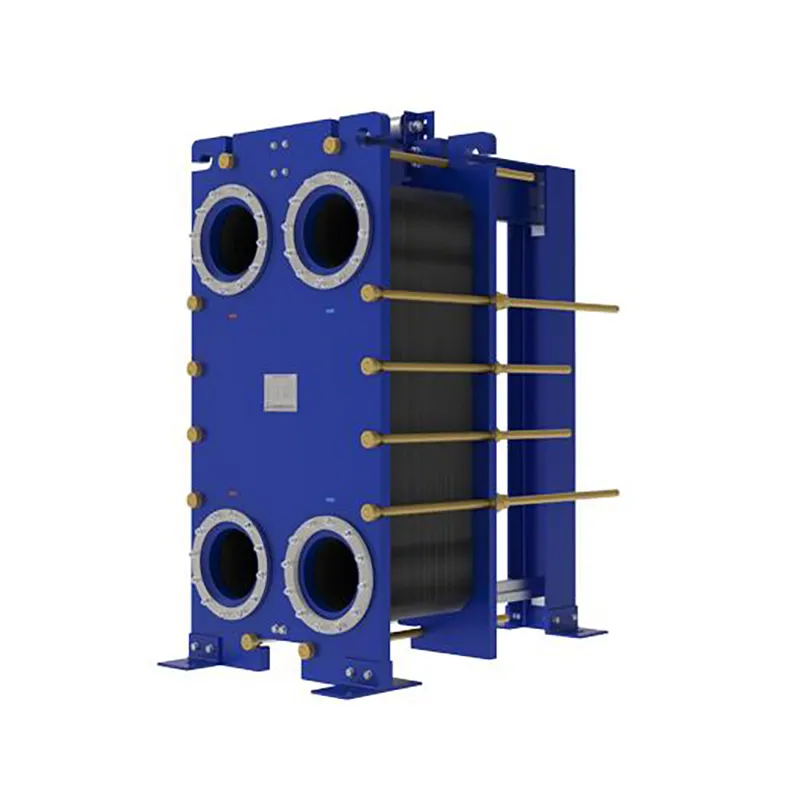
Flat-plate heat exchangers consist of a series of corrugated plates stacked together, creating alternating channels for hot and cold fluids. They offer high heat transfer coefficients and compact design, making them suitable for residential solar water heating systems. Their modular nature allows easy capacity adjustment.
Shell-and-Tube Heat Exchangers
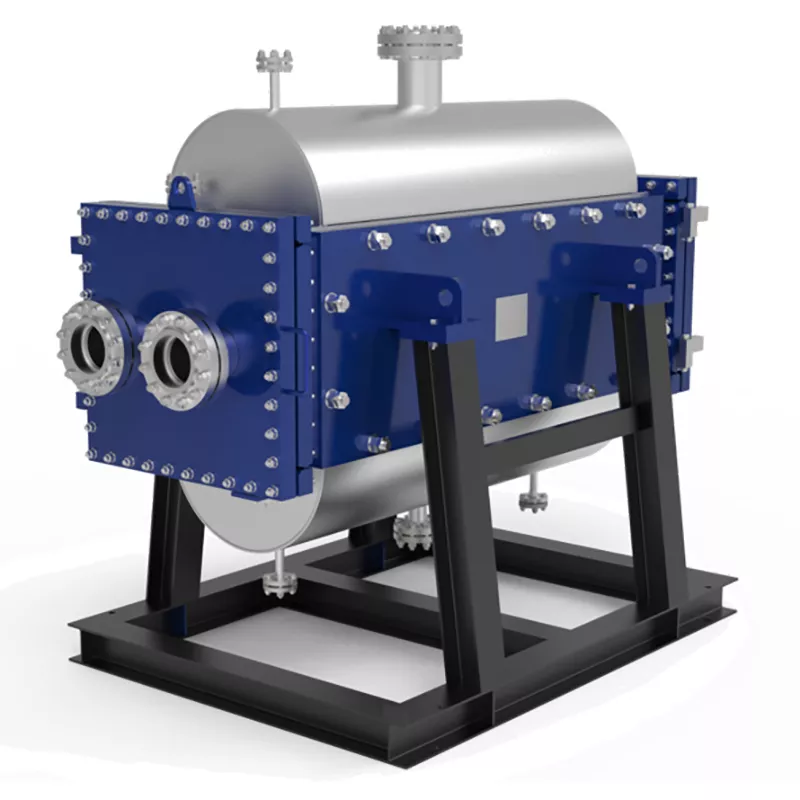
Shell-and-tube heat exchangers feature a bundle of tubes enclosed within a cylindrical shell. One fluid flows through the tubes while the other circulates around them inside the shell. They are robust and handle high pressures and temperatures, often used in large-scale solar thermal plants.
Double-Pipe Heat Exchangers
Double-pipe heat exchangers consist of one pipe placed concentrically inside another. The hot fluid flows through the inner pipe while the cold fluid flows through the annular space. They are simple, cost-effective, and ideal for small-scale or low-temperature solar thermal applications.
Heat Pipe Heat Exchangers
Heat pipe heat exchangers use sealed pipes containing a working fluid that evaporates and condenses to transfer heat. They provide passive, efficient heat transfer with minimal temperature drop, making them suitable for solar thermal systems where space is limited or where freeze protection is needed.
Plate-and-Frame Heat Exchangers
Plate-and-frame heat exchangers are similar to flat-plate types but use gaskets to seal the plates, allowing easy disassembly for cleaning. They offer high efficiency and flexibility, commonly used in solar thermal systems with corrosive fluids or where frequent maintenance is required.
Heat Transfer Mechanisms: From Solar Collectors to Storage Tanks
In solar thermal systems, heat exchangers facilitate the transfer of thermal energy from the collector loop to the storage tank. The primary mechanisms include conduction through metal walls and convection between the fluid and the heat exchanger surface. The efficiency of this process depends on factors such as surface area, temperature difference, and flow characteristics.
The collector absorbs solar radiation and heats a working fluid, typically a water-glycol mixture. This fluid then circulates through the heat exchanger, where its thermal energy is transferred to the water stored in the tank. The heat exchanger design, whether gasketed, welded, or pillow plate, influences the overall system performance and durability.
Typical Performance Parameters
| Parameter |
Value Range |
Typical Unit |
| Heat Transfer Coefficient |
300 – 1200 |
W/m²·K |
| Flow Rate (Collector Loop) |
0.02 – 0.08 |
L/s·m² |
| Temperature Difference (Inlet/Outlet) |
5 – 15 |
°C |
| Storage Tank Capacity |
150 – 500 |
Liters |
The above table summarizes typical operating ranges for key parameters in residential solar thermal systems. Actual values depend on collector type, heat exchanger design, and system configuration. For commercial applications, larger flow rates and higher temperature differentials are common.
Advanced heat exchanger technologies, such as pillow plates and wide-gap welded plate heat exchangers, are increasingly used to enhance heat transfer and reduce fouling. These designs offer improved thermal performance and reliability in demanding solar thermal applications.
Efficiency Factors and Performance Optimization in Solar Heat Exchangers
The thermal performance of solar heat exchangers depends on multiple interrelated factors. Heat transfer coefficient, surface area, and fluid flow characteristics determine the rate of energy exchange between the solar collector fluid and the working medium. Materials with high thermal conductivity, such as copper or aluminum, significantly enhance heat transfer efficiency.
Flow configuration plays a critical role in optimization. Counter-flow arrangements typically achieve higher effectiveness compared to parallel-flow designs, as they maintain a more consistent temperature gradient along the heat transfer surface. Turbulence promoters and extended surface geometries can further improve convective heat transfer coefficients.
Regular maintenance and proper fluid selection also contribute to sustained performance. Anti-freeze solutions and corrosion inhibitors protect the system while maintaining thermal properties. Advanced control strategies, including variable flow rate adjustments based on solar irradiance, enable dynamic optimization of heat exchanger operation throughout the day.
For detailed technical specifications and custom engineering solutions, explore advanced plate heat exchanger designs that maximize energy recovery in solar thermal applications.
Common Applications and System Configurations for Solar Thermal Heat Exchange
Solar thermal systems utilize heat exchangers to transfer captured solar energy to a working fluid, which then serves various heating needs. These systems are widely deployed in residential, commercial, and industrial settings, with configurations tailored to specific temperature and load requirements.
Domestic Hot Water Systems
One of the most common applications is domestic hot water (DHW) production. In a typical configuration, a solar collector heats a heat transfer fluid, which flows through a heat exchanger to warm potable water stored in a tank. This indirect system prevents freezing and scaling issues.
System configurations often include a single-tank or dual-tank setup. In a dual-tank system, a preheat tank connects to the solar loop, while a conventional water heater provides backup. Single-tank systems integrate an internal heat exchanger or an external plate heat exchanger for compactness.
Learn more about gasketed plate heat exchangers for DHW
Space Heating and Radiant Floor Systems
Solar thermal heat exchangers also support space heating, particularly in radiant floor systems. Heated fluid from solar collectors passes through a heat exchanger to transfer warmth to a lower-temperature water loop circulating under floors. This configuration maximizes efficiency by operating at moderate temperatures.
A common setup includes a buffer tank that stores solar heat and a secondary heat exchanger to isolate the collector loop from the building’s hydronic system. This design prevents contamination and allows integration with auxiliary boilers or heat pumps.
Explore pillow plate heat exchangers for radiant heating
Industrial Process Heat
In industrial applications, solar thermal systems provide preheated water or thermal oil for processes such as cleaning, drying, or chemical reactions. Heat exchangers in these systems must handle higher temperatures and pressures, often using welded or brazed plate designs for durability.
Configurations vary based on process requirements. A typical setup includes a solar collector array, a high-temperature heat exchanger, and a storage tank. The heat exchanger may be a custom-engineered unit to match specific fluid properties and flow rates.
View TP welded plate heat exchangers for industrial use
Solar Cooling and Absorption Chillers
Solar thermal energy can drive absorption chillers for air conditioning. In this configuration, a heat exchanger transfers heat from the solar loop to the chiller’s generator, where a refrigerant solution is heated to produce cooling. This application requires high-temperature collectors and efficient heat exchange.
System configurations often include a dedicated heat exchanger between the solar loop and the chiller, along with a storage tank to buffer thermal energy. Welded plate or printed circuit heat exchangers are preferred for their compactness and high heat transfer rates.
Discover printed circuit heat exchangers for solar cooling
Swimming Pool Heating
Swimming pool heating is a straightforward solar thermal application. A heat exchanger transfers heat from the solar collector fluid to the pool water, often using a plate heat exchanger for efficient heat transfer. The system typically includes a bypass valve to regulate temperature.
Configurations are simple: the pool pump circulates water through the heat exchanger, while the solar loop operates independently. Gasketed or brazed plate heat exchangers are common due to their corrosion resistance and ease of maintenance.
Check wide gap heat exchangers for pool systems
Large-Scale District Heating
District heating networks can integrate solar thermal fields with central heat exchangers. These systems use large plate heat exchangers to transfer heat from the solar loop to the district water supply, serving multiple buildings. Configurations often include multiple heat exchanger units in parallel for redundancy.
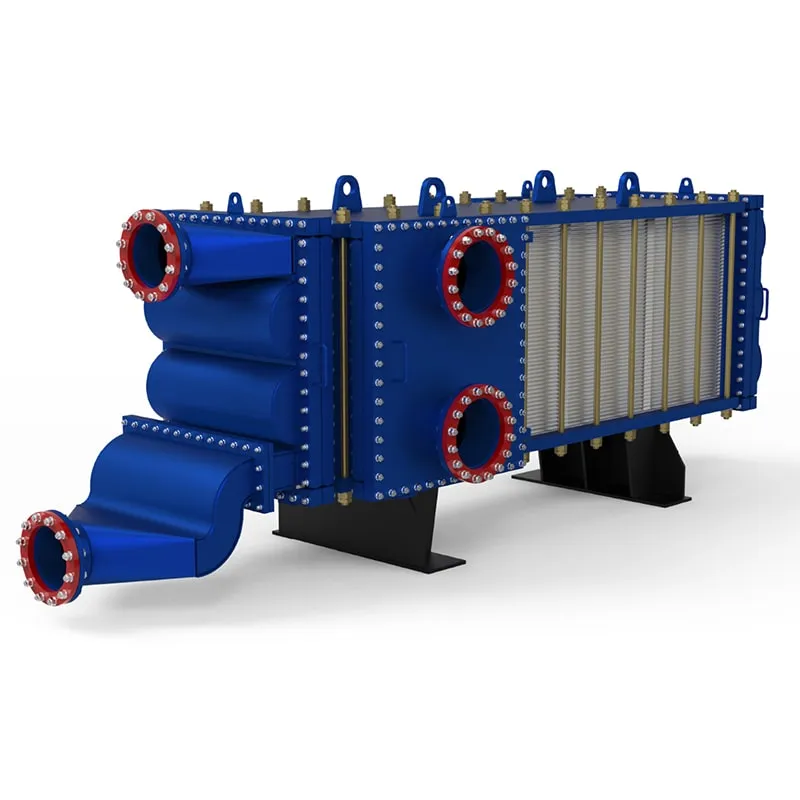
The system design may incorporate a primary solar loop, a storage tank farm, and a secondary distribution loop. Welded plate or HT-Bloc heat exchangers are selected for their ability to handle high flow rates and thermal stresses.
See HT-Bloc welded plate exchangers for district heating
System Configuration Overview
Solar thermal heat exchanger systems generally fall into two configuration types: direct and indirect. Direct systems circulate potable water through collectors, while indirect systems use a separate heat transfer fluid and a heat exchanger. Indirect systems are more common in colder climates due to freeze protection.
Key components include solar collectors, a heat exchanger, a storage tank, pumps, and controls. The heat exchanger type—gasketed, welded, or custom-engineered—depends on temperature, pressure, and fluid compatibility. Proper sizing and material selection are critical for long-term performance.
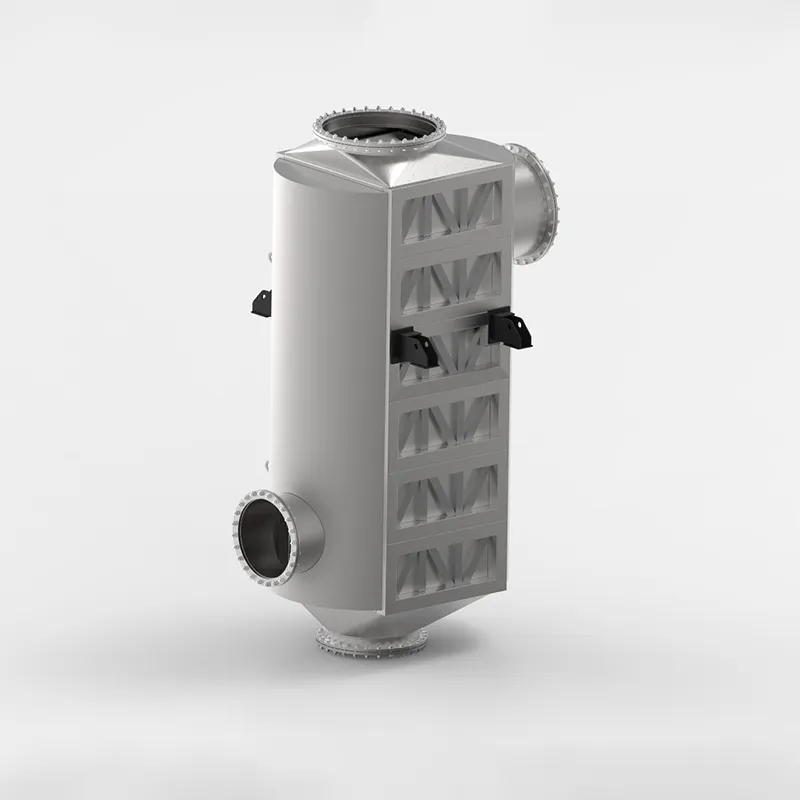
Learn about custom-engineered plate air preheaters
Summary
Heat exchangers play a critical role in solar thermal systems by transferring captured solar energy from collectors to storage tanks or distribution loops. The selection of heat exchanger type—such as shell-and-tube, plate, or double-pipe—depends on system scale, fluid properties, and efficiency requirements. Effective heat transfer relies on conduction and convection mechanisms, with performance influenced by factors like flow rate, surface area, and temperature differentials. Optimizing these parameters enhances overall system efficiency. Common applications include domestic hot water heating, space heating, and industrial process heat, with configurations ranging from direct to indirect circulation systems.
Key Takeaways
- Heat exchangers enable efficient energy transfer from solar collectors to storage.
- Common types include shell-and-tube, plate, and double-pipe designs.
- Heat transfer mechanisms rely on conduction and convection principles.
- Efficiency optimization involves flow rate, surface area, and temperature control.
- Applications range from residential water heating to industrial thermal processes.
How Do Renewable Energy Heat Exchangers Work in Solar Thermal Systems?
Heat exchangers transfer thermal energy from solar collectors to a storage fluid (e.g., water or glycol) without mixing the fluids. In a typical system, a heat-transfer fluid circulates through the collector, absorbs heat, and passes through the heat exchanger where it releases heat to the storage tank's water via conduction and convection.
The Role of Heat Exchangers in Capturing Solar Thermal Energy
Heat exchangers act as the critical interface between the solar collector loop and the storage system. They enable efficient heat capture by isolating the collector fluid (often antifreeze) from the potable water, preventing contamination while maximizing thermal transfer to the stored water for later use.
Types of Heat Exchangers Used in Solar Thermal Systems
Common types include shell-and-tube, plate, and coil-in-tank heat exchangers. Plate heat exchangers are popular for their compact size and high efficiency, while coil-in-tank designs integrate directly into storage tanks for simpler installation and reduced space requirements.
Heat Transfer Mechanisms: From Solar Collectors to Storage Tanks
Heat moves via conduction through the collector absorber plate, then by convection to the heat-transfer fluid. The fluid carries thermal energy to the heat exchanger, where conduction through the exchanger walls and convection to the storage water complete the transfer. Radiation plays a minor role in this closed loop.
Efficiency Factors and Performance Optimization in Solar Heat Exchangers
Key factors include flow rate, temperature difference, surface area, and fluid properties. Optimization involves matching flow rates to maximize turbulence (enhancing convection), using materials with high thermal conductivity (e.g., copper), and minimizing fouling through regular maintenance to sustain peak performance.
Common Applications and System Configurations for Solar Thermal Heat Exchange
Applications include domestic hot water, space heating, and pool heating. Common configurations are direct (single-loop) systems where water flows through collectors, and indirect (dual-loop) systems using a heat exchanger to separate collector fluid from storage water, which is essential in freeze-prone climates.

 English EN





User Comments
Service Experience Sharing from Real Customers
Ethan
HVAC Design EngineerFinally a heat exchanger that doesn't corrode after two seasons. We installed these in a solar thermal setup for a school district, and the efficiency gain was immediately noticeable on our monitoring dashboards. The compact design saved us a ton of space in the mechanical room too.
Maya
Energy AuditorI’ve been recommending these units for small wind-to-heat projects. The thermal response is solid, and the pressure drop is lower than I expected for the size. Only reason it’s not a 5 is because the mounting brackets could be a bit sturdier for outdoor installations. Still, great value for the price point.
Omar
Plant Operations ManagerWe swapped out our old shell-and-tube units for these plate heat exchangers in our biomass heating loop. Downtime for cleaning dropped by half, and the heat recovery rate went up about 12%. My maintenance team actually likes working on them now. No leaks after six months of continuous use.
Liam
Sustainability CoordinatorNeeded a reliable heat exchanger for a university research greenhouse that runs off geothermal loops. This one handled the variable flow like a champ. The data sheets were accurate, which is rare. Took a star off because the delivery took longer than quoted, but the product itself is top-notch.