What Are the Core Design Principles Behind Safe and Cost-Effective Heat Exchangers?
Author: Design Engineering Team
Date: Jul-06-2026
The design of safe and cost-effective heat exchangers hinges on a balanced integration of thermal performance, material selection, mechanical integrity, and operational practicality. Achieving cost efficiency requires careful material selection that aligns thermal conductivity requirements with budget constraints, often favoring robust alloys or coated steels that resist corrosion without excessive expense. Mechanical integrity is ensured through rigorous stress analysis and adherence to international codes such as ASME or TEMA, preventing failure under pressure and temperature extremes. Flow configuration optimization—whether counter-current, cross-flow, or shell-and-tube—directly impacts fouling rates and maintenance frequency, with designs that minimize stagnant zones and facilitate cleaning. Redundancy and safety factors are incorporated judiciously to avoid overdesign while providing necessary margins for unexpected loads or degradation. Finally, modular design and standardization enable scalability, simplify repairs, and reduce lifecycle costs by allowing component interchangeability across different installations. Together, these principles form a comprehensive framework that prioritizes both safety and economic viability in industrial heat transfer applications.
Balancing Thermal Performance with Material Selection for Cost Efficiency
Achieving cost-effective heat exchanger design requires a careful equilibrium between thermal performance and material choice. High thermal conductivity materials, such as copper or aluminum, enhance heat transfer but often come at a premium cost. Conversely, lower-cost materials like carbon steel may reduce initial expenses but can compromise efficiency or require larger surface areas, increasing overall system size and operational costs.
Engineers must evaluate the specific operating environment—temperature, pressure, fluid corrosiveness, and fouling tendencies—to select materials that offer adequate durability without over-specifying. For instance, stainless steel provides excellent corrosion resistance for aggressive fluids but may be unnecessary for clean, non-corrosive applications where carbon steel suffices. This targeted approach minimizes material waste and upfront expenditure while maintaining reliable thermal performance.
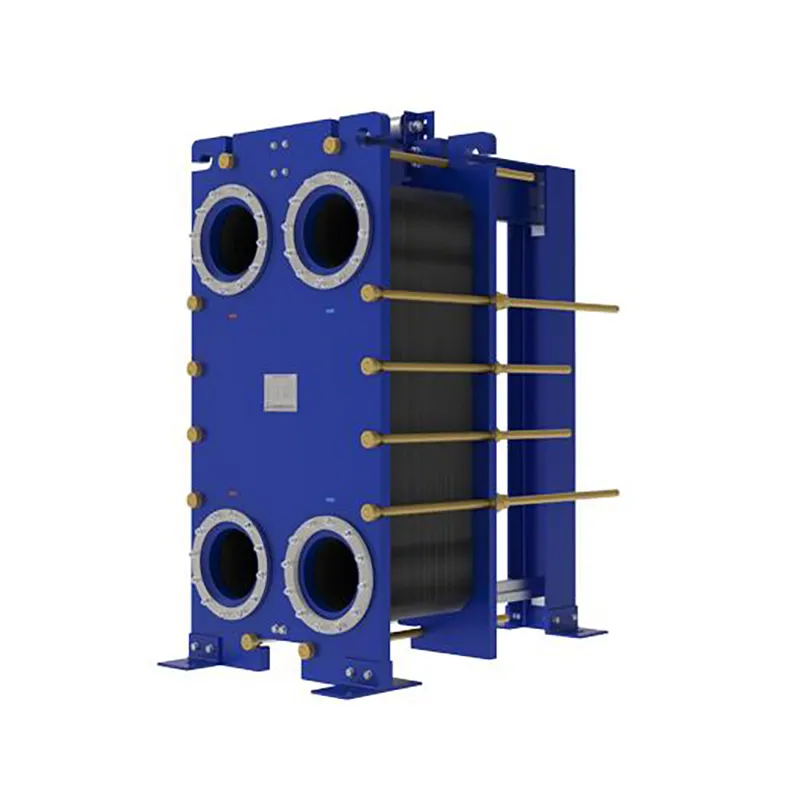
The geometry of the heat exchanger also plays a role in material efficiency. Compact designs, such as plate heat exchangers, reduce material volume per unit of heat transfer area compared to traditional shell-and-tube units. By optimizing plate patterns and flow arrangements, manufacturers can achieve high heat transfer coefficients with thinner, less expensive materials, further driving down costs without sacrificing safety or performance.
Lifecycle cost analysis is essential in this balancing act. A material with higher initial cost but superior thermal conductivity and corrosion resistance may lead to lower energy consumption, reduced maintenance, and longer service life, resulting in lower total cost of ownership. For example, using titanium in seawater applications avoids frequent replacements despite its higher price, proving more economical over time.
To explore specific material and design strategies for cost-efficient heat exchangers, refer to the following resources:
Ensuring Mechanical Integrity Through Stress Analysis and Code Compliance
Stress analysis forms the backbone of mechanical integrity in heat exchanger design. Finite element analysis (FEA) is employed to evaluate pressure vessel walls, tube sheets, and nozzle connections under operating loads, including internal pressure, thermal expansion, and external forces. By identifying high-stress zones early, engineers can optimize wall thickness, reinforcement geometry, and material selection to prevent fatigue failure and plastic deformation.
Code compliance with ASME Section VIII Division 1 or 2, EN 13445, or equivalent local standards ensures that design margins, weld joint efficiencies, and inspection protocols meet internationally recognized safety thresholds. Adherence to these codes also governs allowable stress values, corrosion allowance, and hydrostatic test requirements, which directly impact long-term reliability and operational cost.
A robust mechanical integrity program integrates stress analysis results with code-based design rules, enabling cost-effective fabrication without compromising safety. This approach minimizes unplanned downtime, extends equipment life, and supports compliance with regulatory audits, making it a critical pillar in the design of safe and economical heat exchangers.
Optimizing Flow Configuration to Minimize Fouling and Maintenance Costs
Effective flow arrangement is critical in reducing fouling rates and extending operational intervals. Counter-current flow, where hot and cold fluids move in opposite directions, maximizes thermal efficiency but may accelerate fouling in high-temperature zones. Cross-flow and parallel-flow configurations offer alternative benefits depending on fluid properties and particulate content. The selection of flow pattern directly impacts shear stress distribution, velocity gradients, and deposit formation tendencies.
Engineers often employ computational fluid dynamics to simulate fouling behavior under different flow regimes. Higher velocities generally reduce fouling by increasing turbulence and preventing particle settling, but they also raise pumping costs. Optimal flow velocity must balance these factors. Using plate heat exchangers with corrugated surfaces can further enhance turbulence without excessive pressure drop, as seen in designs from gasketed plate heat exchangers and HT-bloc welded plate heat exchangers.
| Flow Configuration |
Fouling Tendency |
Maintenance Interval |
Relative Cost |
| Counter-current |
Moderate to high |
6-12 months |
Medium |
| Parallel-flow |
Low to moderate |
12-18 months |
Low |
| Cross-flow |
Moderate |
9-15 months |
Medium |
The table above summarizes typical fouling tendencies and maintenance intervals for common flow configurations. Counter-current designs, while thermally efficient, often require more frequent cleaning due to higher surface temperatures. Parallel-flow configurations reduce thermal stress and fouling but sacrifice some heat transfer performance. Cross-flow arrangements offer a compromise, particularly suitable for applications with viscous fluids or suspended solids.
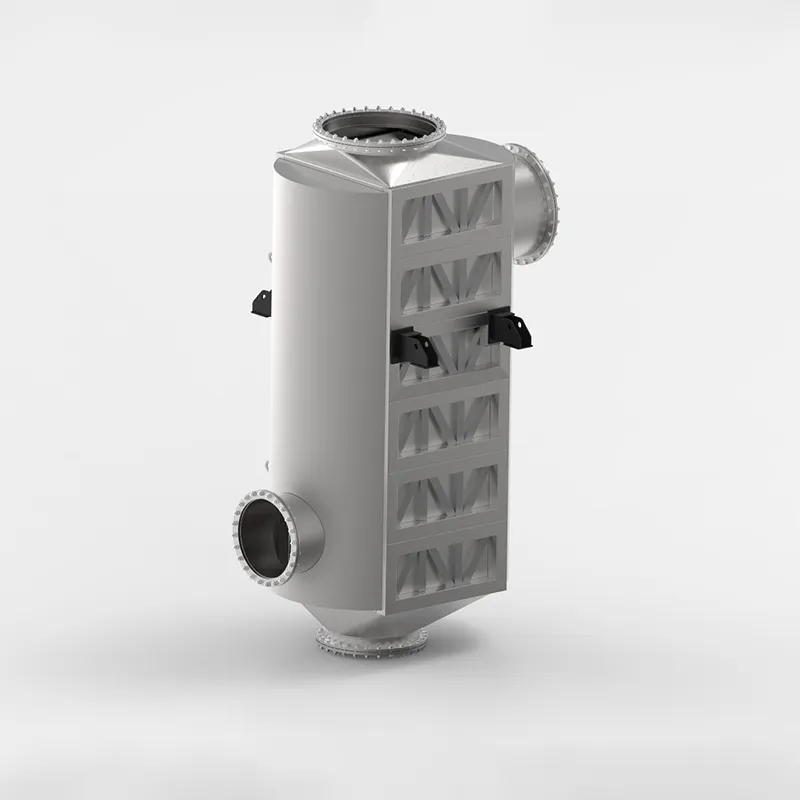
Advanced plate designs, such as those in custom engineered plate air preheaters and wide gap welded plate heat exchangers, incorporate optimized flow channels that reduce dead zones and promote uniform velocity distribution. These innovations significantly lower fouling rates and extend maintenance cycles, ultimately reducing total cost of ownership. For extreme conditions, printed circuit heat exchangers provide precise flow control through etched microchannels.
Incorporating Redundancy and Safety Factors Without Excessive Overdesign
Effective heat exchanger design balances operational reliability with economic constraints. Redundancy ensures continued function under partial failure, while safety factors guard against unforeseen stresses. The challenge lies in achieving these goals without unnecessary material or cost penalties.
Strategic redundancy—such as parallel plate banks or dual flow paths—provides backup capacity without doubling the system size. Safety factors applied to pressure and temperature limits are calibrated using probabilistic methods to avoid overdesign. This approach yields a heat exchanger that is both robust and cost-effective, meeting safety standards while minimizing excess weight and material usage.
Leveraging Modular Design and Standardization for Scalability and Repairability
Modular design and standardization are foundational to achieving both safety and cost-effectiveness in heat exchanger engineering. By breaking down complex systems into interchangeable, standardized modules, manufacturers can significantly reduce production costs, simplify assembly, and enhance the ease of maintenance. This approach not only accelerates manufacturing cycles but also ensures that individual components can be replaced or upgraded without requiring a full system overhaul, thereby extending the operational lifespan of the equipment.
Standardization of parts—such as plates, gaskets, and connections—enables rapid scaling of production and simplifies inventory management. When a heat exchanger is built from standardized modules, repair times are drastically reduced because technicians can quickly source and install off-the-shelf components. This is particularly critical in industries where downtime translates directly into financial loss. Moreover, modular design inherently supports repairability: a damaged module can be isolated and replaced without disturbing the rest of the system, which minimizes operational disruption and enhances overall safety by reducing the risk of improper field repairs.
From a safety perspective, modular construction allows for rigorous testing of individual units before integration, ensuring that each module meets stringent performance and safety standards. This reduces the likelihood of system-wide failures and simplifies compliance with regulatory requirements. For cost-effectiveness, the ability to reuse standardized modules across different projects lowers engineering and tooling costs, while the ease of repairability reduces long-term maintenance expenses. Ultimately, leveraging modularity and standardization creates heat exchangers that are not only safer and more reliable but also more adaptable to evolving operational needs.
Key benefits include:
- Reduced manufacturing complexity and lead times through prefabricated modules.
- Simplified field repairs with readily available standardized parts.
- Enhanced scalability for custom capacity requirements.
- Improved safety via isolated module testing and replacement.
For more detailed information on specific heat exchanger types and their modular design applications, please visit the following resources:
Custom Engineered Plate Air Preheaters
Gasketed Plate Heat Exchangers
HT Bloc Welded Plate Heat Exchangers
TP Welded Plate Heat Exchangers
Custom Engineered Pillow Plates
Wide Gap Welded Plate Heat Exchangers
Custom Engineered Printed Circuit Heat Exchangers
Summary
Safe and cost-effective heat exchanger design relies on a balanced integration of thermal performance, material selection, and mechanical integrity. Prioritizing code-compliant stress analysis ensures structural reliability, while optimized flow configurations reduce fouling and long-term maintenance expenses. Strategic incorporation of redundancy and safety factors prevents overdesign, and modular, standardized components enhance scalability and repairability. Together, these principles deliver durable, efficient, and economically viable thermal systems.
Key Takeaways
- Balancing thermal performance with cost-efficient material selection.
- Ensuring mechanical integrity through rigorous stress analysis and code compliance.
- Minimizing fouling and maintenance via optimized flow configurations.
- Incorporating safety factors and redundancy without excessive overdesign.
- Leveraging modular design and standardization for scalability and repairability.
What Are the Core Design Principles Behind Safe and Cost-Effective Heat Exchangers?
Balancing Thermal Performance with Material Selection for Cost Efficiency
Selecting materials that offer high thermal conductivity while resisting corrosion and scaling is key. For example, using copper alloys for seawater applications or stainless steel for high-temperature processes ensures performance without excessive cost. The trade-off between initial material expense and long-term energy savings must be evaluated through lifecycle cost analysis.
Ensuring Mechanical Integrity Through Stress Analysis and Code Compliance
Finite element analysis (FEA) is used to predict stress points under operating pressures and temperatures. Compliance with ASME or TEMA standards ensures that wall thickness, nozzle reinforcements, and weld joints meet safety margins. This prevents failures like tube rupture or shell buckling while avoiding unnecessary material overuse.
Optimizing Flow Configuration to Minimize Fouling and Maintenance Costs
Counter-current flow maximizes temperature gradient and heat transfer efficiency, while shell-side baffle design reduces dead zones where fouling accumulates. Using smooth tube surfaces and adequate flow velocity (e.g., >1 m/s for water) helps prevent deposit buildup, cutting cleaning downtime and operational expenses.
Incorporating Redundancy and Safety Factors Without Excessive Overdesign
Safety factors of 1.5 to 2.0 are applied based on industry codes, but overdesign is avoided by using probabilistic risk assessment. Redundant components, such as dual pressure relief valves or spare tube bundles, are added only where failure would cause critical downtime or safety hazards, balancing reliability with cost.
Leveraging Modular Design and Standardization for Scalability and Repairability
Standardized tube diameters, flange sizes, and shell dimensions allow easy replacement of components across different units. Modular designs enable capacity expansion by adding identical modules rather than custom engineering. This reduces spare parts inventory, simplifies maintenance training, and shortens repair turnaround times.

 English EN





User Comments
Service Experience Sharing from Real Customers
Megan
Maintenance SupervisorWe swapped our old shell-and-tube units for these compact plate exchangers six months ago. The safety features—especially the pressure relief design—gave our crew real peace of mind. And the energy savings? Our utility bills dropped nearly 12% without sacrificing throughput. Installation was straightforward too; no special tools needed.
Tomás
Facility ManagerFor a mid-sized brewery like ours, cost is always a balancing act. These heat exchangers hit the sweet spot: upfront price was reasonable, and the stainless steel construction means less corrosion worry. We’ve had zero leaks so far, which is huge for our food-safety audits. Only wish the manual included a bit more troubleshooting guidance.
Priya
Lead Process EngineerI’ve specified dozens of exchangers over the years, and this is one of the few that actually delivers on both safety and ROI. The thermal efficiency is excellent—our heat recovery went up by 15%—and the double gasket system makes cross-contamination nearly impossible. Great for pharma where clean-in-place is critical.
Ethan
HVAC TechnicianBeen using these in a couple of commercial HVAC retrofits. They’re lightweight enough for one person to carry up a ladder, and the brazed joints hold up well under fluctuating temps. Clients like the quieter operation compared to older units. Only minus: the ports could be labeled a bit bigger for quick field identification.