How Does a Plate and Shell Heat Exchanger Work and Where Is It Used?
John Smith
Jul-06-2026
A plate and shell heat exchanger combines the high thermal efficiency of plate heat exchangers with the robust pressure and temperature capabilities of shell-and-tube designs. It consists of a cylindrical shell housing a stack of corrugated plates, which create narrow channels for two fluids to flow in counter-current or co-current directions. Heat transfer occurs through the thin metal plates without direct fluid contact, enabling rapid thermal exchange in a compact footprint. This design offers up to five times higher heat transfer coefficients than conventional shell-and-tube units, while requiring less space and material. Typical applications include chemical processing, oil refining, power generation, HVAC systems, food and beverage production, and pharmaceutical manufacturing, where efficient heating, cooling, condensation, or evaporation is critical. Despite its advantages, the unit requires careful maintenance to prevent fouling and scaling on plate surfaces, and gasket integrity must be regularly inspected to avoid leakage under high pressure or thermal cycling. Proper operational monitoring ensures long service life and consistent performance across demanding industrial environments.
The Core Structure: Understanding the Plates and Shell Configuration
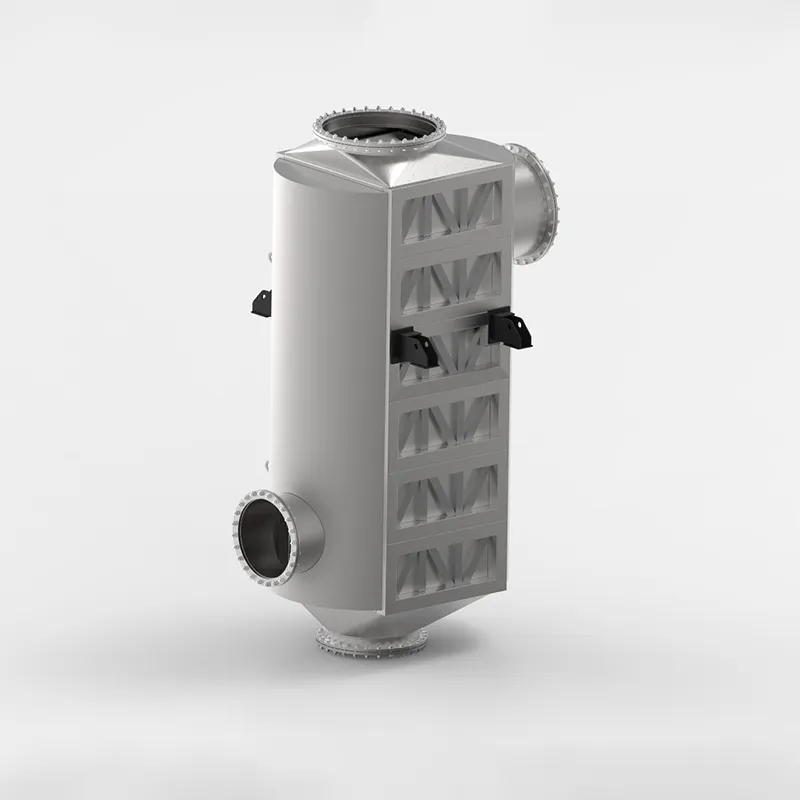
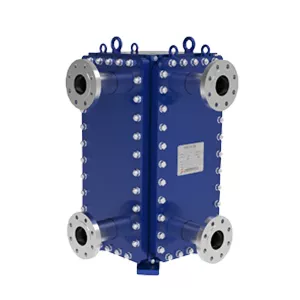
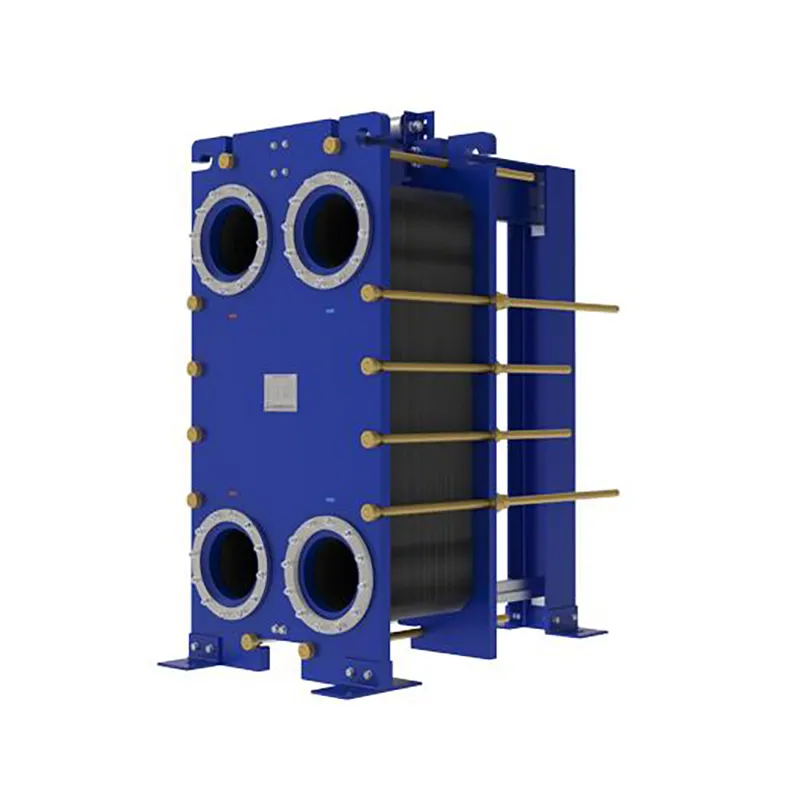
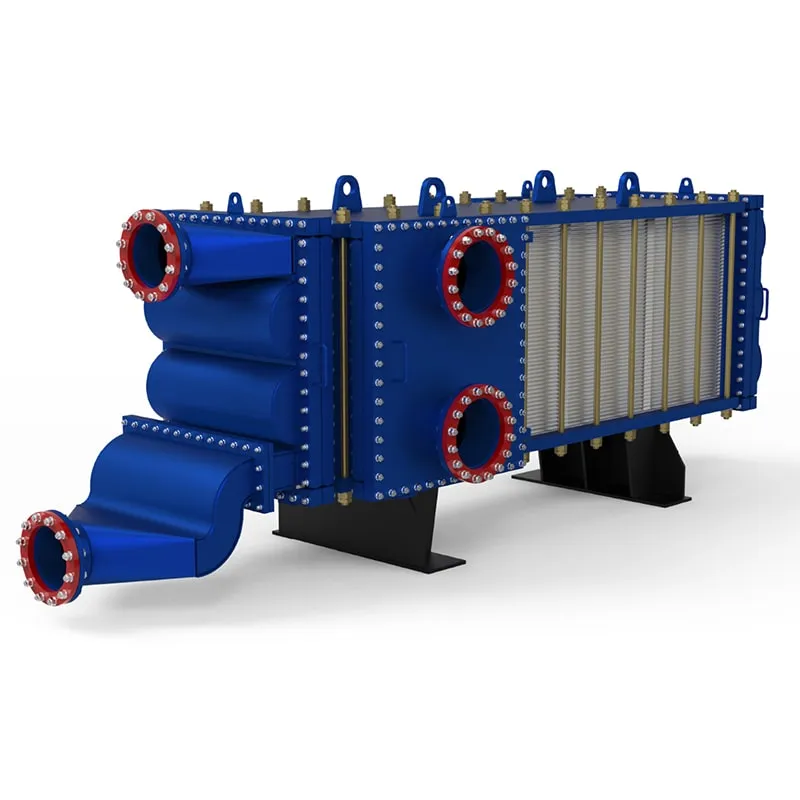
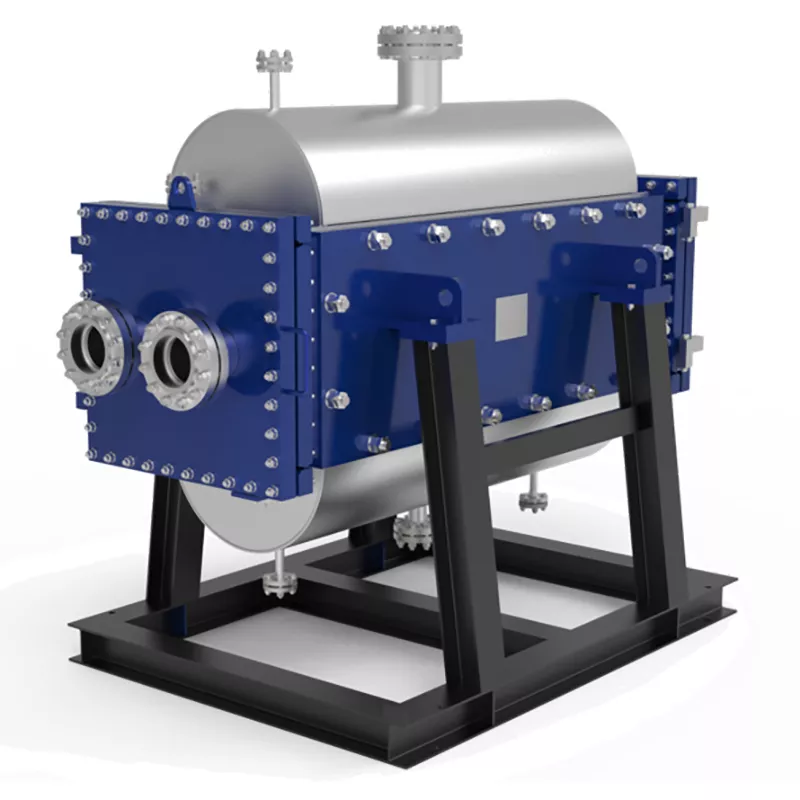
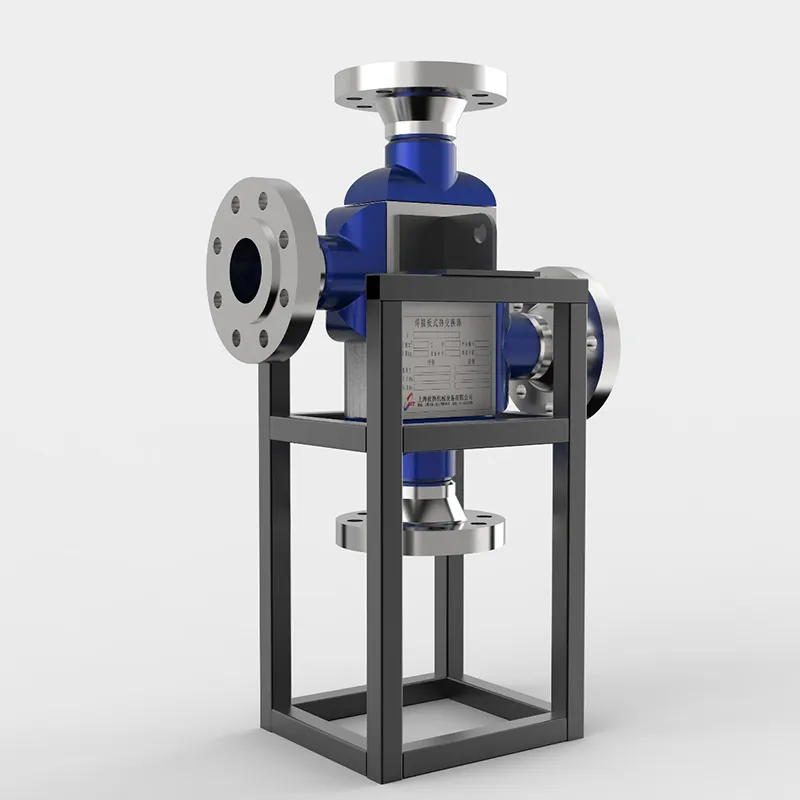
A plate and shell heat exchanger combines a cylindrical shell with a stack of corrugated plates, creating a compact yet robust design. The plates are arranged in a pack, sealed by gaskets or welded joints, and housed inside the shell. This configuration allows two fluids to flow in alternating channels—one through the plate gaps and the other around the shell side—maximizing thermal contact without mixing.
The shell provides structural integrity and contains the fluid pressure, while the plates offer a large surface area for efficient heat transfer. The plate pattern induces turbulence, reducing fouling and enhancing performance. This design is particularly effective for high-pressure and high-temperature applications, as the shell supports the plate stack against mechanical stress.
Key components include the inlet and outlet nozzles on the shell, the plate pack with flow distribution zones, and the tie bolts that compress the plates. The configuration can be customized for single-pass or multi-pass flow, adapting to specific heating or cooling duties. Industries such as chemical processing, oil and gas, and power generation rely on this structure for its durability and thermal efficiency.
For detailed product specifications and applications, visit: Plate Air Preheaters, HT Bloc Welded Plate Heat Exchanger, TP Welded Plate Heat Exchanger, Wide Gap Welded Plate Heat Exchanger, Pillow Plates, Gasketed Plate Heat Exchangers, Printed Circuit Heat Exchanger.
The Working Principle: Heat Transfer Between Two Fluids
In a plate and shell heat exchanger, the core mechanism involves two separate fluid streams flowing through alternating channels. One fluid passes through the plate pack while the other circulates around the plates inside the shell. The thin metal plates, typically made of stainless steel or titanium, facilitate rapid thermal conduction without mixing the fluids.
The design maximizes surface area contact between the two media. As the hot fluid transfers its thermal energy to the cooler fluid across the plate walls, the temperature of the hot stream decreases while the cold stream heats up. This counter-current or co-current flow arrangement ensures efficient heat recovery in industrial processes.
Key to its operation is the welded or gasketed plate construction that creates distinct flow passages. The shell surrounds the plate bundle, directing one fluid across the plate surfaces while the other flows internally. This configuration handles high pressures and temperatures, making it suitable for demanding thermal duties where traditional shell-and-tube designs may fall short.
Key Advantages: High Efficiency and Compact Design
Plate and shell heat exchangers combine the high thermal performance of plate technology with the pressure-bearing capability of a shell. Their corrugated plates create intense turbulence, significantly improving heat transfer coefficients while requiring less space than traditional shell-and-tube units.
The compact welded plate core eliminates gaskets, reducing leakage risks and maintenance needs. This design allows for close temperature approaches and high thermal recovery, making it ideal for demanding industrial processes where efficiency and footprint are critical.
| Parameter |
Plate & Shell |
Shell & Tube |
| Heat Transfer Coefficient (W/m²K) |
3000 – 7000 |
500 – 1500 |
| Footprint (relative) |
30 – 50% |
100% |
| Maximum Operating Pressure (bar) |
Up to 100 |
Up to 100 |
| Temperature Approach (°C) |
1 – 3 |
5 – 10 |
The table above highlights the superior thermal performance and space savings of plate and shell technology. With heat transfer coefficients up to five times higher than conventional shell-and-tube exchangers, these units deliver exceptional efficiency in a compact form.
Typical applications include chemical processing, oil & gas, power generation, and HVAC systems. For more detailed product information, please visit our custom engineered plate air preheaters or HT Bloc welded plate heat exchanger pages.
Common Industrial Applications: From Chemical Processing to Power Generation
Plate and shell heat exchangers are widely utilized across multiple industries due to their high thermal efficiency, compact design, and ability to handle demanding operating conditions. In chemical processing, they are essential for heating, cooling, and condensing aggressive fluids, ensuring precise temperature control during reactions and distillation. Their welded construction eliminates gasket failure risks, making them suitable for toxic or corrosive media.
In the power generation sector, these exchangers serve in steam condensing, turbine cooling, and waste heat recovery systems. They withstand high pressures and temperatures, contributing to improved plant efficiency. Other key applications include oil and gas processing, where they handle hydrocarbon streams, and pharmaceutical manufacturing, where hygienic design and cleanability are critical. Their versatility also extends to HVAC systems, refrigeration, and renewable energy plants, proving their value from chemical reactors to power turbines.
Maintenance Considerations and Operational Challenges
Plate and shell heat exchangers require regular inspection of gaskets and welded joints to prevent leakage. The compact design can make internal cleaning difficult, especially when fouling occurs. Operators must monitor pressure drops and temperature differentials to detect early signs of scaling or blockage.
Thermal stress from rapid temperature changes may cause material fatigue over time. Corrosion resistance depends on the fluid composition, so material selection is critical. For aggressive media, custom-engineered pillow plates offer enhanced durability. Similarly, wide-gap welded plate heat exchangers handle viscous fluids with reduced clogging risks.
Common Operational Issues
Fouling from particulate matter or scaling reduces thermal efficiency. Chemical cleaning or mechanical brushing may be required, but accessibility is limited. Vibration from high flow rates can loosen connections, necessitating robust support structures. For high-pressure applications, HT-bloc welded plate heat exchangers provide improved leak resistance.
Thermal cycling causes expansion and contraction, stressing welds and gaskets. Regular torque checks on bolted joints are essential. In systems with corrosive fluids, pitting or stress corrosion cracking may develop. Printed circuit heat exchangers offer alternative solutions for chemically aggressive environments.
Inspection and Cleaning Protocols
Non-destructive testing methods like ultrasonic or dye penetrant inspection detect cracks in welds. For gasketed units, visual checks for seal degradation are necessary. Cleaning intervals depend on fluid quality; some systems require quarterly maintenance. Gasketed plate heat exchangers allow easier disassembly for manual cleaning compared to fully welded designs.
In fouling-prone applications, installing strainers or filters upstream reduces particle ingress. For high-temperature duties, custom-engineered plate air preheaters incorporate features to mitigate thermal fatigue. Regular log keeping of performance metrics helps schedule proactive maintenance.
Spare Parts and Repair Strategies
Critical spare parts include gaskets, sealing rings, and replacement plates. For welded units, repair requires specialized welding techniques. TP welded plate heat exchangers offer modular plate replacement options, reducing downtime. Stocking common sizes of gaskets and plates is recommended for rapid response.
Operators should train staff on proper disassembly and reassembly procedures to avoid damage. For complex systems, partnering with the manufacturer for annual service contracts ensures compliance with operational limits. Custom-engineered pillow plates often come with detailed maintenance manuals tailored to specific process conditions.
Summary
The plate and shell heat exchanger combines a corrugated plate pack with a cylindrical shell, enabling efficient heat transfer between two fluids through alternating channels. Its compact design and high thermal performance make it suitable for demanding industrial applications.
Core Structure
The unit consists of a series of corrugated plates housed inside a pressure vessel shell. Plates are arranged in pairs to create separate flow passages for hot and cold fluids, with gaskets or welded seals preventing cross-contamination.
Working Principle
Heat transfer occurs as the hot fluid flows through one set of plate channels while the cold fluid flows counter-currently through adjacent channels. The corrugated surfaces induce turbulence, enhancing heat transfer coefficients and reducing fouling.
Key Advantages
High thermal efficiency due to turbulent flow, compact footprint compared to shell-and-tube designs, easy maintenance through plate access, and ability to handle high pressures and temperatures with proper material selection.
Industrial Applications
Commonly used in chemical processing, oil refining, power generation, HVAC systems, food and beverage production, and pharmaceutical manufacturing where efficient heat recovery or precise temperature control is required.
Maintenance & Challenges
Regular inspection of gaskets and plate surfaces is necessary to prevent leaks and fouling. Challenges include managing thermal stresses during start-up/shutdown, ensuring proper flow distribution, and addressing potential corrosion in aggressive chemical environments.
The plate and shell design offers a robust solution for applications requiring high heat transfer rates within limited space, balancing performance with operational reliability.
How Does a Plate and Shell Heat Exchanger Work and Where Is It Used?
Q: What is the core structure of this exchanger?
A: The core structure combines a cylindrical shell with a plate bundle inside. Plates are stacked and sealed, creating separate channels for two fluids. The shell encloses the plates, directing flow and withstanding pressure.
Q: How does heat transfer occur between two fluids?
A: One fluid flows through the plate channels, the other through the shell side around the plates. Heat passes from the hotter fluid through the thin plate walls to the cooler fluid, without mixing.
Q: What are the key advantages of this design?
A: High thermal efficiency due to turbulent flow over plates, and compact size relative to traditional shell-and-tube units. It also handles high pressures and temperatures well.
Q: Where is it commonly used in industry?
A: Applications range from chemical processing, oil refining, and pharmaceutical production to power generation, HVAC, and food processing.
Q: What maintenance challenges exist?
A: Plate fouling can reduce efficiency, requiring periodic cleaning. Gasket degradation may cause leaks, and accessing the plate bundle for inspection can be labor-intensive.

 English EN





User Comments
Service Experience Sharing from Real Customers
Ethan
Process EngineerWe installed this plate and shell unit for a tricky ammonia cooling loop, and it’s been a beast. Handles the high pressure swings without any leaks, and the thermal performance is spot on. Maintenance is way simpler than the old shell-and-tube we had.
Maya
Plant SupervisorHad some initial doubts about the plate-and-shell design for our dairy pasteurization, but after six months of daily CIP cycles, no fouling issues and the heat recovery is solid. Only wish the gasket replacement was a bit quicker, but overall a good buy.
Liam
HVAC TechnicianSwapped out a failing brazed plate heat exchanger in a large office building’s chiller system. This plate and shell model is much more robust—no more vibration problems, and the efficiency bump actually lowered our energy bill noticeably. Easy to service too.
Chloe
Senior Maintenance ManagerWe run a pharmaceutical batch reactor that needs precise temperature control and zero cross-contamination risk. This heat exchanger delivers on both fronts. The compact footprint saved us floor space, and the plate pack is surprisingly easy to inspect. Took a star off only because the initial cost was a bit steep, but it’s paying off in reliability.