What Are the Key Design Features of a Shell & Plate Heat Exchanger and How Do They Improve Thermal Performance?
Author: Thermal Engineering Research Group
Date: Jul-06-2026
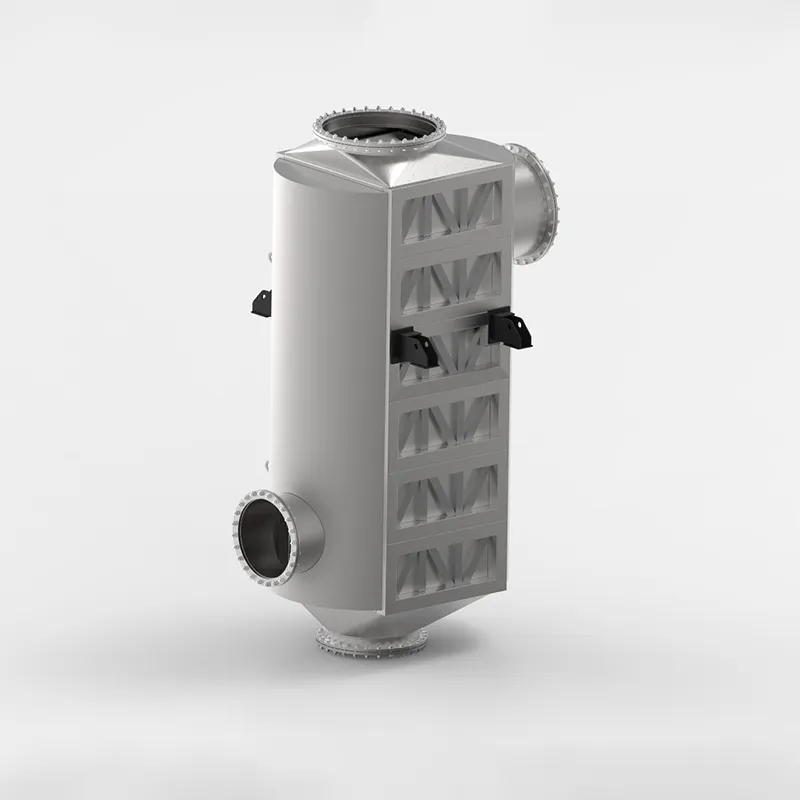
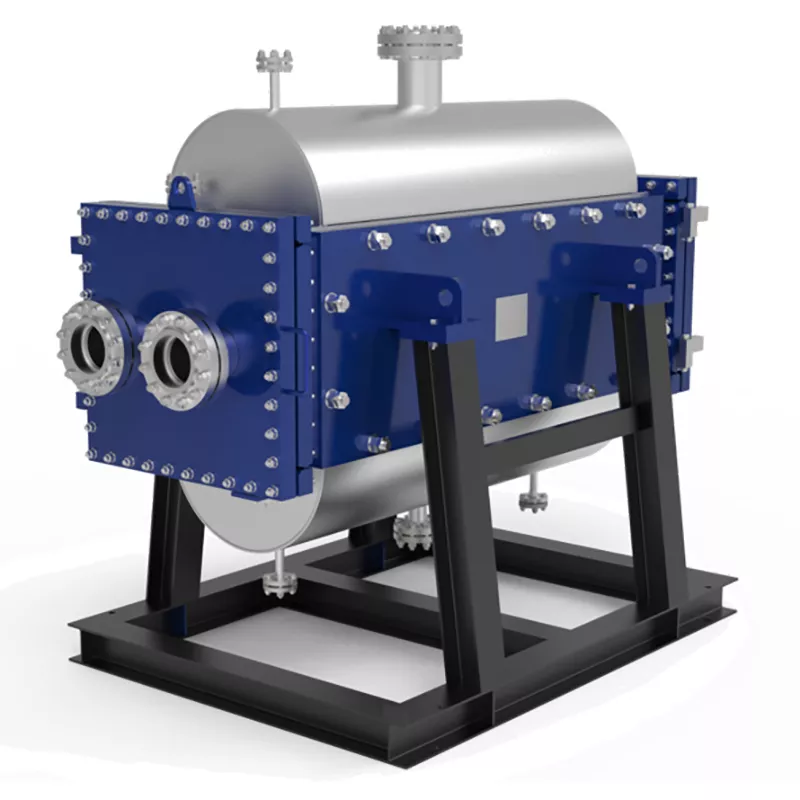
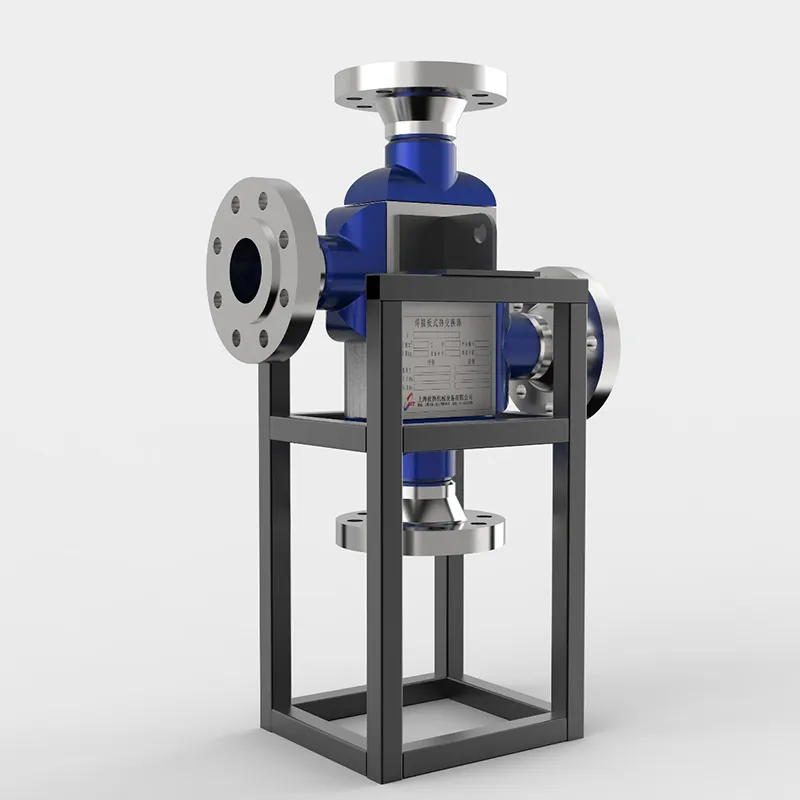
The shell and plate heat exchanger incorporates a unique plate-and-shell geometry that induces high turbulence and significantly enhances the heat transfer coefficient compared to conventional designs. Its counter-current flow arrangement maximizes the temperature differential between fluids, directly boosting thermal efficiency. Corrugated or chevron plate patterns further increase the effective surface area and promote fluid mixing, which intensifies heat exchange. The compact design reduces fluid hold-up volume, enabling rapid thermal response and substantial energy savings. Advanced material selection and sealing technologies minimize leakage risks and maintain consistent thermal performance even under high-pressure conditions. Together, these features make the shell and plate heat exchanger a highly efficient and reliable solution for demanding industrial thermal management applications, offering superior performance in a smaller footprint with lower operational costs.
1. The Unique Plate-and-Shell Geometry and Its Role in Enhancing Turbulence and Heat Transfer Coefficient
The shell and plate heat exchanger employs a distinctive geometry where corrugated plate bundles are enclosed within a cylindrical shell. This configuration fundamentally alters fluid flow behavior compared to traditional shell-and-tube designs. The narrow, tortuous channels formed between adjacent plates force the fluid into continuous directional changes, promoting high turbulence even at low flow velocities. This turbulence disrupts the thermal boundary layer on the plate surfaces, significantly increasing the convective heat transfer coefficient. The enhanced mixing ensures that temperature gradients are steeper, allowing more efficient thermal energy exchange per unit area.
The plate geometry also creates a fully developed turbulent flow regime across the entire heat transfer surface, eliminating stagnant zones that often reduce performance in conventional designs. The chevron or herringbone patterns on the plates induce secondary flows and vortex shedding, which further intensify local heat transfer. As a result, the overall heat transfer coefficient in a shell and plate unit can be three to five times higher than that of a comparable shell-and-tube exchanger. This geometric advantage directly translates to reduced surface area requirements and more compact equipment footprints.
For applications requiring high thermal performance, the plate-and-shell geometry offers a superior solution. The combination of turbulent flow and extended surface area from the corrugations ensures that heat is transferred rapidly and uniformly. Engineers can optimize the plate spacing and angle to match specific process conditions, further fine-tuning the turbulence intensity. This design flexibility makes the shell and plate heat exchanger particularly effective for viscous fluids, fouling services, and duties with close temperature approaches. To explore related engineered solutions, refer to
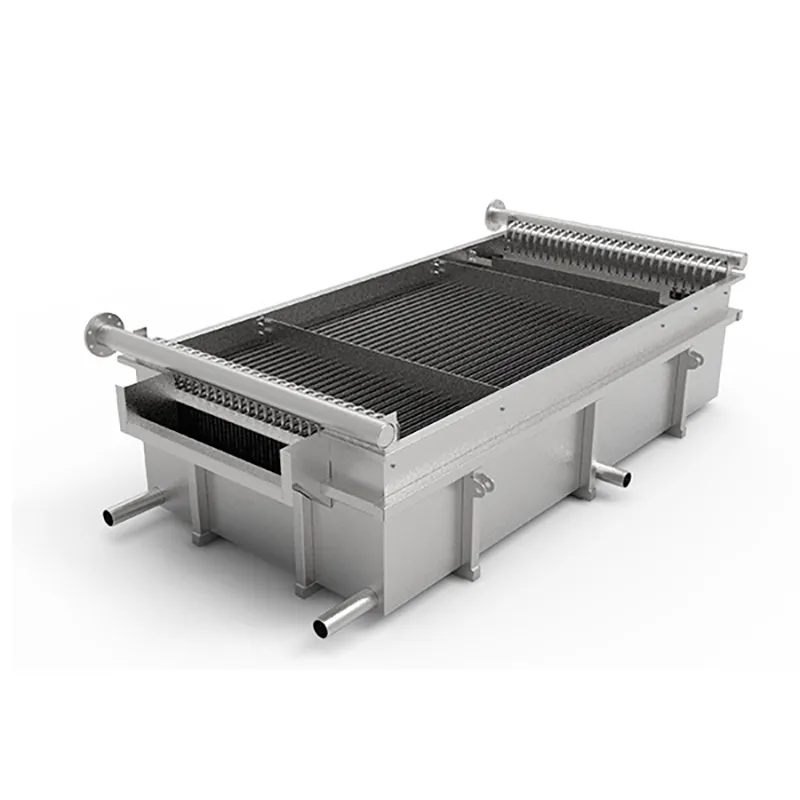
custom plate air preheaters or
pillow plate designs.
Additional performance gains are realized through the elimination of bypass flow paths. In a shell and plate exchanger, the plate pack is tightly sealed within the shell, forcing all fluid to pass through the corrugated channels. This maximizes the effective heat transfer area and ensures that no fluid shortcuts around the heating surfaces. The resulting improvement in thermal performance is especially pronounced in applications with low allowable pressure drops, where maintaining high velocity and turbulence is challenging. The geometry inherently balances hydraulic resistance with thermal enhancement, delivering a robust and efficient heat transfer solution.
The plate-and-shell geometry also facilitates multi-pass arrangements and countercurrent flow patterns, which further elevate the logarithmic mean temperature difference (LMTD). By arranging the plates to guide the shell-side and plate-side fluids in opposite directions, the temperature driving force is maximized. This, combined with the high heat transfer coefficients from turbulence, allows the exchanger to achieve thermal effectiveness approaching 95% or higher. For further insights into advanced plate exchanger configurations, see
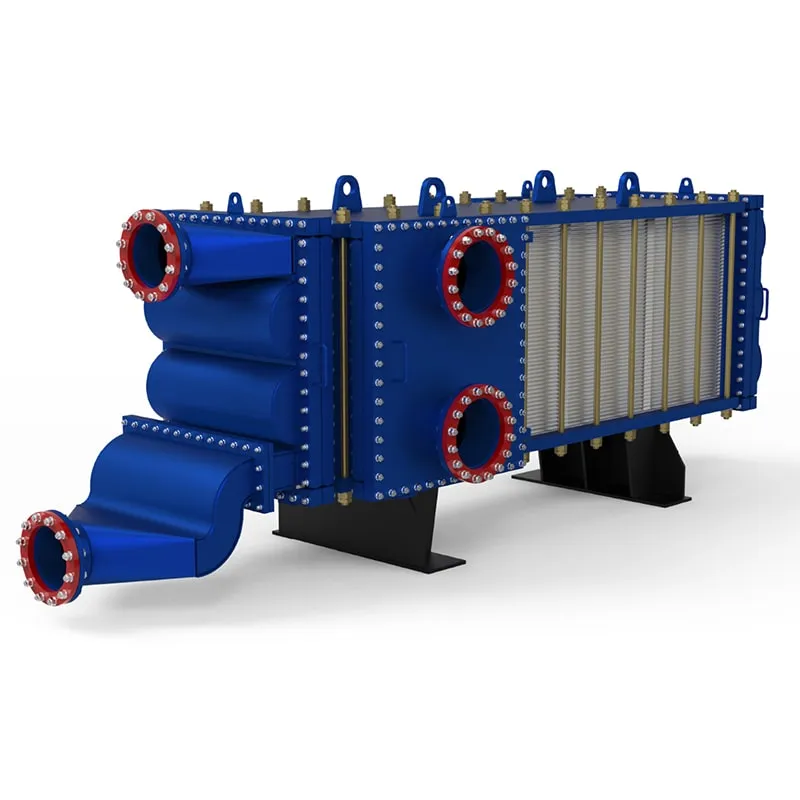
gasketed plate heat exchangers and
wide gap welded plate units.
2. Counter-Current Flow Arrangement and Its Impact on Maximizing Temperature Differential and Thermal Efficiency
In a shell and plate heat exchanger, the counter-current flow arrangement positions the hot and cold fluid streams to move in opposite directions. This design allows the outlet temperature of the cold fluid to approach the inlet temperature of the hot fluid, significantly increasing the logarithmic mean temperature difference (LMTD). A higher LMTD directly enhances the heat transfer driving force, enabling more thermal energy to be exchanged per unit area.
By maintaining a consistent temperature gradient along the entire heat transfer surface, counter-current flow minimizes thermal pinch points and reduces the required surface area for a given duty. This results in higher thermal efficiency, lower material costs, and more compact exchanger designs. The arrangement also improves temperature cross capabilities, making it ideal for applications requiring close approach temperatures and high heat recovery rates.
Key benefits include:
- Maximized temperature differential between fluids
- Enhanced thermal efficiency and heat transfer rates
- Reduced heat exchanger size and weight for same duty
- Ability to achieve closer approach temperatures
3. The Use of Corrugated or Chevron Plate Patterns to Increase Effective Surface Area and Promote Fluid Mixing
Corrugated or chevron plate patterns are a defining geometric feature in shell & plate heat exchangers. These patterns are pressed into the plate surfaces, creating a three-dimensional structure that significantly increases the effective heat transfer area within a compact volume. The angled ridges and grooves disrupt the boundary layer of the fluid, inducing turbulence and promoting thorough mixing even at low flow velocities.
The chevron angle (typically ranging from 30° to 60°) directly influences thermal performance: sharper angles create higher turbulence and better heat transfer but also increase pressure drop. This design allows for precise tuning of the exchanger to match specific process requirements, balancing thermal efficiency with pumping energy.
The table below summarizes typical performance enhancements achieved through corrugated/chevron patterns compared to flat plate configurations under similar operating conditions.
| Parameter |
Flat Plate |
Corrugated Plate (30° Chevron) |
Corrugated Plate (60° Chevron) |
| Effective Surface Area Increase |
Baseline |
+25% |
+40% |
| Heat Transfer Coefficient (W/m²·K) |
800 |
1,200 |
1,600 |
| Pressure Drop (kPa) |
10 |
18 |
30 |
| Turbulence Intensity (Relative) |
Low |
Moderate |
High |
Data shown is for water-to-water operation at 1 m/s flow velocity. Actual values vary with fluid properties and specific geometry. The enhanced surface area and mixing directly improve thermal performance by reducing thermal resistance and increasing the overall heat transfer coefficient.
For further technical details on corrugated plate designs, please refer to custom engineered plate air preheaters or explore gasketed plate heat exchangers for additional configuration options.
4. Compact Design and Reduced Fluid Hold-Up Volume: Implications for Rapid Thermal Response and Energy Savings
The shell and plate heat exchanger integrates a compact plate bundle within a cylindrical shell, significantly reducing the overall footprint compared to traditional shell-and-tube designs. This geometric efficiency directly minimizes the internal fluid hold-up volume, meaning less process fluid is contained within the exchanger at any given time.
A lower hold-up volume translates to faster thermal response during start-up, shut-down, or process changes. The system reaches target temperatures more quickly, reducing idle time and improving batch cycle efficiency. This rapid response is critical for applications requiring precise temperature control or frequent load variations.
Energy savings are realized through reduced thermal inertia. Less energy is wasted heating or cooling the mass of the fluid and the exchanger itself. Additionally, the compact design lowers material usage and installation costs. For industries prioritizing operational agility and energy efficiency, this feature provides a measurable advantage.
For further technical details on compact plate exchanger configurations, please refer to the custom pillow plate product page.
5. Material Selection and Sealing Technologies: How They Minimize Leakage and Maintain Consistent Thermal Performance Under High Pressure
Material selection in shell and plate heat exchangers directly influences resistance to corrosion, thermal fatigue, and mechanical stress under high-pressure operation. Common materials include stainless steel 316L, titanium, and duplex alloys, each chosen based on fluid compatibility and temperature range. These materials provide high tensile strength and low thermal expansion, ensuring plate integrity during rapid temperature cycling.
Sealing technologies such as laser-welded plate pairs and double gasket systems prevent inter-fluid leakage even at pressures exceeding 30 bar. The welded seam eliminates potential leak paths found in traditional gasketed designs, while secondary containment zones capture any minor seepage before it compromises thermal performance. This dual-layer approach maintains consistent heat transfer coefficients by preventing fouling and fluid mixing.
Material Properties and Pressure Resistance
The selection of plate thickness (typically 0.5–1.2 mm) and corrugation pattern optimizes the balance between heat transfer area and mechanical strength. High-pressure variants use thicker plates with deeper chevron angles to withstand differential pressure without deformation. Material hardness also resists erosion from particulate-laden fluids, preserving surface roughness for sustained thermal efficiency.
Advanced Sealing Mechanisms
Modern sealing technologies incorporate elastomeric O-rings in metal grooves or fully welded plate cassettes. For extreme pressures, explosion-bonded transition joints connect dissimilar metals without galvanic corrosion. These seals are tested with helium leak detection to achieve leakage rates below 10⁻⁶ mbar·L/s, ensuring long-term thermal stability.
Impact on Thermal Performance
By minimizing leakage and maintaining plate contact integrity, these design features preserve the turbulent flow regime necessary for high heat transfer coefficients. Consistent thermal performance under high pressure is achieved through predictable fluid distribution and reduced bypass flow. For further details on custom-engineered solutions, visit custom pillow plates or HT Bloc welded plate exchangers.
Additional resources on gasketed and welded plate designs are available at gasketed plate heat exchangers and TP welded plate heat exchangers.
Summary
The shell and plate heat exchanger incorporates several key design features that collectively enhance its thermal performance. The unique plate-and-shell geometry promotes turbulence and increases the heat transfer coefficient, while the counter-current flow arrangement maximizes the temperature differential and thermal efficiency. Corrugated or chevron plate patterns further increase the effective surface area and encourage fluid mixing, contributing to higher heat transfer rates.
Its compact design and reduced fluid hold-up volume enable rapid thermal response and energy savings, making it suitable for applications requiring quick temperature adjustments. Material selection and advanced sealing technologies minimize leakage and maintain consistent thermal performance even under high-pressure conditions. Together, these features make the shell and plate heat exchanger a highly efficient and reliable solution for demanding thermal management tasks.
In summary, the combination of enhanced turbulence, optimized flow arrangement, increased surface area, compact construction, and robust sealing ensures superior heat transfer efficiency, operational flexibility, and long-term durability.
What Are the Key Design Features of a Shell & Plate Heat Exchanger and How Do They Improve Thermal Performance?
1. The Unique Plate-and-Shell Geometry and Its Role in Enhancing Turbulence and Heat Transfer Coefficient
The plate-and-shell geometry creates narrow, tortuous flow channels that induce high turbulence even at low Reynolds numbers. This disrupts thermal boundary layers and significantly increases the convective heat transfer coefficient compared to smooth tubular designs.
2. Counter-Current Flow Arrangement and Its Impact on Maximizing Temperature Differential and Thermal Efficiency
By directing the hot and cold fluids in opposite directions, the counter-current configuration maintains a more uniform temperature difference along the heat exchanger length. This maximizes the log mean temperature difference (LMTD), enabling higher thermal efficiency and closer approach temperatures.
3. The Use of Corrugated or Chevron Plate Patterns to Increase Effective Surface Area and Promote Fluid Mixing
Corrugated or chevron patterns on the plates create a larger effective heat transfer area within a compact volume. These patterns also induce secondary flows and eddies, promoting thorough fluid mixing and further enhancing heat transfer rates.
4. Compact Design and Reduced Fluid Hold-Up Volume: Implications for Rapid Thermal Response and Energy Savings
The compact geometry minimizes the internal fluid volume, allowing for faster thermal response to load changes. Reduced hold-up also lowers the energy required to heat or cool the fluid inventory, contributing to overall energy savings and improved process control.
5. Material Selection and Sealing Technologies: How They Minimize Leakage and Maintain Consistent Thermal Performance Under High Pressure
High-grade materials such as stainless steel or titanium combined with advanced gasket or welded sealing systems prevent inter-fluid leakage and withstand high pressures. This ensures long-term reliability and consistent thermal performance even in demanding operating conditions.

 English EN





User Comments
Service Experience Sharing from Real Customers
Linda
Process EngineerWe swapped out an old gasketed plate unit for this shell & plate model in our glycol loop. The pressure drop is noticeably lower, and the cleaning intervals have doubled. The compact footprint saved us a ton of floor space in the plant. Highly recommend for anyone dealing with fouling fluids.
Tom
Maintenance SupervisorHonestly, I was skeptical about the shell & plate design at first—thought it would be a pain to service. But after six months in our dairy pasteurization line, it’s been rock solid. Only gave 4 stars because the gasket kit was backordered for a week, but the performance is top notch.
Raj
Senior HVAC DesignerSpecified this for a district cooling project where space was tight and efficiency was critical. The shell & plate heat exchanger outperformed the traditional shell & tube we used in the previous phase. No vibration issues, easy to insulate, and the thermal recovery has been excellent. Client is very happy.
Emma
Plant Operations ManagerWe’ve been running this unit on a high-temperature oil loop for about a year now. It handles thermal cycling way better than our old brazed plates did. Only minor gripe is the initial cost is a bit higher, but the reduced downtime for cleaning makes up for it within 18 months. Would buy again.