What Are the Key Design Features of a Welded Plate and Shell Heat Exchanger?
Dr. Elena V. Morrison | Jul-06-2026
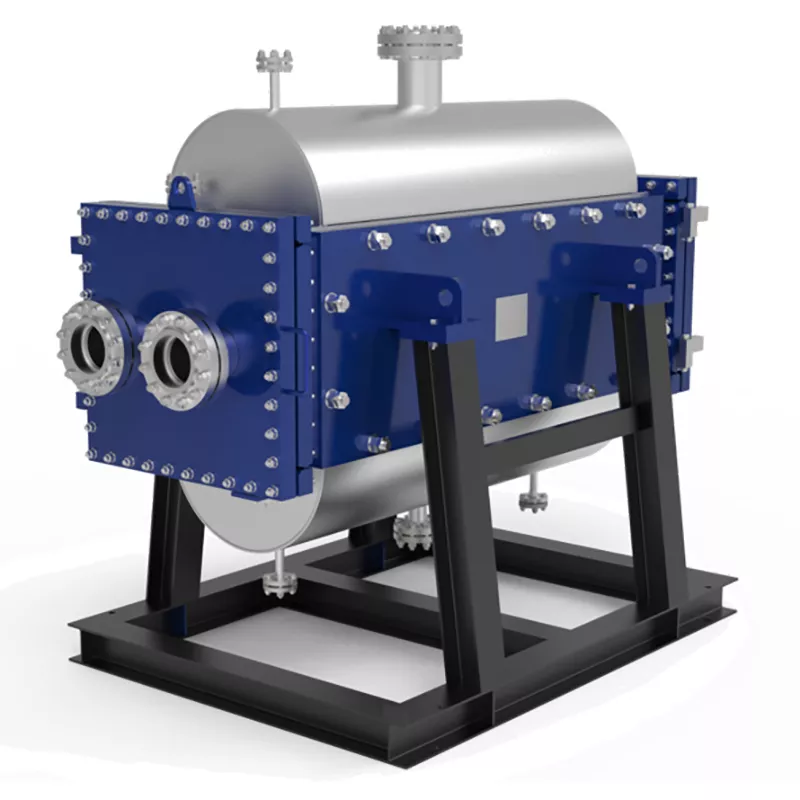
The welded plate and shell heat exchanger combines a compact plate pack with a cylindrical shell, enabling high thermal efficiency and mechanical strength for demanding industrial processes. Its plate-and-shell geometry optimizes flow paths by directing fluids through alternating channels, achieving near-countercurrent flow with minimal dead zones. Advanced welding techniques—such as laser beam welding and automated orbital TIG—ensure leak-proof joints that withstand extreme pressure cycles and thermal fatigue. Material selection focuses on corrosion-resistant alloys (e.g., 316L stainless steel, duplex, or titanium) tailored to aggressive media like seawater, acids, or high-chloride streams. Thermal performance is enhanced through chevron or herringbone plate patterns that increase effective surface area and induce turbulence, boosting heat transfer coefficients by up to 40% compared to conventional shell-and-tube designs. Maintenance is simplified by modular plate bundles that can be individually inspected or replaced, while the shell remains fully weld-sealed to prevent leakage. Cleanability is addressed via accessible nozzle arrangements and the option for chemical cleaning-in-place (CIP) without disassembly. These design features collectively deliver a robust, high-efficiency exchanger suited for offshore, petrochemical, and renewable energy applications where space, weight, and reliability are critical.
1. Plate and Shell Geometry: Configuration and Flow Path Optimization
The plate and shell geometry in a welded plate heat exchanger is designed to maximize thermal efficiency while minimizing pressure drop. The core structure consists of a series of corrugated or embossed metal plates stacked within a cylindrical shell. This configuration creates alternating channels for hot and cold fluids, enabling counter-current or cross-flow arrangements. The plates are laser-welded together at the edges, forming a compact, leak-proof core that eliminates the need for gaskets, making it suitable for high-pressure and high-temperature applications.
Flow path optimization is achieved through strategic plate pattern design. Herringbone or chevron patterns are commonly used to induce turbulence, enhancing heat transfer coefficients. The shell-side flow is guided by baffles or internal supports, ensuring uniform distribution across the plate bundle. On the plate side, fluid enters through nozzles and is directed into the narrow channels, where the corrugations promote mixing and reduce fouling. The geometry can be tailored to handle viscous fluids, slurries, or media with suspended solids by adjusting plate spacing and channel width.
Key design parameters include plate thickness (typically 0.5–1.2 mm), channel gap (2–10 mm), and shell diameter. The number of plates and their arrangement determine the heat transfer area and overall pressure drop. Computational fluid dynamics (CFD) simulations are often employed to refine the flow paths, reducing dead zones and ensuring even temperature distribution. The welded construction also allows for multi-pass configurations, further enhancing performance in applications such as chemical processing, oil and gas, and power generation.
For more detailed information on plate and shell geometry optimization, please refer to the following resources:
2. Welding Techniques and Joint Integrity: Ensuring Leak-Proof Performance
The reliability of welded plate and shell heat exchangers hinges on advanced welding methods that guarantee leak-proof joints under extreme thermal and pressure cycles. Precision automated orbital welding and laser beam welding are commonly employed to create consistent, full-penetration welds between thin plates and the shell structure. These techniques minimize heat-affected zones and residual stresses, which are critical for maintaining dimensional stability and preventing crack propagation during operation.
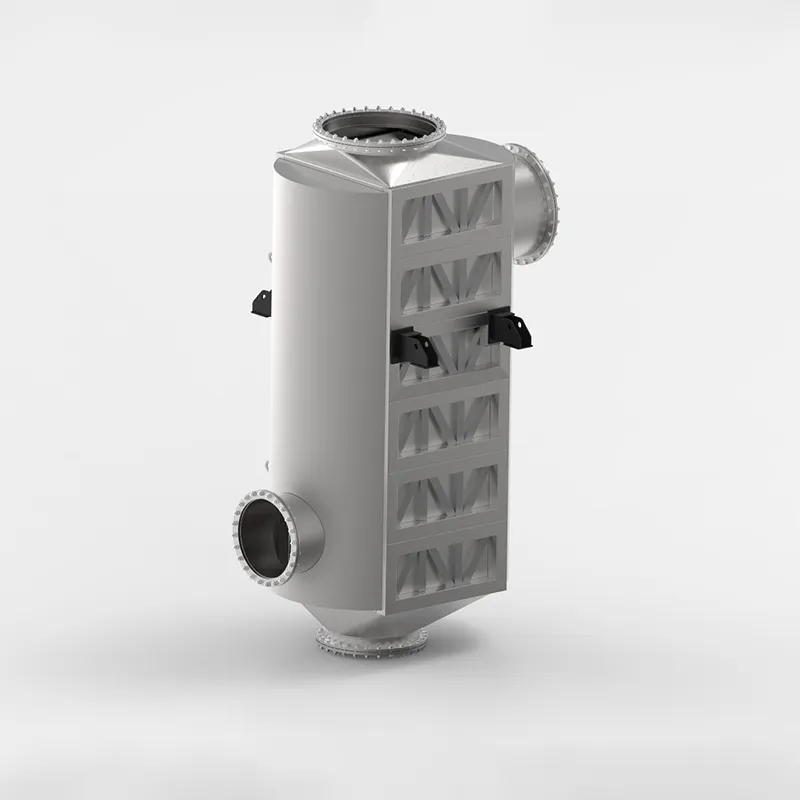
Each weld seam undergoes rigorous non-destructive testing (NDT), including ultrasonic inspection and helium leak detection, to verify joint integrity before the exchanger is placed into service. The combination of controlled heat input, precise filler material selection, and multi-pass welding sequences ensures that the plate-to-shell interface can withstand high differential pressures without leakage. This focus on weld quality directly contributes to the long service life and safety of the equipment in demanding chemical, petrochemical, and power generation applications.
3. Material Selection and Corrosion Resistance for High-Pressure Applications
Selecting appropriate materials is critical for welded plate and shell heat exchangers operating under high pressure and corrosive environments. The material must withstand mechanical stress from elevated pressure while resisting chemical attack from process fluids. Common choices include stainless steels (e.g., 316L, 904L), duplex stainless steels, and nickel-based alloys like Hastelloy or Inconel. These materials offer a balance of strength, toughness, and corrosion resistance tailored to specific operating conditions.
The table below outlines typical material grades and their key properties for high-pressure applications:
| Material Grade |
Max Temperature (°C) |
Corrosion Resistance |
Typical Application |
| 316L Stainless Steel |
450 |
Good against general corrosion |
Chemical processing, oil & gas |
| 904L Stainless Steel |
400 |
Excellent in acidic environments |
Sulfuric acid, phosphoric acid |
| Duplex 2205 |
300 |
High resistance to stress corrosion |
Offshore, marine, chloride environments |
| Hastelloy C-276 |
500 |
Superior in reducing & oxidizing media |
Pharmaceuticals, aggressive chemicals |
| Inconel 625 |
650 |
Excellent pitting & crevice resistance |
High-temperature, high-pressure steam |
Material selection must also consider factors such as weldability, cost, and availability. For extreme high-pressure applications, thicker plates or specialized alloys may be required to prevent deformation or failure. Corrosion resistance is often enhanced through surface treatments or cladding, ensuring long-term reliability in harsh environments. Proper material choice directly impacts the heat exchanger's lifespan and maintenance frequency.
For further details on custom-engineered solutions, refer to product pages such as plate air preheaters, wide gap welded plate heat exchangers, and HT-Bloc welded plate heat exchangers.
4. Thermal Performance Enhancement: Surface Area and Heat Transfer Coefficients
The thermal efficiency of a welded plate and shell heat exchanger is fundamentally driven by two interrelated parameters: effective surface area and the heat transfer coefficient. The corrugated plate geometry significantly increases the surface area available for heat exchange per unit volume compared to traditional shell-and-tube designs, enabling compact installations without sacrificing thermal duty.
The plate pattern induces turbulent flow at lower Reynolds numbers, which enhances the convective heat transfer coefficient on both the plate and shell sides. This turbulence reduces fouling tendencies and maintains consistent thermal performance over extended operation. The combination of increased surface density and improved fluid mixing allows for temperature approaches as low as 1-2°C, making these exchangers highly effective for heat recovery and process heating applications.
Furthermore, the welded construction eliminates gasket material limitations, permitting operation at higher temperatures and pressures while preserving the thermal advantages of the plate geometry. The resulting design achieves overall heat transfer coefficients typically 2-5 times higher than conventional shell-and-tube exchangers, significantly reducing the required footprint and capital cost for a given thermal load.
5. Maintenance and Cleanability: Accessibility and Modular Design Considerations
The welded plate and shell heat exchanger design prioritizes ease of maintenance through strategic accessibility. Unlike traditional shell-and-tube units, the welded plate bundle can often be withdrawn as a single module, allowing direct access to all heat transfer surfaces for inspection or cleaning. This modular approach reduces downtime significantly, as individual sections can be isolated, serviced, or replaced without disturbing the entire system.
Key cleanability features include smooth plate surfaces that resist fouling and large-diameter nozzles that facilitate mechanical or chemical cleaning. The absence of gaskets eliminates leak points and simplifies the cleaning protocol, while the compact welded structure ensures that even in tight installation spaces, maintenance crews can reach critical components. For applications requiring frequent sanitation, the design supports full drainage and easy flushing, meeting stringent hygiene standards.
Modular construction also enables future capacity expansions or retrofits. Individual plate packs can be upgraded or exchanged with minimal welding, making the system adaptable to changing process conditions. This design philosophy reduces lifecycle costs by simplifying both routine maintenance and major overhauls, ensuring long-term operational reliability.
Summary of Key Design Features
The welded plate and shell heat exchanger integrates a compact plate geometry with a cylindrical pressure vessel shell, enabling efficient flow path optimization for both high thermal performance and mechanical strength. Precision welding techniques, such as laser or TIG welding, ensure leak-proof joints that withstand extreme pressures and thermal cycling, eliminating gasket-related failure risks.
Material selection focuses on corrosion-resistant alloys like stainless steel, titanium, or duplex grades, tailored for aggressive media and high-pressure applications. Thermal performance is enhanced through corrugated plate patterns that increase surface area and turbulence, boosting heat transfer coefficients while maintaining a compact footprint.
Maintenance and cleanability are addressed via modular plate bundles and accessible shell designs, allowing for mechanical or chemical cleaning without full system disassembly. These combined features deliver a robust, high-efficiency solution for demanding industrial heat transfer requirements.
What Are the Key Design Features of a Welded Plate and Shell Heat Exchanger?
The core design integrates a plate bundle within a cylindrical shell, optimizing flow paths for high thermal efficiency and compactness.
1. Plate and Shell Geometry: Configuration and Flow Path Optimization
The geometry uses corrugated plates arranged in a circular pattern inside the shell, creating turbulent flow and maximizing heat transfer surface area per unit volume.
2. Welding Techniques and Joint Integrity: Ensuring Leak-Proof Performance
Laser or automated TIG welding is employed to seal plate edges and shell connections, with rigorous pressure testing to guarantee zero leakage under extreme conditions.
3. Material Selection and Corrosion Resistance for High-Pressure Applications
Stainless steel, titanium, or duplex alloys are chosen based on fluid corrosivity and pressure ratings, ensuring long-term durability in harsh environments.
4. Thermal Performance Enhancement: Surface Area and Heat Transfer Coefficients
Enhanced plate patterns (e.g., herringbone or chevron) increase surface area and induce turbulence, achieving heat transfer coefficients up to 3 times higher than traditional shell-and-tube designs.
5. Maintenance and Cleanability: Accessibility and Modular Design Considerations
Modular plate bundles allow easy removal for cleaning or inspection, while the shell design provides access ports for chemical cleaning or mechanical brushing.

 English EN





User Comments
Service Experience Sharing from Real Customers
Mike Torres
Senior Process EngineerWe switched to a welded plate design for our solvent recovery loop last quarter. The shell-side pressure drop is noticeably lower than the old gasketed unit, and we haven't had a single leak. The fabrication quality is solid—no welding defects after six months of thermal cycling. Exactly what we needed for high-temp service.
Priya Sharma
Maintenance SupervisorGot this installed in our ammonia plant's preheater service. It's been running for about 10 months now with only one minor cleaning stop. The all-welded construction means no gasket replacements, which saves us a ton of downtime. Only reason I'm not giving 5 stars is that the nozzle orientation made piping tie-in a bit tricky, but that's on our layout, not the unit.
Jack Morrison
Project ManagerSpec'd this for a new ethanol distillation skid. Delivery was on time, and the thermal performance matched the datasheet within 2%. Crew liked that the plate pack could be inspected without breaking any welds. No fouling issues so far, even with some dirty feed. Would buy again for future projects.
Linda Osei
Reliability EngineerUsing it as a brine chiller in a food processing plant. The welded design handles the corrosive brine way better than our old shell-and-tube ever did. We've had zero cross-contamination, which is critical for our HACCP audits. Only small gripe: the weight is a beast to maneuver during installation, but that's the price of a robust unit.