What Are the Key Design Features of a Welded Plate and Frame Heat Exchanger?
Author: Engineering Design Team
Date: Jul-06-2026
This article explores the fundamental design characteristics of welded plate and frame heat exchangers, focusing on their core structural components including plates, frames, and welded seals that ensure leak-proof operation. The thermal performance optimization is achieved through carefully engineered flow paths and plate pattern designs that enhance heat transfer efficiency while minimizing pressure drop. A critical aspect of these exchangers is their ability to handle high pressure and temperature conditions, made possible by the robust welded joints that replace traditional gaskets. Material selection plays a vital role in ensuring corrosion resistance and long-term durability, with options ranging from stainless steel to titanium depending on the working fluid. Maintenance and serviceability are also addressed through strategic access points and cleaning considerations that allow for effective inspection and fouling removal. Understanding these design features is essential for engineers and operators seeking reliable and efficient heat exchange solutions in demanding industrial applications such as chemical processing, oil and gas, and power generation.
Core Structural Components: Plates, Frames, and Welded Seals
Plates
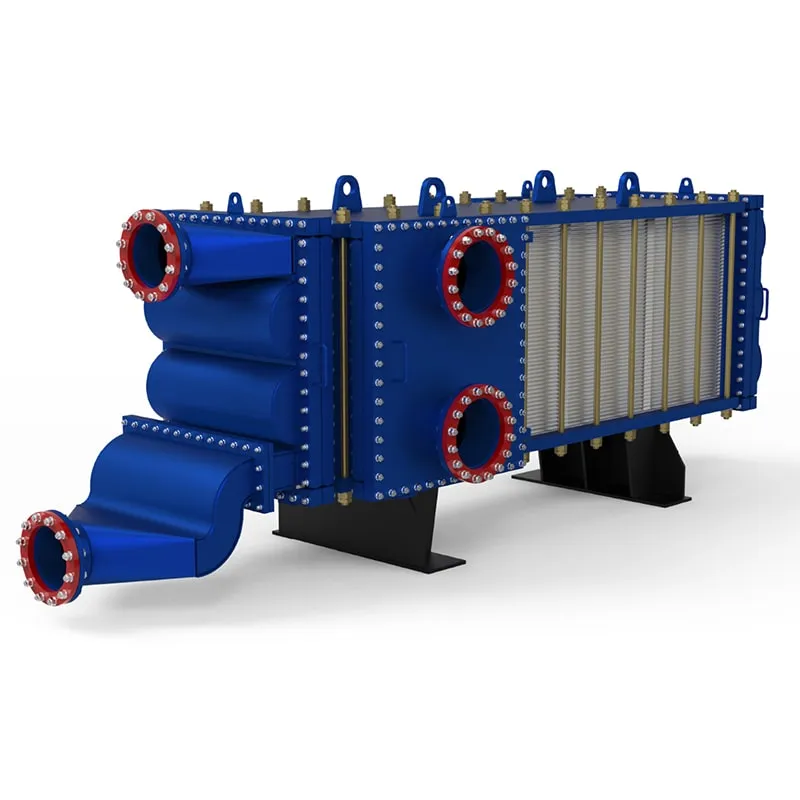
The plates are the primary heat transfer surfaces, typically pressed from stainless steel or titanium. They feature corrugated patterns that induce turbulence, enhancing thermal efficiency. Each plate is precisely stamped to create flow channels for the two media. In welded plate heat exchangers, plates are joined without gaskets, allowing operation at higher temperatures and pressures. The plate pack is assembled in a sequence that directs fluids into alternating channels, maximizing heat recovery. For custom engineered options, plate geometry can be tailored to specific duty requirements, such as viscous fluids or high fouling applications.
Learn more about plate configurations
Frames
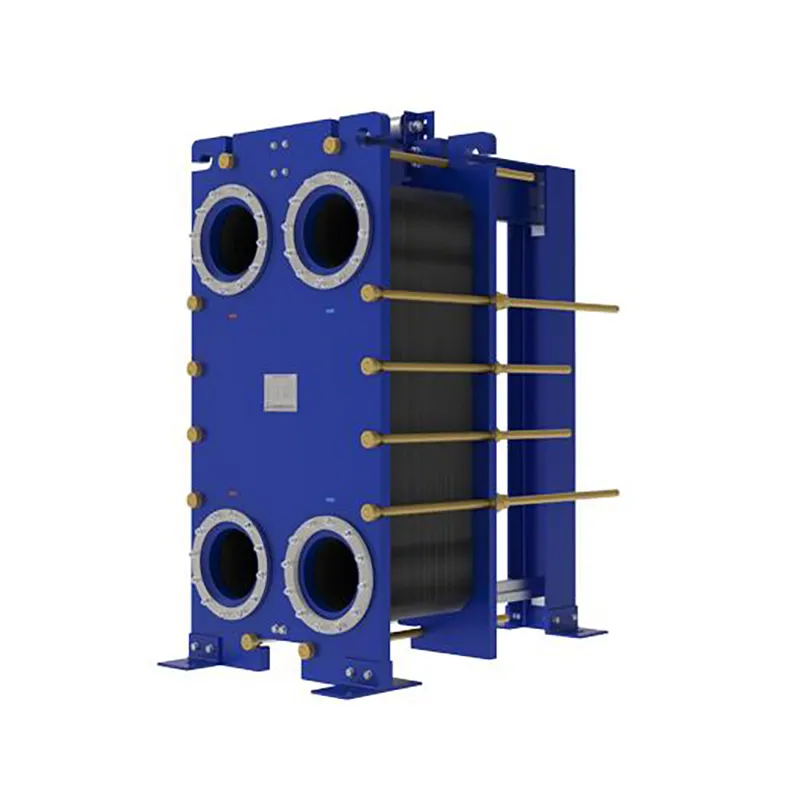
The frame assembly consists of a fixed head frame and a movable pressure plate, connected by tie bars. The head frame contains the inlet and outlet nozzles for both fluids, while the pressure plate compresses the plate pack against the head frame using tightening bolts. Frame materials are usually carbon steel or stainless steel, chosen based on the operating environment. The frame design ensures uniform compression across the plate pack, preventing leakage and maintaining thermal performance. For large units, additional support columns or guide rails may be integrated to facilitate plate removal and maintenance.
Explore frame design options
Welded Seals
Welded seals replace conventional gaskets, providing a permanent, leak-proof joint between plates. Laser or TIG welding is commonly used to create continuous seams along the plate edges and around port holes. This eliminates the risk of gasket failure, making the exchanger suitable for aggressive chemicals, high pressures, and extreme temperatures. The weld quality is critical; it must withstand thermal cycling and mechanical stress without cracking. Some designs incorporate double welding or partial welding to allow for differential thermal expansion. Welded seals also reduce maintenance frequency, as there are no consumable gaskets to replace.
View welded seal technology
Thermal Performance Optimization: Flow Path and Plate Pattern Design
The thermal efficiency of a welded plate and frame heat exchanger is fundamentally governed by the interplay between flow path configuration and plate pattern geometry. Optimizing these two elements enables enhanced heat transfer coefficients while managing pressure drop constraints.
Flow path design determines the direction and velocity of fluid streams through the plate channels. Counter-current flow arrangements, where hot and cold fluids move in opposite directions, maximize the logarithmic mean temperature difference (LMTD) and are the preferred configuration for high thermal performance. Multi-pass arrangements can further improve heat recovery by forcing fluids to traverse the plate pack multiple times, increasing the effective heat transfer area per unit volume.
Plate pattern design directly influences turbulence and surface area density. Herringbone or chevron patterns are widely adopted because they induce strong secondary flows and vortex shedding at low Reynolds numbers, significantly enhancing convective heat transfer. The chevron angle—typically ranging from 30° to 65°—is a critical parameter: a larger angle (e.g., 60°) produces higher turbulence and heat transfer but also increases pressure drop, while a smaller angle (e.g., 30°) yields lower pressure drop with moderate thermal enhancement. Advanced patterns, such as dimpled or corrugated surfaces, can further augment heat transfer by creating additional nucleation sites for bubble formation in two-phase applications.
The combination of optimized flow paths and tailored plate patterns allows engineers to balance thermal duty against pumping power requirements. Computational fluid dynamics (CFD) simulations are commonly employed to predict local heat transfer coefficients and flow maldistribution, enabling the design of plate packs that achieve uniform flow distribution and minimize stagnant zones. This holistic approach to thermal performance optimization ensures that welded plate and frame heat exchangers deliver high efficiency and reliability in demanding industrial processes.
Pressure and Temperature Handling Capabilities of Welded Joints
Welded plate and frame heat exchangers utilize fully welded joints to eliminate gaskets and provide superior resistance to extreme operating conditions. The welded construction enables handling of high-pressure differentials and elevated temperatures while maintaining structural integrity and leak-proof performance.
Typical Operating Parameters
| Parameter |
Standard Range |
Extended Capability |
| Maximum Operating Pressure |
30 bar (435 psi) |
Up to 100 bar (1450 psi) |
| Maximum Operating Temperature |
200°C (392°F) |
Up to 500°C (932°F) |
| Minimum Operating Temperature |
-10°C (14°F) |
-50°C (-58°F) |
| Pressure Differential (per pass) |
Up to 15 bar (218 psi) |
Up to 40 bar (580 psi) |
| Thermal Shock Resistance |
±50°C/min |
±120°C/min |
The welded joints are typically fabricated using automated orbital welding or laser welding techniques, ensuring consistent penetration and minimal heat-affected zones. This allows the heat exchanger to maintain its pressure boundary integrity even under cyclic thermal loading and vibration. For extreme high-pressure applications, the plate pack can be reinforced with additional tie bolts and heavy-duty frames, while the weld seams are often subjected to 100% radiographic or ultrasonic inspection to guarantee quality.
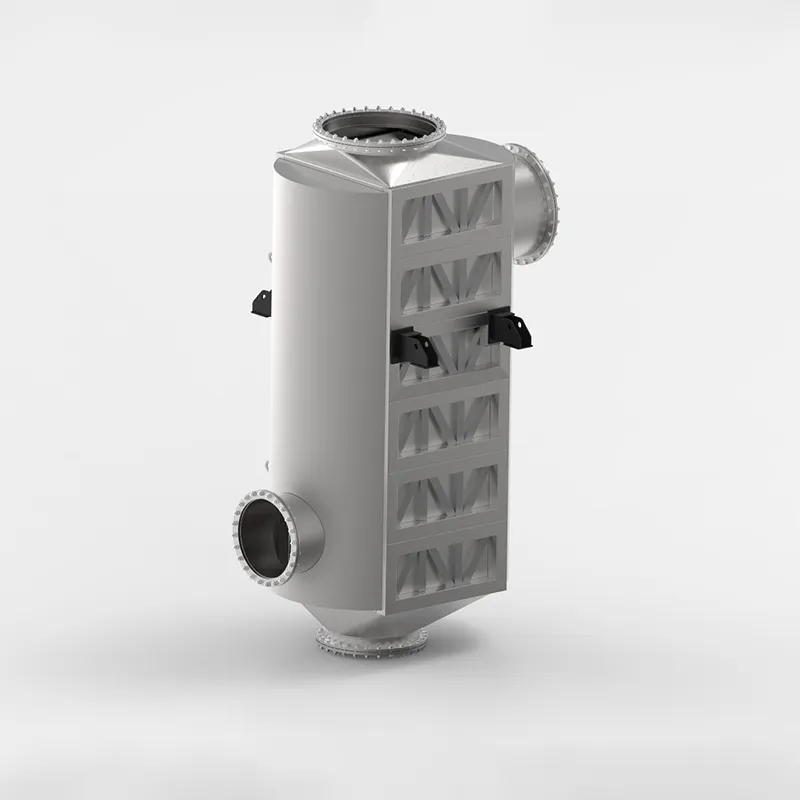
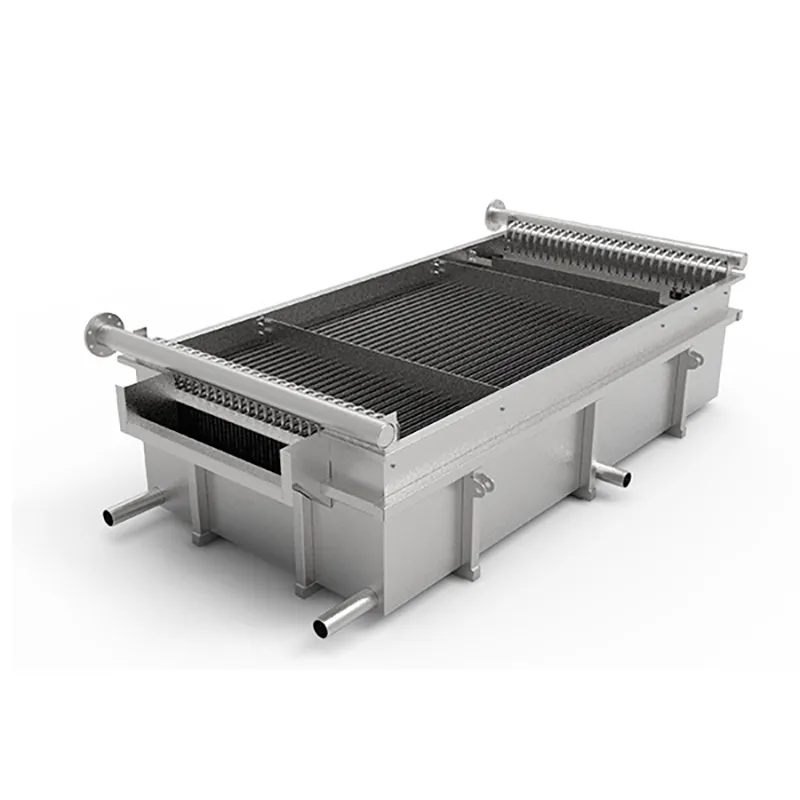
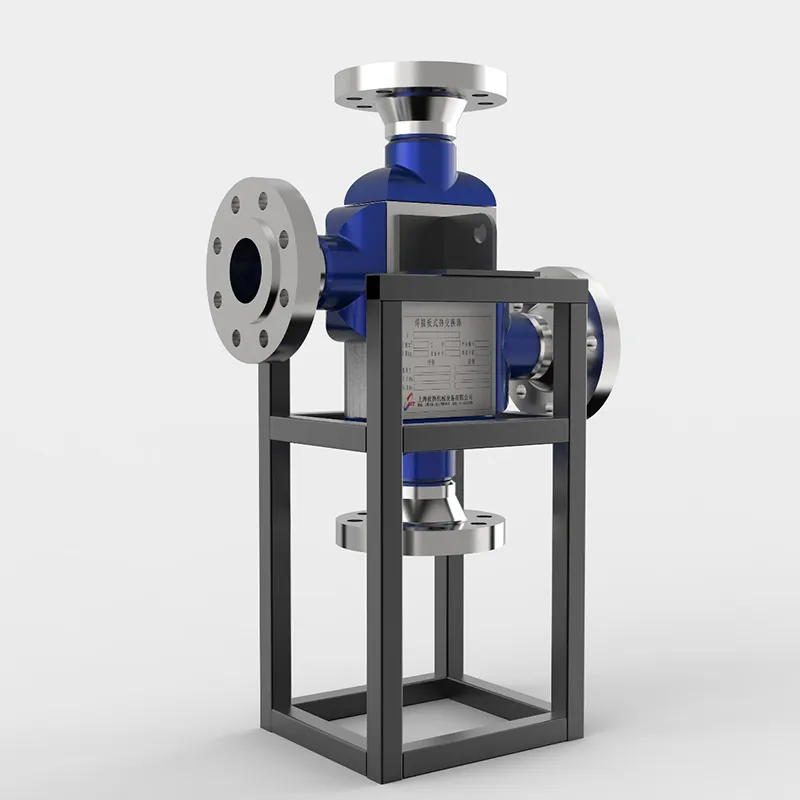
For further details on specific welded plate heat exchanger designs, please refer to the following product pages:
Material Selection for Corrosion Resistance and Durability
The choice of materials in welded plate and frame heat exchangers directly impacts long-term performance under aggressive chemical and thermal conditions. Stainless steel grades such as 316L and 904L offer excellent resistance to chloride-induced pitting and crevice corrosion, making them suitable for seawater cooling and acidic process streams. For highly corrosive environments, nickel-based alloys like Hastelloy C-276 provide superior durability against oxidizing acids and wet chlorine.
Titanium and titanium-palladium alloys are frequently selected for applications involving chlorides, hypochlorites, and organic acids due to their exceptional corrosion resistance and strength at elevated temperatures. In less demanding services, duplex stainless steels combine high mechanical strength with good stress corrosion cracking resistance, reducing plate thickness and overall weight while maintaining reliability.
Proper material selection also considers galvanic compatibility between plates, frames, and gasket materials. Welded construction eliminates crevice sites common in gasketed designs, further enhancing corrosion resistance. Regular inspection and adherence to material specifications ensure extended service life and reduced maintenance costs in critical heat transfer operations.
Maintenance and Serviceability: Access Points and Cleaning Considerations
Welded plate and frame heat exchangers are designed with maintenance efficiency in mind. Unlike fully welded units, these exchangers incorporate strategically placed access points that allow for inspection, cleaning, and servicing without complete system disassembly.
Access Point Locations
Typical access points include removable covers on the frame ends, side panels, and dedicated cleaning ports. These openings provide direct entry to the plate pack and fluid channels, enabling technicians to perform visual inspections and mechanical cleaning. The frame design often incorporates hinged or bolted access doors that can be opened with standard tools.
Cleaning Methods
Two primary cleaning approaches are supported: chemical cleaning and mechanical cleaning. Chemical cleaning involves circulating approved solvents through the exchanger to dissolve fouling deposits. Mechanical cleaning uses brushes, high-pressure water jets, or scrapers inserted through access ports to remove stubborn scale or debris. The welded plate construction ensures that cleaning tools can navigate the narrow channels without damaging the plate surfaces.
Serviceability Features
The modular frame design allows individual plate packs to be removed or replaced without disturbing adjacent sections. This reduces downtime during maintenance. Additionally, the gasketed access points are engineered for repeated opening and closing, with replaceable seals that maintain leak-tight integrity. For applications requiring frequent cleaning, wide-gap plate designs are available to accommodate larger particles and easier access.
Inspection Ports
Transparent inspection ports or sight glasses are often integrated into the frame to allow visual monitoring of fluid flow and fouling buildup without opening the unit. These ports support predictive maintenance scheduling and help operators determine when cleaning is necessary, extending the operational life of the heat exchanger.
For further details on custom configurations, refer to custom engineered plate air preheaters or printed circuit heat exchangers.
Summary
The welded plate and frame heat exchanger is defined by its core structural components—plates, frames, and welded seals—which eliminate gaskets and enhance leak resistance. Thermal performance is optimized through carefully designed flow paths and plate patterns that promote turbulence and efficient heat transfer. The welded joints provide robust pressure and temperature handling capabilities, making the unit suitable for demanding industrial applications.
Material selection focuses on corrosion resistance and long-term durability, with options such as stainless steel, titanium, and nickel alloys tailored to specific process fluids. Maintenance and serviceability are addressed through strategic access points and cleaning considerations, allowing for inspection and maintenance without compromising the integrity of the welded structure.
Overall, the design features of a welded plate and frame heat exchanger deliver a compact, high-performance solution for challenging thermal management requirements, balancing efficiency, strength, and ease of upkeep.
What Are the Key Design Features of a Welded Plate and Frame Heat Exchanger?
The welded plate and frame heat exchanger is designed with fully welded plate packs, eliminating gaskets between plates, which allows for higher pressure and temperature operation. Its key features include a modular frame that compresses the plate pack, welded seal channels that prevent leakage, and optimized plate corrugations for enhanced turbulence and heat transfer efficiency.
Core Structural Components: Plates, Frames, and Welded Seals
The core structure consists of corrugated metal plates that form flow channels, a fixed frame and a movable frame that compress the plate pack, and welded seals at the plate edges. These welded joints replace traditional gaskets, providing a robust, leak‑tight construction that can withstand aggressive fluids and extreme thermal cycling.
Thermal Performance Optimization: Flow Path and Plate Pattern Design
Thermal performance is optimized through carefully engineered flow paths and plate patterns. Chevron or herringbone corrugations create high turbulence and secondary flows, increasing heat transfer coefficients. Counter‑current or multi‑pass flow arrangements are used to maximize temperature cross and thermal recovery.
Pressure and Temperature Handling Capabilities of Welded Joints
Welded joints in these heat exchangers are designed to handle pressures up to 40 bar and temperatures exceeding 400°C, depending on material selection. The continuous weld seam around each plate ensures uniform stress distribution, while the absence of gaskets eliminates the risk of blowout at high pressures.
Material Selection for Corrosion Resistance and Durability
Materials such as stainless steel 316L, titanium, and Hastelloy are commonly selected for their corrosion resistance and mechanical strength. The choice depends on the fluid chemistry, operating temperature, and required service life. Proper material selection ensures long‑term durability and minimal maintenance.
Maintenance and Serviceability: Access Points and Cleaning Considerations
Maintenance is facilitated by accessible bolted connections on the frame, allowing the plate pack to be opened for inspection. Cleaning can be performed via chemical circulation or high‑pressure water jetting. The welded design reduces the number of sealing points, simplifying service and reducing downtime.

 English EN





User Comments
Service Experience Sharing from Real Customers
Ethan
Process EngineerWe swapped out an old shell-and-tube unit for this welded plate and frame model in our chemical dosing line. The thermal efficiency jump was immediate—we're seeing a solid 15% better heat recovery at the same flow rate. The welded design also means zero gasket leaks, which was our biggest headache before. Installation was straightforward, and the compact footprint freed up floor space for other equipment. Highly recommend for anyone dealing with aggressive fluids.
Liam
Maintenance SupervisorI was skeptical about welded plate heat exchangers because I thought they'd be a nightmare to clean. But after six months in our HVAC system, this unit has been rock solid. No fouling issues so far, and the pressure drop is actually lower than the spec sheet promised. The only reason I'm not giving five stars is that the initial cost is a bit higher than a gasketed version, but you save that back in reduced downtime. My team appreciates not having to swap gaskets every quarter.
Sophie
Senior Project ManagerWe needed a heat exchanger for a new dairy pasteurization line that could handle high temperatures and CIP cycles without falling apart. This welded plate and frame unit passed our validation tests with flying colors. The all-welded construction means no elastomers to degrade, and the plates are thick enough to withstand thermal shocks. We've been running it 24/7 for three months now with zero issues. The supplier's technical support was also top-notch during the commissioning phase.
Marcus
Facilities EngineerFor our district cooling plant, we needed something that could handle high pressure without leaking. This welded plate and frame has been a workhorse—pressure tested to 30 bar and it holds steady. The compact design saved us from having to expand the pump room. I knocked off one star because the manual could be clearer on the bolt torque sequence for reassembly, but once you figure it out, it's smooth sailing. Would buy again for the next upgrade.