Optimizing Thermal Management with a Heat Exchanger for Carbon Capture Systems
Carbon capture systems demand precise thermal management to maintain efficiency and reduce operational costs. Selecting the right heat exchanger for carbon capture applications is critical—whether for amine scrubbing, direct air capture, or cryogenic processes. This article explores how plate heat exchangers, including welded and gasketed designs, address heat recovery, solvent cooling, and condensation duties. We cover working principles, key parameters, and practical selection criteria for process engineers and procurement managers.
Why Thermal Management Matters in Carbon Capture
Carbon capture processes, such as post-combustion amine scrubbing, generate significant heat during solvent regeneration. Without efficient heat recovery, energy consumption can spike, making the entire system uneconomical. A well-designed heat exchanger for carbon capture systems recovers waste heat, preheats feed streams, and cools solvents to optimal absorption temperatures. This directly lowers the reboiler duty and improves the overall carbon capture rate.
Common thermal challenges include fouling from amine degradation, high-temperature gradients, and pressure drops across the exchanger. Engineers need robust equipment that handles corrosive fluids, operates at elevated pressures, and delivers consistent performance over years of service. Plate heat exchangers, particularly welded and wide-gap variants, offer solutions that traditional shell-and-tube designs struggle to match.
How Does a Heat Exchanger for Carbon Capture Work?
In a typical amine-based carbon capture loop, flue gas enters an absorber where it contacts a lean amine solvent. The rich amine is then heated and sent to a stripper for regeneration. A heat exchanger for carbon capture systems is installed between the rich and lean amine streams—this is the lean/rich amine heat exchanger. It preheats the rich amine using the hot lean amine returning from the stripper, recovering up to 80–90% of the thermal energy.
Plate heat exchangers excel here because of their high thermal efficiency and compact footprint. The countercurrent flow arrangement maximizes temperature cross, while the narrow channels promote turbulence and reduce fouling. For applications with suspended solids or viscous fluids, wide-gap welded plate heat exchangers provide larger flow passages, minimizing clogging risks.
What Are the Key Features of a Plate Heat Exchanger for Carbon Capture?
Modern plate heat exchangers designed for carbon capture systems incorporate several features that address industry-specific demands:
- High thermal efficiency: Heat transfer coefficients typically range from 3,000 to 7,000 W/m²·K, depending on fluid properties and flow conditions.
- Compact design: Plate packs require up to 80% less floor space compared to shell-and-tube units of equivalent duty.
- Corrosion resistance: Materials like 316L stainless steel, duplex alloys, or titanium are standard for amine and solvent contact.
- Wide temperature and pressure range: Gasketed designs handle up to 250°C and 25 bar; fully welded units (e.g., HT-Bloc) operate at 400°C and 40 bar.
- Low fouling tendency: Turbulent flow and smooth plate surfaces reduce deposit buildup, extending cleaning intervals.
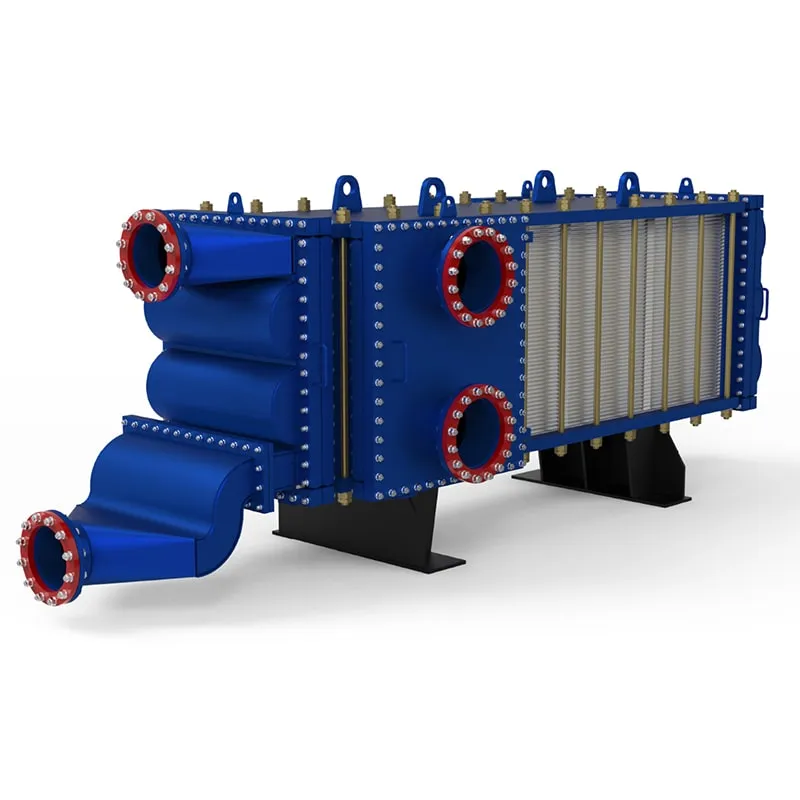
For more details on specific product lines, explore our HT-Bloc welded plate heat exchanger and wide gap welded plate heat exchanger pages.
Typical Parameter Ranges for Carbon Capture Heat Exchangers
When specifying a heat exchanger for carbon capture systems, engineers should consider the following commonly accepted ranges:
| Parameter |
Typical Range |
| Operating temperature |
20°C – 150°C (amine loops); up to 400°C (welded units) |
| Operating pressure |
2 – 40 bar (gasketed); up to 60 bar (welded) |
| Flow rate per unit |
10 – 1,500 m³/h (single unit) |
| Heat transfer coefficient |
3,000 – 7,000 W/m²·K |
| Fouling factor |
0.0001 – 0.0005 m²·K/W (clean fluids) |
| Plate material |
316L, 904L, duplex 2205, titanium |
Applications and Recommended Solutions
A heat exchanger for carbon capture systems is deployed across several process stages:
- Lean/rich amine heat exchange: Gasketed plate heat exchangers are a cost-effective choice for moderate pressures and temperatures. For higher pressures, consider a TP welded plate heat exchanger.
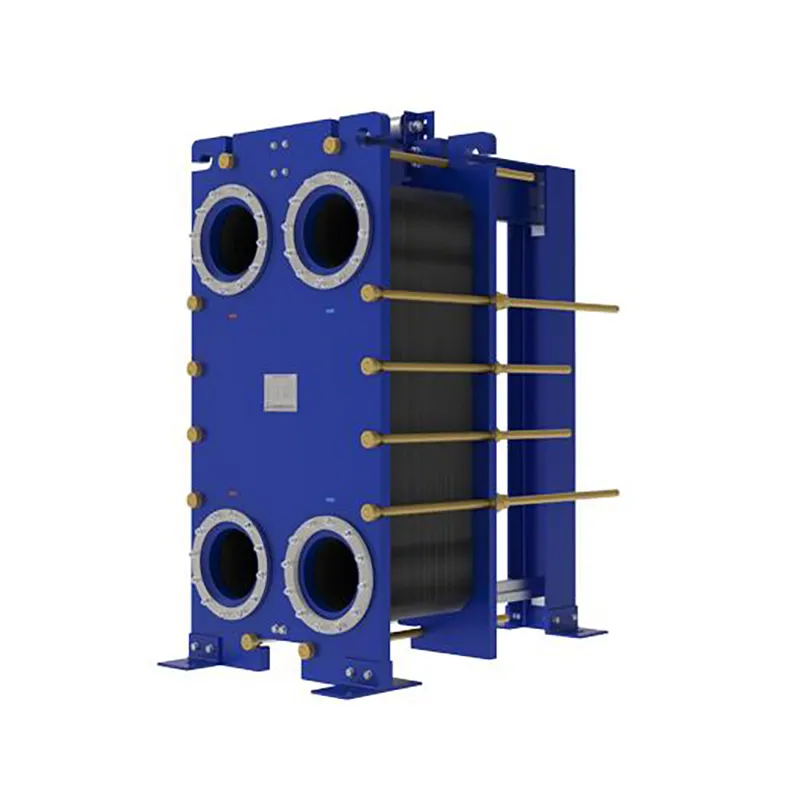
- Solvent cooler: Cooling the lean amine before it enters the absorber improves absorption efficiency. Our gasketed plate heat exchangers are widely used for this duty.
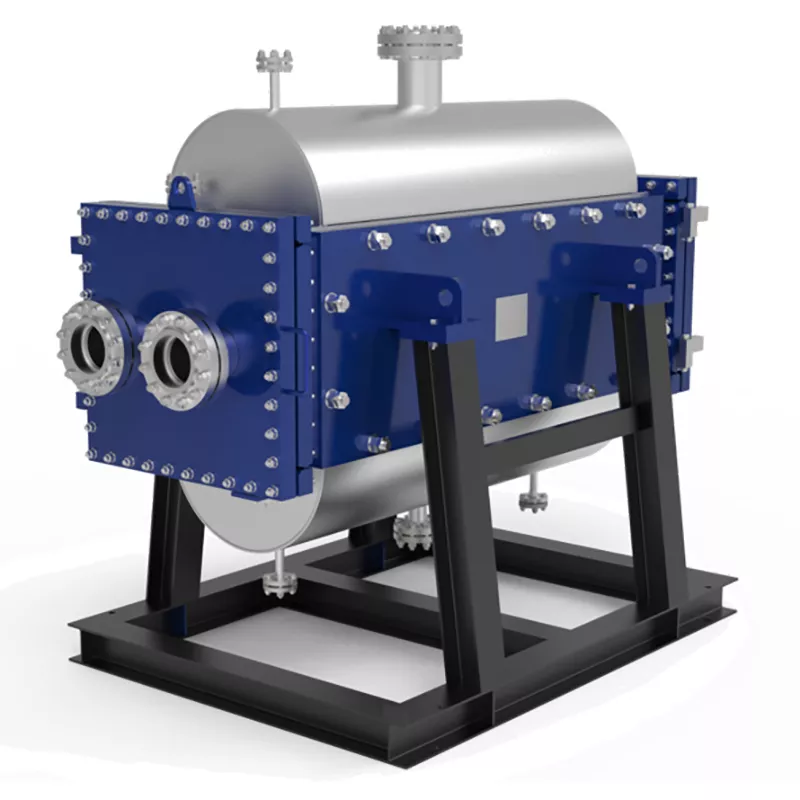
- Condenser duty: In cryogenic carbon capture, a printed circuit heat exchanger (PCHE) handles extreme temperature gradients and high pressures.
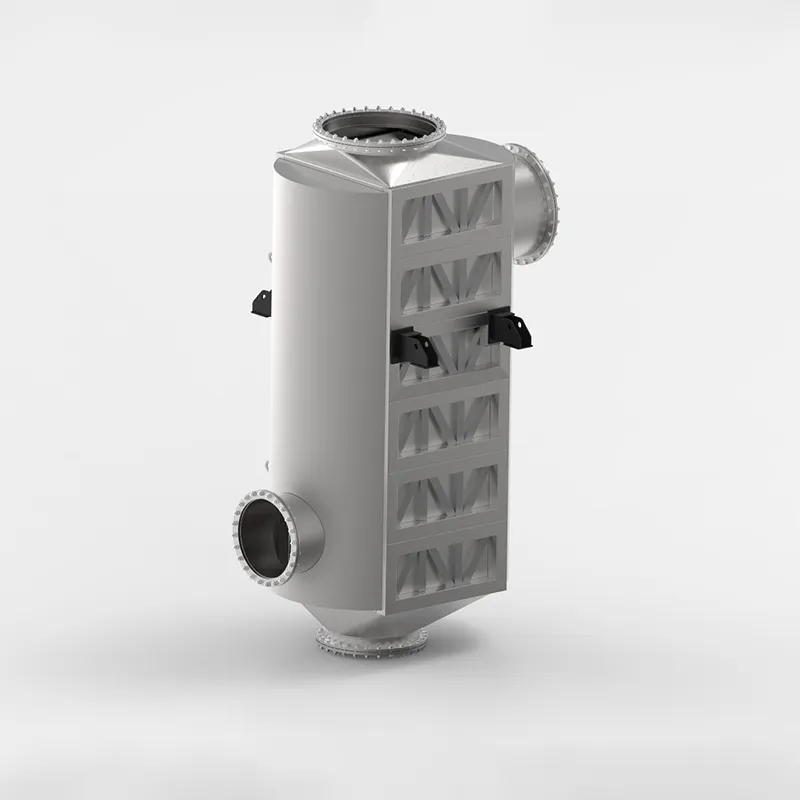
- Flue gas preheating: Plate air preheaters recover waste heat from flue gas streams, reducing overall energy demand.
For applications with high fouling potential—such as direct contact with flue gas containing particulates—a wide gap welded plate heat exchanger is recommended. Its enlarged channel spacing prevents blockages while maintaining thermal performance.
Why Choose SHPHE for Your Carbon Capture Heat Exchanger?
SHPHE is a Shanghai-based plate heat exchanger manufacturer founded in 2005, exporting to over 20 countries. We hold ISO9001 and ASME U certifications, ensuring our products meet international quality standards. Our product portfolio includes HT-Bloc and TP welded plate heat exchangers, wide gap welded plate heat exchangers, gasketed plate heat exchangers, PCHE, plate air preheaters, and pillow plates. We offer free thermal design and selection services to help you find the optimal heat exchanger for carbon capture systems.
Our units are compatible with major industry platforms, serving as a reliable alternative to Alfa Laval, Compabloc, or GEA designs. Whether you need a custom-engineered solution or a standard unit, our engineering team works closely with your process parameters to deliver a cost-effective, long-lasting heat exchanger.
Explore our custom engineered printed circuit heat exchanger and custom engineered pillow plates for specialized carbon capture duties.
Frequently Asked Questions
What type of heat exchanger is best for amine carbon capture?
Gasketed plate heat exchangers are the most common choice for lean/rich amine service due to their high efficiency and ease of maintenance. For higher pressures or temperatures, welded plate heat exchangers like the HT-Bloc are recommended.
Can a plate heat exchanger handle corrosive solvents?
Yes. Plate heat exchangers can be constructed from corrosion-resistant materials such as 316L stainless steel, duplex alloys, or titanium. Proper material selection ensures long service life even with aggressive amine solvents.
How do I prevent fouling in a carbon capture heat exchanger?
Choose a design with high turbulence and smooth plate surfaces. Wide gap welded plate heat exchangers offer larger flow channels that reduce fouling from particulates. Regular cleaning cycles and proper filtration upstream also help.
What is the typical payback period for a heat exchanger in carbon capture?
Depending on energy savings and scale, payback periods range from 1 to 3 years. High-efficiency plate heat exchangers recover up to 90% of thermal energy, significantly reducing reboiler fuel costs.
Are SHPHE heat exchangers compatible with existing carbon capture systems?
Yes. Our units are designed as drop-in replacements or upgrades for existing systems. They are compatible with Alfa Laval, Compabloc, and GEA platforms, making integration straightforward.
What information do I need to get a heat exchanger quote?
Provide flow rate, inlet and outlet temperatures, operating pressure, and fluid composition (including any solids or corrosive components). Our engineering team uses this data to perform free thermal design and selection.
Request a Quote for Your Carbon Capture Heat Exchanger
Selecting the right heat exchanger for carbon capture systems is a critical step toward optimizing your process economics. We invite process engineers and purchasing managers to submit their project requirements. Please provide the following details for a customized proposal:
- Flow rate (hot and cold streams)
- Inlet and outlet temperatures
- Operating pressure
- Media composition (including any corrosive or fouling components)
Our team will provide a free thermal design and selection service, ensuring you receive the most efficient and cost-effective heat exchanger for your carbon capture application. Contact us today to start the process.

 English EN





User Comments
Service Experience Sharing from Real Customers
Elena
Process EngineerInstalled this heat exchanger in our pilot capture unit six months ago. The pressure drop is significantly lower than our previous shell-and-tube design, which means we're saving on fan power. Also, cleaning the amine fouling off the plates is way easier than I expected. Solid build quality.
Marcus
Senior Project ManagerWe needed a compact solution for a retrofit at a cement plant, and this unit fit the bill. The thermal performance is good—we're hitting our target CO2 capture rates. My only minor gripe is that the delivery lead time was a bit longer than quoted, but the on-site support from the vendor made up for it.
Priya
R&D ScientistUsing this in a lab-scale direct air capture setup. The modular design is a lifesaver because we keep reconfiguring our test loop. It handles the temperature swings from the solvent regeneration cycle without any leaks so far. Great for experimental work where you need reliability and flexibility.
Tom
Maintenance TechnicianIt does the job for our post-combustion capture skid, but I've had to replace two gaskets in the first year. The corrosion resistance on the stainless steel is fine with MEA solvent, but the gaskets seem to be the weak point. Easy to swap out, though, and the manual has clear diagrams. Not bad, not great.