How a Plate Heat Exchanger for Dairy Industry Enhances Processing Efficiency and Hygiene
In dairy processing, maintaining product quality while maximizing throughput is a constant challenge. A plate heat exchanger for dairy industry applications directly addresses this by combining high thermal efficiency with strict hygienic design. This article explores how these heat exchangers work, their key features, and why they are essential for modern dairy plants. We will cover everything from pasteurization to CIP compatibility, with real parameter ranges and practical selection advice.
What Makes a Plate Heat Exchanger for Dairy Industry Different from Standard Units?
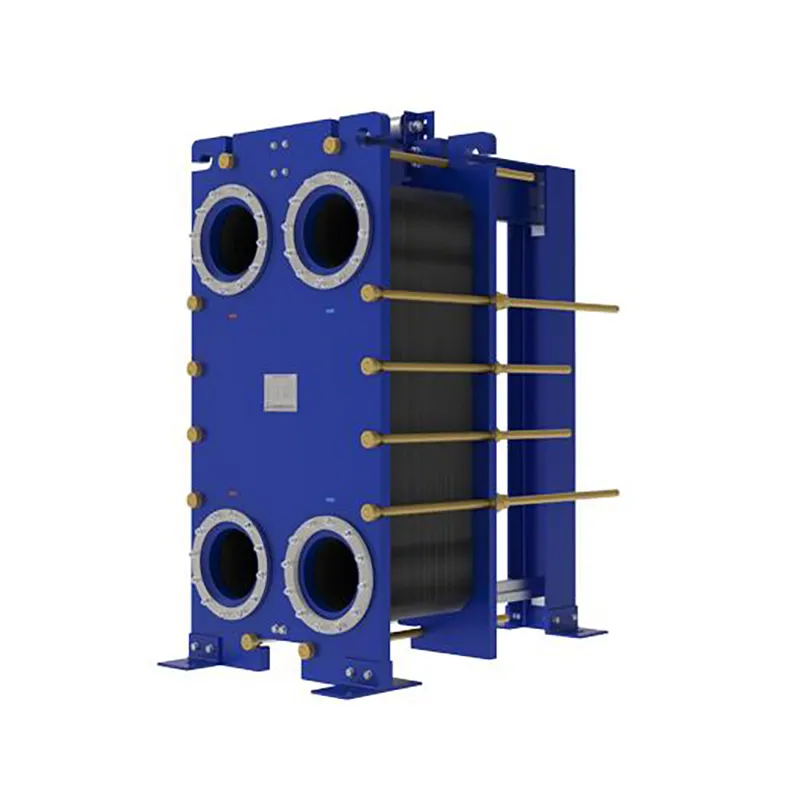
Dairy fluids like milk, cream, and whey are sensitive to heat and prone to fouling. A standard industrial heat exchanger may not meet the rigorous cleanliness and temperature control required. A plate heat exchanger for dairy industry is specifically designed with smooth surfaces, tight clearances, and high turbulence to minimize fouling and ensure even heat distribution. The gaskets and plates are made from FDA-approved materials, and the entire assembly can be easily disassembled for inspection and cleaning.
The core difference lies in the plate geometry. Dairy-grade plates often feature a deep chevron pattern that creates high shear forces, breaking down boundary layers and preventing milk protein from sticking. This directly translates to longer production runs between cleanings and consistent product quality. For engineers looking to upgrade their lines, understanding these design nuances is critical.
How Does a Plate Heat Exchanger for Dairy Industry Improve Hygiene Standards?
Hygiene is non-negotiable in dairy processing. A plate heat exchanger for dairy industry supports Clean-in-Place (CIP) systems, allowing automated cleaning without disassembly. The plates are typically made of AISI 316L stainless steel, which resists corrosion from acidic cleaning agents and chlorinated water. The gasket materials, such as EPDM or NBR, are selected for their resistance to hot caustic solutions.
Moreover, the design eliminates dead zones where bacteria could grow. Each plate has a precise sealing gasket that directs flow evenly across the entire surface. When paired with a proper CIP cycle (typically 80-85°C for 20-30 minutes), these heat exchangers achieve the high hygiene levels required for pasteurized milk and cheese production. This is why many plants choose a gasketed plate heat exchanger for their most critical duties.
Key Features and Typical Parameter Ranges
When selecting a plate heat exchanger for dairy industry applications, you will encounter several standard specifications. The table below summarizes common ranges that engineers should consider:
| Parameter |
Typical Range |
| Operating Pressure |
Up to 16 bar (gasketed) / 30 bar (welded) |
| Operating Temperature |
-20°C to 180°C |
| Plate Material |
AISI 316L (standard), Titanium (for corrosive fluids) |
| Gasket Material |
EPDM, NBR, Viton |
| Flow Rate per Unit |
1 to 500 m³/h |
| Heat Transfer Coefficient |
3,000 to 7,000 W/m²K (depending on fluid and plate pattern) |
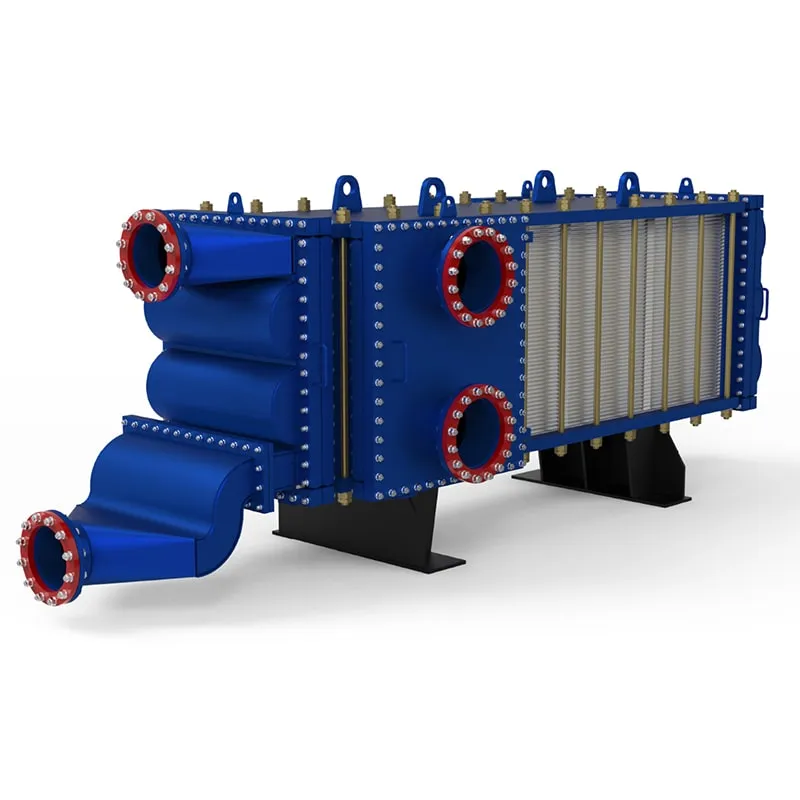
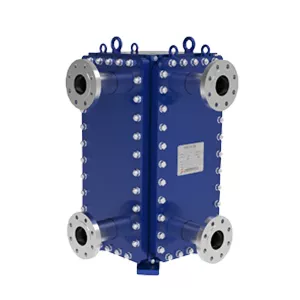
These ranges are industry-generic and should be verified with a manufacturer for your specific process conditions. For high-temperature or high-pressure duties, a HT-Bloc welded plate heat exchanger is often a better fit, as it eliminates gasket failure risks.
Applications and Recommended Solutions
A plate heat exchanger for dairy industry is used in multiple stages of production:
- Milk pasteurization (72°C for 15 seconds, followed by rapid cooling)
- Cream heating and cooling before homogenization
- Whey protein concentration and thermal treatment
- Yogurt and cheese milk preheating
- Ice cream mix processing
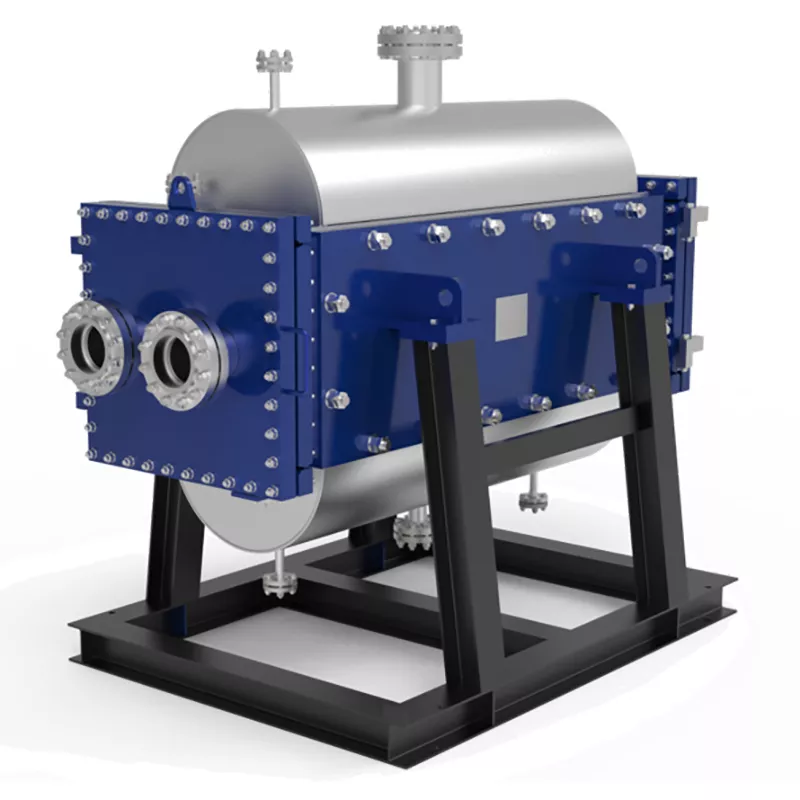
For each application, the choice of heat exchanger type matters. Gasketed units are cost-effective and easy to maintain, making them ideal for pasteurizers. For processes involving high solids or viscous fluids, a wide gap welded plate heat exchanger prevents clogging while maintaining high heat transfer. If you are replacing an existing unit from Alfa Laval or GEA, many manufacturers offer compatible plates that fit the same frame, reducing downtime.
Why Choose SHPHE for Your Dairy Heat Exchanger Needs?
SHPHE has been manufacturing plate heat exchangers in Shanghai since 2005, exporting to over 20 countries. We hold ISO9001 and ASME U certifications, ensuring our products meet international quality standards. Our product range includes gasketed, welded, and specialized units like custom-engineered pillow plates and printed circuit heat exchangers for demanding applications.
We offer free thermal design and selection services. Our engineers will analyze your process parameters and recommend the optimal plate configuration, material, and gasket type. Whether you need a single unit or a complete skid-mounted system, we provide technical support from concept to commissioning. For dairy plants looking for a reliable alternative to Compabloc or other brands, our welded plate heat exchangers deliver comparable performance at competitive pricing.
Frequently Asked Questions
Q: Can a plate heat exchanger for dairy industry handle high-viscosity products like condensed milk?
A: Yes, but you need a wide gap or free-flow design. Standard gasketed plates with narrow channels may clog. A wide gap welded plate heat exchanger is recommended for viscosities above 500 cP.
Q: How often should I replace the gaskets in a dairy heat exchanger?
A: Gasket life depends on temperature and cleaning frequency. Typically, EPDM gaskets last 2-4 years in dairy service. Regular inspection for cracks or hardening is recommended.
Q: Is it possible to retrofit an existing frame with new plates from SHPHE?
A: Yes, we offer replacement plates compatible with major brands like Alfa Laval and GEA. Provide your plate dimensions and port pattern, and we can match the performance.
Q: What is the typical payback period for upgrading to a more efficient plate heat exchanger?
A: Most dairy plants see a payback within 12-18 months through energy savings, reduced downtime, and lower maintenance costs. Exact figures depend on your current system.
Q: Can a plate heat exchanger for dairy industry be used for both heating and cooling in the same process?
A: Absolutely. Many pasteurization systems use a regenerative section where the hot product preheats the incoming cold milk, recovering up to 90% of heat energy.
Q: What certifications should I look for in a dairy-grade heat exchanger?
A: Look for FDA or EU 1935/2004 compliance for food contact materials, plus 3-A Sanitary Standards if required in your region. ASME U certification is important for pressure vessels.
Request a Quote for Your Dairy Processing Line
Choosing the right plate heat exchanger for dairy industry applications is critical for both efficiency and product safety. To get an accurate recommendation, please provide the following details in your inquiry:
- Flow rate (m³/h or L/h)
- Inlet and outlet temperatures for both sides
- Operating pressure
- Fluid composition (e.g., whole milk, skim milk, whey, cream)
- Desired material (e.g., AISI 316L, titanium)
Our team will provide a free thermal design and selection within 24 hours. Contact SHPHE today to discuss your project requirements.

 English EN





User Comments
Service Experience Sharing from Real Customers
Marcus
Dairy Plant Maintenance SupervisorWe installed this plate heat exchanger six months ago for our pasteurization line, and I have to say the temperature control is incredibly stable. The gaskets hold up well even with daily CIP cycles. My only regret is not switching sooner—our old unit was a constant headache. Solid build quality.
Linda
Quality Assurance ManagerFor a medium-sized yogurt plant, this heat exchanger does the job efficiently. The plates are easy to inspect and clean, which is crucial for our HACCP audits. I knocked off one star because the initial manual was a bit thin on troubleshooting, but their tech support helped us out quickly. Good value for the price.
Tom
Shift OperatorI've been running this unit on the cheese milk pasteurizer for about a year now. It handles the thick milk really well without clogging like our old shell-and-tube did. The pressure drop is low, and it's way easier to open up and clean after a long shift. My back thanks me.
Sofia
Process EngineerWe retrofitted this into an existing ice cream mix line. The heat recovery efficiency is excellent—we're seeing about 20% less steam usage. The only minor issue was the frame size was a bit tight for our piping layout, but we made it work. Reliable unit overall.