Fuel cell systems demand precise thermal control to maintain stack efficiency and durability. The plate heat exchanger sits at the heart of this challenge, managing coolant loops, rejecting waste heat, and stabilizing operating temperatures. Choosing the right unit involves more than just matching flow rates; it requires a deep dive into material compatibility, pressure constraints, thermal duty, and the specific architecture of your fuel cell stack. This guide walks through the critical selection criteria, common pitfalls, and practical considerations to help you match the right plate heat exchanger to your fuel cell application.
Understanding the Thermal Demands of Fuel Cell Systems
Fuel cells, whether proton exchange membrane (PEM), solid oxide (SOFC), or molten carbonate (MCFC), all generate heat as a byproduct of electrochemical reactions. In a typical PEM stack, roughly 40% to 50% of the hydrogen energy converts to electricity, while the remainder becomes heat. This heat must be continuously removed to keep the membrane hydrated and prevent degradation. The plate heat exchanger in this loop acts as the primary cooling interface, transferring heat from the coolant (often deionized water or a water-glycol mixture) to a secondary cooling circuit or ambient air via a dry cooler.
The thermal duty required from the heat exchanger depends on the stack power rating. A 100 kW PEM fuel cell system, for example, may need to reject approximately 100 kW of heat under full load. However, peak thermal loads often occur during transient operation or high ambient temperatures, so the heat exchanger must be sized with a safety margin—typically 10% to 20% above the calculated steady-state duty. Additionally, the inlet coolant temperature to the stack is usually maintained between 60°C and 80°C for PEM systems, which dictates the approach temperature and log mean temperature difference (LMTD) used in the thermal design.
Key Selection Criteria for Plate Heat Exchangers
1. Material Compatibility and Corrosion Resistance
Fuel cell coolant loops often use deionized water to maintain low conductivity and prevent ionic contamination of the stack. Deionized water is aggressive toward many metals, especially at elevated temperatures. Stainless steel 316L is a common choice for plates due to its good corrosion resistance and weldability. However, for prolonged exposure to high-purity water, higher-grade alloys such as 904L or titanium may be necessary. Titanium offers excellent resistance to chloride-induced stress corrosion cracking, making it suitable for marine or coastal installations where saltwater may contaminate the secondary loop.
Gaskets also require careful consideration. EPDM (ethylene propylene diene monomer) is widely used for its compatibility with water and glycol mixtures up to 150°C. For higher temperature SOFC systems, where coolant temperatures may exceed 200°C, metal gaskets or fully welded plate heat exchangers become necessary. Always verify the gasket material's compatibility with your specific coolant additive package, as some corrosion inhibitors can degrade EPDM over time.
2. Pressure and Temperature Ratings
Fuel cell cooling loops typically operate at moderate pressures, usually between 2 and 4 bar gauge. However, the secondary cooling circuit may have different pressure requirements. The plate heat exchanger must be rated to withstand the maximum working pressure of both circuits simultaneously, including transient surges during pump startup or valve switching. Gasketed plate heat exchangers are generally suitable for pressures up to 25 bar, while brazed or welded units can handle higher pressures. For fuel cell applications, the pressure drop across the heat exchanger is equally critical—excessive pressure drop reduces coolant flow to the stack, potentially causing hot spots. Aim for a pressure drop below 0.5 bar on the primary coolant side.
3. Thermal Performance and Plate Geometry
The chevron angle of the plates significantly influences heat transfer and pressure drop characteristics. Plates with a high chevron angle (60° or more) provide turbulent flow and high heat transfer coefficients but also create higher pressure drops. Low chevron angles (around 30°) offer lower pressure drops but reduced thermal performance. For fuel cell applications, a balanced approach often works best—using a mixed chevron arrangement or selecting a plate pattern specifically designed for viscous or low-flow conditions. The number of plates and their arrangement in passes (single-pass vs. multi-pass) also affects the LMTD correction factor. Single-pass countercurrent flow is preferred for fuel cell loops to maximize thermal effectiveness.
4. Flow Rates and Connection Sizes
Accurately determining the coolant flow rate is essential. The flow rate depends on the heat load and the allowable temperature rise across the stack. For instance, if a 100 kW fuel cell stack requires a 10°C temperature rise in the coolant, the flow rate can be calculated using the specific heat capacity of the coolant. For water, this works out to approximately 4.18 kJ/kg·K. So, the mass flow rate would be roughly 100 kW / (4.18 kJ/kg·K × 10 K) = 2.39 kg/s, or about 143 liters per minute. The heat exchanger's connection ports must match the piping size to avoid unnecessary restrictions, and the nozzle placement should facilitate proper drainage and venting.
Comparing Plate Heat Exchanger Types for Fuel Cells
Gasketed Plate Heat Exchangers
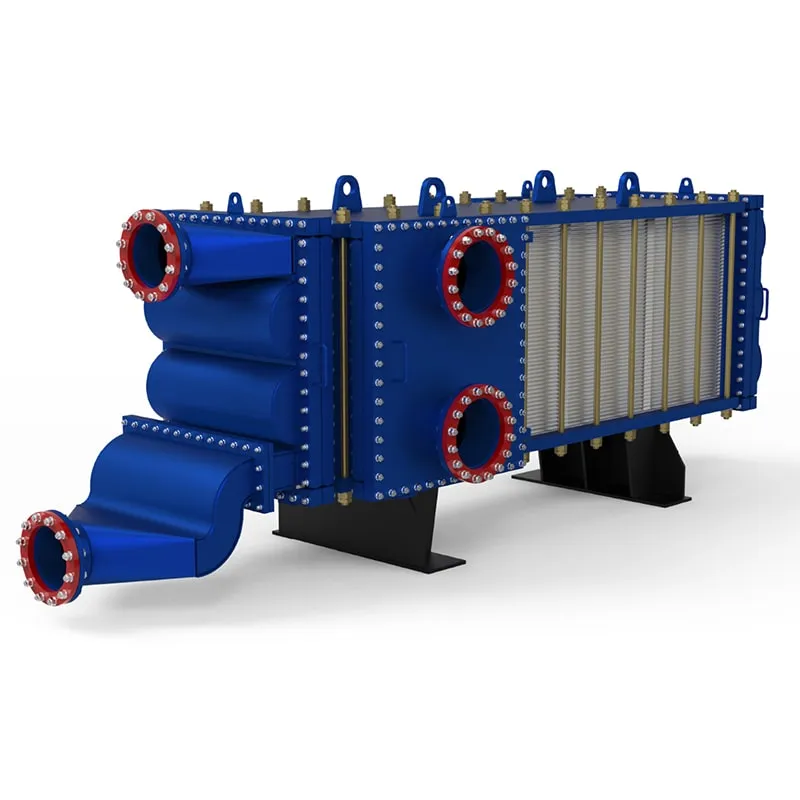
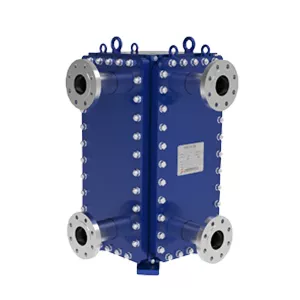
Gasketed units are the most common choice for fuel cell thermal management, especially for systems below 500 kW. They offer excellent serviceability—plates can be added, removed, or cleaned individually. This flexibility is valuable during the development phase when thermal loads may change. However, the gaskets introduce a potential leak path and require periodic replacement. For stationary fuel cell installations with consistent operating conditions, gasketed units provide an optimal balance of cost and performance. You can explore gasketed plate heat exchanger options for more detailed specifications.
Brazed Plate Heat Exchangers
Brazed units use copper or nickel brazing to seal the plates, eliminating gaskets entirely. They are compact, lightweight, and can handle higher pressures and temperatures. For fuel cell applications with space constraints, such as automotive or portable systems, brazed heat exchangers are often the preferred choice. The main drawback is the inability to clean or modify the plate count. Additionally, copper brazing may not be compatible with deionized water due to copper ion leaching, which can contaminate the coolant and reduce stack performance. Nickel-brazed units are a safer alternative for high-purity water loops.
Welded Plate Heat Exchangers
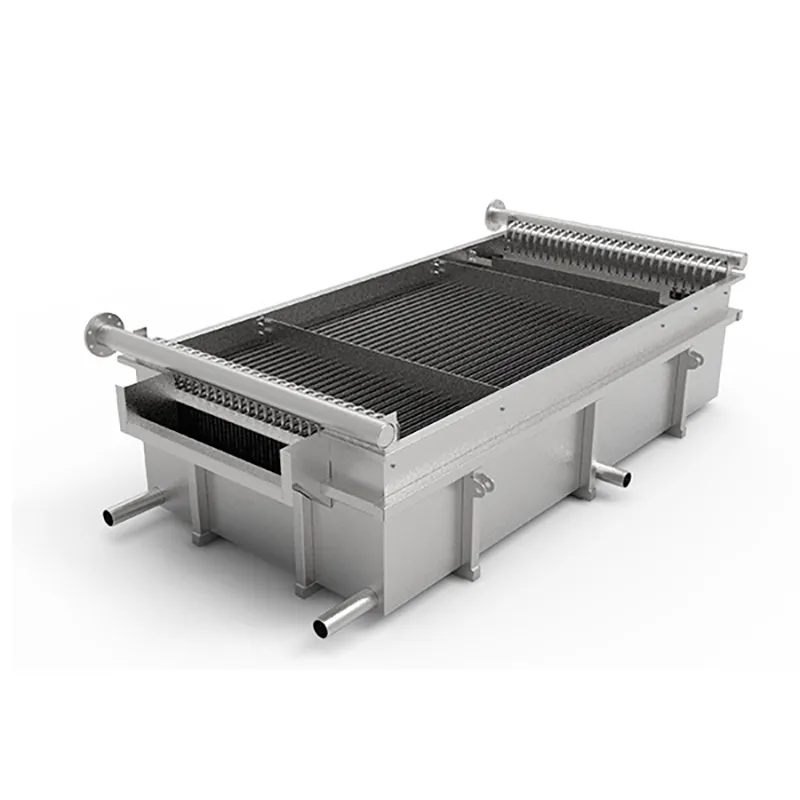
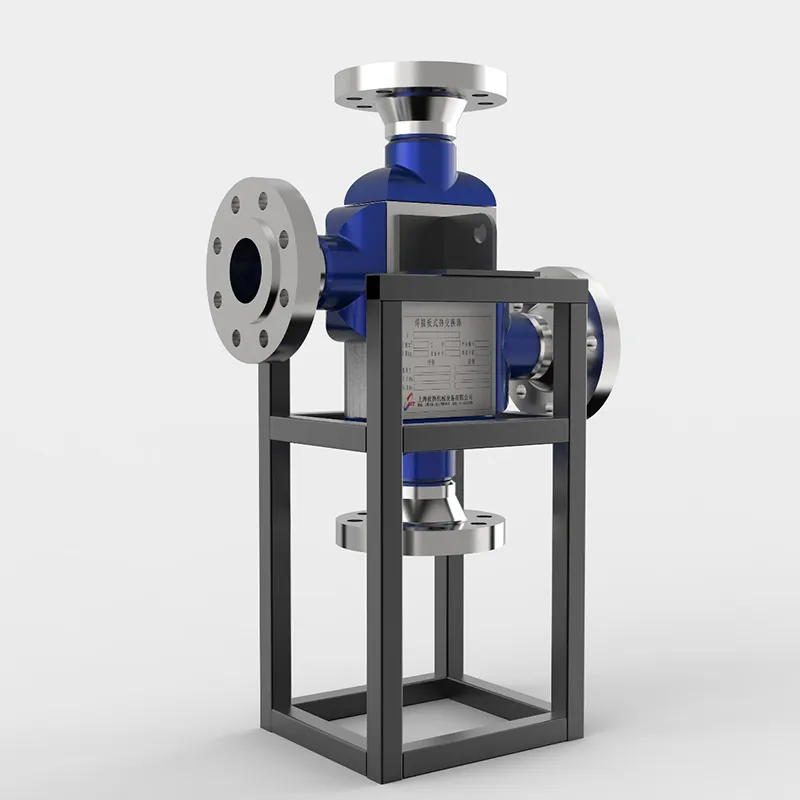
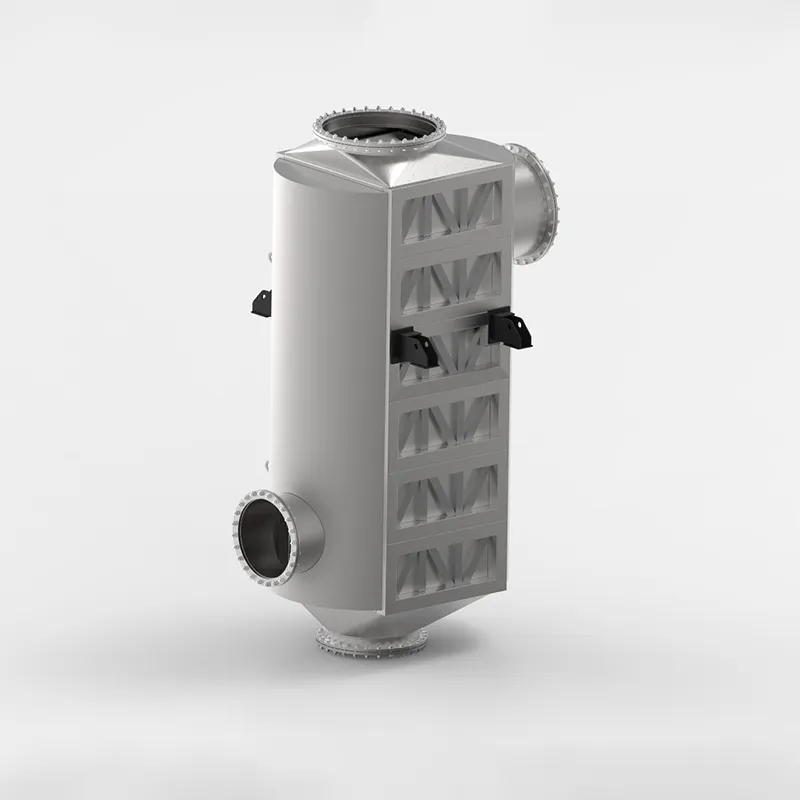
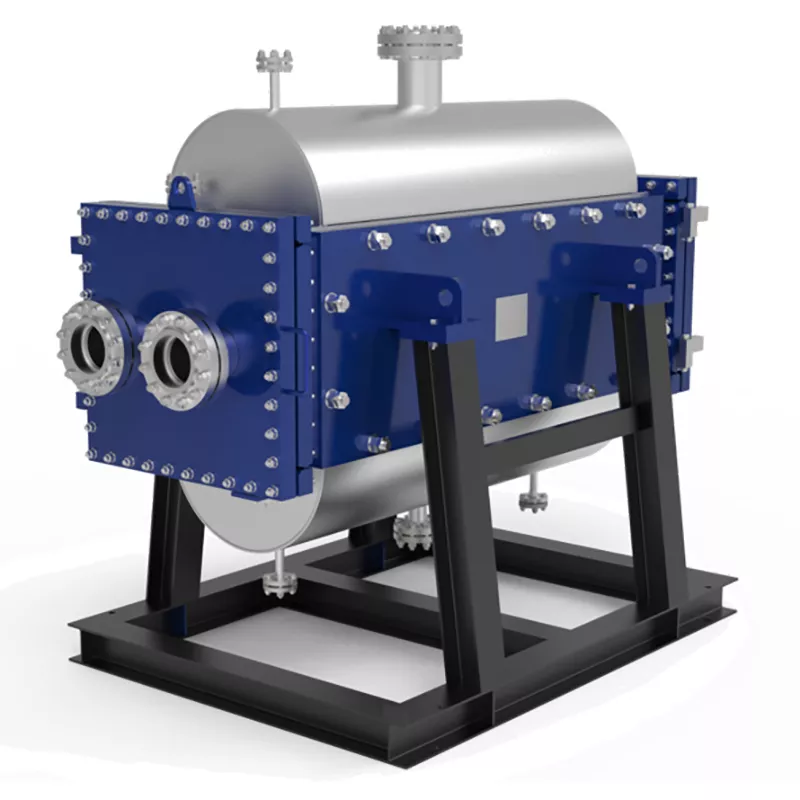
For large-scale fuel cell installations or systems using aggressive coolants, welded plate heat exchangers provide a hermetic seal without gaskets. These units are more expensive but offer superior reliability and can handle higher temperatures. The HT-Bloc welded plate heat exchanger is an example of a fully welded design that eliminates gasket failure risks. Similarly, TP welded plate heat exchangers offer a robust solution for high-pressure and high-temperature fuel cell loops.
Practical Sizing Methodology
To select the right plate heat exchanger, follow a systematic approach:
Step 1: Define Operating Conditions. Determine the hot-side (stack coolant) inlet and outlet temperatures, the cold-side (secondary loop) inlet and outlet temperatures, and the respective flow rates. For fuel cells, the hot-side inlet temperature is typically the stack outlet temperature, which should not exceed the maximum allowable membrane temperature.
Step 2: Calculate the Heat Duty. Using Q = m × cp × ΔT, where m is the mass flow rate, cp is the specific heat, and ΔT is the temperature difference. Verify this against the stack's heat rejection requirement.
Step 3: Determine the LMTD. Calculate the log mean temperature difference based on the inlet and outlet temperatures of both fluids. Apply a correction factor (F) if the flow arrangement is not purely countercurrent. For most plate heat exchangers, F is typically above 0.9, but it's worth verifying.
Step 4: Estimate the Required Heat Transfer Area. Using the overall heat transfer coefficient (U), which for water-to-water plate heat exchangers ranges from 3000 to 7000 W/m²·K, calculate the area as A = Q / (U × LMTD × F).
Step 5: Select the Plate Pattern and Number of Plates. Based on the calculated area and the allowable pressure drop, choose a plate size and chevron angle. Manufacturers provide selection software that can simulate different plate configurations to meet both thermal and hydraulic constraints.
Common Pitfalls to Avoid
One frequent mistake is undersizing the heat exchanger to save cost. Fuel cell stacks are sensitive to temperature fluctuations—a heat exchanger that performs marginally at design conditions may struggle during hot summer days or when the stack operates at partial load with reduced coolant flow. Always include a safety factor of at least 10% on the heat transfer area.
Another issue is neglecting the pressure drop on the secondary side. If the secondary loop uses a pump with limited head, a high pressure drop across the heat exchanger can starve the flow, leading to inadequate cooling. Check the pump curve against the heat exchanger's pressure drop at the design flow rate.
Material selection errors also cause premature failures. Deionized water with low conductivity (below 10 µS/cm) can be corrosive to stainless steel if the temperature exceeds 80°C for extended periods. In such cases, consider using higher-grade materials or adjusting the coolant chemistry with approved inhibitors that do not affect stack performance.
Integration with the Overall Thermal Management System
The plate heat exchanger does not operate in isolation. It interfaces with the coolant pump, expansion tank, deionizer, and the stack itself. The heat exchanger's placement in the loop—whether on the primary (stack) side or as part of a cascaded cooling system—affects the overall thermal response. In some designs, a two-stage cooling approach is used: the first stage uses a plate heat exchanger to transfer heat from the stack coolant to an intermediate loop, and the second stage rejects heat to ambient via a dry cooler or cooling tower. This configuration allows for better control of the stack inlet temperature and reduces the risk of thermal shock.
For systems requiring precise temperature control, consider integrating a bypass valve around the heat exchanger. This allows a portion of the coolant to bypass the heat exchanger, enabling finer adjustment of the stack inlet temperature without varying the pump speed. The heat exchanger should be sized to handle the full flow during maximum heat rejection, while the bypass handles turndown scenarios.
Maintenance and Lifecycle Considerations
Fuel cell systems are expected to operate for thousands of hours with minimal downtime. Plate heat exchangers, especially gasketed types, require periodic inspection and cleaning to prevent fouling. In closed-loop systems with deionized water, fouling is less of an issue, but particulate contamination from pump wear or system debris can accumulate on plate surfaces. Installing a strainer or filter upstream of the heat exchanger is a simple and effective preventive measure.
For gasketed units, keep spare gaskets and follow the manufacturer's torque specifications during reassembly. Over-tightening can damage the plates, while under-tightening leads to leaks. Welded or brazed units have lower maintenance needs but cannot be repaired in the field—a failure typically requires replacement of the entire unit. When designing the system, consider the accessibility of the heat exchanger for maintenance or replacement, especially in space-constrained installations.
Future Trends in Fuel Cell Thermal Management
As fuel cell technology advances toward higher power densities and lower costs, heat exchanger designs are evolving accordingly. Additive manufacturing is enabling complex plate geometries that enhance heat transfer while reducing pressure drop. For example, printed circuit heat exchangers (PCHE) offer extremely high surface-area-to-volume ratios, making them suitable for compact fuel cell systems where space is at a premium. Similarly, pillow plates provide a lightweight and cost-effective alternative for low-pressure applications.
The trend toward higher operating temperatures in next-generation fuel cells, such as solid oxide fuel cells operating at 600°C to 800°C, requires heat exchangers made from specialized alloys like Inconel or Hastelloy. These materials can withstand the extreme temperatures but come with significantly higher costs. For such applications, wide-gap welded plate heat exchangers may be suitable, as they can handle fluids with particulates or high viscosity while maintaining structural integrity at elevated temperatures.
Final Recommendations
Selecting the right plate heat exchanger for fuel cell thermal management is a multi-faceted decision that balances thermal performance, material compatibility, cost, and reliability. Start by thoroughly characterizing your system's thermal load and operating envelope. Consult with heat exchanger manufacturers early in the design process—their selection software and application expertise can help you avoid costly mistakes. Always request performance data based on your specific fluids and conditions, not just generic ratings.
For most PEM fuel cell systems, a gasketed stainless steel plate heat exchanger with EPDM gaskets offers the best combination of performance, serviceability, and cost. If space is constrained or the coolant is particularly aggressive, consider brazed or welded designs. For high-temperature fuel cells, specialized welded units with appropriate alloy materials are necessary. By carefully evaluating each selection criterion against your system's unique requirements, you can ensure reliable thermal management that supports optimal fuel cell performance and longevity.
Remember that the heat exchanger is a critical component in the thermal management loop—getting it right from the start saves time, money, and operational headaches down the road. Take advantage of manufacturer resources, request sample calculations, and validate your selection with testing where possible. With the right approach, you can confidently choose a plate heat exchanger that meets your fuel cell system's demands today and scales for future needs.

 English EN





User Comments
Service Experience Sharing from Real Customers
Liam Chen
Senior Mechanical EngineerWe swapped out our old brazed plates for these on a 10kW PEM stack, and the temperature uniformity improvement was immediate. No more hot spots on the outlet manifold. The gasket sealing held up perfectly through 200 thermal cycles so far. Solid build.
Sophie Hart
Lab TechnicianHonestly, I was a bit skeptical about the pressure drop specs at first, but after running our 5-cell short stack with deionized water, the flow distribution was way better than our previous supplier. Only gave 4 stars because the port alignment was slightly off on one plate—still worked, just took extra care during assembly.
Marcus Okafor
Field Service TechnicianI install these for a living on backup power units. These plates are lighter than the old style and the gaskets don't pop out when you're torquing the frame. Had one unit running 24/7 for three months in a humid warehouse—opened it up for inspection and the channels were still clean. No corrosion spots.
Elena Rossi
Process EngineerThe thermal performance is great for the price point—we saw about a 12% improvement in heat recovery compared to our previous supplier's design. However, the documentation on the chevron angle was a bit vague, and we had to do our own CFD to confirm it matched our coolant loop. Works fine now, but the datasheet could be clearer.