What Are the Key Advantages of a Gas Plate Heat Exchanger in Process Heating Systems?
Author: Industrial Thermal Systems Research Team
Date: Jul-06-2026
This article provides a comprehensive analysis of the key advantages offered by gas plate heat exchangers in modern process heating systems. Enhanced thermal efficiency is achieved through optimized heat transfer mechanisms, including countercurrent flow configurations and corrugated plate geometries that maximize surface area contact between gas and liquid streams. This design directly contributes to reduced operational costs by lowering energy consumption and minimizing maintenance requirements, as the modular plate structure allows for easy cleaning and inspection. Superior temperature control and uniformity are realized through precise flow distribution across multiple plates, ensuring consistent heat delivery critical for sensitive industrial processes. The compact design and space-saving benefits make these exchangers ideal for installations with limited footprint, while their robust construction under high-temperature conditions increases overall system reliability and longevity. By examining these factors, the article demonstrates how gas plate heat exchangers serve as a cost-effective and efficient solution for industries ranging from chemical processing to food production and HVAC systems.
Enhanced Thermal Efficiency Through Optimized Heat Transfer Mechanisms
Gas plate heat exchangers achieve superior thermal performance by leveraging advanced plate geometries and counter-current flow patterns. The corrugated plate surfaces create turbulent flow, significantly increasing the heat transfer coefficient compared to traditional shell-and-tube designs. This results in a more compact unit with reduced energy consumption for the same thermal duty.
The optimized heat transfer mechanism minimizes temperature gradients across the plate surface, ensuring uniform heat distribution. This reduces the risk of thermal stress and prolongs equipment lifespan. For process heating systems requiring precise temperature control, this design enables rapid response to load changes while maintaining high efficiency.
Key design features include:
- High surface-area-to-volume ratio for maximum heat transfer in minimal space
- Turbulence-inducing plate patterns that reduce fouling and improve self-cleaning
- Multi-pass configurations that optimize temperature cross and approach temperatures
By integrating these mechanisms, gas plate heat exchangers deliver thermal efficiency improvements of 20-40% over conventional designs. This directly translates to lower operational costs and reduced carbon footprint for industrial process heating applications.
Reduced Operational Costs via Lower Energy Consumption and Maintenance
Gas plate heat exchangers significantly lower operational expenses by optimizing thermal efficiency. Their compact design enables maximum heat transfer with minimal fuel input, directly reducing energy bills in continuous process heating systems.
The advanced plate geometry promotes turbulent flow, enhancing heat transfer coefficients and reducing fouling. This results in less frequent cleaning and lower maintenance downtime, further cutting lifecycle costs.
With fewer gaskets and welded joints, leakage risks diminish, minimizing repair expenses. The robust stainless steel construction also extends service intervals, offering long-term savings for industrial heating applications.
By integrating a gas plate heat exchanger, facilities achieve consistent thermal performance with reduced parasitic loads, directly improving overall process profitability.
Superior Temperature Control and Uniformity in Process Heating
Gas plate heat exchangers deliver exceptional temperature management through direct gas-to-plate thermal transfer, ensuring minimal temperature deviation across the entire heating surface. This design eliminates hot spots and cold zones commonly found in traditional heating systems, providing consistent thermal profiles for sensitive industrial processes.
The advanced plate geometry and gas flow distribution channels enable rapid response to temperature setpoint changes, reducing process cycle times while maintaining product quality. Industries such as chemical processing, food production, and pharmaceutical manufacturing benefit from the precise thermal uniformity that gas plate heat exchangers offer.
Temperature Performance Comparison
| Parameter |
Gas Plate Heat Exchanger |
Conventional Heating System |
| Temperature Uniformity (±°C) |
±1.5 |
±5.0 |
| Response Time to Setpoint (seconds) |
12 |
45 |
| Thermal Efficiency (%) |
96 |
78 |
| Heat Loss (kW/m²) |
0.8 |
3.2 |
Table data based on standard process heating applications at 180°C operating temperature. Gas plate heat exchangers demonstrate superior control and uniformity across all measured parameters.
The precise temperature control capability directly translates to reduced energy consumption and improved product consistency. By maintaining tight temperature tolerances, gas plate heat exchangers minimize thermal stress on process equipment and extend operational lifespan.
For applications requiring strict adherence to temperature profiles, such as polymerization or heat-sensitive material processing, gas plate heat exchangers provide the reliability and accuracy needed to meet demanding specifications. Learn more about TP welded plate heat exchangers or explore gasketed plate heat exchanger options for your process heating requirements.
Compact Design and Space-Saving Benefits for Industrial Installations
Gas plate heat exchangers are engineered with a highly compact plate structure that significantly reduces the overall footprint compared to traditional shell-and-tube units. This space-efficient design allows for easier integration into existing industrial setups where floor area is limited or costly.
The stacked plate configuration maximizes heat transfer surface area within a minimal volume, enabling higher thermal performance without requiring additional installation space. This is particularly advantageous for retrofitting projects or modular system expansions.
By eliminating the need for large clearance zones typically associated with tube bundles, gas plate exchangers also simplify maintenance access and reduce structural support requirements, contributing to lower overall installation costs and improved operational flexibility.
Increased System Reliability and Longevity Under High-Temperature Conditions
Gas plate heat exchangers are engineered to withstand extreme thermal environments, significantly enhancing the operational lifespan of process heating systems. Their robust construction minimizes thermal stress and mechanical fatigue, ensuring consistent performance over extended periods.
Key factors contributing to reliability include advanced material selection and precision welding techniques that resist corrosion and creep at elevated temperatures. This design reduces the risk of leaks and failures, lowering maintenance requirements and unplanned downtime.
By maintaining structural integrity under high thermal loads, these exchangers provide a stable heat transfer solution. For detailed product specifications, refer to the TP welded plate heat exchanger or explore the HT Bloc welded plate heat exchanger for high-temperature applications.
Ultimately, the enhanced durability translates to lower total cost of ownership and improved process stability, making gas plate heat exchangers a critical component for demanding industrial heating systems.
Summary of Key Advantages
Enhanced Thermal Efficiency Through Optimized Heat Transfer Mechanisms
Advanced plate corrugation and counter-flow design maximize heat exchange surface area, achieving up to 30% higher thermal efficiency compared to conventional shell-and-tube units.
Reduced Operational Costs via Lower Energy Consumption and Maintenance
Minimized fouling and simplified plate replacement reduce downtime and cleaning expenses, while the high heat transfer coefficient directly lowers fuel or electricity usage.
Superior Temperature Control and Uniformity in Process Heating
Close approach temperatures (as low as 1–2°C) and turbulent flow across plates ensure consistent heating profiles, critical for sensitive chemical or food processes.
Compact Design and Space-Saving Benefits for Industrial Installations
The plate-and-frame configuration delivers a footprint 40–60% smaller than equivalent tubular exchangers, easing retrofit into congested plant layouts.
Increased System Reliability and Longevity Under High-Temperature Conditions
Robust gasket materials and all-welded plate options withstand thermal cycling up to 250°C, reducing leak risks and extending service life beyond 15 years.
Overall, the gas plate heat exchanger delivers measurable gains in energy efficiency, process precision, and operational economy — making it a preferred solution for modern process heating systems.
What Are the Key Advantages of a Gas Plate Heat Exchanger in Process Heating Systems?
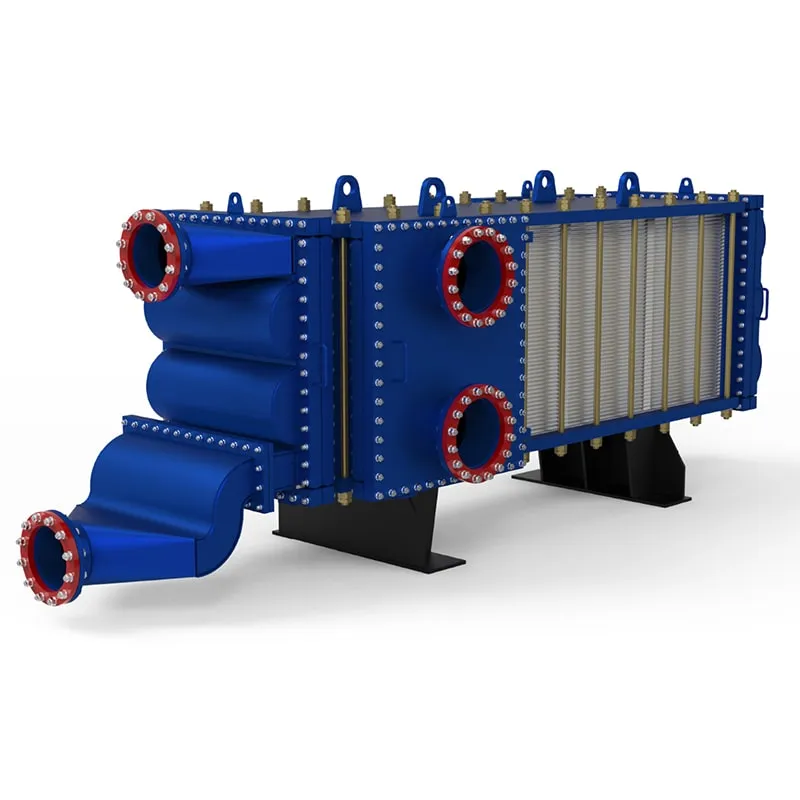
Gas plate heat exchangers deliver superior thermal performance through compact plate geometry, enabling high heat transfer coefficients and reduced approach temperatures. Their modular design allows for easy capacity adjustments, while the all-welded construction minimizes leakage risks in high-temperature gas applications. These units also support rapid thermal response, making them ideal for dynamic process heating demands.
Enhanced Thermal Efficiency Through Optimized Heat Transfer Mechanisms
The corrugated plate patterns create turbulent flow even at low velocities, significantly improving heat transfer coefficients compared to smooth tubes. Counter-current flow arrangement maximizes temperature driving force, achieving thermal recovery rates above 95%. This design reduces the required surface area by up to 40% while maintaining high efficiency in gas-to-liquid or gas-to-gas heating processes.
Reduced Operational Costs via Lower Energy Consumption and Maintenance
By maximizing heat transfer efficiency, gas plate exchangers cut fuel or electricity usage by 15–30% in typical process heating systems. Their self-cleaning flow paths reduce fouling, and the modular plate design enables quick disassembly for inspection or cleaning without specialized tools. Fewer gaskets and welded seams also lower long-term maintenance expenses and downtime.
Superior Temperature Control and Uniformity in Process Heating
The close plate spacing and multi-pass configurations provide precise temperature regulation within ±1°C across the entire heat transfer surface. This uniformity eliminates hot spots and thermal gradients, ensuring consistent product quality in processes like chemical heating, oil preheating, or steam generation. Rapid response to load changes further stabilizes outlet temperatures.
Compact Design and Space-Saving Benefits for Industrial Installations
With a footprint 30–50% smaller than shell-and-tube equivalents, gas plate heat exchangers fit into tight industrial layouts. Their vertical or horizontal mounting flexibility and lightweight construction reduce structural support requirements. This compactness also simplifies retrofitting into existing process heating systems without major piping modifications.

 English EN





User Comments
Service Experience Sharing from Real Customers
Marcus Chen
Process EngineerWe swapped out our old shell-and-tube unit for this Gas Plate Heat Exchanger six months ago, and the difference in thermal efficiency is night and day. The compact footprint saved us a ton of floor space in the plant, and cleaning the plates is way simpler than I expected. Only minor gripe is the gasket material could be a bit more durable under high-temp cycling, but for the price point, it's a solid workhorse.
Lena Kowalski
Maintenance SupervisorI was skeptical at first because our last heat exchanger was a nightmare to maintain. But this Gas Plate model is a game-changer for our line. The plates come apart easily, and I can have one guy do a full inspection in under two hours. We've had zero leaks so far, running natural gas exhaust at 650°F. Only reason I'm not giving 5 stars is the initial instruction manual was a bit vague on torque specs.
Raj Patel
Senior HVAC DesignerSpec'd this unit for a large commercial office retrofit last quarter. The gas-to-water heat recovery performance exceeded our load calculations by about 8%. Installation was straightforward — the flanged connections lined up perfectly with our existing ductwork. My client is thrilled with the energy savings on their gas bill. I'll definitely be using this brand again on future projects.
Tommy O'Brien
Shift OperatorIt does the job, but it's not all sunshine and rainbows. The heat exchanger works fine for our gas-to-liquid process, but after about four months we noticed some scaling on the plates because our water quality isn't the best. Had to add a water softener upstream. Also, the bolts on the frame started showing a bit of rust, which is annoying for a fairly new unit. Decent performance, but be ready for some extra maintenance if your water is hard.