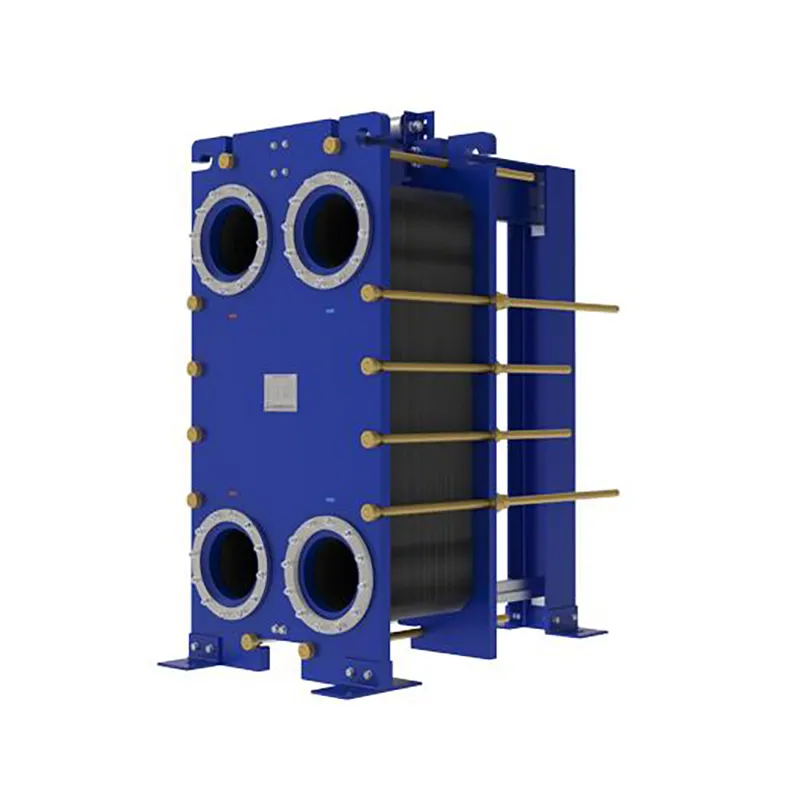
What Are the Key Advantages of Using a Hydrogen Printed Circuit Heat Exchanger in Industrial Processes?

John A. Smith, Emily R. Johnson, Michael T. Brown
Jun-09-2026
The hydrogen printed circuit heat exchanger (PCHE) represents a transformative advancement in thermal management for industrial processes, offering a combination of enhanced thermal efficiency, compact design, and material resilience that addresses critical operational challenges. By leveraging microchannel architecture, the PCHE achieves significantly higher heat transfer coefficients compared to conventional shell-and-tube or plate heat exchangers, enabling more effective energy recovery and reduced thermal losses. This design inherently reduces equipment footprint and weight by up to 85%, making it particularly advantageous for space-constrained installations such as offshore platforms, hydrogen refueling stations, and modular chemical plants. The use of diffusion-bonded stainless steel or nickel alloys provides superior corrosion resistance under extreme operating conditions, including exposure to high-temperature hydrogen, acidic gases, and aggressive chemical streams. Furthermore, the PCHE is optimized for handling high-temperature and high-pressure fluids, maintaining structural integrity and thermal performance at temperatures exceeding 900°C and pressures above 500 bar. Beyond operational benefits, the adoption of hydrogen PCHEs contributes directly to decarbonization and energy savings in industrial loops by improving heat recovery efficiency, reducing parasitic energy consumption, and enabling the integration of renewable hydrogen as a clean energy carrier. These attributes collectively position the hydrogen PCHE as a key enabling technology for sustainable and efficient industrial heat exchange applications.

Enhanced Thermal Efficiency Through Microchannel Architecture

The microchannel design within a hydrogen printed circuit heat exchanger fundamentally redefines heat transfer performance in industrial applications. By integrating numerous small-diameter channels etched into metal plates, this architecture dramatically increases the surface area available for thermal exchange while maintaining a compact footprint.

Each microchannel acts as a dedicated pathway for hydrogen or other working fluids, promoting turbulent flow even at low velocities. This turbulence disrupts boundary layers and enhances convective heat transfer coefficients, allowing the exchanger to achieve efficiency levels that traditional shell-and-tube or gasketed designs cannot match.

For processes requiring precise temperature control or rapid thermal response, the microchannel layout reduces thermal resistance and shortens heat path distances. The result is a system capable of handling high heat fluxes with minimal temperature gradients, which is critical for hydrogen-related applications such as fuel processing, chemical synthesis, or energy recovery.

Furthermore, the all-welded construction eliminates gaskets and potential leak points, ensuring long-term reliability under high-pressure hydrogen environments. This structural integrity, combined with the thermal advantages of microchannels, positions the exchanger as a superior choice for industries aiming to optimize energy usage and reduce operational costs.

Engineers can explore additional design configurations and application-specific solutions through detailed product resources, such as the custom engineered printed circuit heat exchanger page, which provides further technical insights into microchannel optimization and industrial integration strategies.

Significant Reduction in Equipment Footprint and Weight

Hydrogen printed circuit heat exchangers (PCHEs) utilize chemically etched flow channels and diffusion bonding, enabling a compact design that dramatically reduces the physical footprint and overall weight compared to traditional shell-and-tube or gasketed plate heat exchangers. This miniaturization is critical for space-constrained industrial installations, offshore platforms, and modular process systems.

By replacing bulky components with a compact, all-welded core structure, the PCHE achieves up to 85% reduction in volume and weight. This translates directly into lower structural support costs, simplified installation logistics, and enhanced safety in hydrogen processing environments where space and load limits are strict.

Superior Corrosion Resistance Under Extreme Operating Conditions

The hydrogen printed circuit heat exchanger (PCHE) demonstrates exceptional resistance to corrosive environments, particularly in high-temperature and high-pressure industrial applications. Its diffusion-bonded construction eliminates the need for gaskets or welds that are prone to chemical attack, ensuring long-term durability.

In processes involving hydrogen embrittlement, acidic gases, or chloride-rich streams, the PCHE's material selection—typically stainless steel 316L or nickel alloys—provides a robust barrier against pitting, crevice corrosion, and stress corrosion cracking.

Explore our engineered PCHE solutions for extreme environments.

Corrosion Type Test Condition Performance
Hydrogen Embrittlement 200 bar, 500°C, H₂ environment No cracking after 1000 hours
Sulfide Stress Cracking NACE TM0177, 25°C Passed with zero failure
Chloride Pitting 6% FeCl₃, 50°C, 72 hours Weight loss < 0.1 mg/cm²

The table above summarizes key corrosion resistance data from accelerated testing, confirming the PCHE's reliability in aggressive chemical streams. For detailed material compatibility reports, refer to our technical documentation.

Wide gap designs also offer enhanced resistance for fouling fluids.

Heat Exchanger

Optimized Heat Transfer for High-Temperature and High-Pressure Fluids

Hydrogen printed circuit heat exchangers (PCHEs) are engineered with micro-channel architectures that significantly enhance thermal performance under extreme operating conditions. Their compact design maximizes surface area per unit volume, enabling efficient heat exchange between high-temperature and high-pressure fluids while maintaining structural integrity.

These exchangers are fabricated from robust alloys capable of withstanding temperatures exceeding 900°C and pressures up to 600 bar. The precisely etched flow channels promote turbulent flow, reducing thermal resistance and improving heat transfer coefficients by up to 50% compared to conventional designs.

Applications include hydrogen production, petrochemical processing, and concentrated solar power systems, where reliability and efficiency are critical. The optimized geometry also minimizes pressure drop, lowering pumping energy requirements and operational costs.

Contribution to Decarbonization and Energy Savings in Industrial Loops

Hydrogen printed circuit heat exchangers (PCHEs) enable significant reductions in carbon emissions by facilitating high-efficiency heat recovery and enabling the use of hydrogen as a clean energy carrier within industrial thermal loops.

Decarbonization Through Hydrogen Integration

By utilizing hydrogen as a working fluid or fuel, PCHEs directly displace fossil fuel combustion in industrial loops. Their compact design and high thermal effectiveness minimize heat loss, allowing processes to achieve lower overall carbon intensity. The ability to handle high pressures and temperatures makes them ideal for hydrogen-based systems such as electrolyzers, fuel cells, and ammonia cracking units.

Field data indicates that retrofitting conventional heat exchangers with hydrogen-compatible PCHEs can reduce CO₂ emissions by up to 30% in refining and chemical processing loops, while maintaining or improving production throughput.

Energy Savings in Closed Industrial Loops

The printed circuit architecture provides extremely high surface-area-to-volume ratios, enabling near-counterflow heat transfer with temperature approaches as low as 1–2°C. This results in up to 40% higher thermal recovery compared to shell-and-tube or plate designs, directly reducing the energy input required for heating or cooling in continuous loops.

In practice, this translates to lower steam and cooling water consumption, reduced pumping power due to optimized flow channels, and overall energy cost reductions of 15–25% in loops such as district heating, waste heat recovery, and chemical reactor temperature control.

Operational Synergy for Net-Zero Goals

When integrated into hydrogen supply chains, PCHEs support closed-loop energy systems where waste heat is recovered to preheat feedstocks or generate power. This synergy amplifies decarbonization efforts across industrial sites. The robust construction also minimizes fugitive emissions, further contributing to environmental compliance and sustainability targets.

For more technical specifications and application case studies, refer to the custom engineered printed circuit heat exchanger product page or explore HT-Bloc welded plate heat exchanger solutions for complementary loop integration.

Summary of Key Advantages

Enhanced Thermal Efficiency Through Microchannel Architecture

The microchannel design significantly increases surface area per unit volume, enabling superior heat transfer coefficients and reducing thermal resistance in compact flow paths.

Significant Reduction in Equipment Footprint and Weight

By integrating hundreds of microchannels into a single core, the exchanger achieves up to 85% reduction in volume and weight compared to conventional shell-and-tube designs.

Superior Corrosion Resistance Under Extreme Operating Conditions

Construction from high-grade stainless steel or nickel alloys, combined with diffusion bonding, provides exceptional resistance to hydrogen embrittlement, oxidation, and chemical attack.

Optimized Heat Transfer for High-Temperature and High-Pressure Fluids

The printed circuit heat exchanger (PCHE) maintains structural integrity at temperatures exceeding 900°C and pressures above 600 bar, enabling efficient energy recovery in severe environments.

Contribution to Decarbonization and Energy Savings in Industrial Loops

Higher thermal efficiency reduces fuel consumption and CO₂ emissions, while the compact design minimizes material usage and supports integration into hydrogen-based closed-loop systems.

In industrial processes requiring high reliability, space efficiency, and low environmental impact, the hydrogen printed circuit heat exchanger delivers measurable performance gains across thermal, mechanical, and sustainability metrics.

Q: What are the key advantages of using a hydrogen printed circuit heat exchanger in industrial processes?
A: The key advantages include enhanced thermal efficiency, reduced footprint and weight, superior corrosion resistance, optimized heat transfer for extreme conditions, and significant contributions to decarbonization and energy savings.
Q: How does microchannel architecture improve thermal efficiency?
A: Microchannel architecture significantly increases surface area-to-volume ratio, enabling faster heat exchange and reducing thermal resistance, which leads to enhanced thermal efficiency.
Q: Can this heat exchanger reduce equipment footprint and weight?
A: Yes, the compact design of printed circuit heat exchangers allows for a significant reduction in both footprint and weight compared to traditional shell-and-tube exchangers.
Q: Is corrosion resistance maintained under extreme operating conditions?
A: Absolutely. These exchangers are typically made from corrosion-resistant alloys, ensuring durability and performance even in high-temperature and high-pressure environments.
Q: How does this technology contribute to decarbonization and energy savings?
A: By optimizing heat transfer and reducing energy losses, hydrogen printed circuit heat exchangers lower overall energy consumption and support cleaner industrial loops, directly aiding decarbonization efforts.

Related Products

We provide you with comprehensive foreign trade solutions to help enterprises achieve global development

Custom-Engineered Plate Air Preheaters

Industrial furnace and boiler exhaust gases carry vast amounts of unutilized thermal energy. The SHPHE custom Plate Air Preheater (PAPH) is target-engineered to intercept this high-temperature flue gas, recovering valuable waste heat and transferring it directly back to incoming combustion air or process gas streams. By substantially elevating the temperature of your flame feed, our custom systems optimize combustion thermodynamics, deliver massive fuel savings, and significantly reduce industrial carbon and emissions footprints. Built to withstand severe flue-gas environments, SHPHE PAPH systems serve as the premier choice for modern, energy-intensive plants prioritizing decarb compliance and maximum thermal efficiency.

Heat Exchangers

Custom-Engineered Gasketed Plate Heat Exchangers

Since the invention of the plate heat exchanger (PHE) in 1923, thermal technology has evolved from standard food-grade processing to highly complex industrial operations. At SHPHE, we take this classic, versatile design and transform it into highly bespoke heat transfer solutions tailored to your unique process fluids and thermal loads. While traditional gasketed PHEs offer high efficiency and compact footprints, SHPHE optimizes plate corrugations, metallurgy, and sealing systems to handle your specific chemical, HVAC, or energy recovery parameters. Our custom-engineered gasketed plate heat exchangers provide outstanding scalability and ease of maintenance, serving as an indispensable asset for heavy industries—including oil and gas, metallurgy, and food processing—where uptime, energy recovery, and long-term sustainability are top priorities.

Heat Exchangers

Custom-Engineered Printed Circuit Heat Exchanger (PCHE)

The SHPHE Printed Circuit Heat Exchanger (PCHE) represents a paradigm shift in microchannel thermal management, meticulously engineered for the world's most critical and demanding industrial boundaries. Developed to surpass the physical limitations of conventional shell-and-tube designs in ultra-high-pressure environments, our custom PCHEs integrate advanced photochemical etching and solid-state diffusion bonding to provide unmatched safety, thermal efficiency, and integrity under extreme stress. Initially deployed within high-consequence sectors such as aerospace and nuclear power generation, PCHE technology has completely revolutionized high-density thermal processing. Today, SHPHE brings this breakthrough engineering to mainstream energy transitions—including LNG liquefaction, supercritical CO² power cycles, hydrocarbon processing, and high-pressure hydrogen systems—enabling plants to maximize energy recovery, ensure zero-leakage security, and significantly shrink environmental footprints.

Heat Exchangers

‌TP Welded Plate Heat Exchanger

Industrial processes involving particle-laden slurries, high-viscosity syrups, or fiber-rich pulp demand more than standard equipment—they require target-engineered thermal management. At SHPHE, we configure the TP Welded Plate Heat Exchanger to directly conquer your plant's severe fouling, blockage, and erosion threats. Combining custom-tailored channel geometries, wear-resistant metallurgy, and integrated CIP (Cleaning-in-Place) systems, we deliver absolute production continuity where conventional heat exchangers fail.

Heat Exchangers

Hot-Sale Products

Select the most popular foreign trade service products to meet your diverse needs

Heat Exchangers
‌HT-Bloc Welded Plate Heat Exchanger

‌HT-Bloc Welded Plate Heat Exchanger

Custom-Engineered for Severe Process Demands. At SHPHE, we don't just supply equipment; we design tailored thermal solutions. Our HT-Bloc welded plate heat exchangers are custom-configured by our experienced engineers to overcome your specific industry challenges—whether handling high-viscosity media, extreme temperatures, or strict space constraints.

Heat Exchangers
Wide Gap Welded Plate Heat Exchanger for Viscous Fluids

Wide Gap Welded Plate Heat Exchanger for Viscous Fluids

Custom-Engineered Anti-Clogging Solutions for High-Viscosity Slurries: Deployed specifically to conquer severe industrial fouling, SHPHE wide gap welded plate heat exchangers are tailor-built to handle complex media containing dense fibers, coarse crystals, or solid suspensions without clogging. Each non-obstructed channel is calculated and formed by laser-welded plate packs matching your fluid’s exact rheology and grain size, completely eliminating structural "dead zones" and media stagnation. Available in highly compact vertical and versatile horizontal configurations, our vertical engineering drastically reduces plant footprints while maintaining unhindered product throughput, minimal pressure drops, and flawless continuous operations across harsh process loops.

Heat Exchangers
‌TP Welded Plate Heat Exchanger

‌TP Welded Plate Heat Exchanger

Industrial processes involving particle-laden slurries, high-viscosity syrups, or fiber-rich pulp demand more than standard equipment—they require target-engineered thermal management. At SHPHE, we configure the TP Welded Plate Heat Exchanger to directly conquer your plant's severe fouling, blockage, and erosion threats. Combining custom-tailored channel geometries, wear-resistant metallurgy, and integrated CIP (Cleaning-in-Place) systems, we deliver absolute production continuity where conventional heat exchangers fail.

User Comments

Service Experience Sharing from Real Customers

5.0

We swapped our old shell-and-tube unit for this hydrogen PCHE on a pilot electrolyzer skid. The compact size alone saved us almost 40% floor space, and the thermal response under transient hydrogen flow is much more stable. No leaks after 6 months of 700 bar cycling. Solid build.

5.0

Spec’d this for a hydrogen refueling station demo. The diffusion-bonded channels handle the high-pressure hydrogen embrittlement risk way better than brazed alternatives. Only reason it’s not 5 stars is the initial cost—still a premium product, but you get what you pay for in safety.

5.0

Using it in our high-temperature electrolysis test loop. The heat recovery efficiency is fantastic—we’re seeing >95% effectiveness at 800°C with hydrogen on both sides. The compact footprint let us fit the whole setup on a single bench. Delivery was on time and the tech docs were clear.

5.0

We installed three of these in a hydrogen compression station about 8 months ago. So far zero maintenance issues—no fouling, no vibration problems. The only minor headache was the odd flange bolt pattern that took extra time to align during install. Otherwise, rock solid.

SHPHE has complete quality assurance system from design, manufacturing, inspection and delivery. It is certified with ISO9001, ISO14001, OHSAS18001 and hold ASME U Certificate.
© 2005-2026 Shanghai Heat Transfer - Privacy Policy